
In high-pressure chemical dosing, the pump is rarely the most expensive item on the line, but it is often the one that decides whether the process runs cleanly or becomes a maintenance problem. A high-pressure leak-proof diaphragm pump sits at the intersection of two demands that are difficult to satisfy at the same time: accurate, repeatable dosing and absolute containment of the medium at discharge pressures that can exceed 30 MPa. For operators in petrochemical, chemical, oil and gas, power generation, nuclear and environmental water treatment plants, the question is no longer whether a diaphragm pump can handle high pressure — it is which configuration, and which supplier, fits the specific duty.
This guide explains how a hydraulic diaphragm metering pump works at high pressure, what parameters must be defined before requesting a quotation, how to compare configurations, and how to evaluate a high-pressure process diaphragm pump manufacturer so that the pump you buy is still serviceable and supported years after commissioning.
What Makes a High-Pressure Leak-Proof Diaphragm Pump Different
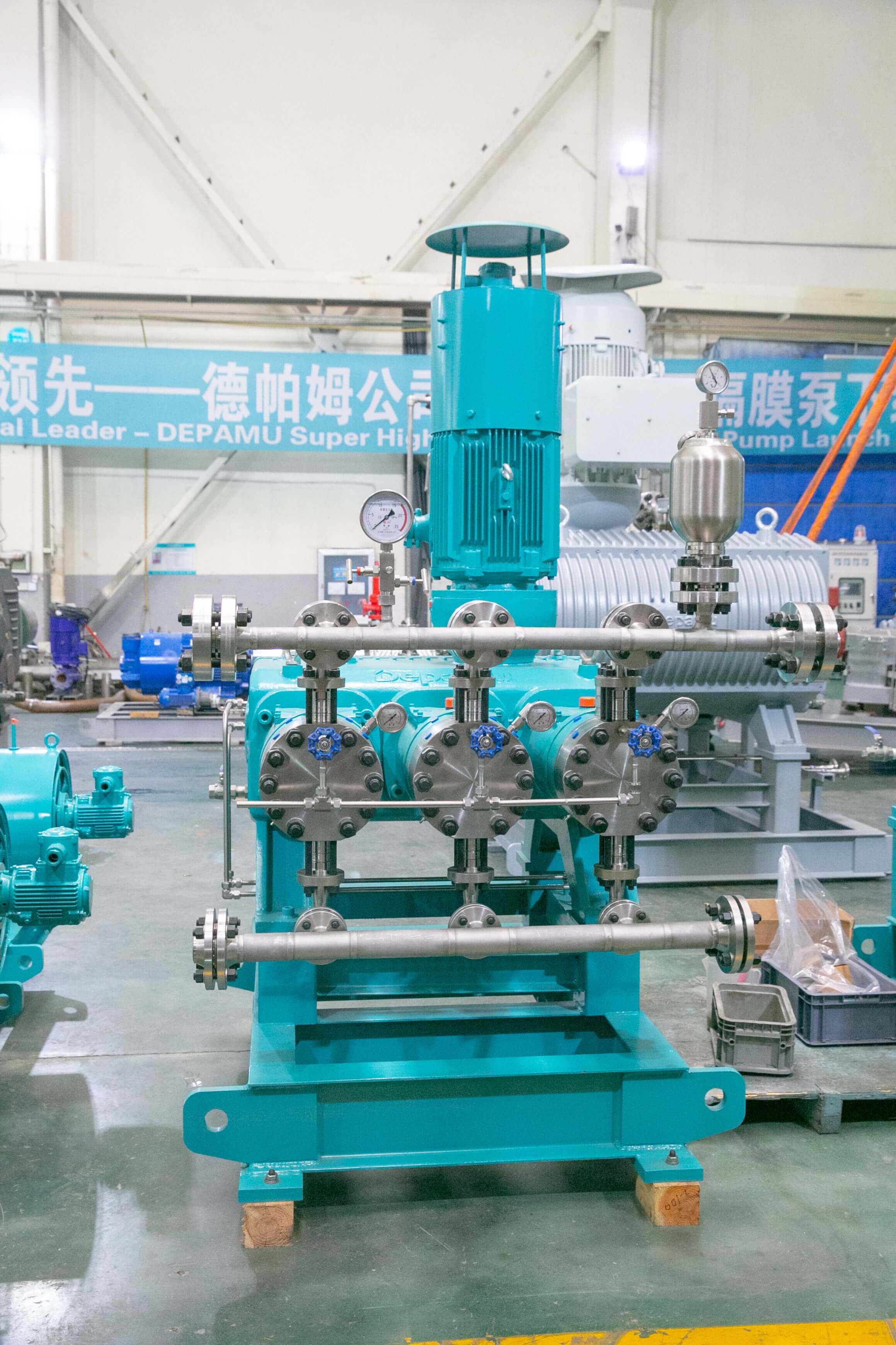
A diaphragm metering pump replaces the packed plunger seal of a traditional reciprocating pump with a flexible diaphragm that separates the process medium from the hydraulic or mechanical drive. Because the medium never contacts a sliding seal, there is no packing to leak, no flush water to manage, and no path for toxic, volatile or corrosive fluid to escape into the plant environment. That containment principle is what makes the design the default choice for dosing applications where leakage is not an acceptable failure mode.
At high discharge pressures, the design becomes more demanding. In a hydraulic diaphragm metering pump, the diaphragm is actuated by hydraulic oil whose pressure and volume are controlled by a piston or plunger. The hydraulic system must be balanced precisely so that diaphragm deflection stays within its elastic limits at every stroke, and so that metering accuracy is not lost as pressure rises. Key engineering features that distinguish a genuinely high-pressure unit from a low-pressure diaphragm pump include a reinforced diaphragm with a defined deflection curve, hydraulic compensation for internal leakage and air ingress, a pressure-relief and degassing arrangement in the hydraulic circuit, and check valves rated for the full discharge pressure.
The practical result is a pump that delivers a stable volumetric output against a varying system pressure, with a repeatability that is normally expressed as a percentage of set flow rather than of full stroke. For plants dosing antiscalant, corrosion inhibitor, catalyst, amine, methanol or dosing chemicals into a pressurised line, this combination of containment and control is the core value proposition.
Why Leak-Free Operation Matters More at High Pressure
A leaking seal at 1 bar is a housekeeping issue. A leaking seal at 200 bar is a safety event. High-pressure leakage produces a fine jet or mist that can travel several metres, and with aggressive or toxic chemicals the consequence is not only product loss but exposure risk, corrosion damage to adjacent equipment, and potential regulatory findings. This is why many plant specifications now require a leak-proof design with a secondary containment or diaphragm rupture detection option for critical dosing services.
There is also an economic argument. Packed plunger pumps in high-pressure service consume packing, require periodic gland adjustment, and often need a continuous flush or cooling supply. That consumable and utility cost continues for the entire life of the pump. A high-pressure leak-proof diaphragm pump concentrates wear in the diaphragm and check valves, which are replaceable in planned intervals, and removes the routine labour associated with gland maintenance. When the medium is expensive — catalysts, speciality additives, high-purity chemicals — the eliminated loss also has a direct cost value.
The third consideration is process stability. A seal that weeps progressively changes the delivered dose even when the pump setting is unchanged. Containment and metering accuracy are therefore not separate features but two outcomes of the same design discipline.
How to Choose a High-Pressure Leak-Proof Diaphragm Pump: Step-by-Step
Selecting a high-pressure diaphragm pump is a duty-point exercise before it is a product exercise. The following sequence reflects how pump engineers normally work through a project, and it also happens to be the information a supplier needs to produce a meaningful quotation.
Step 1: Define the Duty Point — Flow, Pressure, Temperature
Start with the required flow range, not a single value. Dosing pumps rarely run at one fixed capacity; they follow a process demand that may vary from 20% to 100% of design flow, and sometimes drop below that during low-load operation. Define the maximum required flow, the normal operating flow, the minimum controllable flow, and the discharge pressure at the injection point — including the static head, line losses, back pressure from the receiving vessel, and any relief valve settings that could be seen during a blocked discharge.
Temperature must be stated for the medium, not the ambient. Both affect material selection and, in hydraulic designs, the viscosity behaviour of the hydraulic fluid. If the pump is expected to start cold or sit idle in a hot environment, say so at the enquiry stage; these details are difficult to correct after manufacture.
| Selection Parameter | What to Specify | Why It Matters |
|---|---|---|
| Capacity | Max / normal / minimum flow, in L/h | Determines plunger and stroke geometry; avoids running outside the controllable range |
| Discharge pressure | Injection pressure plus margin, in MPa | Sets diaphragm rating, valve loading and motor power |
| Medium properties | Corrosivity, viscosity, solids, gas content, toxicity, volatility | Drives wetted material, valve type and diaphragm construction |
| Temperature | Operating medium temperature and ambient range | Affects elastomer choice, hydraulic fluid and clearances |
| Metering accuracy | Repeatability target and turndown ratio | Confirms whether manual stroke adjustment is enough or closed-loop control is required |
| Control interface | Manual, 4-20 mA, pulse, or PLC-integrated | Defines whether dosing follows a fixed setpoint or a live process signal |
| Installation | Footprint, suction conditions, pipe layout, skid or standalone | Influences NPSH behaviour and whether a packaged dosing system is the better purchase |
Step 2: Evaluate Medium Properties Before Materials
Too many projects begin with a material list and work backwards. The better sequence is to describe the medium physically and chemically, then let the pump engineer propose materials. State the chemical composition or at least the active component and concentration, the pH range, the presence of chlorides, the viscosity at operating temperature, whether solids are present and at what particle size, and whether the medium can crystallise, polymerise or outgas inside the pump head.
Abrasive solids influence valve design more than they influence the diaphragm itself. Viscous media reduce the effective fill of the pump chamber and may require larger suction lines or a slower stroke rate. Media that tend to crystallise require a pump head that can be flushed or drained without dismantling. Media with dissolved gas can cause cavitation in the dosing chamber, which shows up later as erratic output rather than as a dramatic failure.
Step 3: Check Metering Accuracy and Turndown Ratio
Accuracy statements should be read carefully. The meaningful figure is repeatability under the actual operating conditions — same pressure, same temperature, same medium — not a laboratory number taken with water at low pressure. Ask how accuracy is maintained across the turndown range, and whether the pump uses stroke-length adjustment, stroke-frequency adjustment, or both. A dual-adjustment design allows coarse setting by stroke length and fine trimming by frequency, which is useful when the process demand drifts.
For high-pressure service, confirm that the accuracy claim holds at the top of the pressure range. Hydraulic diaphragm designs manage this through compensation in the hydraulic circuit; mechanical designs may suffer from increased diaphragm stress and reduced volumetric efficiency as pressure rises.
Step 4: Review Diaphragm, Valve and Wetted Material Construction
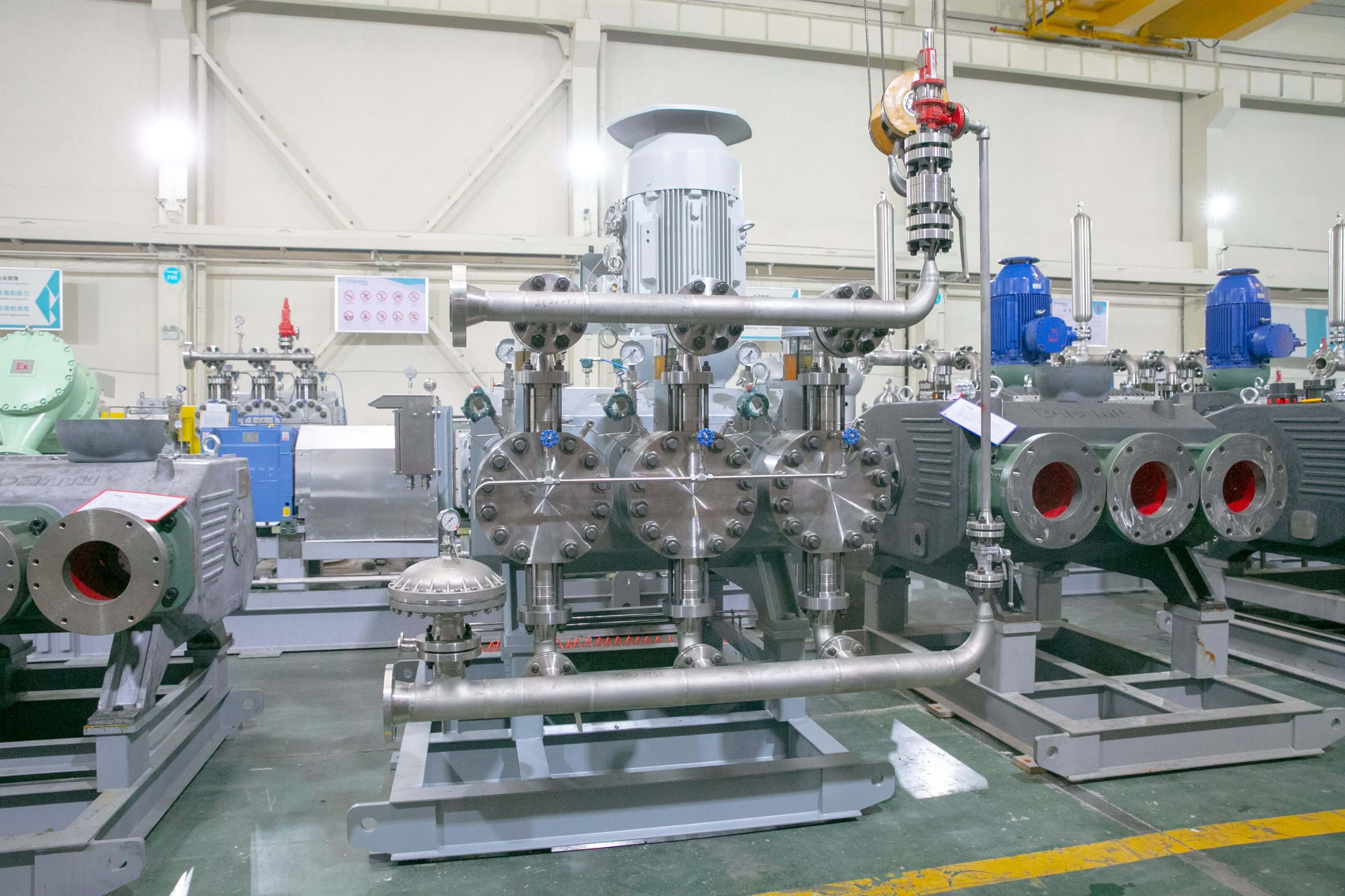
The diaphragm is the component that defines the pump’s life in most high-pressure dosing duties. Look for a defined deflection limit, a backing support that prevents over-stroking, and a diaphragm material matched to the medium — PTFE-faced or composite diaphragms for aggressive chemicals, elastomeric diaphragms where flexibility and cost matter more than chemical resistance.
Check valve design deserves equal attention. Ball valves are simple and tolerant of small solids; cone or plate valves seal better at high pressure and offer better repeatability with clean liquids. The wetted materials of the valve seat, ball and housing decide how often the pump will need attention, particularly with chlorides or trace solids.
Step 5: Plan the Control Strategy Early
Dosing rarely operates in isolation. If the pump must follow a flow signal, a pH or conductivity reading, or a batch sequence, the control interface must be agreed before the pump is built. Manual stroke adjustment is adequate for constant-rate injection; 4-20 mA or pulse input is required for proportional dosing; and a packaged dosing system with an integrated controller is often the cleaner solution when chemical preparation, mixing and dosing are all part of the scope.
Confirm signal compatibility, fail-safe behaviour on signal loss, and whether the pump should stop, hold the last setpoint or run at a defined safe rate. These decisions affect both the electrical design and the process safety case.
Step 6: Assess Serviceability and Spare Parts Availability
Ask to see the maintenance procedure for diaphragm and valve replacement, and ask how long the wear parts are expected to last under your duty. A pump that can be serviced in place with ordinary tools, using spares that are held in stock by the supplier, is worth more over ten years than a marginally cheaper unit that requires a factory return for every diaphragm change.
Common Selection Mistakes in High-Pressure Dosing Projects
The most frequent error is specifying capacity at atmospheric pressure and then installing the pump against a pressurised line. The delivered flow falls, the operator increases the stroke setting, and the pump ends up running flat out with no control margin. Specify the flow at the actual discharge pressure.
The second error is under-sizing the suction side. High-pressure pump heads have small chamber volumes; a long, narrow or air-trapped suction line will starve the chamber and produce erratic dosing that is often misdiagnosed as a pump fault. Suction piping, strainers and pulsation dampers belong in the selection conversation, not in the installation phase.
The third error is treating a diaphragm pump as a shut-off device. A positive-displacement pump must never be run against a closed valve; a relief valve on the discharge side, set below the pump and line rating, is a basic requirement rather than an option. Finally, avoid specifying materials by habit. A material that has worked in one plant’s water treatment service may be entirely unsuitable for a chloride-bearing stream at 120 °C.
Where High-Pressure Process Diaphragm Pumps Are Used
High-pressure diaphragm and reciprocating pump technology is applied wherever a defined volume of liquid must be injected into a system that is already under pressure. In oil and gas field operations, pumps inject chemicals for scale and corrosion control, hydrate inhibition and water flooding. In petroleum refining and petrochemicals, they dose additives, inhibitors and catalysts into process streams and feed high-pressure injection points.
In power generation, diaphragm dosing pumps feed boiler water treatment chemicals, ammonia, hydrazine and phosphate, and support sampling systems where a representative water sample must be delivered at pressure. In nuclear and metallurgical facilities the containment principle is essential for chemical control and reagent dosing. Environmental water treatment — municipal and industrial wastewater, desalination and circulating cooling systems — relies on accurate dosing of coagulants, disinfectants and antiscalants. New energy and new materials production, including battery materials and speciality chemicals, and food processing where hygiene and precise additive dosing matter, complete the picture.
Each of these sectors has a different priority: containment and documentation in nuclear service, chemical resistance in petrochemicals, continuous duty reliability in oil fields, and cost-efficient automation in water treatment. A supplier with experience across several of these sectors is generally better placed to recognise which priority dominates in a given project.
How to Evaluate a High-Pressure Process Diaphragm Pump Manufacturer
Once the technical requirement is clear, supplier selection becomes the deciding factor. The following criteria separate a manufacturer from a trading intermediary.
- In-house engineering: the ability to review the duty point, propose a hydraulic and material configuration, and produce drawings for approval, rather than simply quoting a catalogue model.
- Manufacturing depth: machining, assembly and testing performed in-house, with pressure testing of every unit before shipment.
- Customisation capability: non-standard materials, special control interfaces, packaged skids, and adaptation to site-specific piping and electrical standards.
- Test documentation: hydrostatic and performance test records, material certificates and, where required, traceability documentation.
- Spare parts and service: wear parts held in stock, clear maintenance instructions, and technical support that can respond to a dosing problem remotely.
- Application record: experience in comparable media, pressures and industries, described honestly and verifiably.
Depamu’s Capabilities in High-Pressure Diaphragm Pump Supply
Depamu (Hangzhou) Pump Industry Technology Co., Ltd. was founded in 2003 and has spent more than two decades focused on high-end volumetric pumps and fluid equipment. The company employs over 400 people, operates a manufacturing site of approximately 35,000 m², holds registered capital of RMB 54 million, and generates annual output value of around RMB 500 million, with sales of approximately RMB 450 million in 2023, RMB 510 million in 2024 and RMB 560 million in 2025.
Its product range covers metering pumps — including hydraulic diaphragm metering pumps — high-pressure process reciprocating pumps, pneumatic and electric pumps, automatic chemical dosing packages, water and steam sampling systems, water treatment equipment, and screw, rotary lobe and gear pumps. Products are supplied into petroleum refining and chemicals (about 41% of sales), oil and gas fields (about 23%), nuclear power, power generation, metallurgy and new energy (about 15%), environmental water treatment (about 13%), new materials and food (about 3%), and other industries (about 5%).
For high-pressure leak-proof diaphragm pump projects, the company works from the medium characteristics, flow, pressure, temperature and site process conditions, and can supply standard models, non-standard designs or complete customised fluid solutions. Automatic chemical dosing packages are assembled and tested before delivery, so site work is limited to piping and electrical connections. This combination of pump engineering and package integration is relevant to buyers who want a single point of responsibility for the dosing system rather than separate pump, tank and control suppliers.
Total Cost of Ownership: What Buyers Should Compare
Purchase price is a poor basis for comparison in high-pressure dosing. A more useful comparison includes the wear-part consumption over the expected service interval, the labour hours required for each maintenance event, the energy consumption at the duty point, and the cost of any lost production while the pump is out of service. Add the value of the medium that a leak-proof design does not lose, and the cost of downtime avoided through reliable continuous operation.
Evaluating quotations on this basis usually shifts the decision towards a pump with a well-defined hydraulic design, documented testing and available spares. When comparing options, request the wear-part list with expected life, the maintenance procedure, and the recommended spare parts holding for two years of operation. A supplier that can answer these questions in detail is likely to be equally responsive after the order.
FAQ
What is the difference between a high-pressure leak-proof diaphragm pump and a plunger pump?
A plunger pump uses a packed sliding seal around the plunger, so the medium contacts the packing and can weep, crystallise or require flush liquid. A high-pressure leak-proof diaphragm pump separates the medium from the drive with a flexible diaphragm, so there is no dynamic seal in contact with the process fluid. Diaphragm designs are normally preferred for toxic, volatile or expensive media, while plunger designs remain common where very high pressure and rugged solids handling are the dominant requirements.
How do I choose the right flow rate and pressure for a high-pressure diaphragm metering pump?
Specify the maximum, normal and minimum flow in litres per hour, and state the pressure at the injection point including static head, line losses and any relief valve setting. Choose the pump so that normal operation falls in the middle of its controllable range, leaving margin for process upsets. Confirming the flow at the actual discharge pressure, rather than at atmospheric pressure, avoids the common problem of a pump that cannot reach its rated capacity once installed.
Can a hydraulic diaphragm metering pump handle corrosive, toxic or volatile media?
Yes, provided the wetted materials are correctly selected for the specific medium and temperature. Pump heads in stainless steel, higher alloys or non-metallic materials, together with PTFE-faced or composite diaphragms and suitable valve seats, are used for aggressive chemicals. For toxic or volatile media, diaphragm rupture detection and secondary containment options are worth specifying so that a diaphragm failure is signalled rather than discovered through a leak.
What maintenance does a high-pressure leak-proof diaphragm pump require?
Routine attention focuses on the diaphragm, check valves, hydraulic fluid condition in hydraulic designs, and the calibration of the flow setting. Typical checks include verifying output against the setpoint, inspecting valves for wear or blockage, confirming that the hydraulic circuit is free of air, and replacing wear parts at the intervals recommended for the duty. Keeping a two-year holding of diaphragms and valve components minimises downtime.
How do I identify a reliable high-pressure process diaphragm pump manufacturer?
Look for in-house engineering and manufacturing, documented pressure and performance testing of every unit, experience with your medium and pressure class, a clear wear-parts and service policy, and the ability to customise rather than only supply catalogue models. Ask for the maintenance procedure and spare parts list during the enquiry stage; the quality of that response is a good indicator of post-order support.
What information should I provide when requesting a quotation?
Provide the medium with composition or active component and concentration, flow range, discharge pressure, temperature, viscosity and solids content, the control interface required, electrical standards, installation constraints, and any documentation or certification requirements. Supplying these details in the first enquiry usually shortens the selection cycle and reduces the risk of a configuration change later in the project.
Summary
Choosing a high-pressure leak-proof diaphragm pump is a sequence of decisions, not a single comparison. Define the duty point at the real discharge pressure, describe the medium honestly, confirm that the metering accuracy claim applies to your operating conditions, and review diaphragm, valve and wetted material construction against the service life you expect. Plan the control interface before manufacture, and treat suction piping, relief protection and spare parts as part of the pump specification rather than installation details.
On the supply side, the strongest indicator of a good outcome is a manufacturer that engages with the technical detail — reviewing the duty point, proposing a configuration, testing every unit before shipment, and supporting the pump through its service life. Depamu’s two decades in high-end volumetric pump manufacturing, its breadth of metering and high-pressure reciprocating products, and its capability to deliver standard, non-standard and fully packaged dosing solutions place it among the suppliers worth including on a shortlist for high-pressure diaphragm pump projects in refining, chemicals, oil and gas, power, nuclear and water treatment applications.