
Precise chemical injection is one of the quiet foundations of any modern process plant. Whether a refinery is dosing corrosion inhibitor into a crude unit, a water treatment plant is feeding coagulant at a controlled rate, or an oilfield is injecting methanol to prevent hydrate formation, the equipment responsible for that duty has to do two things extremely well: it must measure a very specific volume of liquid, and it must push that liquid against whatever pressure the process demands. A high pressure plunger metering pump is built for exactly this combination of accuracy and pressure.
For engineers and procurement teams, the challenge is rarely “does this type of pump exist” — it is “which configuration, from which supplier, will still be accurate and reliable three years from now.” This guide walks through how a high pressure plunger metering pump works, what parameters drive selection, how it compares with diaphragm metering pumps, which industries rely on it, and how buyers can evaluate a plunger metering pump manufacturer before placing an order.
What Is a High Pressure Plunger Metering Pump and How Does It Work?
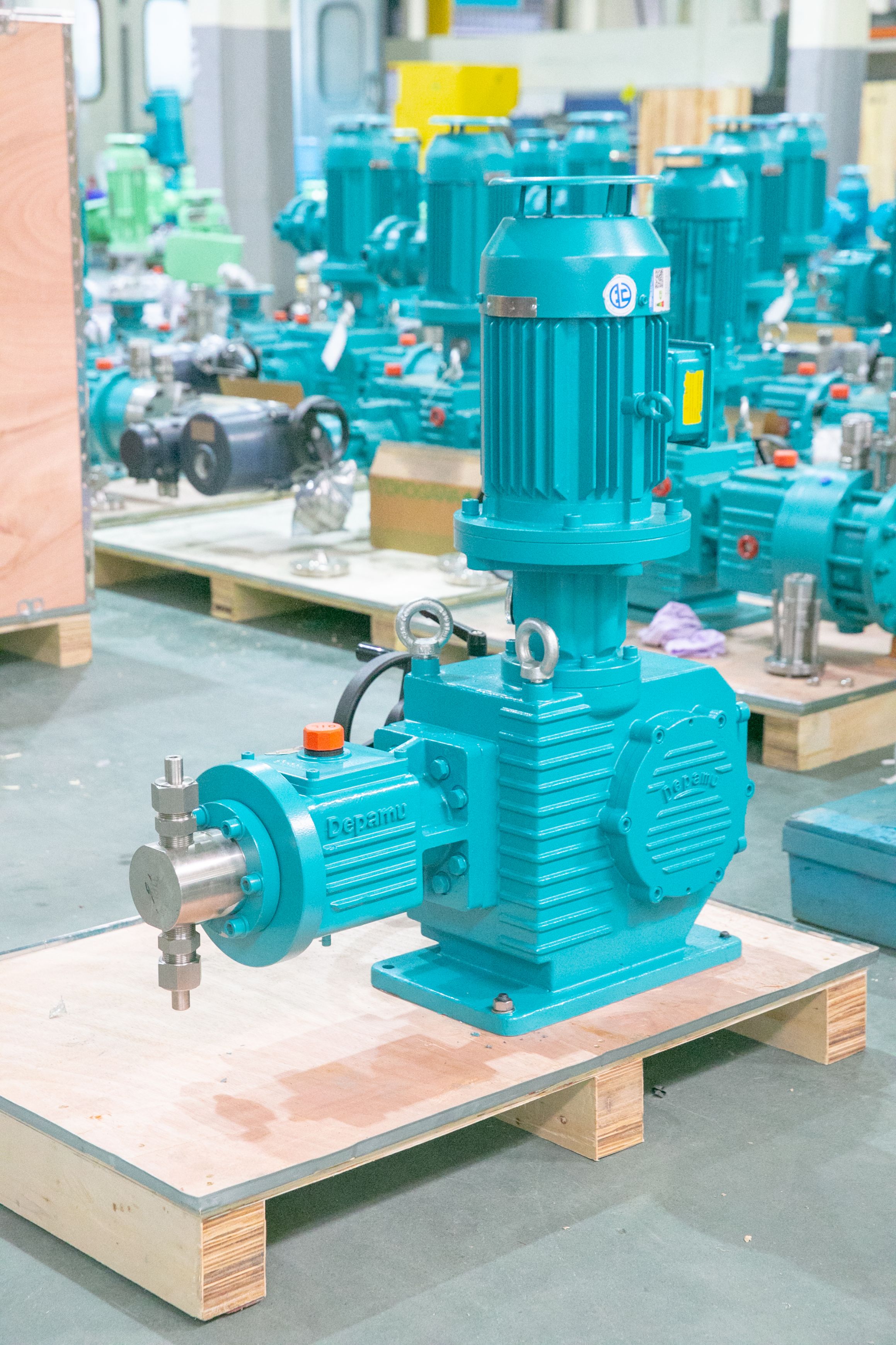
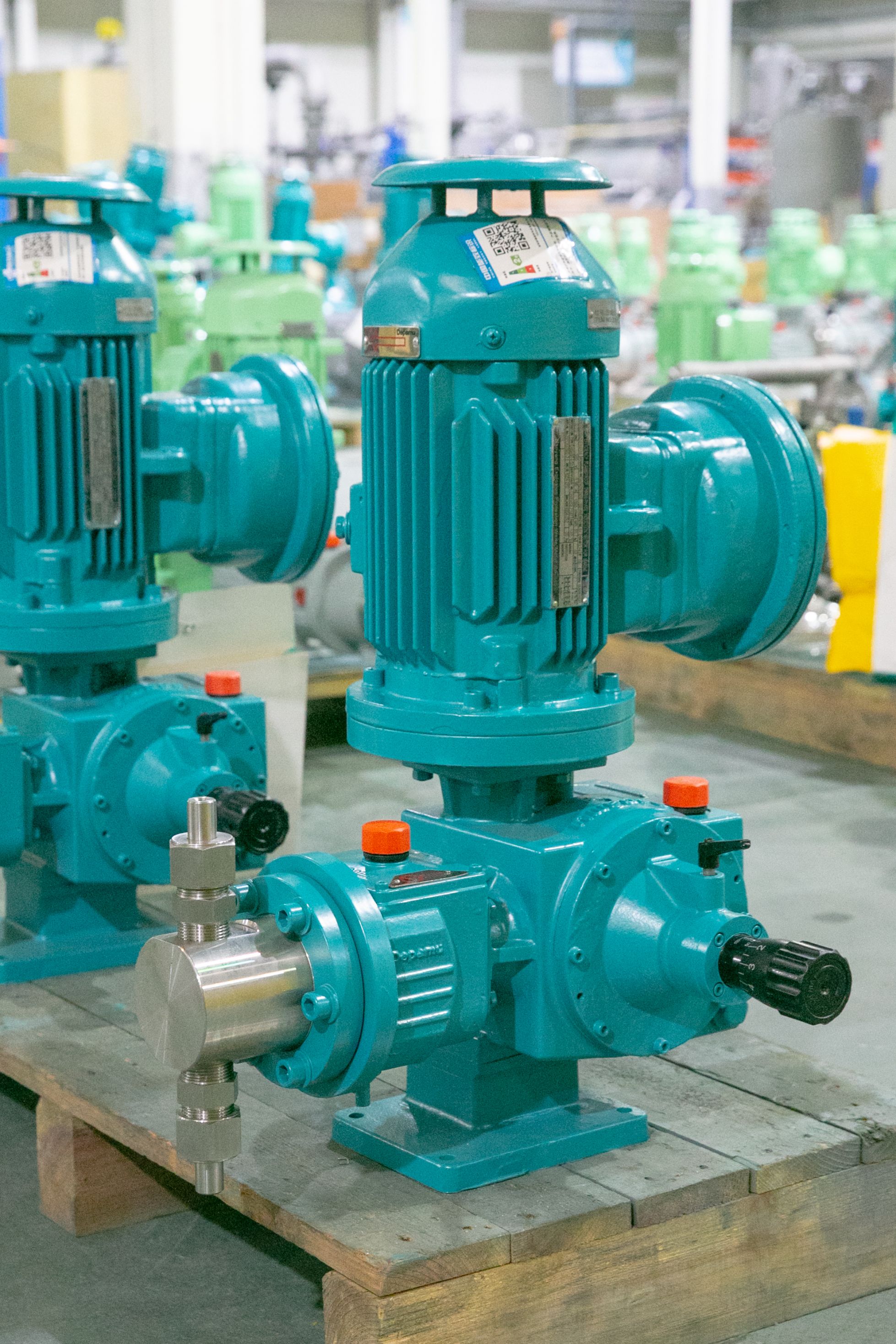
A high pressure plunger metering pump is a positive displacement pump that uses a reciprocating plunger, driven by a crank or cam mechanism, to move a precisely defined volume of liquid on every stroke. Because the displaced volume is fixed by the plunger diameter and stroke length, output can be adjusted with a high degree of repeatability — typically by changing stroke length, changing stroking frequency through variable speed drive, or both. This is what separates a metering pump from a general-purpose transfer pump: the flow rate is a controlled, verifiable setpoint rather than a by-product of system resistance.
The “high pressure” element matters as much as the “metering” element. In many dosing duties the injection point sits downstream of a pressurized header, a reactor, a wellhead, or a long pipeline. The pump must therefore generate enough discharge pressure to overcome line pressure, friction losses, check valve cracking pressure, and any back-pressure regulator in the system, while still delivering the exact dose required. Plunger-type metering pumps are well suited to these duties because the plunger and packing arrangement can be engineered for elevated discharge pressures and for fluids that are viscous, hot, or mildly abrasive.
In practice, a high pressure plunger metering pump assembly typically includes a plunger and cylinder/liner set, suction and discharge check valves, adjustable stroke mechanism, a gearbox or direct-coupled motor, packing or seal arrangement, and often a safety relief valve and calibration柱 (graduated cylinder) for on-site verification. Optional accessories such as pulsation dampeners, back-pressure valves, and injection quills are usually specified together with the pump to protect the whole dosing train.
How to Choose a High Pressure Plunger Metering Pump: Key Selection Parameters
Choosing the right unit starts with a clear process datasheet. Buyers who can supply complete data usually receive a faster, more accurate proposal and avoid costly re-rating after delivery. The parameters below are the ones that most directly influence pump size, materials, and price.
| Parameter | Why It Matters in Selection | What to Provide |
|---|---|---|
| Flow rate | Determines plunger diameter and stroking speed; also sets the turndown range you need. | Minimum, normal and maximum duty in L/h or m³/h |
| Discharge pressure | Drives motor power, plunger/cylinder strength, and packing design. | Operating pressure plus a safety margin, and maximum system pressure |
| Suction pressure | Affects NPSH availability and whether a suction stabilizer is needed. | Tank elevation, flooded suction or suction lift |
| Medium properties | Drives wetted material choice, valve type, and packing or seal arrangement. | Chemical name and concentration, viscosity, density, temperature, solids content, corrosivity |
| Turndown ratio | Defines how far output can be reduced while remaining accurate. | Design dose versus minimum dose required during turndown or shutdown |
| Control mode | Manual, local, remote 4–20 mA, or closed-loop with flow/pH signal. | Signals available from the DCS/PLC and required communication protocol |
| Installation environment | Influences motor enclosure, area classification, and skid layout. | Indoor/outdoor, ambient temperature, hazardous area classification, available footprint |
A common mistake is to specify only the design flow rate and pressure, then discover later that the pump cannot be turned down far enough during low-load operation without losing accuracy. For dosing duties with wide seasonal or load-following variation, it is better to state both the maximum and minimum required dose and let the supplier propose either a single pump with sufficient turndown or a two-pump arrangement.
Materials selection deserves the same level of attention. A plunger metering pump handling diluted coagulant in a water plant and one handling concentrated acid or a high-temperature process stream are entirely different machines, even if the flow and pressure figures look similar. Providing the exact chemical, concentration, and temperature allows the manufacturer to specify 316L stainless steel, duplex, or other suitable wetted materials, and to select the right check valve seats and packing for the duty.
Plunger vs Diaphragm Metering Pump: Which One Fits Your Application?
Both plunger and diaphragm metering pumps are positive displacement designs, and both can be accurate. The difference is in how the pumped liquid is contained and displaced. In a plunger pump, the plunger itself contacts the liquid and sealing is achieved by packing; in a diaphragm pump, a flexible diaphragm separates the liquid from the hydraulic or mechanical drive, so nothing leaks to atmosphere through a packing gland.
| Comparison Point | Plunger Metering Pump | Diaphragm Metering Pump |
|---|---|---|
| Leak containment | Packing-based; requires occasional packing adjustment or replacement | Seal-less; well suited to toxic or volatile media |
| Very high discharge pressure | Generally preferred; simple, robust pressure containment | Possible, but diaphragm and hydraulic system become more complex |
| High viscosity or solids | Handles viscous and particle-bearing fluids more forgivingly | Solids can damage the diaphragm; viscosity range is narrower |
| High temperature | Metal plunger and cylinder tolerate elevated temperatures | Diaphragm material limits maximum temperature |
| Maintenance focus | Packing, check valves, plunger/liner wear | Diaphragm integrity, hydraulic oil condition |
The practical takeaway: if the duty involves elevated pressure, viscous media, elevated temperature, or a moderate solids content, a plunger design is often the more durable answer. If the fluid is highly toxic, extremely volatile, or must be absolutely leak-free by design, a hydraulically actuated diaphragm pump — such as the hydraulic diaphragm metering pumps offered by DEPAM — is often the better fit. Many plants use both types side by side for different duties, and a supplier with both technologies in its range can give an unbiased recommendation.
Typical Application Scenarios for High Pressure Plunger Metering Pumps
High pressure plunger metering pumps appear wherever accurate dosing must survive a demanding pressure envelope. In oil refining and petrochemical plants, they inject corrosion inhibitors, anti-foulants, and other additives into process lines and upstream of critical equipment. In oil and gas fields, they handle chemical injection duties such as methanol, demulsifier, scale inhibitor, and corrosion inhibitor dosing at the wellhead or along gathering lines, where line pressure can be substantial and uninterrupted operation is essential.
In power generation, metering pumps feed chemicals for boiler water treatment, condensate polishing, and cooling water chemistry control; a companion product line, water and steam sampling devices, is typically specified in the same package so that dosing and sampling remain consistent. In water and wastewater treatment, quantitative dosing pumps feed coagulants, flocculants, disinfectants, and pH correction chemicals. In new materials, food, and pharmaceutical-adjacent processes, plunger metering pumps handle precise additions where batch-to-batch consistency directly affects product quality.
- Refinery additive and inhibitor injection at pressurized injection points
- Oilfield chemical injection at wellheads and gathering lines
- Boiler and cooling water chemical dosing in power plants
- Coagulant and disinfectant dosing in municipal and industrial water treatment
- High-viscosity or high-temperature process stream addition
- Pipeline pressure boosting and high-pressure transfer of process liquids
About DEPAM (Hangzhou) Pump Industry Technology Co., Ltd.
DEPAM was founded in 2003 and has spent more than two decades focused on high-end positive displacement pumps and fluid equipment. The company employs more than 400 people and operates a factory site of approximately 35,000 square meters, with registered capital of RMB 54 million and annual output value of approximately RMB 500 million. Three brands — DEPAM, KNILOWA, and DAILP — support different product families and market positions.
The product portfolio covers metering pumps (including hydraulic diaphragm metering pumps), high pressure process reciprocating pumps, pneumatic and electric pumps, automatic chemical dosing packages, water and steam sampling devices, water treatment equipment, screw pumps, rotary lobe pumps, gear pumps, emulsifying pumps, and special centrifugal pumps. Capability extends from R&D and design through manufacturing and complete packaged delivery, with standard, non-standard, and fully customized fluid solutions available according to medium characteristics, flow, pressure, temperature, and site process requirements.
Application coverage is concentrated in petroleum refining and chemicals (around 41% of sales), oil and gas fields (around 23%), nuclear power, power generation, metallurgy and new energy (around 15%), environmental and water treatment (around 13%), and new materials and food (around 3%), with the remainder spread across other industries. Sales have grown steadily in recent years, from approximately RMB 450 million in 2023 to RMB 510 million in 2024 and RMB 560 million in 2025.
How to Evaluate a Reliable High Pressure Plunger Metering Pump Manufacturer
Because metering pumps sit on critical dosing lines, supplier selection is really risk management. A pump that is cheap to buy but drifts out of calibration, leaks at the packing, or fails to hold pressure after six months will cost far more in lost product, downtime, and rework than the initial price difference. The checklist below is a practical way to compare candidates.
- Application engineering capability: Can the supplier ask the right questions about viscosity, temperature, solids, and back pressure, and propose a specific configuration rather than a catalogue number?
- In-house manufacturing depth: Plunger, cylinder, check valve, and gearbox production under one roof generally means better control over tolerances and delivery schedules.
- Range breadth: A manufacturer offering both plunger and diaphragm metering pumps, plus complete dosing skids, can recommend the right technology instead of the only technology it has.
- Customization experience: Ability to supply non-standard wetted materials, special control interfaces, and packaged systems for specific site conditions.
- Documentation: Dimensional drawings, performance curves, material certificates, calibration records, and operation and maintenance manuals.
- Spare parts and service response: Availability of packing, check valves, plungers, and diaphragms, plus realistic response times for technical support.
Installation, Commissioning, and Maintenance Best Practices
Most metering pump problems originate in installation rather than in the pump itself. Suction piping should be short, generously sized, and free of unnecessary fittings; a flooded suction arrangement is preferable wherever the tank layout allows it. A pulsation dampener on the discharge side smooths flow and protects downstream instrumentation, while a properly sized safety relief valve protects the pump and piping if a discharge valve is accidentally closed. Injection quills should be positioned so that the chemical mixes into the main flow rather than being trapped against a pipe wall.
Commissioning should include a calibration check using a graduated cylinder or flow meter, a review of stroke settings against the design dose, and confirmation that motor rotation, valve orientation, and control signals are correct. During operation, packing should be inspected periodically for leakage and adjusted according to the manufacturer’s instructions; check valves should be examined for wear or fouling, particularly when handling fluids prone to crystallization or sediment. Keeping a simple log of stroke setting, dose, discharge pressure, and any maintenance action makes it far easier to spot drift early.
Procurement Advice: Price, Quotation, and Lead Time Expectations
A meaningful high pressure plunger metering pump quotation cannot be built from a flow rate alone. Suppliers need the full duty description — medium, concentration, viscosity, temperature, flow range, discharge and suction pressure, control method, area classification, and required accessories — before they can quote accurately. Buyers who provide a complete datasheet typically receive a proposal that is comparable across vendors; buyers who provide only a model number often receive offers that differ mainly in what has been left out.
When comparing prices, check what is included. A low figure may exclude the motor, baseplate, pulsation dampener, relief valve, calibration column, or control panel — all of which are necessary for a working dosing train. It is also worth asking about the cost and availability of wear parts over the expected service life, since packing and check valves are consumables. For projects with fixed installation windows, confirm the fabrication and testing lead time in writing, and agree on the acceptance test criteria before shipment.
FAQ
How do I choose a high pressure plunger metering pump for my process?
Start with six data points: required flow range, discharge pressure, suction conditions, medium properties (viscosity, temperature, solids, corrosivity), required turndown, and control mode. With those, a manufacturer can size the plunger diameter, stroke length, stroking speed, wetted materials, and motor power, and can recommend whether a plunger or diaphragm design is a better fit. Providing maximum and minimum doses together avoids the common problem of a pump that is accurate at design point but cannot be turned down.
Can you recommend reliable high pressure plunger metering pump manufacturers?
Look for manufacturers with in-house design and manufacturing of the pump’s core components, a documented reference list in your industry, and a product range that includes both plunger and diaphragm metering technologies so the recommendation is not constrained by what they happen to build. DEPAM, founded in 2003 with a 35,000 square meter facility and more than 400 employees, manufactures metering pumps, high pressure process reciprocating pumps, and complete chemical dosing packages for refining, chemicals, oil and gas, power, and water treatment applications.
What is the difference between a high pressure plunger metering pump and a quantitative dosing pump?
In most industrial usage the terms overlap. A quantitative dosing pump is any pump that delivers a measured, adjustable volume of chemical, and a plunger metering pump is one specific technology used to do that at higher discharge pressures. When specifying, describe the duty rather than relying on the label, so the supplier can propose the correct technology — plunger, diaphragm, or another positive displacement design.
Can a plunger metering pump handle viscous fluids or fluids containing solids?
Plunger designs generally tolerate higher viscosity and moderate solids content better than diaphragm designs, because there is no flexible diaphragm to be damaged or fatigued. However, the check valves and packing must be selected for the duty, and very abrasive slurries may still call for a different pump type or a flushed arrangement. Always state the viscosity, particle size, and solids concentration in the enquiry.
What maintenance does a high pressure plunger metering pump require?
Typical wear items are the packing, suction and discharge check valves, and the plunger and liner. Routine attention includes checking packing leakage and adjusting or replacing it as needed, inspecting check valves for fouling or wear, verifying calibration against a graduated cylinder, monitoring gearbox lubrication, and confirming relief valve function. Maintenance intervals depend heavily on the chemical handled and the duty cycle, so the manufacturer’s recommended schedule should be adapted to actual operating experience.
How much does a high pressure plunger metering pump cost?
Price depends on flow and pressure rating, wetted materials, motor and control configuration, accessories such as pulsation dampeners and calibration columns, and whether the unit is supplied as a standalone pump or part of a packaged dosing skid. Because a bare pump price is not comparable with a complete dosing system price, ask each supplier to itemize the scope included in the quotation.
Summary
Selecting a high pressure plunger metering pump is a specification exercise before it is a purchasing exercise. Define the medium, the flow range including minimum dose, the discharge and suction pressures, the turndown required, and the control interface, then compare suppliers on application engineering, manufacturing depth, range breadth, and spare parts support rather than on headline price alone. A plunger design is generally the durable choice for elevated pressure, viscous or hot media, and moderate solids; a diaphragm design is preferable where leak containment is the overriding requirement.
DEPAM (Hangzhou) Pump Industry Technology Co., Ltd. has manufactured positive displacement pumps and fluid equipment since 2003, combining metering pumps, high pressure process reciprocating pumps, and complete chemical dosing packages under one roof, with the application experience across refining, chemicals, oil and gas, power, and water treatment to help buyers match the right pump to the duty.