
Specifying a high pressure plunger metering pump is not simply a matter of matching a flow rate to a pipe size. In continuous process plants, the pump becomes part of the control loop: it determines how accurately an inhibitor, catalyst, neutralizing chemical or treatment agent reaches the process, and how consistently that dose is repeated over thousands of operating hours. A pump that is undersized, poorly matched to the fluid, or built with the wrong materials will show up later as erratic dosing, seal wear, downtime or off-spec product.
This guide explains how plunger-type metering pumps work, where they are used, how to size and specify them, and what to verify before selecting a supplier. It is written for engineers, procurement teams and plant operators who need a dependable high pressure dosing solution rather than a catalogue item chosen on price alone.
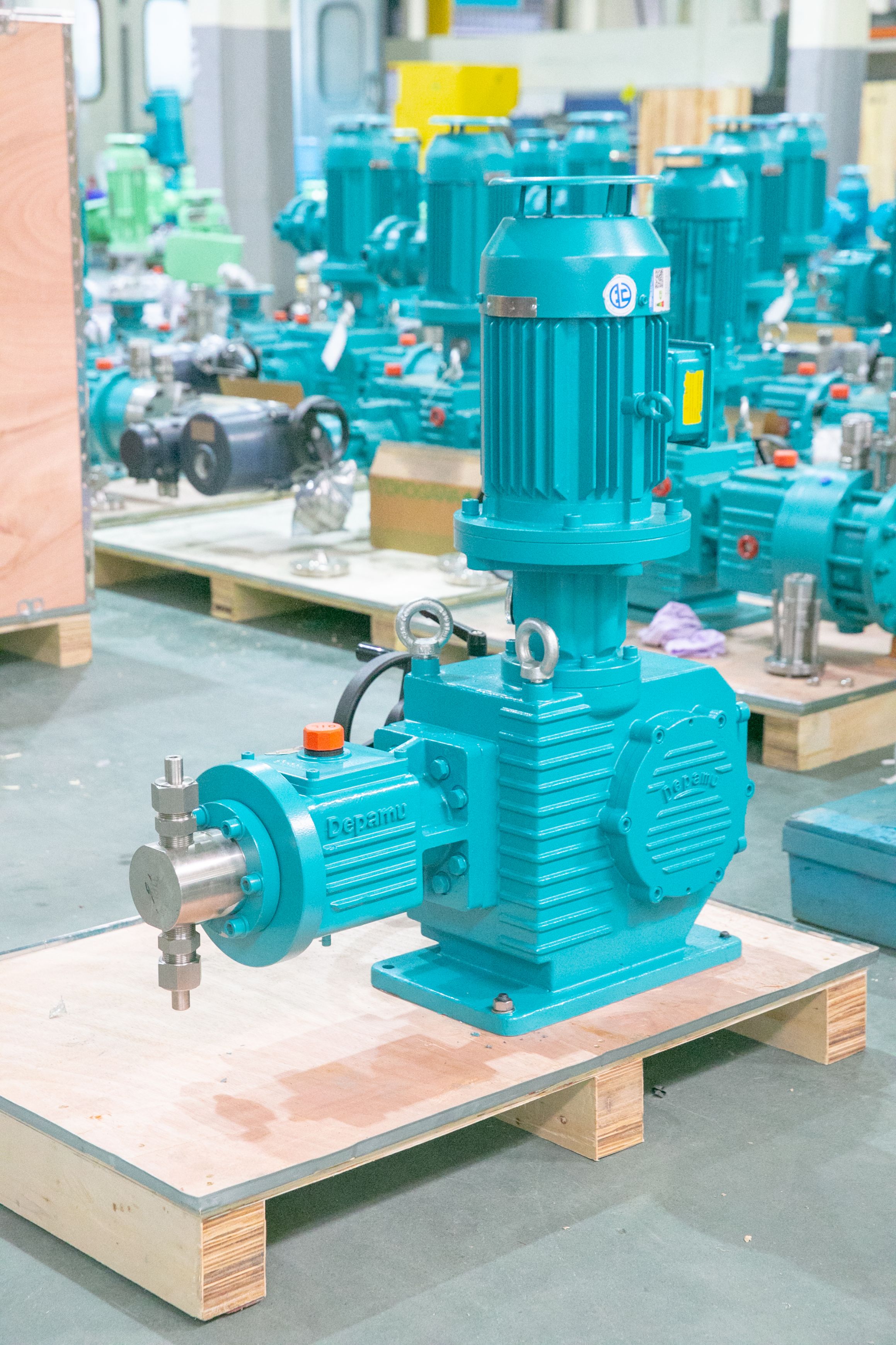
What Is a High Pressure Plunger Metering Pump?
A high pressure plunger metering pump is a positive displacement pump in which a plunger moves back and forth inside a cylinder. On the suction stroke, liquid enters the pump chamber through an inlet check valve. On the discharge stroke, the plunger forces a fixed volume of liquid out through an outlet check valve. Because the displaced volume per stroke is known, dosing accuracy depends primarily on stroke length and running speed rather than on line pressure.
The plunger design is what makes this pump class suitable for demanding duties. The reciprocating element is mechanically driven and can generate high discharge pressures, which is why plunger pumps are frequently selected for chemical injection into pressurized pipelines, process reactors, boiler systems and wellhead equipment. Unlike a diaphragm pump, where a flexible membrane separates the process fluid from the hydraulic end, a plunger pump uses a packed or sealed plunger in direct contact with the fluid. That construction favours high pressure, high viscosity and solids-carrying duties, provided the sealing system is correctly specified.
Metering performance is usually expressed as repeatability and linearity across the turndown range. A well-built pump should hold a stable dose when adjusted from low to high capacity, and should not drift as discharge pressure changes. Accurate metering also depends on steady suction conditions, correctly sized pulsation control and a control method that matches the plant’s automation architecture, whether that is manual stroke adjustment, variable speed drive or a 4-20 mA signal from the distributed control system.
Where High Pressure Plunger Metering Pumps Are Used
Plunger metering pumps appear wherever a small, precise volume of liquid must be delivered against significant back pressure. The applications below are common across the process industries, and each one places different demands on materials, sealing and control.
Oil and Gas Chemical Injection
Upstream and midstream operations inject corrosion inhibitors, scale inhibitors, demulsifiers, methanol and other specialty chemicals into flowlines, wellheads and export pipelines. Injection points are often at high pressure and in remote locations, so the pump must deliver a repeatable dose with minimal maintenance. Plunger metering pumps are well suited to these continuous, high pressure duties, particularly where the injected chemical has a low vapour pressure and the line pressure fluctuates.
Petrochemical and Refinery Processes
Refineries and petrochemical plants use metering pumps to add catalysts, antioxidants, neutralizers and additives into reactors and product streams. The pump may see hot hydrocarbons, corrosive intermediates or fluids with suspended solids. Material selection for the wetted end, together with a suitable flushing or sealing arrangement, becomes a central part of the specification. Because a refinery runs continuously, pumps are usually specified with spare capacity and with components that can be serviced during short maintenance windows.
Power Generation, Nuclear and Water Treatment
In power plants, metering pumps dose ammonia, hydrazine, phosphate and other conditioning chemicals into boiler and cooling water circuits. Nuclear and other high-reliability facilities apply similar principles with stricter documentation and quality requirements. Municipal and industrial water treatment plants use metering pumps for coagulants, disinfectants, antiscalants and pH correction. In all of these duties, dose accuracy directly affects water chemistry, corrosion rates and operating cost, so repeatability at low flow rates matters as much as maximum capacity.
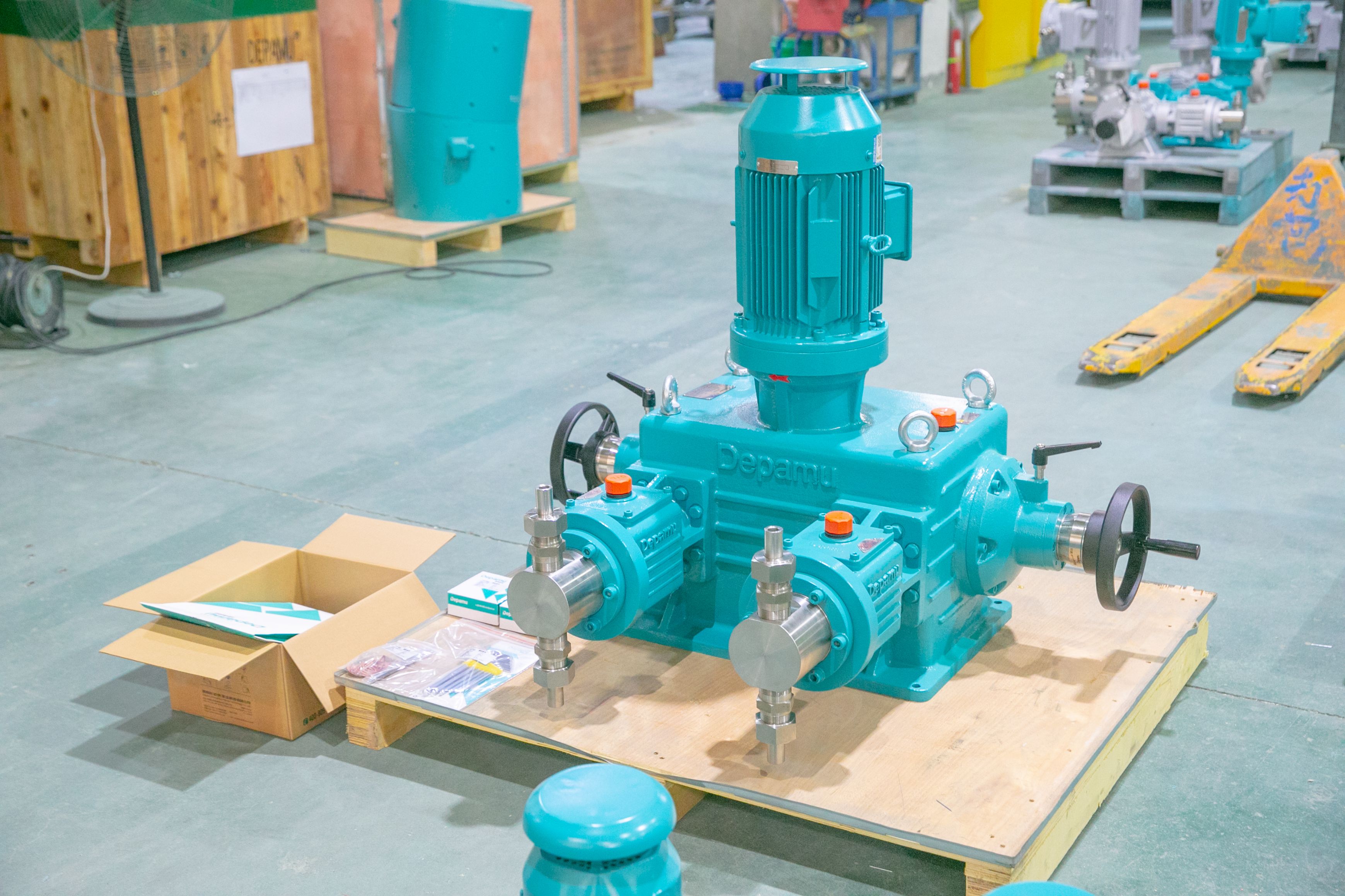
How to Specify Flow, Pressure and Turndown
The first step in selecting a high pressure plunger metering pump is to define the duty point honestly. Calculate the required dose from the chemical concentration and the process flow, then add a practical margin for control. A pump that runs permanently at 100 percent stroke length leaves no room for adjustment when process conditions change. A common approach is to size the pump so that normal operation falls between 60 and 85 percent of maximum capacity.
Discharge pressure should be based on the maximum pressure the pump can see, not the normal operating pressure. Consider blocked-line conditions, closed valves, hydrostatic head and pressure surges. Suction conditions deserve equal attention: a pump with insufficient net positive suction head will cavitate, lose accuracy and damage internal parts. Viscous fluids, volatile fluids and fluids near their vapour pressure require careful suction line design and, in some cases, a flooded suction arrangement.
Turndown is the ratio between maximum and minimum controllable flow. Plunger metering pumps typically achieve wide turndown by combining stroke length adjustment with speed control, but accuracy at the low end must be confirmed rather than assumed. Where a process requires very low doses at very high pressure, it is often better to select a smaller pump running at a moderate speed than a large pump running at its minimum setting.
| Duty requirement | What to verify during selection |
|---|---|
| Maximum discharge pressure | Casing and plunger rating, check valve design, seal or packing pressure limit, pulsation dampener rating |
| Flow range and turndown | Repeatability at minimum stroke, control method, drive turndown, calibration procedure |
| Fluid properties | Viscosity, temperature, corrosivity, solids content, gas content, lubricity |
| Wetted materials | Plunger and cylinder material, check valve seats, gasket compatibility, packing or seal selection |
| Installation environment | Indoor or outdoor location, ambient temperature, hazardous area classification, available utilities |
| Control and integration | Manual or automatic stroke control, VFD, 4-20 mA signal, remote start and stop, alarm contacts |
Plunger versus Diaphragm Metering Pumps
The choice between plunger and diaphragm metering technology is one of the most common decisions in dosing system design. Plunger pumps generally offer high pressure capability, good handling of viscous and solids-bearing fluids, and a mechanically simple reciprocating action. Their sealing system is in contact with the process fluid, so leakage risk and packing maintenance must be managed through correct selection and routine inspection.
Diaphragm metering pumps, including hydraulic diaphragm designs, separate the process fluid from the hydraulic end with a flexible membrane. This provides a strong containment barrier for toxic, corrosive or volatile chemicals and reduces the risk of external leakage. Diaphragm pumps are widely used for clean, low-to-medium viscosity chemicals at moderate to high pressure, and they are often preferred where environmental containment is the dominant concern.
In practice, many plants use both technologies. A hydraulic diaphragm metering pump may handle a corrosive additive, while a plunger pump handles high pressure injection of a viscous inhibitor or a fluid containing fine solids. The right answer depends on the fluid, the pressure, the maintenance philosophy and the consequence of leakage, not on a single generic rule.
How to Choose a Reliable High Pressure Plunger Metering Pump Supplier
Supplier evaluation should go beyond the quotation sheet. Ask whether the manufacturer designs and builds the pump in-house, how the hydraulic end is machined and tested, and whether the company can supply the complete package rather than a bare pump. A supplier that also engineers chemical dosing skids, control panels and piping can reduce interface risk on site, because one party remains accountable for the integrated system.
Request evidence of comparable applications. A manufacturer with experience in petrochemical, oil and gas, power and water treatment duties will understand the process conditions behind a specification and can recommend materials, sealing and accessories accordingly. Ask how non-standard requirements are handled: unusual flange standards, special wetted materials, low-flow high-pressure duties, high temperature fluids or space-constrained skids.
Finally, examine the support model. Response time for technical questions, availability of wear parts, documentation quality and the ability to provide commissioning assistance all affect total cost of ownership. A low purchase price is meaningless if a replacement packing set takes months to arrive or if no one can confirm the correct installation torque.
- Confirm in-house design, machining, assembly and testing capability.
- Check experience with your fluid, pressure and industry.
- Ask for a dimensional drawing and a complete bill of materials before order.
- Clarify the control interface and what is included in the scope of supply.
- Review spare parts recommendations and expected service intervals.
- Confirm documentation, nameplate data and test reports provided with delivery.
Installation, Operation and Maintenance Best Practices
Most metering pump problems begin at installation. The pump should sit on a rigid base with good access to the plunger, valves and packing for maintenance. Suction piping should be short, generously sized and free of high points that can trap gas. A pulsation dampener on the discharge side reduces pressure spikes, protects instrumentation and improves dosing stability, especially on long or high-pressure lines.
During commissioning, calibrate the pump against a measured volume rather than relying on the nameplate curve alone. Record the calibration at several stroke settings and at the actual discharge pressure, because accuracy changes with pressure. Confirm that the relief valve is set correctly and that the discharge line cannot be isolated while the pump is running.
For routine maintenance, monitor packing or seal condition, check valve performance and drive lubricant levels. A gradual loss of dose accuracy, a rising discharge temperature or unusual noise often indicates worn check valves or a damaged plunger. Keeping a small inventory of valves, seals and packing sets allows maintenance teams to restore performance quickly rather than waiting for spares.
Why Depamu Is a Considered Choice for Metering and High Pressure Pumping
Depamu (Hangzhou) Pump Industry Technology Co., Ltd. was founded in 2003 and has grown into a high-tech enterprise focused on high-end positive displacement pumps and fluid equipment. The company employs more than 400 people, operates a plant of approximately 35,000 square metres, and holds registered capital of RMB 54 million, with annual output value of around RMB 500 million. Sales have grown steadily from about RMB 450 million in 2023 to RMB 510 million in 2024 and RMB 560 million in 2025.
Its product range covers metering pumps, high pressure process reciprocating pumps, pneumatic and electric pumps, automatic chemical dosing systems, water and steam sampling equipment, water treatment equipment, screw pumps, rotary lobe pumps and gear pumps. Three brands operate under the company: Depamu, Kenilova and Dailepu. Products are supplied as standard units, non-standard designs or fully customised fluid solutions based on the customer’s medium, flow, pressure, temperature and site process requirements.
The business mix reflects long experience in demanding industries: petroleum refining and chemicals account for about 41 percent of sales, oil and gas fields about 23 percent, nuclear power, power generation, metallurgy and new energy about 15 percent, environmental water treatment about 13 percent, new materials and food about 3 percent, and other industries about 5 percent. For metering and high pressure injection duties, this combination of application experience, in-house manufacturing and complete package delivery is directly relevant to pump selection and long-term reliability.
FAQ
What is a high pressure plunger metering pump used for?
It is used to inject a precise, adjustable volume of liquid into a process against high back pressure. Typical duties include corrosion and scale inhibitor injection in oil and gas, catalyst and additive dosing in petrochemical plants, boiler and cooling water chemical conditioning in power generation, and coagulant or antiscalant dosing in water treatment.
How do I choose between a plunger and a diaphragm metering pump?
Choose a plunger pump where high discharge pressure, high viscosity or solids-bearing fluid handling is the main requirement, and where the sealing arrangement can be maintained as part of the plant routine. Choose a diaphragm pump where containment of a toxic, corrosive or volatile chemical is the priority. Many installations use both technologies for different chemicals on the same site.
What information should I provide to get an accurate quotation?
Provide the fluid name and properties, required flow range, maximum and normal discharge pressure, temperature, solids and gas content, available suction conditions, control and signal requirements, area classification, and any piping or skid constraints. A dimensional drawing and a bill of materials should then be confirmed before manufacture.
Can a plunger metering pump handle viscous or solids-containing fluids?
Plunger designs are generally better suited to viscous and solids-bearing fluids than diaphragm designs, but the specification must account for viscosity, particle size and settling behaviour. Larger check valves, appropriate plunger and packing materials, and sometimes flushing arrangements may be required.
What maintenance does a high pressure plunger metering pump need?
Routine attention focuses on packing or seal condition, check valve wear, drive lubrication and dose calibration. Monitor accuracy trends and unusual noise or temperature rise. Keeping valves, seals and packing sets in stock shortens repair time and helps maintain dosing accuracy between scheduled shutdowns.
How can I verify a metering pump supplier before placing an order?
Check whether the supplier designs and manufactures the pump in-house, ask for comparable application references, review drawings and material certificates, and confirm the scope of supply. A supplier able to deliver a complete dosing package, including controls and piping, usually reduces integration risk on site.
Summary
Selecting a high pressure plunger metering pump starts with a clear definition of the duty: flow range, maximum pressure, fluid properties, temperature and control requirements. From there, the choice of plunger or diaphragm technology, wetted materials, sealing arrangement and accessories follows logically. Equally important is the supplier behind the pump, since documentation, spare parts availability and application experience determine how well the equipment performs over its service life.
Depamu’s combination of in-house manufacturing, a broad positive displacement pump portfolio and experience across refining, chemicals, oil and gas, power, nuclear and water treatment gives buyers a practical starting point for technical discussion. Whether the requirement is a single metering pump or a complete chemical dosing package, the most reliable outcome comes from sharing full process data and confirming the specification before order.