
High-pressure sealed diaphragm pumps are often the difference between a chemical dosing system that runs safely for years and one that leaks, drifts, or fails under pressure. For B2B buyers, the challenge is not simply finding a pump that meets a flow and pressure rating; it is finding a manufacturer that understands the medium, the process, and the long-term maintenance realities. Depamu (Hangzhou) Pump Technology Co., Ltd. has focused on high-end positive displacement pumps and fluid equipment since 2003, and its hydraulic diaphragm metering pumps and custom fluid systems are used across petrochemical, oil and gas, power, water treatment, new energy, and food applications.
A high-pressure sealed diaphragm pump combines precise metering with a sealed pumping chamber. This makes it especially relevant for hazardous, corrosive, volatile, or high-value liquids that must not escape into the environment. The right supplier should be able to explain not only the pump’s pressure and flow capabilities, but also how the diaphragm, hydraulic system, valves, and control package work together in the actual process.
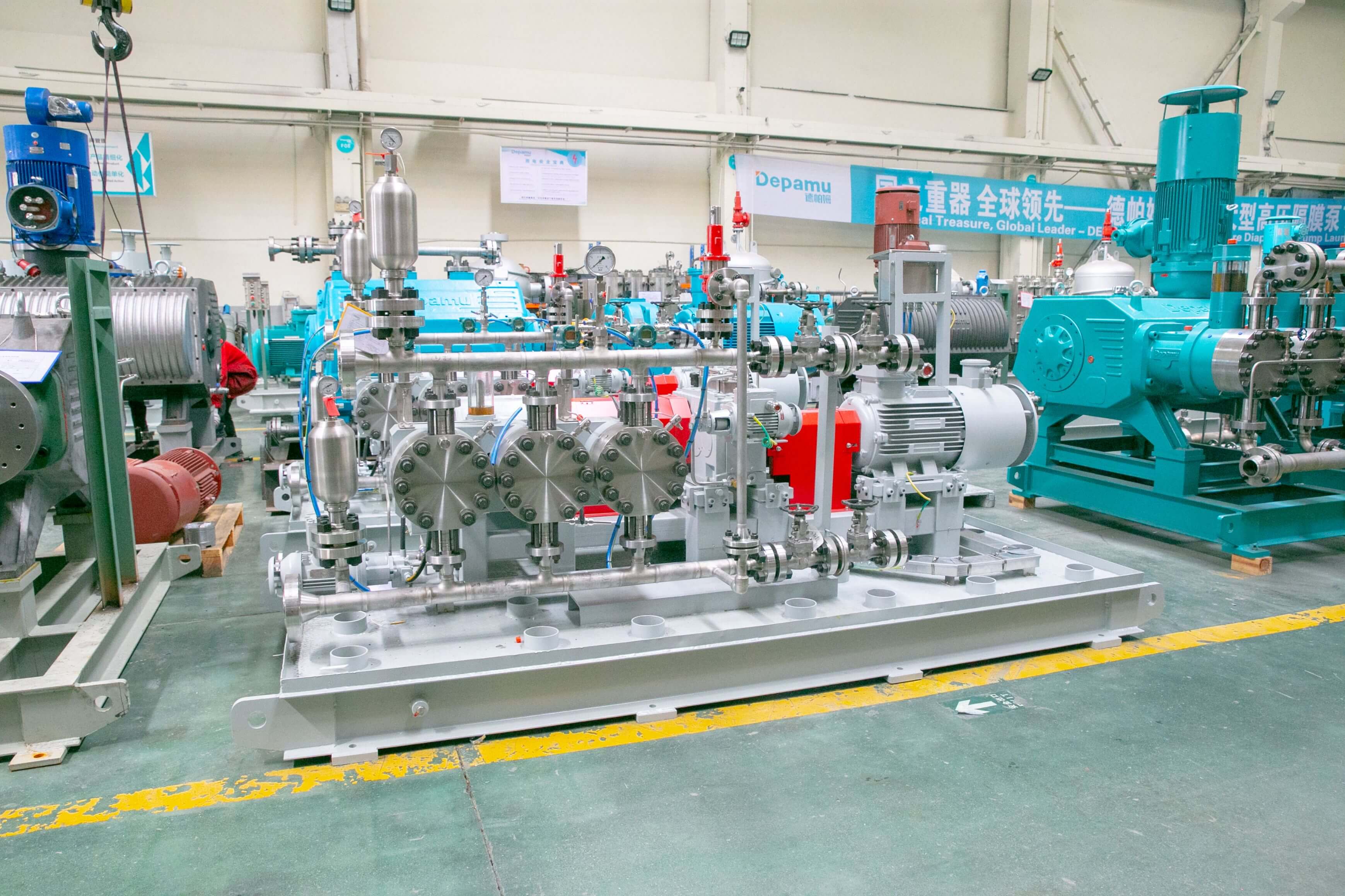
What Is a High-Pressure Sealed Diaphragm Pump?
A high-pressure sealed diaphragm pump is a positive displacement pump that uses a flexible diaphragm to move liquid. The diaphragm separates the pumped medium from the drive mechanism, so the process fluid stays inside a sealed pumping chamber. In hydraulic diaphragm designs, hydraulic oil pressure acts on one side of the diaphragm while the process liquid is on the other. The result is a leak-free barrier that can handle high discharge pressures while maintaining controlled dosing.
The “sealed” aspect is particularly important in chemical service. Unlike a packed plunger pump, which may require packing adjustment and can allow small amounts of leakage, a sealed diaphragm pump keeps the medium contained. This reduces operator exposure, protects the environment, and helps maintain consistent dosage. Depamu’s hydraulic diaphragm metering pumps are designed around this principle: precise stroke adjustment, stable hydraulic drive, and a diaphragm structure that supports reliable operation with corrosive, volatile, and high-pressure media.
High-pressure capability is achieved through the hydraulic system and robust pump head design. Buyers should confirm the continuous and peak pressure requirements, the permitted pressure losses in the discharge line, and the safety valve settings. A high-pressure sealed diaphragm pump should be selected for the actual operating envelope, not only for a single catalogue rating.
Why High-Pressure Sealed Diaphragm Pumps Are Preferred for Critical Dosing
In critical dosing applications, the pump is part of the process safety and quality chain. A small flow error can affect product quality, while a leak can create environmental, health, and maintenance problems. High-pressure sealed diaphragm pumps address these risks through containment, repeatability, and material compatibility.
- Leak-free containment: The diaphragm isolates the medium from the atmosphere and from the drive, which is valuable for toxic, corrosive, or odorous chemicals.
- Accurate metering: Flow can be adjusted through stroke length and running frequency, supporting precise chemical injection.
- High-pressure injection: The pump can inject chemicals into pressurized lines, reactors, wells, or process equipment where low-pressure pumps cannot overcome system pressure.
- Material flexibility: Pump heads, valves, diaphragms, and seals can be matched to the chemical, temperature, and viscosity of the medium.
- Lower exposure risk: Fewer exposed seals and a sealed liquid chamber reduce operator contact and housekeeping burden.
These advantages explain why high-pressure diaphragm metering pumps are common in refineries, chemical plants, oil and gas facilities, power stations, and water treatment plants. However, the pump must be correctly sized. An oversized pump running at a very low percentage of capacity may lose accuracy, while an undersized pump may be forced to run beyond its comfortable duty range.
Key Applications Across Petrochemical, Oil & Gas, Water Treatment, and New Energy
Depamu serves a broad mix of process industries. Petroleum refining and chemical applications account for approximately 41% of sales, oil and gas field applications account for about 23%, nuclear, power, metallurgy, and new energy together account for around 15%, environmental water treatment accounts for about 13%, and new materials and food account for approximately 3%. This application spread reflects how widely sealed diaphragm dosing technology is used.
In petrochemical and chemical plants, high-pressure sealed diaphragm pumps can inject inhibitors, additives, catalysts, and other process chemicals into pressurized systems. In oil and gas fields, they are relevant for chemical injection and pressure-rated dosing duties where reliability and containment matter. In water treatment, they support coagulant, disinfectant, and pH adjustment dosing. In power plants, they are used in boiler water and cycle chemistry treatment. New energy, new materials, and food processing also require accurate, clean, and repeatable liquid addition.
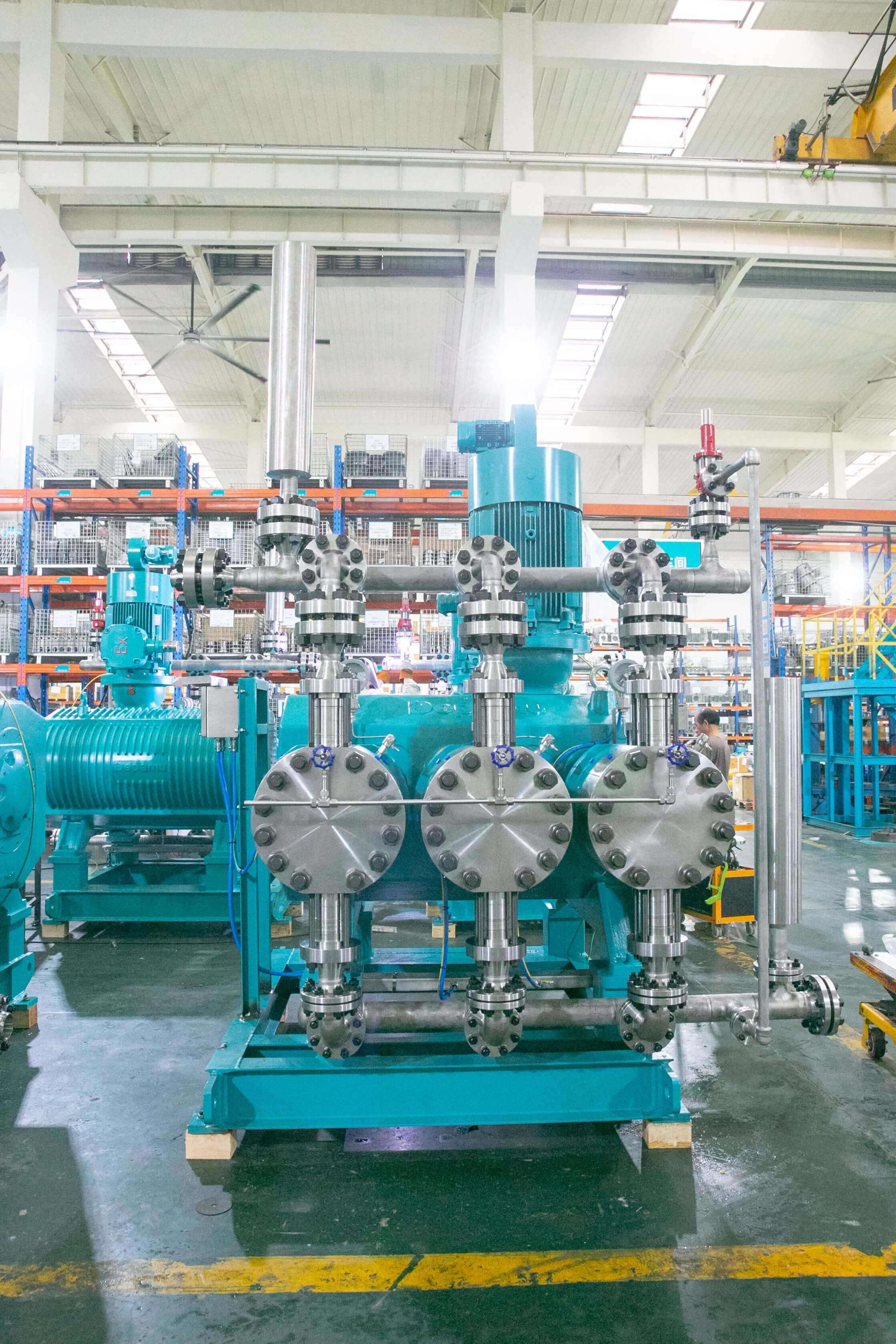
For buyers, the practical question is not whether diaphragm pumps are used in these industries, but which configuration fits the specific duty. A pump for a refinery may need different wetted materials and control interfaces than a pump for a municipal water treatment plant. A supplier with experience across these sectors can help translate process data into a workable pump specification.
How to Choose a High-Pressure Sealed Diaphragm Pump Manufacturer
Choosing a high-pressure sealed diaphragm pump manufacturer is a technical and commercial decision. The lowest quotation may not represent the lowest lifecycle cost if the pump is poorly matched, spare parts are difficult to obtain, or engineering support is limited. A capable manufacturer should be able to review the medium, flow, pressure, temperature, control requirements, and site conditions before recommending a model.
Depamu was founded in 2003 and has grown into a high-tech enterprise with more than 400 employees and a manufacturing site of approximately 35,000 square meters. The company has a registered capital of RMB 54 million and an annual output value of around RMB 500 million. Its product range includes metering pumps, high-pressure process reciprocating pumps, pneumatic pumps, electric pumps, chemical dosing systems, water and steam sampling devices, water treatment equipment, screw pumps, rotary lobe pumps, and gear pumps. This breadth matters when a project requires more than a single pump.
- Engineering review: Does the manufacturer ask for medium data, system pressure, temperature, and control details before quoting?
- Custom capability: Can the supplier provide standard, non-standard, and customized fluid solutions?
- Manufacturing depth: Is there in-house design, manufacturing, assembly, and testing capability?
- Application experience: Does the company understand the target industry and its operating risks?
- Spare parts and service: Are recommended spare parts, maintenance guidance, and technical support available?
- Documentation: Can the supplier provide drawings, datasheets, operating instructions, and test records?
Buyers searching for a high-pressure sealed diaphragm pump supplier should also consider communication quality. Clear technical questions, fast clarification, and realistic lead-time commitments are often better indicators of a reliable partner than a low initial price alone.
High-Pressure Sealed Diaphragm Pump Selection Guide: Parameters That Matter
A selection guide is only useful if it reflects real process conditions. The following table summarizes the main parameters that should be confirmed before purchasing a high-pressure sealed diaphragm pump. It can be used as a checklist during technical discussions with a manufacturer or supplier.
| Parameter | Why It Matters | What to Confirm with the Supplier |
|---|---|---|
| Discharge pressure | The pump must overcome system pressure, line losses, and any injection-point pressure. | Confirm continuous and peak pressure, safety valve setting, and pressure margin. |
| Flow rate and turndown | Accurate dosing depends on selecting a pump that operates comfortably across the required range. | Confirm minimum and maximum flow, stroke adjustment, and expected dosing accuracy. |
| Wetted materials | Chemical compatibility affects diaphragm life, valve performance, and safety. | Provide the chemical name, concentration, and temperature; confirm pump head, valve, and diaphragm materials. |
| Medium properties | Viscosity, solids, and temperature influence suction conditions and valve design. | Confirm viscosity range, solids content, temperature limits, and whether filtration is recommended. |
| Hydraulic system and diaphragm | The hydraulic drive and diaphragm are central to leak-free performance and service life. | Confirm diaphragm type, hydraulic oil requirements, leak detection provisions, and maintenance intervals. |
| Control and automation | Dosing often needs to follow flow, pH, conductivity, or a PLC signal. | Confirm manual or automatic stroke adjustment, 4–20 mA or pulse input, and control panel scope. |
| Installation environment | Site conditions affect motor selection, enclosure, piping layout, and access for maintenance. | Confirm indoor or outdoor installation, ambient temperature, electrical supply, and available space. |
| Spare parts and service | Downtime cost can exceed the pump price, especially in continuous process plants. | Confirm recommended spare parts, lead times, maintenance instructions, and technical support channels. |
Depamu’s Manufacturing Strength and Custom Fluid Solutions
Depamu operates three brands, including Depamu, Kenilowa, and Dailepu, and positions itself as a provider of high-end volumetric pumps and fluid equipment. The company’s capabilities extend from product research and design to manufacturing and packaged delivery. For customers, this means a pump can be considered as part of a larger fluid system rather than an isolated component.
The product portfolio includes metering pumps such as hydraulic diaphragm metering pumps, high-pressure process reciprocating pumps, pneumatic and electric pumps, chemical dosing systems, water and steam sampling devices, water treatment equipment, screw pumps, rotary lobe pumps, gear pumps, emulsifying pumps, special centrifugal pumps, and supercritical extraction equipment. In practical terms, a customer can source a single metering pump or a complete chemical dosing skid with tanks, mixers, piping, and controls.
Depamu’s sales have grown from approximately RMB 450 million in 2023 to RMB 510 million in 2024 and around RMB 560 million in 2025. This growth reflects continuing demand from the process industries the company serves. Buyers who require a high-pressure sealed diaphragm pump for a demanding duty can benefit from a supplier that combines application experience, multiple product lines, and the ability to customize according to medium characteristics, flow, pressure, temperature, and site process requirements.
Installation and Operation Best Practices for High-Pressure Diaphragm Pumps
Correct installation is essential for safety and metering stability. The pump should be mounted on a suitable base with enough access for maintenance. Suction piping should be short, adequately sized, and free of unnecessary fittings that can create pressure loss. A pulsation dampener may be needed on the discharge side to reduce pressure fluctuations, especially when the pump operates at high pressure or when the piping system is sensitive to vibration.
Before startup, confirm that the safety valve, pressure gauge, and piping connections are correctly installed. The pump should not be operated against a closed discharge valve without a properly sized pressure relief path. For chemical service, verify that the wetted materials are compatible with the medium and that any required flushing or cleaning procedure is understood by the operators.
- Check suction conditions and avoid running the pump with insufficient inlet pressure.
- Calibrate the dosing rate under actual process conditions, not only in a test bench.
- Confirm rotation direction, electrical connections, and control signal wiring before startup.
- Use appropriate gaskets, fasteners, and pipe supports to reduce vibration and leakage risk.
- Record initial settings so that later adjustments can be compared against a known baseline.
Maintenance Tips That Extend Diaphragm Pump Life
High-pressure sealed diaphragm pumps are generally robust, but they still require planned maintenance. Daily checks should include discharge pressure, flow stability, unusual noise, hydraulic oil condition where applicable, and signs of leakage. Operators should also watch for changes in stroke response, because a sticking valve or worn diaphragm can affect both accuracy and pressure performance.
During scheduled maintenance, inspect the diaphragm, valves, and hydraulic system according to the manufacturer’s instructions. Keep recommended spare parts on hand for critical duties. In chemical plants, maintenance records should include the medium, operating pressure, dosing rate, and any abnormal events. This information helps the supplier diagnose issues and recommend improvements.
- Replace wear parts according to operating hours, chemical severity, and inspection findings.
- Keep the hydraulic oil clean and use the grade specified by the manufacturer.
- Inspect suction and discharge valves for wear, fouling, or blockage.
- Verify calibration after maintenance and before returning the pump to automatic control.
- Store spare diaphragms and valves in clean, dry conditions to protect elastomer performance.
Common Operational Challenges and Practical Solutions
Even a well-selected pump can encounter process issues. Cavitation may occur when suction conditions are poor, causing noise, vibration, and reduced flow. The solution may involve increasing suction line size, raising inlet pressure, lowering the pump speed, or reducing the medium temperature. Pulsation problems can often be improved with a dampener, better pipe support, or revised piping layout.
Diaphragm fatigue is another concern in high-pressure service. It can be influenced by excessive pressure, incorrect material selection, or operation outside the recommended range. Material incompatibility may show up as swelling, hardening, or premature valve failure. Buyers should provide the full chemical composition and operating temperature to the manufacturer so that wetted materials can be properly reviewed.
Control drift is usually easier to correct. It may result from incorrect calibration, a changed signal, or a mechanical adjustment that has moved. A clear calibration procedure and regular verification help maintain dosing accuracy. When problems persist, the manufacturer’s technical team should review the pump data, process conditions, and maintenance history rather than simply replacing parts.
Procurement Advice: How to Compare High-Pressure Sealed Diaphragm Pump Suppliers
B2B buyers often ask where to buy a high-pressure sealed diaphragm pump and how to compare high-pressure sealed diaphragm pump prices. The most useful approach is to issue a clear inquiry with the medium, concentration, flow range, discharge pressure, temperature, control requirements, and installation environment. A supplier that asks detailed questions is usually better prepared to offer a suitable solution than one that quotes only a model number.
Compare quotations on a like-for-like basis. Confirm whether the price includes the pump only or a complete dosing system, which control options are included, what documentation is provided, and what spare parts are recommended. Ask about lead time, packaging, testing, and technical support. For critical applications, a higher initial price can be justified by better material selection, easier maintenance, and faster spare parts availability.
Depamu’s product range and custom capability allow the company to support standard and non-standard requirements. Whether the project needs a single hydraulic diaphragm metering pump, a high-pressure process reciprocating pump, or a packaged chemical dosing system, the technical discussion should begin with the process data. That is the most reliable way to compare a high-pressure sealed diaphragm pump manufacturer and supplier.
FAQ
What is a high-pressure sealed diaphragm pump used for?
A high-pressure sealed diaphragm pump is used for precise, leak-free dosing of liquids into pressurized systems. Typical applications include chemical injection in petrochemical plants, oil and gas field dosing, boiler water treatment, water treatment chemicals, and process additive dosing. The sealed diaphragm design helps contain corrosive or hazardous media while maintaining controlled flow.
How do I choose a high-pressure sealed diaphragm pump manufacturer?
Choose a manufacturer by reviewing engineering support, application experience, manufacturing capability, customization options, spare parts availability, and documentation. The supplier should ask for medium data, flow, pressure, temperature, and control requirements before recommending a model. Depamu, with experience since 2003 and a broad volumetric pump portfolio, can support standard and custom fluid solutions.
Can a high-pressure sealed diaphragm pump handle corrosive or hazardous chemicals?
Yes, provided the wetted materials are correctly selected. Pump head, valve, diaphragm, and sealing materials must be compatible with the chemical, concentration, and temperature. Buyers should share the safety data sheet or chemical composition with the manufacturer so that material recommendations can be reviewed before purchase.
What should I check before buying a high-pressure sealed diaphragm pump?
Confirm discharge pressure, flow range, turndown, chemical compatibility, temperature, viscosity, solids content, control signal, installation environment, and spare parts requirements. Also confirm whether the quotation includes a pump only or a complete dosing skid. A clear selection checklist reduces the risk of purchasing a pump that is technically unsuitable.
Does Depamu provide custom high-pressure sealed diaphragm pump solutions?
Depamu provides standard products, non-standard products, and customized fluid solutions based on medium characteristics, flow, pressure, temperature, and site process requirements. The company’s capabilities cover design, manufacturing, and packaged delivery, including chemical dosing systems built around metering pumps.
How can I request a quotation or technical recommendation?
Prepare a process datasheet that includes the medium, concentration, required flow, discharge pressure, temperature, control method, and installation conditions. Then contact the supplier’s technical team for a recommendation and quotation. Clear input data helps the manufacturer propose a suitable high-pressure sealed diaphragm pump configuration and avoid unnecessary oversizing.
Summary
A high-pressure sealed diaphragm pump is a critical component in safe, accurate, and reliable chemical dosing. Selecting the right unit requires more than matching a pressure rating; it requires a review of the medium, flow range, materials, control strategy, installation, and maintenance plan. Depamu (Hangzhou) Pump Technology Co., Ltd. combines long-standing experience in high-end volumetric pumps with a broad product portfolio, custom fluid solutions, and manufacturing capacity. For B2B buyers comparing high-pressure sealed diaphragm pump manufacturers and suppliers, the best starting point is a detailed technical discussion followed by a like-for-like quotation and a clear lifecycle cost comparison.