
Pumping slurry is never a simple fluid-handling task, and the difficulty increases sharply once the solids content rises. A high solids slurry pump has to move a mixture that behaves less like a liquid and more like a heavy, abrasive paste, often at elevated pressure, elevated temperature, or with particles that settle the moment flow stops. Choosing the wrong pump in this duty does not simply reduce efficiency; it typically leads to blocked lines, destroyed rotors, failed seals, and unplanned shutdowns that cost far more than the pump itself.
This guide explains how high solids content changes pump behavior, which pump technologies are best suited to different slurry profiles, what information a supplier needs to recommend the correct configuration, and how operators can extend service life in abrasive duty. It also outlines how an experienced high solids slurry pump manufacturer approaches selection and customization, using Depam (Hangzhou) Pump Industry Technology Co., Ltd. as a practical reference for how engineering-led pump suppliers structure volumetric pump solutions for demanding process conditions.
What Is a High Solids Slurry Pump and Why Does Solids Content Matter?
A high solids slurry pump is a pump specifically configured to handle a liquid carrying a substantial concentration of solid particles, whether those particles are fine powders, sand-like grit, crystalline products, mineral tailings, or fibrous process residue. The key engineering challenge is not only the presence of solids but the combination of solids concentration, particle size distribution, particle hardness, carrier-liquid viscosity, and the settling behavior of the mixture.
As solids content increases, slurry density and viscosity rise, and the mixture can transition from Newtonian to non-Newtonian behavior. In practical terms, this means the pump must generate enough shear and enough pressure to keep particles suspended and moving, while resisting the abrasion caused by those same particles passing through the pump’s internal clearances. Pumps that perform well on clean water or low-solids liquids frequently fail quickly in this service because their clearances are too tight, their internal velocities are too high, or their sealing arrangements cannot tolerate grit.
How High Solids Content Changes Pump Performance
Solids loading affects nearly every performance parameter. First, it raises the effective density of the fluid, which increases the power required to deliver a given flow and pressure. Second, it increases internal friction, reducing hydraulic efficiency compared with clear-liquid duty. Third, it increases abrasion, which accelerates wear on rotors, stators, casings, liners, and sealing surfaces.
There is also a system-level effect that is often underestimated. High solids slurries tend to settle in low-velocity sections of pipework, so the pump must be selected not only for its own performance but for the velocity it maintains through the whole circuit. If the pump is oversized and runs at low speed, solids may drop out in the line. If it is undersized, the extra speed needed to meet flow targets raises wear rates and can damage shear-sensitive particles or flocculants.
Finally, high solids duty places particular demands on shaft sealing and on the mechanical drive train. Grit that reaches a seal face or a bearing housing can cause rapid failure, so seal arrangement, flush provisions, and bearing protection deserve as much attention as headline flow and pressure figures.
High Solids Slurry Pump Types: Comparison and Selection Guide
There is no single pump technology that is correct for every high solids application. Positive displacement pumps are generally preferred in high-solids duty because they deliver a near-constant flow regardless of pressure variation and handle viscosity well. Within that category, three pump families dominate industrial slurry service: progressing cavity pumps, rotary lobe pumps, and reciprocating plunger or piston pumps.
Each family has a distinct wear profile, pressure capability, and sensitivity to particle size. The comparison below summarizes the practical differences that matter most during selection.
| Pump Type | Working Principle | Typical Strength | Main Limitation |
|---|---|---|---|
| Progressing cavity pump | Rotor rotating inside a helical stator forms sealed cavities that move the slurry forward | Gentle, low-shear flow; handles viscous and fibrous media; steady pulseless discharge | Stator elastomer wears in highly abrasive duty; sensitive to oversized hard particles |
| Rotary lobe pump | Two rotating lobes mesh inside a casing to displace product without internal contact | Good for medium to high viscosity; large free passage suits soft solids and lumps | Not ideal for hard, coarse grit or very high discharge pressures |
| High pressure reciprocating pump | Plunger or piston reciprocates to pressurize liquid through check valves | Very high discharge pressure; stable flow; suited to long-distance and injection duty | Valves and packing require careful selection for abrasive particles; pulsation must be managed |
| Metering pump with slurry-capable head | Hydraulically actuated diaphragm displaces a precisely controlled volume | Accurate dosing of slurried chemicals; leak-free containment of aggressive media | Best for lower solids loadings; valves must be chosen for particle tolerance |
Progressing Cavity Pumps for Viscous, Fibrous, and Fine-Particle Slurries
Progressing cavity pumps are often the first choice when the slurry is viscous, contains fine abrasive particles, or carries fibrous material that would foul a centrifugal impeller. The slow, positive displacement action produces a steady, low-pulsation flow that protects shear-sensitive additives such as flocculants in wastewater treatment. In high solids service, the decisive variables are rotor and stator geometry, elastomer compound, and the maximum particle size the pump must pass.
Rotary Lobe Pumps for Large Free Passage Requirements
Where the slurry contains soft lumps, agglomerates, or solids that would bridge inside a narrow passage, rotary lobe pumps offer generous free passage and non-contacting rotors. They are widely used in food processing, chemical intermediates, and sludge transfer where gentle handling matters. Because the lobes do not touch, wear is concentrated at clearances, which makes running speed a key lever for extending life.
High Pressure Reciprocating Pumps for Injection and Long-Distance Transfer
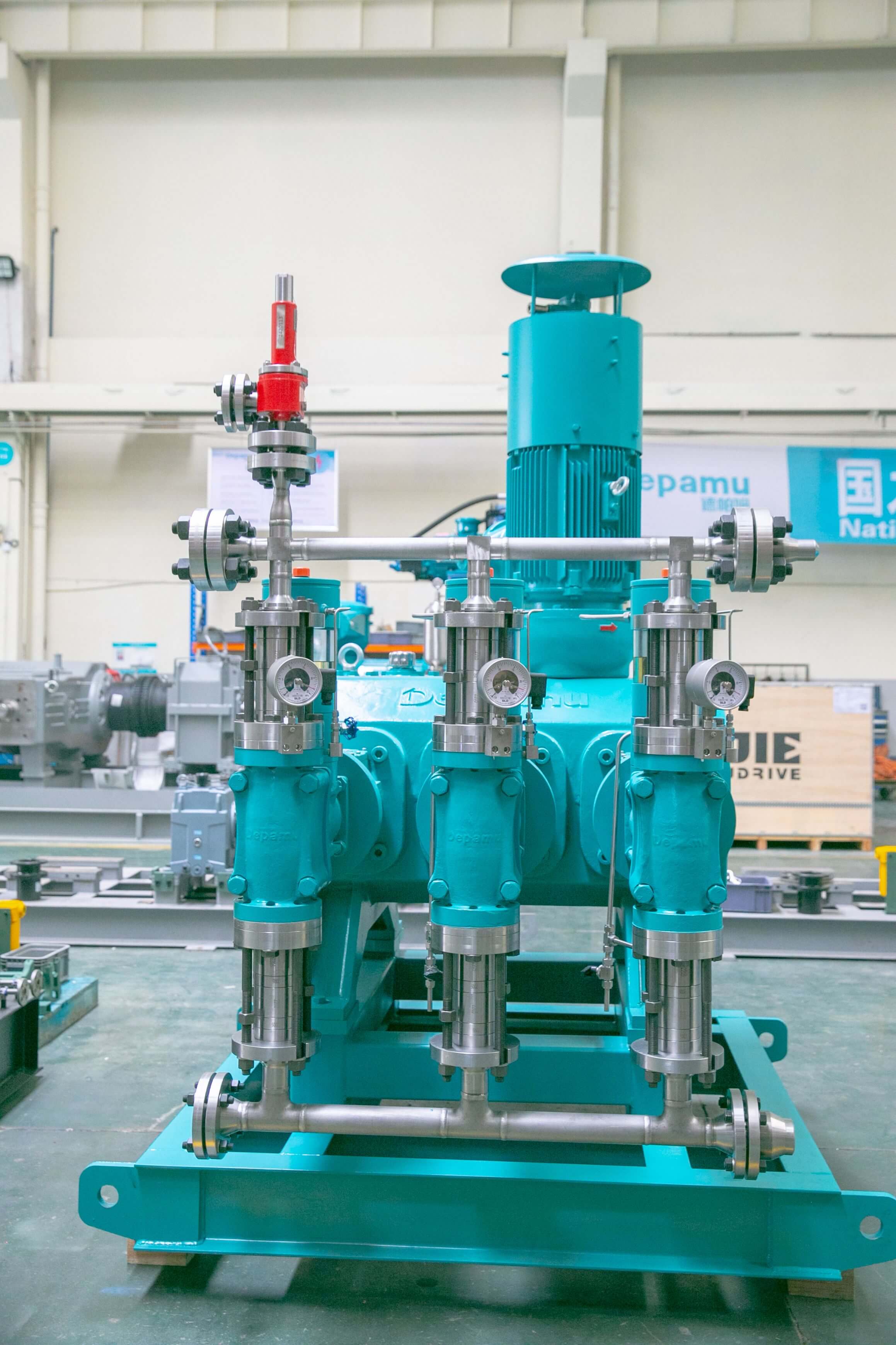
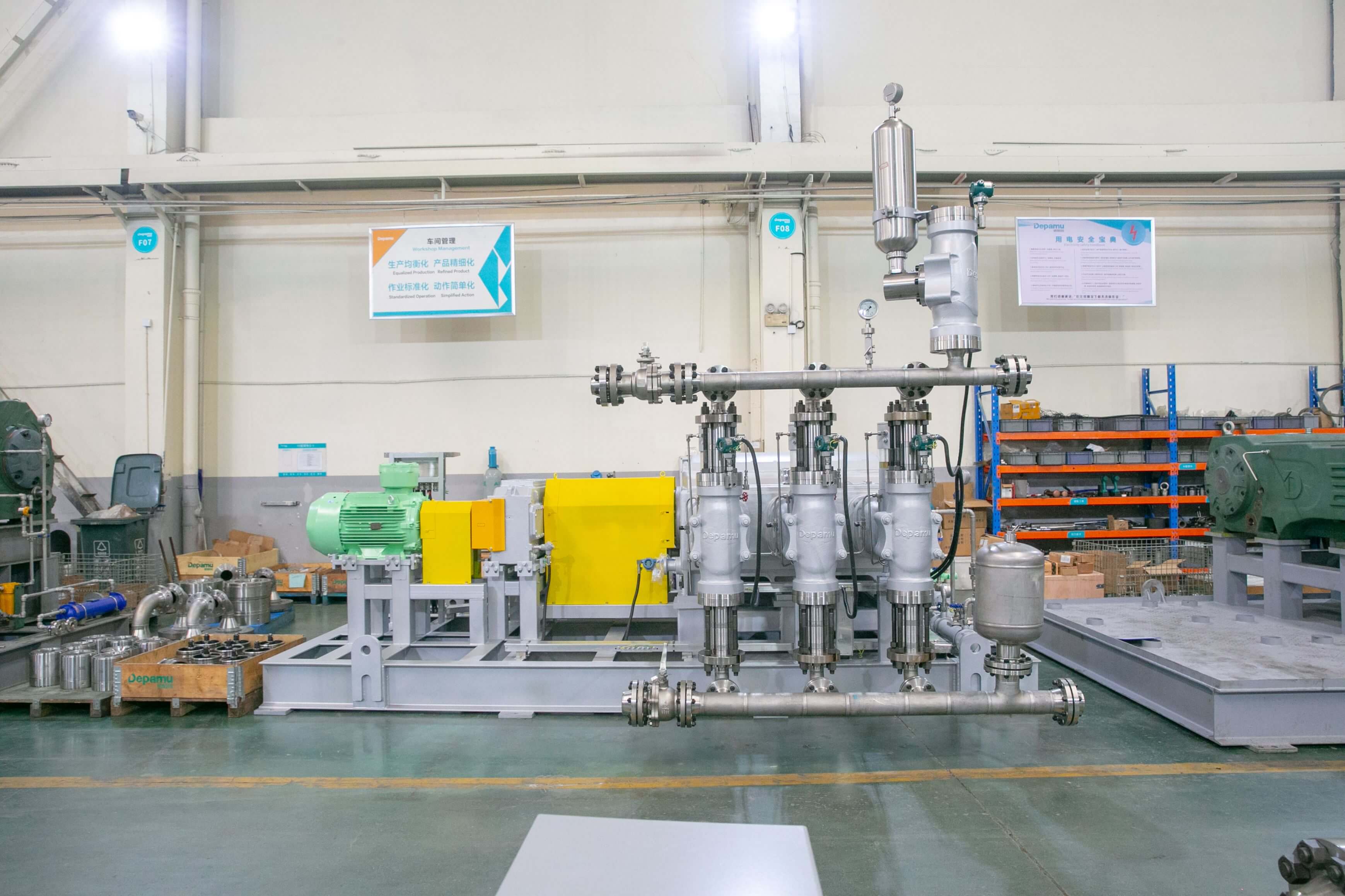
When the process requires very high pressure — for example water injection, process boosting, or transport through long or elevated pipelines — a reciprocating plunger pump becomes necessary. These pumps deliver stable flow at high pressure and can be configured with valve and packing materials selected for the specific particle size and chemistry of the slurry. Valve design is the single most consequential detail in abrasive service.
Key Selection Factors for a High Solids Slurry Pump
Accurate selection requires data. A supplier should ask for the full particle size distribution, not just an average figure, because a small percentage of oversized particles frequently determines both pump type and wear life. The carrier liquid also matters: pH, salinity, temperature, dissolved gases, and the presence of corrosive species all influence material selection for wetted parts.
Operating conditions should be defined as a range rather than a single point. Flow rates, discharge pressure, suction conditions, and duty cycle all affect the choice between a standard and a customized configuration. A pump that runs continuously at its maximum rated speed will wear far faster than one sized with margin and operated at moderate speed.
- Solids concentration and particle size distribution — determines pump family and free passage requirements.
- Particle hardness and shape — sharp, hard particles accelerate wear on liners, lobes, and valve seats.
- Viscosity and rheology — affects suction performance, power demand, and starting torque.
- Temperature and chemistry — drives elastomer and metallurgy selection.
- Discharge pressure and line length — decides between rotor-based and reciprocating technologies.
- Duty cycle and maintenance access — influences sealing arrangement and ease of parts replacement.
Where a single catalogue unit cannot cover the full envelope, a customized solution combining pump, drive, sealing, and control into a single packaged assembly is often the more economic answer over the life of the plant.
Application Scenarios for High Solids Slurry Pumps
High solids slurry handling appears across a wide range of process industries, and the requirements differ considerably between them. In mineral and metallurgical operations, tailings and concentrate transfer demand abrasion resistance and the ability to handle coarse particles. In oil and gas production, produced sand, drilling residues, and injection fluids create a combination of high pressure and abrasive solids that requires robust reciprocating or cavity pump designs.
Chemical and petrochemical plants handle slurried catalysts, crystallized intermediates, and lime or gypsum suspensions where both corrosion and abrasion are present. Wastewater treatment plants move primary and digested sludge, often with polymer dosing that demands gentle, low-shear pumping. Power plants handle ash slurry, limestone slurry for flue gas treatment, and chemical dosing duties. New energy and new material processes frequently involve high-solids suspensions of electrode materials, pigments, or fine powders.
Each of these environments imposes a different balance between pressure, abrasion, corrosion, and particle integrity. That is why a slurry pump supplier should be selected on the basis of application engineering capability rather than catalogue breadth alone.
Reducing Wear and Maintenance Cost in Abrasive Slurry Service
Wear in high solids service is inevitable, but its rate can be managed. The most effective single measure is to operate the pump at the lowest speed that satisfies the process requirement, since abrasive wear scales strongly with relative velocity at wear surfaces. Trimming an oversized pump or using a variable frequency drive to reduce speed is often more cost-effective than upgrading materials.
Material selection is the second lever. Elastomer stators, hardened rotors, coated casings, and appropriate valve materials each address a specific wear mechanism. The correct choice depends on whether the dominant damage is abrasion, corrosion, or a combination of both, so the supplier needs a clear description of the medium rather than a generic request for “wear-resistant” components.
Operating discipline matters as much as hardware. Avoiding dry running, maintaining stable suction pressure, preventing solids from settling during shutdown, and flushing lines before long stoppages all extend component life. Planned inspection intervals based on measured wear rather than calendar schedules reduce the risk of unexpected failure without replacing parts prematurely.
Choosing a Reliable High Solids Slurry Pump Manufacturer
Depam (Hangzhou) Pump Industry Technology Co., Ltd. was established in 2003 and has focused on high-end volumetric pumps and fluid equipment for more than two decades. The company employs over 400 people across a manufacturing site of approximately 35,000 square meters, with annual output value of around RMB 500 million and registered capital of RMB 54 million. Sales have grown steadily, from approximately RMB 450 million in 2023 to RMB 510 million in 2024 and RMB 560 million in 2025.
The product range covers metering pumps, high pressure process reciprocating pumps, pneumatic and electric pumps, automatic chemical dosing systems, water and steam sampling systems, water treatment equipment, and progressing cavity, rotary lobe, and gear pumps. This breadth matters in slurry service, because the correct answer is frequently a combination of technologies rather than a single unit — for example a reciprocating pump for high pressure injection paired with a dosing package for chemical conditioning.
Depam’s business is concentrated in applications where difficult media are routine: petroleum refining and chemicals account for roughly 41% of sales, oil and gas fields around 23%, nuclear power, electric power, metallurgy and new energy around 15%, environmental water treatment around 13%, and new materials and food around 3%. This application mix means the engineering team works continuously with abrasive, corrosive, high-temperature, and high-pressure media.
For high solids slurry duty, the company provides standard products, non-standard products, and fully customized fluid solutions based on the customer’s medium characteristics, flow rate, pressure, temperature, and site process requirements. Capabilities span development, design, manufacturing, and packaged delivery, which allows a single supplier to take responsibility for the hydraulic selection, the sealing arrangement, the drive, and the control integration.
FAQ
What is considered a high solids slurry, and when does a standard pump stop being suitable?
There is no universal threshold, but as a practical rule, once solids are present in sufficient concentration that the mixture settles quickly at rest, becomes noticeably viscous, or causes visible abrasion on wetted parts, a purpose-selected slurry pump is required. Standard clear-liquid pumps typically have internal clearances and velocities that are unsuitable for particles, and centrifugal designs lose efficiency rapidly as viscosity rises. Selection should be based on particle size distribution, hardness, and settling behavior rather than on a single percentage figure.
Which pump type is best for a high solids slurry pump application?
It depends on the duty. Progressing cavity pumps suit viscous, fibrous, and fine-particle slurries where gentle, pulseless flow is needed. Rotary lobe pumps are preferred when large free passage for soft lumps or agglomerates is essential. High pressure reciprocating pumps are required when the process demands high discharge pressure, such as injection or long-distance pipeline transfer. Many plants use a combination of these technologies at different points in the same process.
How can I reduce wear and maintenance costs in abrasive slurry service?
Operate at the lowest practical speed, select materials based on the actual wear mechanism rather than general “abrasion resistance”, keep suction conditions stable, prevent solids from settling during shutdown, and replace components based on measured wear instead of fixed calendars. Correct valve and seal selection is especially important, because most unexpected failures in slurry duty begin at valves, packing, or seal faces rather than at the main hydraulic elements.
What information should I provide to a high solids slurry pump supplier for an accurate quotation?
Provide the full particle size distribution, solids concentration by weight and volume, particle hardness and shape, carrier liquid chemistry including pH and temperature, required flow rate range, discharge pressure, suction conditions, duty cycle, and any site constraints such as available space or utilities. Photographs or samples of the slurry and details of previous pump failures are extremely useful, because they reveal the dominant wear mechanism and help the supplier propose the right configuration the first time.
Can a high solids slurry pump be customized for a specific process?
Yes. Customization in slurry service usually involves material selection for wetted parts, rotor and stator or lobe geometry, valve and seal design, drive configuration including variable speed control, and integration into a packaged skid with instrumentation. Suppliers with in-house design and manufacturing capability can build and test the assembly before delivery, which reduces commissioning time and the risk of mismatch between pump and process.
Summary
High solids slurry pumping is a discipline of its own. Success depends on understanding how solids concentration, particle characteristics, viscosity, and chemistry interact, and then matching that profile to the right positive displacement technology — progressing cavity, rotary lobe, or high pressure reciprocating — with appropriate materials, sealing, and speed control. Getting the selection right at the specification stage is far cheaper than correcting it after repeated failures in the field.
Working with a manufacturer that has direct experience of abrasive, corrosive, and high-pressure media shortens that process considerably. Depam’s two decades of focus on volumetric pumps, its range spanning metering, reciprocating, rotary, and packaged dosing systems, and its capability to deliver standard, non-standard, and fully customized fluid solutions give buyers a single engineering partner for demanding slurry duty across chemical, oil and gas, power, metallurgy, new energy, and water treatment applications.