
Choosing the right pump is one of the most consequential decisions in any fluid handling project. A pump that is oversized wastes energy and capital; a pump that is undersized throttles production; a pump built from the wrong materials fails early and creates unplanned downtime. Among all equipment categories, the centrifugal pump is the most widely used workhorse in water supply, circulation, transfer and process service — and also the one most often specified by habit rather than by calculation.
This guide explains how to choose a centrifugal pump in a structured, engineering-led way. It walks through flow rate and head requirements, fluid characteristics, material and seal selection, NPSH and installation conditions, and the commercial questions that determine total cost of ownership. It also explains how to evaluate a centrifugal pump supplier or centrifugal water pump manufacturer, and where centrifugal technology sits alongside positive displacement equipment such as metering pumps, high pressure reciprocating pumps and complete chemical dosing skids.
Why Centrifugal Pump Selection Deserves a Structured Approach
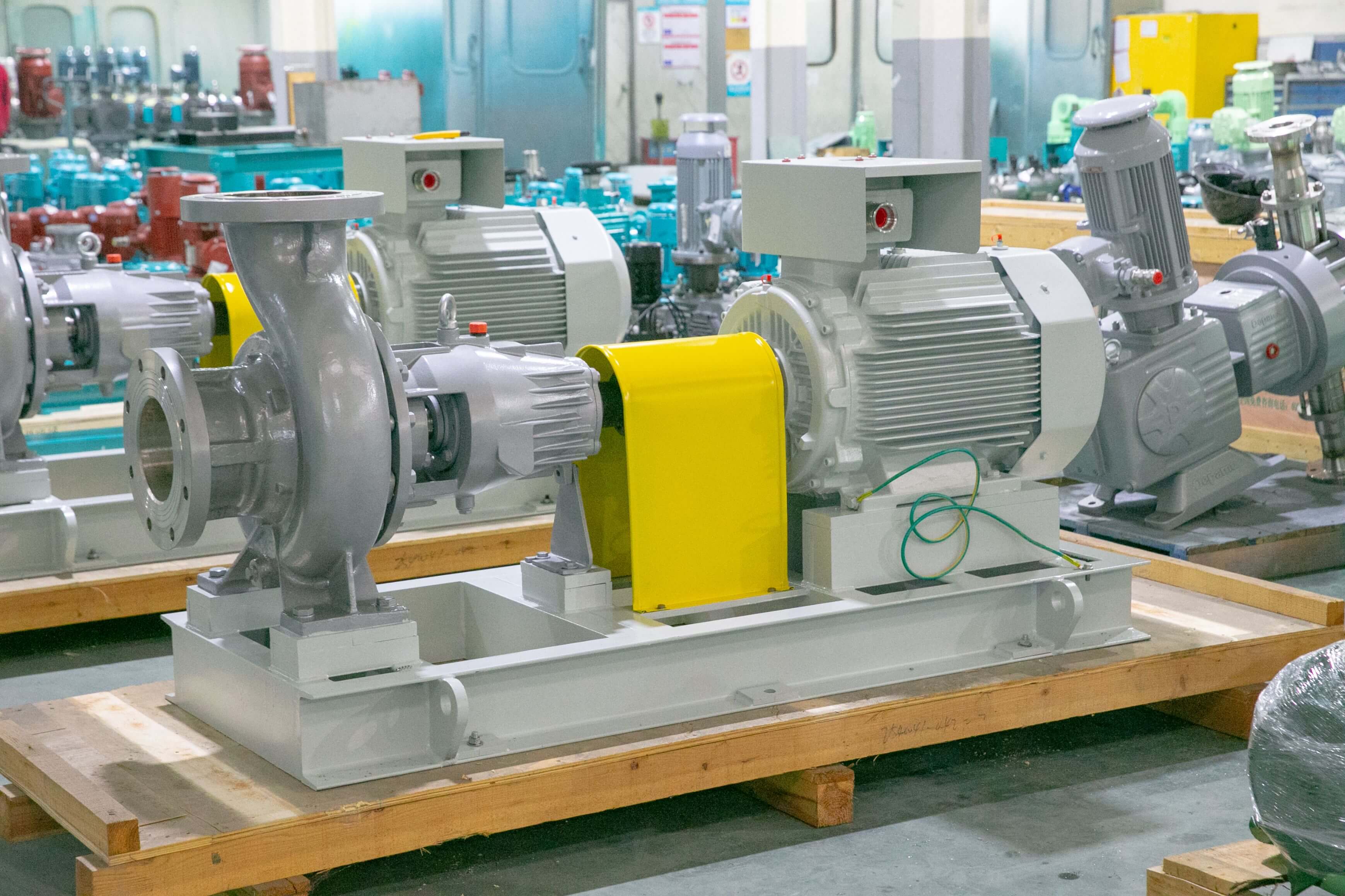
A centrifugal pump transfers energy to a liquid by means of a rotating impeller. Liquid enters the impeller eye, is accelerated outward by the rotating vanes, and is then converted from velocity into pressure in the volute or diffuser. This operating principle gives centrifugal pumps their defining strengths: smooth, pulsation-free flow, compact construction, relatively low initial cost per unit of capacity, and simple maintenance with few wearing parts.
The same principle also defines their limits. A centrifugal pump delivers flow along a performance curve — flow changes as system resistance changes — so the pump and the piping system must be matched at a single duty point. If the actual system curve differs from the assumed one, the pump may run far from its best efficiency point, causing cavitation, vibration, excessive bearing load or premature seal failure. That is why selection is not a catalogue lookup but an engineering matching exercise.
A structured approach pays for itself quickly. Correctly sized equipment consumes less power, needs fewer spare parts, holds accuracy of flow over time, and avoids the costly rework of re-piping or re-machining a pump that was specified from incomplete data. Whether the application is cooling water circulation in a refinery, reagent transfer in a chemical plant or process water supply in a food facility, the same four blocks of information drive the decision: hydraulic duty, fluid properties, site conditions and commercial requirements.
How to Choose a Centrifugal Pump: A Step-by-Step Selection Guide
The following selection sequence works for almost every industrial application, from clean water transfer to mildly corrosive chemical service. Each step narrows the range of viable pumps until a single duty point and configuration remain.
Step 1: Define the Required Flow Rate and Head
Start with the process requirement rather than the pump catalogue. Establish the design flow rate in cubic meters per hour, including any future capacity margin that the plant realistically expects. Then calculate the total system head: static elevation difference, pressure difference between suction and discharge vessels, and friction losses through pipe, fittings, valves, filters and heat exchangers at the design flow. Add a reasonable fouling allowance, because filters and exchangers accumulate resistance over time.
Plot the resulting system curve against candidate pump curves. The intersection is the duty point. A good selection places that point close to the best efficiency point and within the preferred operating region recommended for the hydraulic design, rather than at the far edge of the curve where efficiency collapses and hydraulic loads rise.
Step 2: Characterize the Fluid Being Handled
Fluid data determines both the hydraulic behavior and the mechanical construction. Record density, viscosity, temperature, vapour pressure, pH, chloride content, suspended solids and whether the liquid is flammable, toxic or prone to crystallization. Viscosity above water values reduces the head and flow a centrifugal pump can produce, so corrections to the published water performance curve are needed. High temperature affects material strength, seal selection and the vapour pressure used in the NPSH calculation.
Corrosive or aggressive media drive the choice of wetted materials — stainless steels, duplex grades, higher alloys, or non-metallic linings — and often the choice of magnetic drive or double mechanical seal arrangements to eliminate leakage paths. For strongly abrasive slurries or very high viscosity, a positive displacement pump is frequently the better answer, which is why a supplier with a broad portfolio can advise objectively.
Step 3: Verify NPSH Available Against NPSH Required
Net positive suction head is the most frequently underestimated item in centrifugal pump selection. The pump requires a minimum NPSH at the impeller eye to avoid cavitation. The system must make that NPSH available, calculated from the suction vessel pressure, static suction head, suction line friction losses and the liquid vapour pressure at pumping temperature.
Keep a safety margin between NPSH available and NPSH required, particularly when the pump will run at flows above the design point, where required NPSH rises steeply. If the margin is thin, options include raising the suction vessel, increasing suction pipe diameter, reducing suction line fittings, lowering the pump speed or selecting a low-NPSH impeller design. Cavitation damage is progressive and expensive, so this check should never be skipped.
Step 4: Select Materials, Seals and Drive Configuration
Once the hydraulic duty is fixed, finalize the mechanical configuration: casing and impeller materials, shaft and bearing arrangement, sealing system, flange standard and baseplate type. Mechanical seal choice deserves particular attention. Single seals with flush plans suit clean, benign fluids; double seals or seal-less magnetic drive designs are preferred for toxic, volatile or crystallization-prone media.
Drive configuration follows site conditions. Direct-coupled electric motors are standard for most fixed installations. Where variable process demand exists, a variable frequency drive usually earns its cost back through energy savings and improved process control. In areas with limited electrical infrastructure, engine-driven or pneumatic alternatives may be considered. The table below summarizes the main selection parameters and how each influences the final decision.
| Selection Parameter | What to Define | Design Impact |
|---|---|---|
| Flow rate | Design and maximum flow, turndown requirement | Impeller size and casing size; determines where the duty point sits on the curve |
| Total head | Static head, pressure differential, friction losses, fouling allowance | Number of stages, impeller diameter, motor power |
| Fluid characteristics | Density, viscosity, temperature, pH, chlorides, solids content | Wetted materials, curve correction factors, seal and flush plan |
| NPSH margin | NPSH available versus NPSH required at design and maximum flow | Suction layout, pump speed, impeller design, installation elevation |
| Sealing method | Single seal, double seal, magnetic drive, API plan requirement | Leakage containment, auxiliary piping, maintenance routine |
| Drive and control | Fixed speed or variable frequency drive, duty/standby arrangement | Energy consumption, process stability, spare capacity strategy |
| Site conditions | Ambient temperature, hazardous area classification, available utilities, footprint | Motor protection class, baseplate design, layout and access for maintenance |
Centrifugal Pump or Positive Displacement Pump: Matching Technology to Duty
Centrifugal and positive displacement pumps are not competitors; they are complementary technologies. A centrifugal pump is normally the first choice for high flow at moderate pressure, for clean or lightly contaminated liquids, and for continuous circulation duties where smooth, pulsation-free flow matters. It has few wear parts, is inexpensive per unit of capacity and is easy to maintain.
Positive displacement pumps displace a fixed volume per stroke or revolution, so flow stays nearly constant as discharge pressure changes. That characteristic makes them suitable for accurate chemical dosing, high pressure injection, viscous media, shear-sensitive products and fluids containing solids. In practical plant design, both technologies often appear in the same process line — a centrifugal pump for bulk transfer, a metering pump for precise reagent injection, and a reciprocating pump where pressure exceeds what a centrifugal machine can economically deliver.
This is why working with a supplier that builds both families is an advantage. Recommendations can be based on the duty rather than on a limited product range, and interfaces between transfer, dosing and boosting stages can be engineered as one consistent system.
DEPAM as a Centrifugal Water Pump Manufacturer and Fluid Equipment Supplier
DEPAM (Hangzhou) Pump Technology Co., Ltd. was founded in 2003 and has spent more than two decades focused on high-end volumetric pumps and fluid equipment. The company employs more than 400 people, operates a plant of approximately 35,000 square meters, holds registered capital of RMB 54 million and generates annual output value of around RMB 500 million. Its product range covers metering pumps, high pressure process reciprocating pumps, pneumatic and electric pumps, automatic chemical dosing systems, water and steam sampling devices, water treatment equipment, screw pumps, rotary lobe pumps, gear pumps, emulsifying pumps and special centrifugal pumps.
For centrifugal water pump enquiries, this breadth matters in two ways. First, the engineering team can evaluate the duty from both a hydraulic and a volumetric perspective, so a customer receives an honest recommendation on whether a centrifugal pump, a metering pump or a reciprocating pump is the appropriate technology. Second, the company provides standard products, non-standard products and customized fluid solutions based on the customer’s medium characteristics, flow rate, pressure, temperature and site process requirements — an important capability when a pump must fit an existing skid, an existing piping layout or an unusual fluid.
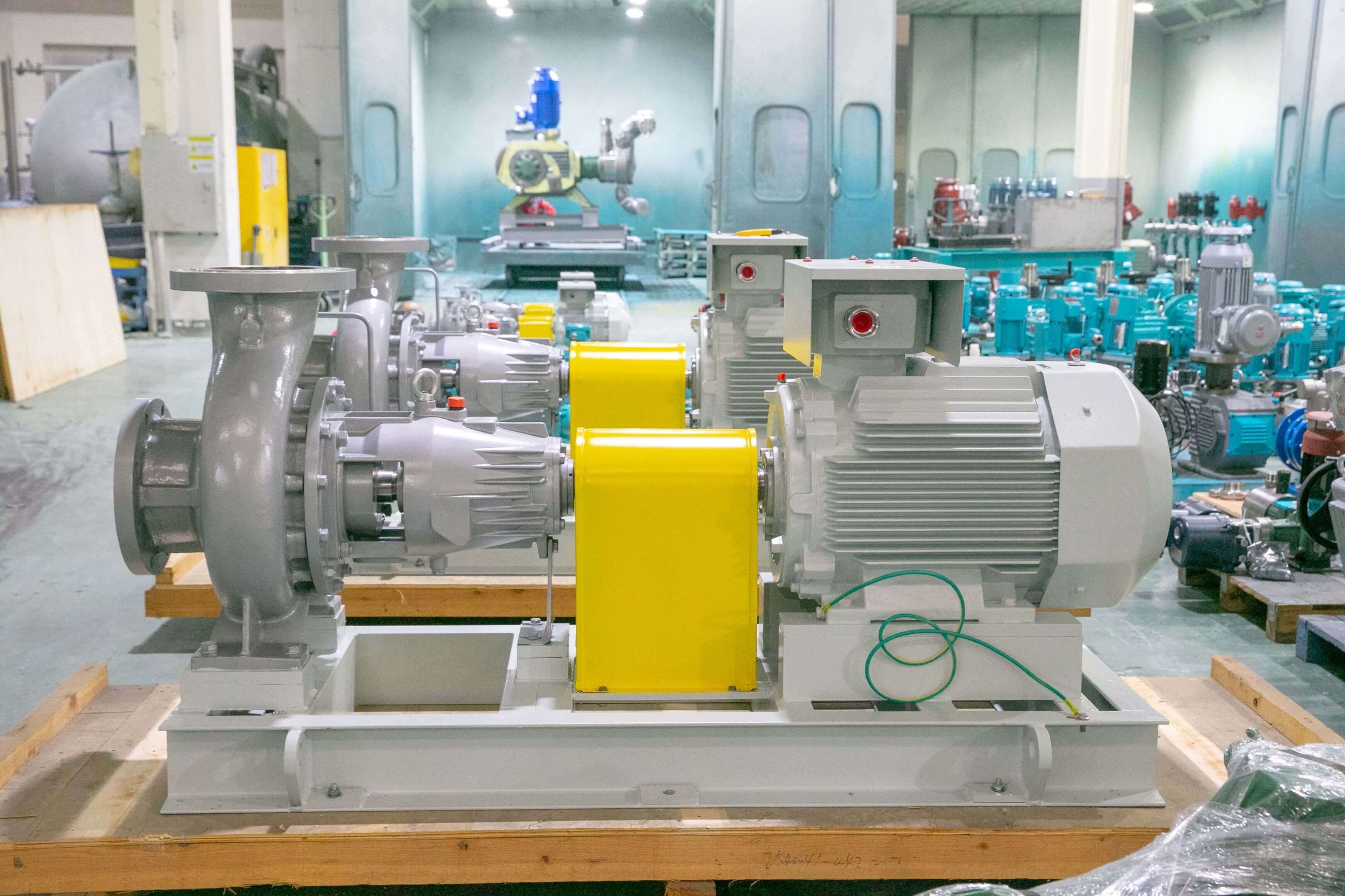
The company’s three brands address different market segments within the same technical platform, and its manufacturing scope runs from research and product design through fabrication and testing to packaged delivery. Complete systems such as automatic chemical dosing skids — integrating chemical tanks, agitators, metering pumps and control systems — are assembled and tested before shipment so that on-site work is limited to connecting piping and power. This systems capability is directly relevant to centrifugal pump projects in water treatment, circulation and transfer duty, where pump, instrumentation and controls are usually specified together.
Industries and Applications Where These Pumps Are Used
DEPAM products are applied across a range of process industries, and the revenue distribution reflects where fluid handling requirements are most demanding. Petroleum refining and chemical processing account for about 41% of sales, oil and gas field applications about 23%, nuclear power, electric power, metallurgy and new energy about 15%, environmental protection and water treatment about 13%, new materials and food about 3%, and other industries about 5%.
| Application Area | Share of Sales | Typical Fluid Handling Duty |
|---|---|---|
| Petroleum refining and chemical processing | Approx. 41% | Process transfer, circulation, reagent dosing, high pressure injection |
| Oil and gas fields | Approx. 23% | Water injection, pipeline boosting, chemical injection, viscous media transfer |
| Nuclear, power, metallurgy and new energy | Approx. 15% | Boiler water treatment, sampling systems, circulating water, process dosing |
| Environmental protection and water treatment | Approx. 13% | Water transfer, chemical dosing, sludge and reagent handling, filtration support |
| New materials and food | Approx. 3% | Hygienic transfer, additive dosing, emulsifying and blending support |
| Other industries | Approx. 5% | General transfer, utility service and specialized custom projects |
In water treatment and environmental applications, centrifugal pumps typically handle bulk transfer of raw water, filtered water and circulating streams, while metering pumps and dosing skids handle coagulants, disinfectants, pH correction chemicals and antiscalants. In refining and chemical plants, centrifugal equipment supports cooling water and utility circuits, and positive displacement equipment manages high pressure and accurate dosing duties. In oil and gas field service, high pressure process reciprocating pumps are frequently selected for water injection and pipeline boosting, where discharge pressures can reach 35 MPa and above.
How to Evaluate a Centrifugal Pump Supplier or Manufacturer
Once the technical selection is settled, supplier evaluation determines whether the equipment will perform reliably for the next decade. Price alone is a poor guide. The following checklist reflects what experienced buyers examine during vendor qualification.
- Engineering capability: Can the supplier review your process data, produce a calculated duty point and recommend a configuration, rather than simply quoting a model number?
- Product range breadth: Does the supplier offer centrifugal, metering and reciprocating options so that the recommendation is driven by duty rather than by a limited catalogue?
- Customization ability: Can non-standard materials, connections, baseplates and control interfaces be accommodated when the site layout demands it?
- Manufacturing and testing: Is assembly and testing performed in-house before shipment, and are test records provided with the equipment?
- Spare parts and service: Are wear parts, seals and impellers available with predictable lead times, and is technical support accessible after commissioning?
- Documentation: Are drawings, curves, material certificates and operating manuals supplied in a form suitable for plant maintenance systems?
- Reference experience: Has the supplier delivered equipment into comparable process conditions and media, and can it explain the design choices made there?
A short technical discussion usually reveals the difference between a trading intermediary and a manufacturer with real engineering depth. Ask specific questions: what is the NPSH margin at maximum flow, how is viscosity corrected on the curve, which seal plan is proposed and why, and what happens to bearing life if the pump runs at 30% of design flow. Suppliers who answer precisely are the ones worth shortlisting.
Cost, Efficiency and Lifecycle Value
The purchase price of an industrial centrifugal pump is only a fraction of its lifecycle cost. Energy typically dominates over a service life of ten years or more, followed by maintenance labour, spare parts and downtime. A pump selected at its best efficiency point with a correctly sized motor and, where appropriate, variable speed control will usually cost less to own than a cheaper unit operating away from its efficient region.
Three practical measures improve lifecycle value. First, avoid excessive safety margins on flow and head; a pump running far below design flow suffers recirculation, vibration and shaft deflection. Second, consider trimming the impeller rather than throttling a valve when the actual duty is lower than expected. Third, define a preventive maintenance schedule covering seal inspection, bearing lubrication, alignment checks and vibration monitoring, and keep critical spares on site for continuous-duty applications.
For projects involving multiple fluid duties, consolidating supply with one manufacturer also reduces engineering hours, spare parts inventory and interface risk between skids. That is the practical argument for selecting a centrifugal pump supplier that also builds dosing systems, metering pumps and reciprocating pumps — the entire fluid handling package can be coordinated, documented and delivered as one scope.
FAQ
How do I choose a centrifugal pump for a new process line?
Start with the design flow rate and the total system head, including static lift, pressure differential and friction losses with a fouling allowance. Then characterize the fluid — density, viscosity, temperature, vapour pressure, pH, chlorides and solids content — and verify that NPSH available exceeds NPSH required with a safety margin. Finally, select materials, sealing arrangement and drive type, and confirm that the duty point sits close to the best efficiency point. Providing this data to a manufacturer allows a calculated recommendation instead of an estimate.
When is a centrifugal pump not the right choice?
Centrifugal pumps are less suitable for very high discharge pressures, very viscous liquids, shear-sensitive products, accurate low-flow chemical dosing and fluids with high solids content. In those cases a positive displacement pump such as a metering pump, screw pump, rotary lobe pump or high pressure reciprocating pump is usually more appropriate. A supplier that manufactures both families can evaluate the duty objectively and recommend the correct technology.
What information should I provide when requesting a centrifugal pump quotation?
Provide flow rate (design and maximum), suction and discharge conditions, total head or pressure, fluid name and properties including temperature, viscosity, density, pH and solids, NPSH available at the suction, available utilities and voltage, hazardous area classification, connection standards, and any footprint or interface constraints. Clear data reduces quotation cycles and protects against selection errors that only appear after commissioning.
How can I identify a reliable centrifugal water pump manufacturer?
Look for in-house engineering that reviews your process data and produces a documented duty point, a product range broad enough to cover alternative technologies, verifiable manufacturing and testing before shipment, accessible spare parts, and clear technical documentation. Ask technical questions about NPSH margin, viscosity correction, seal selection and part-load operation; the quality of the answers distinguishes a manufacturer from a reseller.
Does DEPAM supply centrifugal pumps as well as metering and reciprocating pumps?
Yes. DEPAM’s range covers metering pumps, high pressure process reciprocating pumps, pneumatic and electric pumps, automatic chemical dosing systems, water and steam sampling devices, water treatment equipment, screw pumps, rotary lobe pumps, gear pumps, emulsifying pumps and special centrifugal pumps. Because the company builds several pump technologies, recommendations can be based on the actual medium, flow, pressure and temperature rather than on a single product line, and standard, non-standard or customized solutions can be offered accordingly.
How is pump performance affected by viscosity and temperature?
Higher viscosity reduces the flow and head a centrifugal pump can generate and increases power consumption, so published water performance curves must be corrected. Higher temperature lowers the liquid’s vapour pressure margin, which directly affects NPSH available and may require a different seal arrangement, flush plan or material grade. Both parameters should always be stated at the actual operating condition, not at ambient reference conditions.
Summary
Choosing a centrifugal pump is a sequence of engineering decisions, not a single purchase action. Define flow and head against a realistic system curve, characterize the fluid completely, verify NPSH with margin, then finalize materials, seals and drive configuration. Confirm that the duty point sits near the best efficiency point and that the selected control method matches the process turndown requirement. When pressure, viscosity or dosing accuracy falls outside the comfortable range of centrifugal technology, a positive displacement solution is the better engineering answer.
Supplier selection is equally important. A centrifugal water pump manufacturer with genuine engineering depth will ask for process data, explain its selection reasoning, offer alternative technologies where appropriate and support the equipment through its service life. DEPAM (Hangzhou) Pump Technology Co., Ltd., founded in 2003, combines more than two decades of experience in high-end volumetric pumps with a broad fluid equipment portfolio, in-house design and manufacturing capability, and customized solution delivery for petroleum refining, chemical processing, oil and gas, power, metallurgy, new energy, environmental water treatment, new materials and food applications. Sharing complete duty data at the enquiry stage is the fastest route to a pump that performs as specified for years of continuous operation.