
Choosing a rotary piston pump is rarely a simple catalogue decision. In real industrial plants, the pump sits between a tank, a pipeline and a process that cannot afford downtime, and the wrong selection shows up months later as cavitation, seal failure, blocked suction lines or an unstable dosage curve. This guide walks through the technical and commercial factors that matter when specifying a rotary piston pump, how it compares with other positive displacement technologies, and what to verify before placing an order with a rotary piston pump manufacturer.
The content below is written for process engineers, EPC contractors, plant maintenance managers and procurement teams who need a defensible selection method rather than a marketing brochure. Where a plant also handles sludge, slurry or thickened biosolids, the same logic applies to sourcing a sludge rotary lobe pump manufacturer, because the two pump families frequently live side by side in the same wastewater or chemical process line.
What Is a Rotary Piston Pump and How Does It Work?
A rotary piston pump is a positive displacement pump in which one or more pistons rotate inside a cylindrical casing. As the rotor turns, the pistons sweep the casing wall and create an expanding cavity at the suction side, drawing fluid into the pump. The fluid is then trapped and displaced toward the discharge port as the cavity contracts. Because the pumping action is volumetric rather than centrifugal, the flow rate is largely determined by rotational speed and displacement volume, not by back pressure.
That characteristic is exactly why rotary piston pumps appear in duties where a centrifugal pump would lose performance: thick fluids, shear-sensitive media, high discharge pressures and processes where the flow must remain stable while the pressure changes. The low internal velocity and gentle handling of the medium also make this pump family attractive for products that must not be emulsified, aerated or mechanically degraded.
Key Mechanical Characteristics
- Volumetric displacement with an almost constant flow curve across a wide pressure range.
- Self-priming capability, which allows suction lift without a flooded inlet in many installations.
- Reversible rotation options on many designs, enabling bidirectional transfer duties.
- Ability to handle viscous, pasty and lightly solids-laden media that would stall a centrifugal impeller.
- Mechanical or lip seal arrangements that can be matched to the chemical nature of the medium.
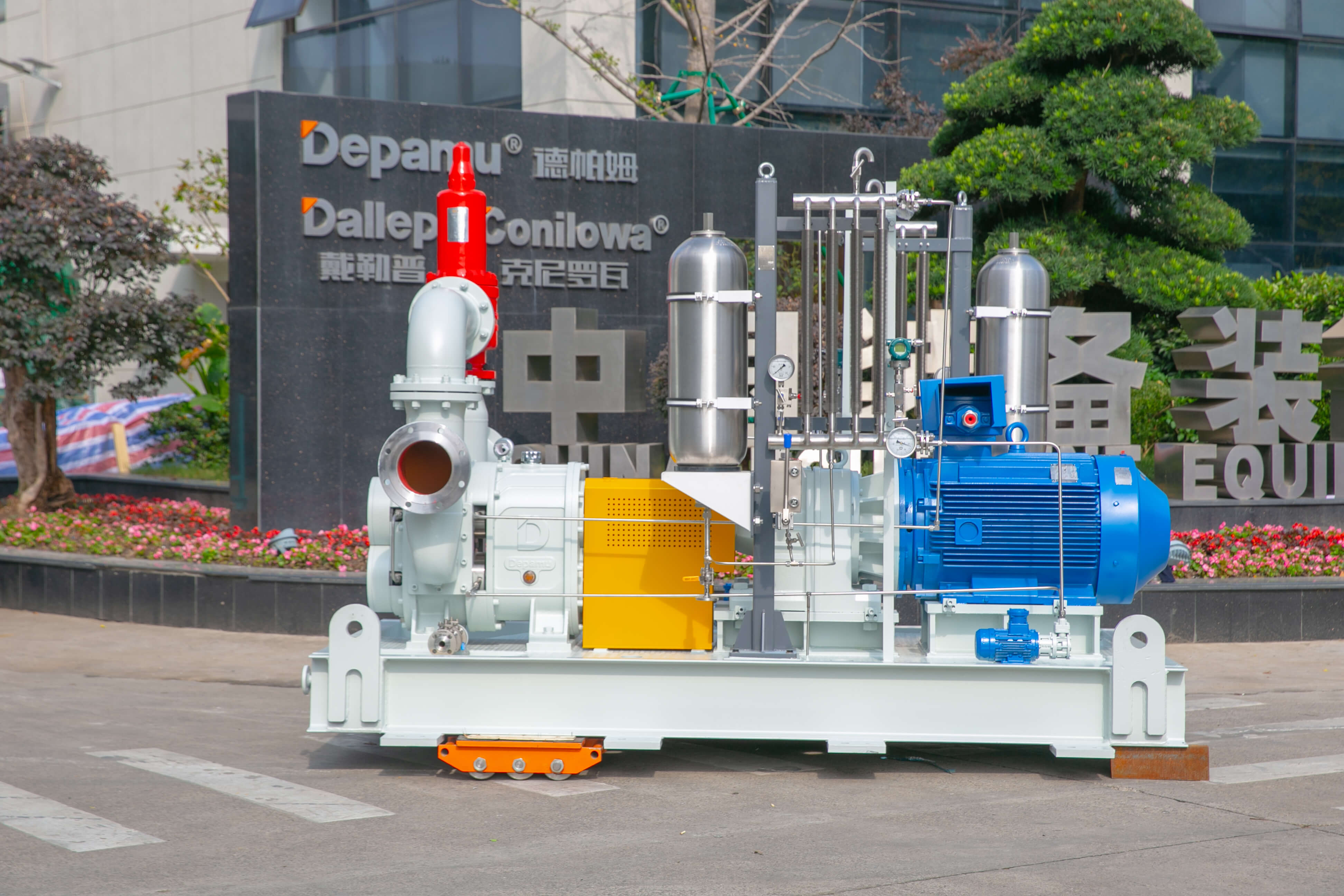
Rotary Piston Pump vs Other Pump Types: Performance Comparison
Before committing to a rotary piston pump, it helps to compare it honestly against the technologies it usually competes with in a tender: rotary lobe pumps, progressing cavity (screw) pumps, centrifugal pumps and diaphragm metering pumps. Each has a domain where it wins, and each has a domain where it becomes an expensive mistake.
| Pump Type | Best Fit | Main Limitations | Typical Duty |
|---|---|---|---|
| Rotary piston pump | Viscous, shear-sensitive and lightly abrasive media at moderate to high pressure | Not ideal for large free-flowing solids; requires proper suction conditions | Transfer, dosing, pressure boosting |
| Rotary lobe pump | Sludge, slurry and solids-laden wastewater with gentle handling requirements | Clearance-dependent performance; wears faster with hard abrasives | Sludge transfer, thickening, dewatering feed |
| Progressing cavity pump | High-viscosity and solids-rich media at steady flow | Stator wear with abrasives; limited dry-run tolerance | Sludge, polymer, oily media |
| Centrifugal pump | High flow, low viscosity, clean fluids | Flow drops as viscosity or pressure rises; shear damage | Water circulation, general transfer |
| Diaphragm metering pump | Precise chemical dosing at low flow, leak-free operation | Limited suction lift; pulsation needs dampening | Reagent dosing, water treatment chemicals |
A useful rule of thumb: if the fluid is clean and low viscosity and the flow requirement is high, a centrifugal pump is usually the cheapest answer. If the fluid is thick, shear-sensitive or must be moved at a stable flow against variable pressure, a rotary piston pump becomes the stronger candidate. If the fluid contains fibrous or abrasive solids at low pressure, a rotary lobe or progressing cavity pump often takes over.
How to Choose a Rotary Piston Pump: Seven Selection Factors
The question “how to choose a rotary piston pump” usually hides a second question: what data do I need to give a supplier so the quotation is technically valid? The seven factors below form a complete specification checklist.
1. Medium Properties
Start with the fluid itself: viscosity at pumping temperature, density, pH, corrosivity, solids content and particle size, and whether the medium is shear-sensitive or prone to foaming. These properties determine the casing and piston materials, the seal type and the allowable operating speed. A pump that is correct for a clean lubricating oil may be entirely unsuitable for a crystallising chemical slurry.
2. Flow Rate and Turndown
Define the normal, minimum and maximum flow rates, not just a single design point. Rotary piston pumps are positive displacement machines, so flow is controlled by speed; if the process needs wide turndown, confirm that the drive, gearbox and motor are sized for the lowest required speed without overheating, and that the pump still meters accurately at the low end.
3. Discharge Pressure and System Curve
Provide the maximum discharge pressure, the normal operating pressure and the pipe layout, including elevation changes and fittings. Positive displacement pumps generate pressure until something yields, so a correctly sized relief valve or bypass arrangement is mandatory. The pressure rating of the casing, seals and flange class must exceed the worst-case shut-off condition.
4. Suction Conditions
Suction lift, NPSH available, line diameter and the presence of strainers all affect whether the pump can fill reliably. Viscous media fill slowly, so suction line sizing and pump speed must be matched to avoid cavitation and vibration. A self-priming rotary piston pump helps, but it does not compensate for an undersized suction line.
5. Temperature Range
Operating and cleaning temperatures influence material selection, seal elastomers and thermal expansion clearances. CIP and steam-in-place cycles are often the hidden constraint in food and pharmaceutical installations, and they must be declared at the selection stage rather than after commissioning.
6. Materials of Construction and Sealing
Confirm wetted materials against the chemical compatibility of the medium, and choose between mechanical seals, lip seals and packed glands based on pressure, temperature and leakage tolerance. For hazardous or high-value media, leak-free sealing and secondary containment are usually worth the additional cost.
7. Drive, Control and Installation Envelope
Decide whether the pump will run at fixed speed, with a variable frequency drive, or as part of an automated dosing loop. Check the available footprint, orientation, nozzle positions and maintenance access. A pump that is technically correct but impossible to service in place becomes a permanent maintenance problem.
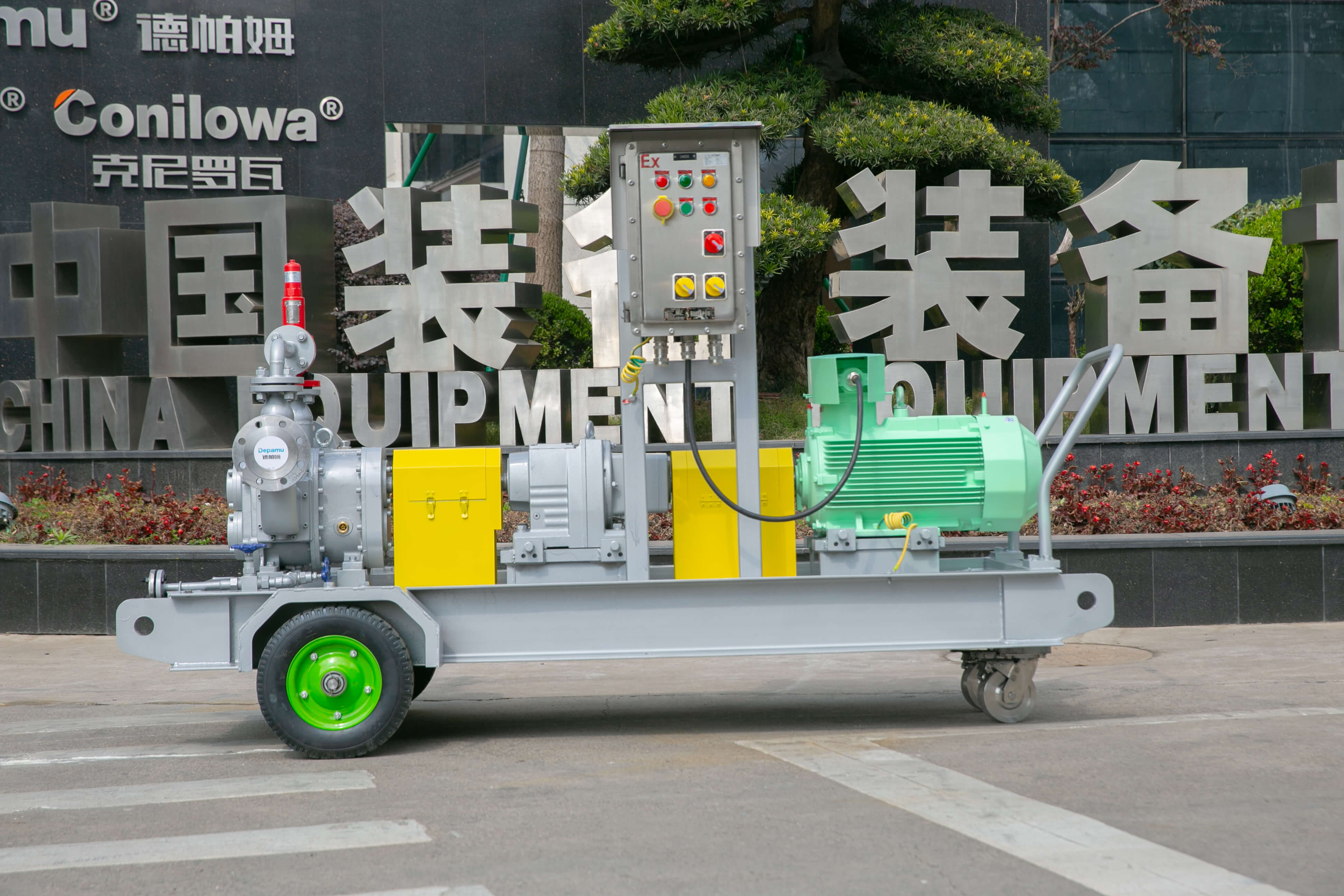
Where Rotary Piston Pumps Deliver the Most Value
Rotary piston pumps are common in chemical transfer, polymer and resin handling, food and cosmetic processing, oil and gas field service, and environmental engineering. In each case the value comes from stable volumetric output under changing pressure, combined with gentle handling of the medium.
They are also frequently specified upstream or downstream of dosing systems. For example, a process may use a rotary piston pump for bulk transfer of a viscous reagent into a day tank, then a hydraulic diaphragm metering pump for precise injection into the process line, supported by a packaged chemical dosing skid with dissolving tank, agitator and automatic control. Matching the transfer pump and the dosing pump as one hydraulic design avoids the classic failure mode where the metering pump is starved by an undersized feed pump.
In wastewater treatment, the counterpart duty is sludge movement. A rotary lobe pump or screw pump moves thickened sludge from holding tanks to digesters, dewatering centrifuges or filter presses. When sourcing a **sludge rotary lobe pump manufacturer**, buyers should look for the same disciplines described above: verified material compatibility, documented clearance and wear-part strategy, realistic solids-handling claims, and a supplier able to supply the complete package rather than a bare pump.
Rotary Piston Pump Maintenance and Reliability Practices
Most premature failures in positive displacement pumps trace back to installation and operating discipline rather than manufacturing defects. The following practices materially extend service life:
- Verify relief valve settings and confirm the bypass returns safely to the suction tank.
- Check suction strainers on a defined schedule; a partially blocked strainer is the most common cause of cavitation damage.
- Monitor seal leakage, vibration and discharge pressure trends rather than waiting for a breakdown.
- Keep a wear-part inventory of seals, gaskets and piston components matched to the actual duty.
- Record the operating speed and pressure at each service interval so deviations become visible early.
What to Verify in a Rotary Piston Pump Manufacturer or Supplier
Technical selection is only half the purchasing decision. The other half is supplier capability: can this company deliver a pump that matches the datasheet, on schedule, with documentation, and support it over a ten-year asset life? A structured evaluation helps.
| Evaluation Area | What to Ask | Why It Matters |
|---|---|---|
| Engineering capability | In-house design, hydraulic selection and non-standard customization | Determines whether the pump really fits your medium and process |
| Manufacturing scale | Factory size, machining resources, assembly and test facilities | Affects lead time, consistency and capacity for larger orders |
| Packaging and integration | Ability to supply skid-mounted, pre-wired and pre-tested systems | Reduces on-site installation time and interface risk |
| Industry experience | Reference duties in your sector and comparable media | Reduces the learning curve on your specific process |
| Documentation and support | Test reports, drawings, manuals, spare-parts lists and after-sales response | Protects long-term plant availability and audit compliance |
When buyers ask a supplier to recommend a rotary piston pump, the strongest answers include a completed data sheet, a preliminary curve, a materials justification and a clear statement of exclusions. A supplier that responds only with a model number is asking you to take on the technical risk yourself.
About DEPAMU: A Positive Displacement Pump Manufacturer for Demanding Duties
DEPAMU (Hangzhou) Pump Industry Technology Co., Ltd. was founded in 2003 and has spent more than two decades focused on high-end positive displacement pumps and fluid equipment. The company employs over 400 people and operates a manufacturing site of approximately 35,000 square meters, with registered capital of RMB 54 million and annual output value of around RMB 500 million.
Its product range covers metering pumps including hydraulic diaphragm metering pumps, high-pressure process reciprocating pumps, pneumatic and electric pumps, automatic chemical dosing packages, water and steam sampling devices, water treatment equipment, screw pumps, rotary lobe pumps, gear pumps, emulsifying pumps, special centrifugal pumps and supercritical extraction equipment. This breadth matters at selection stage, because the right answer to a fluid transfer problem is not always a single pump type, and a supplier able to compare options across families can recommend what the duty actually needs.
Products have been supplied into petroleum refining and chemicals (about 41% of sales), oil and gas fields (about 23%), nuclear power, power generation, metallurgy and new energy (about 15%), environmental and water treatment (about 13%), and new materials and food (about 3%), with the remainder in other sectors. Reported sales have grown from approximately RMB 450 million in 2023 to RMB 510 million in 2024 and RMB 560 million in 2025.
The company provides standard products, non-standard products and customized fluid solutions built around the customer’s medium characteristics, flow rate, pressure, temperature and on-site process requirements, and offers integrated delivery from design and manufacturing through to skid assembly and testing. For buyers comparing rotary piston pump suppliers or searching for a sludge rotary lobe pump manufacturer with in-house engineering support, this combination of range, customization and packaged delivery is worth including in a shortlist.
FAQ
How do I choose a rotary piston pump for a viscous chemical duty?
Begin with viscosity at operating temperature, then define flow range, discharge pressure, suction conditions, temperature and material compatibility. Specify whether the flow must stay stable as pressure changes. Share this data sheet with two or three manufacturers and compare their proposed speed, seal arrangement and materials rather than comparing model numbers alone.
What is the difference between a rotary piston pump and a rotary lobe pump?
Both are positive displacement pumps, but a rotary piston pump uses rotating pistons sweeping a cylindrical casing, while a rotary lobe pump uses two rotating lobes. Rotary lobe pumps generally handle higher solids content and gentle sludge transfer, while rotary piston pumps are often chosen for viscous, shear-sensitive media and higher pressure duties. The correct choice depends on the medium and the system curve.
When should I contact a sludge rotary lobe pump manufacturer instead of a general pump supplier?
When the duty involves thickened sludge, slurry or fibrous solids, a specialist with proven experience in wastewater and dewatering circuits is preferable. Ask about clearance strategy, wear-part life, solids handling limits and references in comparable sludge duties, and confirm the supplier can also provide the associated dosing or transfer equipment if the line requires it.
Can a rotary piston pump be supplied as part of a complete skid?
Yes. Many industrial projects are better served by a packaged solution that includes the pump, motor, base frame, piping, instrumentation and control panel, assembled and tested before shipment. This reduces site installation time and clarifies responsibility for performance at the battery limits.
What information is needed for an accurate quotation?
A complete quotation requires medium properties, flow range, suction and discharge pressure, temperature, pipe layout, available utilities, required materials, control philosophy, certification needs and delivery location. Providing this information up front avoids technically invalid offers and later change orders.
How often should a positive displacement pump be maintained?
Maintenance intervals depend on duty severity, abrasiveness and running hours. A practical approach is to inspect seals, strainers and relief valves at defined intervals, monitor pressure and vibration trends continuously, and replace wear parts on condition rather than on failure. Recording operating data at each service makes the schedule progressively more accurate.
Summary
Selecting a rotary piston pump is a specification exercise, not a shopping exercise. The decisive inputs are the medium, the flow range, the pressure envelope, the suction conditions and the control strategy, and the decisive supplier qualities are engineering depth, manufacturing capability, packaged delivery and after-sales support. Buyers who prepare a complete data sheet and evaluate manufacturers against a consistent checklist consistently get fewer surprises at commissioning.
For duties that combine viscous transfer, precise dosing and sludge handling on the same site, working with a manufacturer that spans metering pumps, reciprocating pumps, rotary lobe pumps and complete dosing skids shortens the integration path. DEPAMU’s range, customization capability and experience across petroleum, chemical, oil and gas, power, nuclear, new energy and water treatment applications make it a relevant candidate for shortlists covering rotary piston pumps, rotary lobe pumps and integrated fluid systems.