
Choosing the right screw oil transfer pump is one of the most consequential decisions in any oil handling system. A pump that is undersized will starve the process, a pump that is oversized will waste energy and shear the fluid, and a pump built from the wrong materials will fail early in a corrosive or high-temperature line. Because screw pumps are positive displacement machines, they behave very differently from centrifugal pumps: they deliver a nearly constant flow regardless of discharge pressure, handle viscous liquids efficiently, and run quietly with low pulsation. Those characteristics make them a natural fit for crude oil, lube oil, fuel oil, heavy residue, and a wide range of process liquids.
This guide explains the working principles of screw oil transfer pumps, compares single, twin, and three-screw designs, walks through a practical selection process, and outlines how to evaluate a three-screw pump manufacturer before placing an order. It is written for project engineers, procurement teams, and plant maintenance managers who need a defensible technical decision rather than a catalogue number.
What Is a Screw Oil Transfer Pump and How Does It Work?
A screw oil transfer pump is a rotary positive displacement pump in which one or more rotating screws mesh with each other or with a stationary stator to form sealed cavities. As the screws turn, these cavities move continuously from the suction side to the discharge side, carrying a fixed volume of liquid with each revolution. Unlike a centrifugal pump, the screw pump does not rely on impeller velocity to generate pressure, so its flow stays almost constant even when system pressure rises.
This operating principle produces several practical benefits in oil transfer duty. The pump is self-priming in most configurations, it handles liquids with very high viscosity without losing efficiency, and it generates low shear, which protects emulsion stability and avoids damaging shear-sensitive additives. Because the liquid is moved in a steady stream rather than in discrete pulses, pipe vibration and pressure spikes are minimal, which reduces stress on flanges, seals, and instrumentation.
Screw pumps are also mechanically simple in the sense that they have few moving parts and no valves in the flow path. That translates into high tolerance for dirty or abrasive fluids when the correct clearances and materials are selected, and it simplifies maintenance planning in continuous-duty plants.
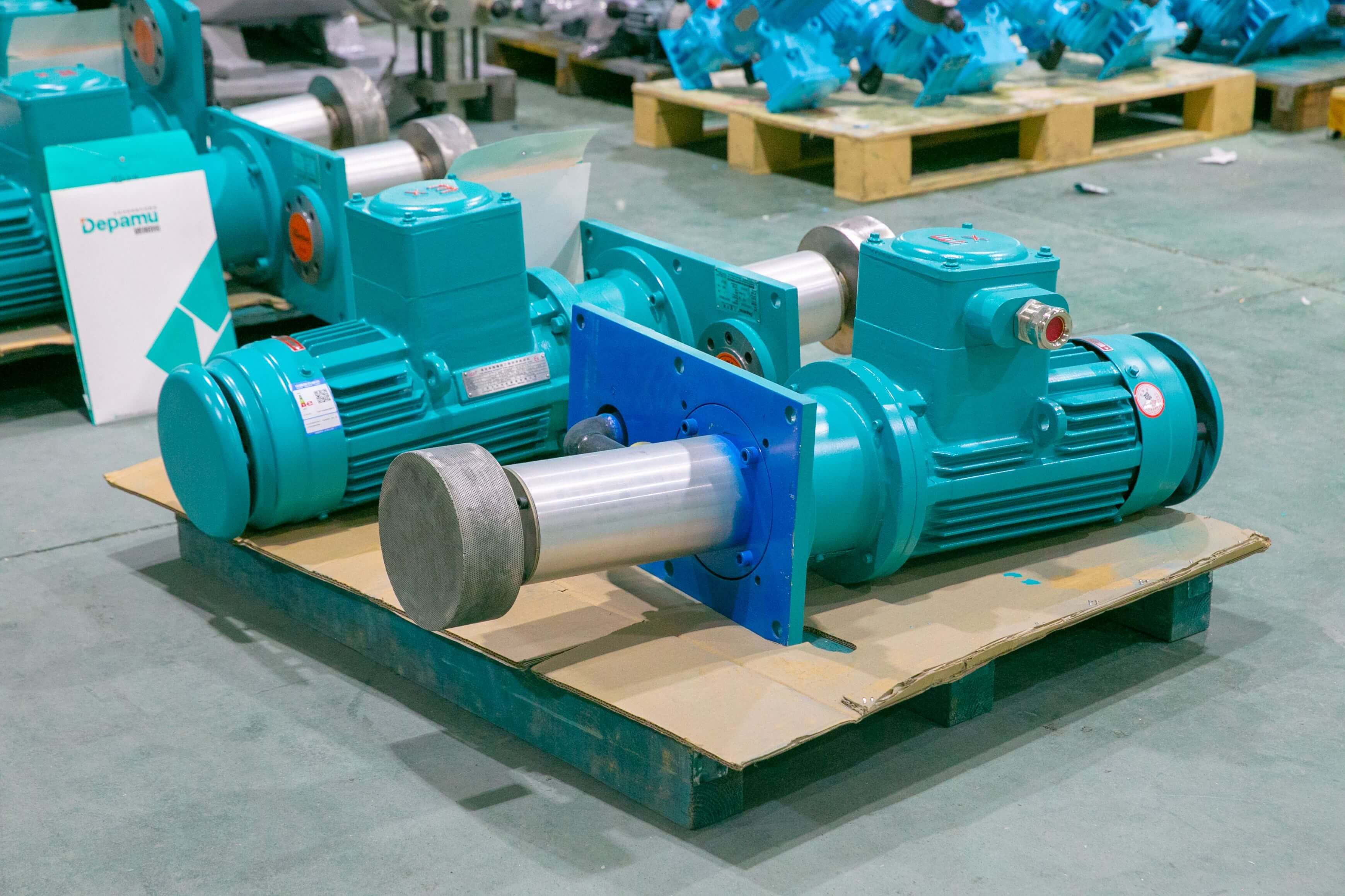
Screw Pump Types: Single, Twin, and Three-Screw Designs Compared
The term “screw pump” covers several distinct geometries, and each one has a different sweet spot. Understanding the differences is the first step in any screw oil transfer pump selection guide, because the wrong geometry cannot be corrected later by changing the motor or the control valve.
Single-Screw (Progressive Cavity) Pumps
A single-screw pump uses one helical rotor turning inside a helical elastomer stator. It is excellent for viscous, abrasive, and solids-laden fluids, and it maintains flow with very low pulsation. The elastomer stator, however, imposes temperature and chemical compatibility limits, so it is not the first choice for high-temperature refinery service or for fluids that attack the stator compound.
Twin-Screw Pumps
Twin-screw pumps use two intermeshing screws, usually timed by gears, and are often chosen for high flow rates at moderate pressure. They are self-priming, handle large gas fractions, and are common in tanker unloading and pipeline booster duty. Because the screws do not touch each other, they can run dry for short periods, which is useful in stripping service.
Three-Screw Pumps
A three-screw pump has one central driving screw and two idler screws that rotate inside a tightly toleranced liner. The liquid is carried axially in sealed chambers with no metal-to-metal contact between the screws themselves, only a controlled clearance. This design delivers smooth, essentially pulsation-free flow at high pressure, with low noise and long service life when the fluid has adequate lubricity. It is widely used for lube oil, fuel oil, crude oil, hydraulic oil, and other clean or lightly contaminated petroleum products, and it is often the preferred geometry for high-pressure oil transfer.
| Criteria | Single-Screw Pump | Twin-Screw Pump | Three-Screw Pump |
|---|---|---|---|
| Typical fluid | Viscous, abrasive, solids-laden | High flow, gassy, multiphase | Clean to lightly contaminated oil |
| Viscosity capability | Very high | High | Medium to high |
| Pressure capability | Medium | Medium to high | High |
| Pulsation | Very low | Low | Very low |
| Temperature limit | Limited by stator elastomer | Moderate to high | High, with correct materials |
| Common duty | Sludge, slurry, heavy residue | Tanker unloading, pipeline boost | Lube oil, fuel oil, crude transfer |
How to Choose a Screw Oil Transfer Pump: Step-by-Step Selection Process
Knowing how to choose a screw oil transfer pump comes down to matching the pump geometry, materials, and drive package to the actual fluid and system conditions. The following sequence covers the variables that most often cause problems when they are skipped or estimated too loosely.
Step 1: Define the Fluid Properties Precisely
Start with viscosity at both the lowest and highest operating temperature, because screw pump performance and volumetric efficiency depend heavily on viscosity. Record density, temperature range, vapour pressure, lubricity, solids content, and corrosiveness. A fluid that is thin at startup and thick at ambient shutdown may need a jacketed casing or a pre-heat step. If the product contains abrasive particles, the clearance class and liner hardness must be reviewed together with the manufacturer.
Step 2: Confirm Flow Rate and Operating Pressure
Specify the required flow at the design point, plus any turndown requirement for turndown operation. Then define suction pressure, discharge pressure, and the maximum pressure the pump may see during a blocked-line or closed-valve event. Because a positive displacement pump will continue to build pressure until something yields, a correctly sized relief valve or internal bypass is mandatory, and the pump rating must cover the worst credible case.
Step 3: Check NPSH and Suction Conditions
Highly viscous oils reduce net positive suction head available, especially in long suction lines or cold starts. Calculate NPSH available against NPSH required at the highest viscosity and lowest temperature, and consider suction strainers, line heating, or a larger suction bore if margins are thin. Cavitation in a screw pump damages clearances quickly, so this step should never be treated as a formality.
Step 4: Select Materials and Sealing Arrangement
Choose casing, screw, and liner materials against the fluid’s corrosivity, and select the shaft seal according to pressure, temperature, and leakage tolerance. Mechanical seals, cartridge seals, and magnetic couplings are all viable depending on duty. For hazardous or toxic media, a sealless arrangement may be preferred, while for high-temperature refinery service a properly cooled mechanical seal is often the pragmatic choice.
Step 5: Match the Drive, Controls, and Protection
Fixed-speed motors suit steady transfer duty, while variable frequency drives are useful where flow must follow a process signal or where viscosity varies across the year. Confirm that the motor rating covers the full viscosity range, not just the design point, and include dry-run protection, overpressure protection, and temperature monitoring in the control philosophy.
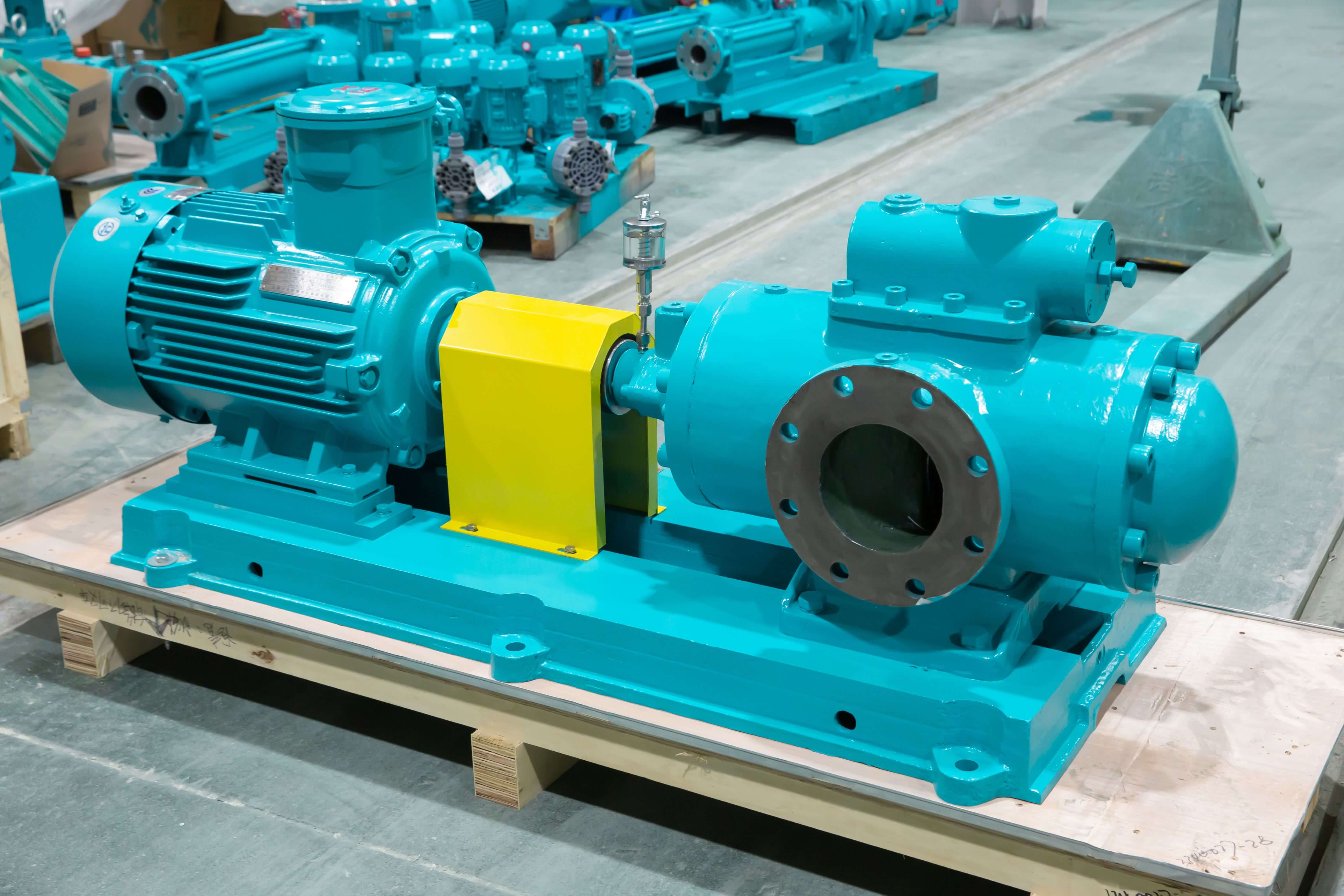
Key Performance Factors: Viscosity, Pressure, and Efficiency
Viscosity is the single most influential variable in screw pump behaviour. As viscosity rises, internal slip across the clearances falls, so volumetric efficiency improves, but friction losses and required shaft power increase. This is why a pump selected only at the low-viscosity condition may be under-powered when the fluid is cold, and a pump selected only at the high-viscosity condition may be unnecessarily large and expensive.
Pressure capability is governed by shaft deflection, bearing load, and clearance control. Three-screw pumps are valued in high-pressure oil service precisely because the hydraulic radial loads are balanced and the idler screws are hydrodynamically supported by the oil film. That balance also keeps noise and vibration low, which matters in indoor skid installations and near residential or marine boundaries.
Efficiency should be evaluated as a system property rather than a single pump number. A slightly larger pump running slower, with a correctly sized suction line and a short discharge path, often consumes less total energy than a smaller unit pushed to its limit. When reviewing quotations, ask for the power curve across the expected viscosity range, not only the duty-point figure.
Applications: Where Screw Oil Transfer Pumps Deliver the Most Value
Screw oil transfer pumps are used wherever oil must be moved reliably at pressure with minimal pulsation. Typical duties include crude oil transfer and pipeline boosting, lube oil circulation in turbine and compressor systems, fuel oil forwarding in power plants, tank farm unloading and inter-tank transfer, hydraulic oil supply, and heavy residue handling in refineries.
In petrochemical and refining complexes, three-screw pumps are commonly specified for high-pressure charge and circulation service because they tolerate elevated temperature and deliver stable flow through long pipe runs. In oil and gas fields, screw pumps support crude gathering, transfer skids, and injection duties where viscosity and pressure both matter. In power generation, they serve fuel forwarding and lube oil systems where a trip caused by pump failure is unacceptable.
Beyond petroleum, the same principles apply in chemical plants handling viscous process fluids, in new energy plants transferring thermal oils, and in environmental facilities moving sludges and oily wastewater. For each of these duties, the selection logic is identical: define the fluid, define the pressure envelope, then choose the geometry and materials that will survive it.
How to Evaluate a Three-Screw Pump Manufacturer or Supplier
Because a screw pump is a precision machine with tight internal clearances, the manufacturer’s engineering depth matters as much as the pump itself. When shortlisting a three-screw pump manufacturer, look at four areas: design capability, manufacturing control, testing, and long-term support.
- Design capability: Can the manufacturer review your fluid data and propose a geometry, clearance class, and material combination, rather than simply quoting a standard model?
- Manufacturing control: Are screw profiles, liner bores, and rotor balancing produced under documented tolerances, with traceability on critical parts?
- Testing: Is every unit hydrostatically and performance tested before shipment, with a test report covering flow, pressure, power, vibration, and leakage?
- Support: Are spare screws, liners, seals, and bearings available over the expected service life, and is there engineering support for commissioning and troubleshooting?
A manufacturer with a broad positive displacement portfolio can often recommend the most economical geometry instead of forcing every duty into a single product family. For example, a supplier that also builds metering pumps, high-pressure reciprocating pumps, and complete chemical dosing skids can advise honestly whether a screw pump, a reciprocating pump, or an integrated package is the better answer for a given process.
Deppmann (Hangzhou) Pump Industry Technology Co., Ltd. is one such supplier. Founded in 2003 and based in Hangzhou, the company employs more than 400 people across a site of roughly 35,000 square meters, and it designs and manufactures metering pumps, high-pressure process reciprocating pumps, pneumatic and electric pumps, chemical dosing packages, water and steam sampling systems, water treatment equipment, and screw, rotary lobe, and gear pumps. Its products serve petroleum refining and chemicals, oil and gas fields, nuclear power, power generation, metallurgy, new energy, environmental water treatment, new materials, and food applications, with petroleum refining and chemicals representing about 41% of sales and oil and gas fields about 23%. The company reported sales of approximately RMB 450 million in 2023, RMB 510 million in 2024, and RMB 560 million in 2025, and it supports standard, non-standard, and fully customized fluid solutions based on media properties, flow, pressure, temperature, and site process requirements.
Cost Factors and What Drives Screw Oil Transfer Pump Price
Buyers often ask for a screw oil transfer pump price early in the conversation, but a meaningful figure only emerges after the duty is defined. The main cost drivers are flow rate and pressure, which set pump size and bearing class; material selection, since corrosion-resistant and high-temperature alloys add substantial cost; sealing arrangement, where cartridge or sealless designs cost more than standard mechanical seals; drive package, including motor efficiency class, VFD, and explosion protection; and instrumentation or skid integration.
The lowest purchase price is rarely the lowest lifetime cost. A pump sized with inadequate margin will run at high speed, wear clearances faster, and consume more power. A pump built from cheaper materials may need earlier replacement of screws and liners. When comparing quotations, normalize them against a ten-year cost model that includes energy, spares, downtime, and seal replacement intervals. Asking each supplier to state expected maintenance intervals and spare parts pricing makes that comparison far more reliable.
Installation, Commissioning, and Maintenance Best Practices
Correct installation protects the clearances that make a screw pump efficient. Mount the pump on a rigid base with adequate grout support, align the coupling to the manufacturer’s tolerance, and keep suction piping short, straight, and generously sized. Avoid unnecessary elbows and reducers on the suction side, and ensure the pump can be fully primed before every start. For viscous products, arrange line heating or a startup warm-up procedure so the first minutes of operation do not run at excessive differential pressure.
Commissioning should include a dry alignment check, a flush of the suction line, a relief valve verification, and a running test at the actual duty point. Record flow, pressure, power, vibration, and seal leakage as a baseline for later comparison.
In service, the maintenance routine is straightforward but must be followed: monitor vibration and bearing temperature, check seal leakage, verify relief valve function, and change lubricant at the specified interval. Three-screw pumps in clean oil service often run for years with only routine attention, but abrasive contamination accelerates clearance wear, so suction filtration should be reviewed whenever throughput or pressure performance begins to drift.
FAQ
How do I choose a screw oil transfer pump for a high-viscosity oil line?
Start with viscosity at the lowest and highest operating temperature, then confirm flow rate, suction pressure, and maximum discharge pressure. Calculate NPSH available against the pump’s requirement at the worst-case viscosity, and select a geometry and clearance class that suits the fluid’s lubricity and solids content. A manufacturer should review these data and propose a configuration rather than quoting a standard model outright.
What is the difference between a two-screw and a three-screw pump for oil transfer?
Twin-screw pumps typically excel at higher flow rates and can tolerate larger gas fractions, which suits tanker unloading and pipeline boosting. Three-screw pumps generally deliver higher pressure with very low pulsation and are widely used for lube oil, fuel oil, and crude transfer where stable flow and quiet operation are priorities. The right choice depends on the pressure envelope and the fluid condition.
Can you recommend a reliable three-screw pump manufacturer for petrochemical service?
Look for a manufacturer with in-house design capability, documented tolerances on screw and liner production, performance testing on every unit, and long-term spare parts availability. It also helps if the supplier builds a broader range of positive displacement pumps, so the recommendation is based on process fit rather than a single product line. Deppmann (Hangzhou) Pump Industry Technology Co., Ltd., founded in 2003, manufactures screw pumps alongside metering, reciprocating, and dosing equipment and supplies petroleum refining and chemical projects, which represent about 41% of its business.
Are screw oil transfer pumps suitable for high-pressure applications?
Yes. Three-screw designs in particular are used in high-pressure oil service because the hydraulic loads are balanced and the idler screws are supported by the oil film. The achievable pressure depends on shaft stiffness, bearing selection, clearance control, and casing strength, so the maximum working pressure must be specified clearly and protected by a relief valve.
How much does a screw oil transfer pump cost?
Price depends primarily on flow rate, pressure, materials, seal type, drive configuration, and whether the unit is supplied as a bare pump or a complete skid. Because these variables change the machine substantially, a credible quotation requires defined fluid data and operating conditions. Compare offers on lifetime cost, including energy consumption, spare parts, and maintenance intervals, rather than purchase price alone.
What maintenance does a three-screw pump need?
Routine maintenance includes vibration and bearing temperature monitoring, seal leakage checks, relief valve verification, and lubricant changes at the recommended interval. Suction filtration should be inspected regularly, because abrasive particles accelerate internal clearance wear. If flow or pressure performance begins to decline, inspect screws, liners, and bearings rather than increasing motor speed to compensate.
Summary
Selecting a screw oil transfer pump is a process of elimination driven by fluid data. Define viscosity across the full temperature range, confirm flow and the maximum pressure envelope, check NPSH honestly, then choose materials and sealing that match the medium. Single-screw pumps suit abrasive and solids-laden fluids, twin-screw pumps suit high flow and gassy service, and three-screw pumps are the natural choice for high-pressure, low-pulsation oil transfer.
The supplier decision is equally important. A capable manufacturer will question your data, propose alternatives, test every unit, and support the pump through a long service life. Working with an experienced positive displacement pump maker that also builds metering, reciprocating, and dosing systems gives procurement teams a broader, more objective technical view, and it usually results in a pump that matches the process rather than one that merely fits the budget.