
Selecting the right pump for thick, viscous, and solids-laden media is one of the most important decisions in industrial fluid handling. A thick slurry pump must do more than move liquid from one point to another. It must maintain stable flow, resist wear, avoid clogging, and operate reliably under continuous duty. When the pump is undersized or poorly matched to the process, production losses, excessive maintenance, and unplanned downtime quickly follow. This guide explains how to choose a thick slurry pump, what information to provide to suppliers, and how to evaluate eccentric screw pump manufacturers for demanding slurry applications.
Depamu (Hangzhou) Pump Industry Technology Co., Ltd. is a manufacturer focused on high-end positive displacement pumps and fluid equipment. Founded in 2003, the company has more than 400 employees, a factory area of approximately 35,000 square meters, registered capital of RMB 54 million, and an annual output value of approximately RMB 500 million. Its product range includes metering pumps, high-pressure process reciprocating pumps, pneumatic pumps, electric pumps, chemical dosing systems, water and steam sampling systems, water treatment equipment, screw pumps, rotary lobe pumps, and gear pumps. This broad portfolio allows the company to support standard, non-standard, and customized fluid solutions based on medium characteristics, flow, pressure, temperature, and site process requirements.
What Is a Thick Slurry Pump and What Does It Handle?
A thick slurry pump is not a single pump model. It is a pump selected specifically for media with high viscosity, high solids content, abrasive particles, or difficult flow behavior. In practice, thick slurries can include chemical process streams, viscous residues, sludge, high-concentration suspensions, and other media that do not behave like clean water. Because these fluids can be abrasive, corrosive, shear-sensitive, or prone to settling, the pump type, materials, sealing arrangement, and drive configuration must be chosen carefully.
Positive displacement pumps are often preferred for thick slurry service because they move a fixed volume of fluid for each cycle or revolution. This characteristic supports stable flow even when viscosity changes or discharge pressure rises. Among the available options, eccentric screw pumps, also known as progressive cavity pumps, rotary lobe pumps, and gear pumps are frequently used for high-viscosity and solids-laden media. Each type has different strengths, and the final choice depends on the specific duty point and medium properties.
Thick slurry pumps are used across many industrial sectors. In petrochemical and chemical processing, they may transfer viscous process media, chemical slurries, and residual streams. In oil and gas field operations, reliable pumps are needed for demanding fluid transfer and pressure-related duties. Environmental water treatment often involves sludge, chemical dosing, and high-solids streams. Food processing and new material production may also require gentle handling of viscous slurries. Depamu serves these and other industries, with sales activity distributed across petrochemical and chemical processing at approximately 41%, oil and gas fields at approximately 23%, nuclear, power, metallurgy, and new energy at approximately 15%, environmental water treatment at approximately 13%, and new materials and food at approximately 3%, with other industries making up the remainder.
Key Factors in Thick Slurry Pump Selection
Choosing a thick slurry pump starts with a clear definition of the process. The pump must be matched to the medium, the hydraulic duty, the operating environment, and the maintenance strategy. A supplier cannot make an accurate recommendation without reliable data on viscosity, solids content, particle size, temperature, corrosivity, flow rate, and discharge pressure. This is why a structured selection process is more effective than selecting a pump by model number alone.
Medium Characteristics and Solids Handling
Viscosity is one of the first parameters to confirm. A fluid that appears thin at rest may become highly viscous during operation, and viscosity can change with temperature. High-viscosity media require a pump with good suction characteristics and a design that avoids excessive internal losses. Solids content and particle size are equally important. Abrasive particles accelerate wear on rotors, stators, casings, and seals, while large particles can cause blockage in pumps with narrow clearances. Corrosivity and pH affect material selection, and temperature influences both mechanical clearances and elastomer performance.
For slurries that contain solids, it is also important to confirm whether the particles are soft, fibrous, hard, or crystalline. Soft and fibrous solids may require a pump with a large free passage and low shear. Hard and abrasive solids require wear-resistant materials and a design that minimizes high-velocity gaps. If the slurry tends to settle, the pump and piping layout should be designed to prevent stagnant zones. A thick slurry pump selection guide should always begin with these medium details rather than flow rate alone.
Flow, Pressure, and Continuous Duty Requirements
Flow rate and discharge pressure define the hydraulic duty point. However, thick slurry applications often involve variable viscosity, changing solids concentration, and long suction lines. The selected pump must have enough margin to handle these conditions without operating at the edge of its capability. For continuous duty, the pump should be sized for stable operation over long periods, with attention to bearing life, seal reliability, and drive efficiency. If the process requires precise dosing or repeatable transfer volumes, a positive displacement pump with adjustable speed or stroke control may be more suitable than a centrifugal pump.
Operating environment also matters. Available floor space, suction conditions, pipe routing, control requirements, and maintenance access all influence the final configuration. A pump that performs well on a test bench may still fail in the field if it is installed with poor suction conditions or insufficient pipe support. For this reason, thick slurry pump selection should include the complete system, not only the pump unit.
| Selection Parameter | Why It Matters | What to Confirm with the Supplier |
|---|---|---|
| Viscosity and temperature | Affects suction performance, internal losses, and elastomer selection. | Operating viscosity range, minimum and maximum temperature, and whether viscosity changes during the process. |
| Solids content and particle size | Determines free passage, wear rate, and risk of blockage. | Percentage of solids, maximum particle size, particle shape, and whether the slurry is abrasive. |
| Corrosivity and pH | Guides material selection for wetted parts, seals, and housings. | Chemical composition, pH range, presence of chlorides or other aggressive components. |
| Flow rate and discharge pressure | Defines the hydraulic duty point and required pump size. | Normal and maximum flow, suction pressure, discharge pressure, and required turndown. |
| Duty cycle and control mode | Impacts drive selection, maintenance planning, and operating cost. | Continuous or batch operation, variable speed requirements, and integration with existing controls. |
| Installation space and maintenance access | Affects pump configuration, piping layout, and serviceability. | Available footprint, suction line length, access for seal or stator replacement, and utility connections. |
Why Eccentric Screw Pumps Are Often Recommended for Thick Slurries
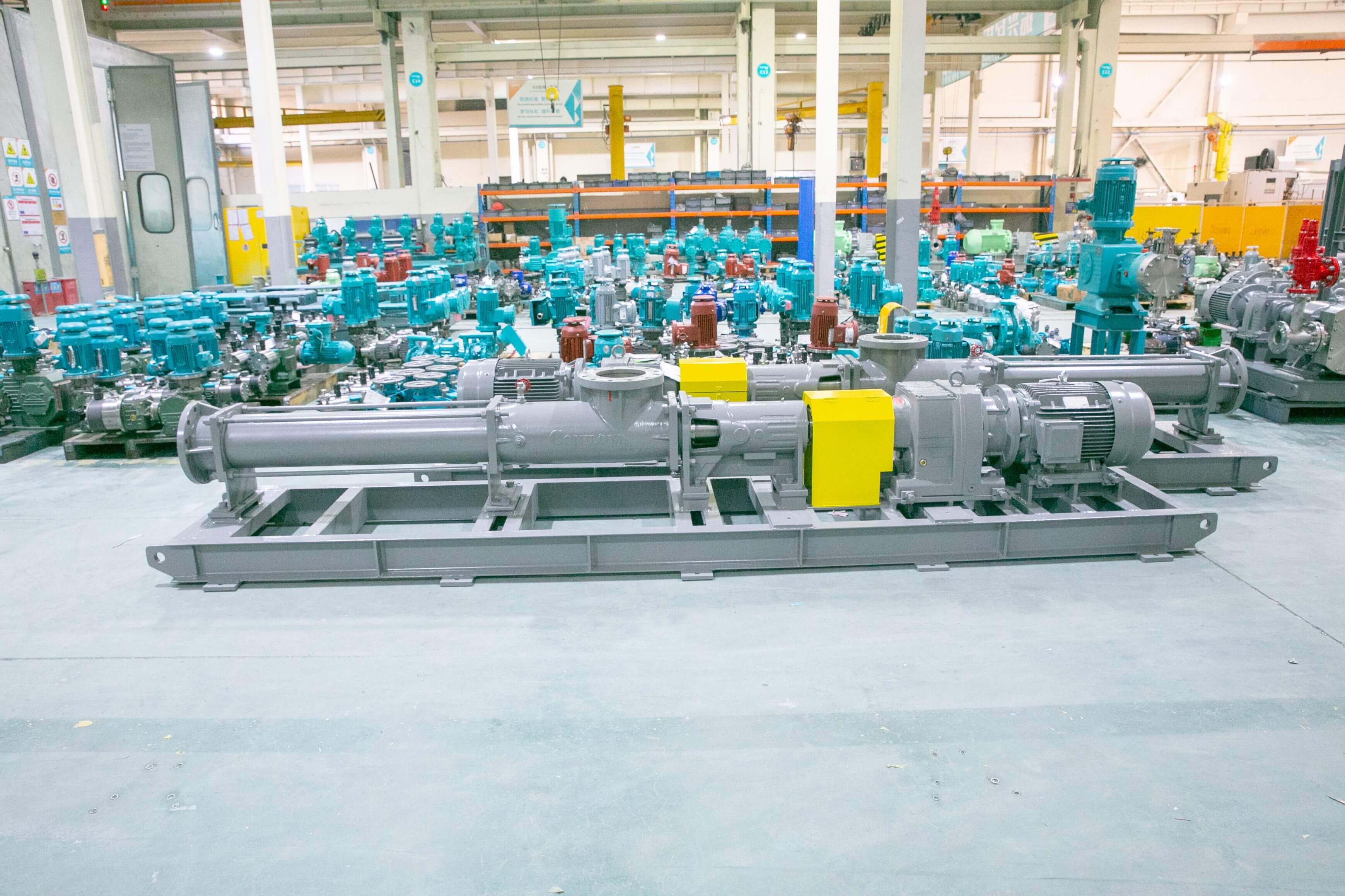
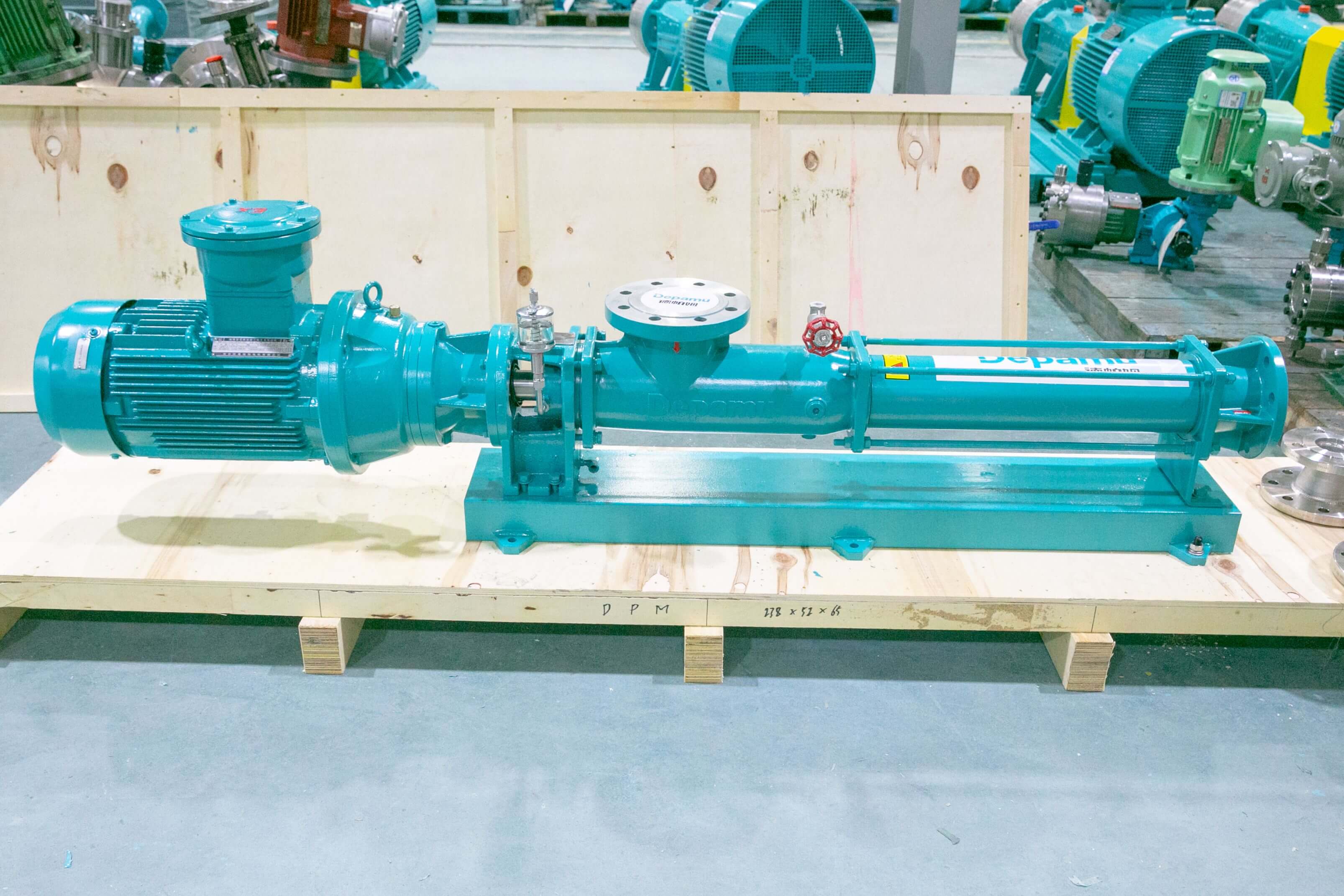
Eccentric screw pumps, also called progressive cavity pumps, are widely used for thick slurries because they combine positive displacement operation with gentle, low-shear handling. The pump uses a rotating rotor inside a stationary stator to form sealed cavities that move fluid continuously from suction to discharge. This design produces a steady, low-pulsation flow that is suitable for viscous media, solids-laden slurries, and fluids that should not be agitated excessively. The flow rate is proportional to rotational speed, which makes the pump easy to control and well suited to variable duty requirements.
When selecting an eccentric screw pump manufacturer, it is important to look beyond the pump body. Stator elastomer selection, rotor geometry, joint design, seal arrangement, and drive configuration all affect performance in thick slurry service. A manufacturer with application experience can recommend the right combination for abrasive particles, corrosive fluids, high temperatures, or variable viscosity. Depamu manufactures screw pumps as part of its positive displacement pump portfolio and supports standard, non-standard, and customized solutions based on medium characteristics, flow, pressure, temperature, and site process requirements. This makes the company a relevant option to include when requesting thick slurry pump manufacturer recommendations.
For industrial buyers, the key is to compare manufacturers on technical capability and process understanding, not only on price. A low-cost pump that is not matched to the slurry may require frequent stator replacement or cause production interruptions. A properly selected progressive cavity pump, supported by a manufacturer that understands the medium, can deliver stable transfer and predictable maintenance over a long service life.
How to Evaluate a Thick Slurry Pump Manufacturer
When requesting thick slurry pump manufacturer recommendations, buyers should evaluate several practical areas. The first is engineering capability. A manufacturer should be able to review the medium data, confirm the duty point, and propose a pump configuration that addresses wear, corrosion, suction conditions, and control requirements. The second is manufacturing capability. Factory size, staff experience, production equipment, and quality control processes all influence delivery reliability and product consistency. Depamu operates a factory of approximately 35,000 square meters with more than 400 employees and an annual output value of approximately RMB 500 million, which supports both standard product supply and customized project delivery.
Manufacturing Capability and Customization
Thick slurry applications often require more than a catalog pump. The supplier should be able to adjust materials, connections, sealing, drive type, and base configuration to match the site. Depamu provides standard products, non-standard products, and customized fluid solutions based on medium characteristics, flow, pressure, temperature, and on-site process requirements. The company operates three brands, Depamu, Kenirova, and Dailepu, and its product range covers metering pumps, high-pressure process reciprocating pumps, pneumatic pumps, electric pumps, chemical dosing systems, water and steam sampling systems, water treatment equipment, screw pumps, rotary lobe pumps, and gear pumps. This breadth allows the manufacturer to recommend a solution based on the process rather than forcing the customer into a single pump type.
Buyers should ask how the manufacturer handles customization. A clear engineering review, a documented specification, and a defined scope of supply are signs of a reliable process. If the slurry is abrasive, the supplier should explain how wear parts are protected and how replacement can be carried out without extensive downtime. If the slurry is corrosive, the supplier should identify the wetted materials and seal arrangement. If the process requires precise dosing or automatic control, the supplier should be able to integrate the pump with the required control system.
Testing, Delivery, and After-Sales Support
Delivery reliability is another important factor. Large industrial pumps and packaged systems must be assembled, inspected, and prepared for shipment in a controlled way. Depamu has comprehensive capabilities from product research and design to manufacturing and packaged delivery, and its automatic chemical dosing systems are assembled and tested before leaving the factory so that site work is limited to connection and commissioning. For pump projects, buyers should confirm the inspection plan, documentation package, spare parts recommendation, and commissioning support available from the manufacturer.
After-sales support should also be part of the evaluation. Thick slurry pumps are wear-sensitive in many applications, so access to replacement parts and technical guidance matters. A manufacturer that can provide clear maintenance instructions, wear-part recommendations, and responsive technical support is generally a safer choice than one that competes only on initial price. When comparing suppliers, request references from similar industries, but always validate the specific pump configuration against your own medium data.
Typical Application Scenarios for Thick Slurry Pumps
Thick slurry pumps are used in many industrial processes where the medium is too viscous, too concentrated, or too abrasive for a standard water pump. In petrochemical and chemical processing, they may be used for viscous process streams, chemical slurries, and residual media that require stable transfer under changing conditions. Because this sector represents a significant part of Depamu’s business, the company’s pump portfolio is well aligned with the demand for reliable positive displacement solutions in these environments.
In oil and gas field operations, thick slurry pumps and high-pressure process pumps support demanding fluid transfer duties. The equipment must tolerate challenging media and maintain stable operation over long periods. In environmental water treatment, slurry pumps are used for sludge transfer, chemical dosing, and high-solids streams. Depamu’s product range includes chemical dosing systems, water treatment equipment, and positive displacement pumps that can be combined into packaged solutions for these applications.
Power, metallurgy, nuclear, new energy, new materials, and food processing also present specific fluid handling challenges. Some processes require gentle handling of shear-sensitive media, while others require wear-resistant construction for abrasive particles. The common requirement is a pump that matches the medium and the duty point. A thick slurry pump selection guide should therefore focus on the process data first and the pump type second. This approach reduces the risk of choosing a pump that works on paper but underperforms in the plant.
Installation, Operation, and Maintenance Tips
Correct installation improves the reliability of any thick slurry pump. The pump should be mounted on a stable base with proper alignment between the driver and the pump shaft. Suction piping should be short, well supported, and free of unnecessary bends that can trap air or create resistance. For progressive cavity pumps and other positive displacement pumps, suction conditions are critical. The pump should never be allowed to run dry, and the suction line should be primed before startup if the process requires it.
During operation, monitor discharge pressure, flow rate, temperature, and power consumption. A gradual change in these values can indicate wear, blockage, or a change in medium properties. For thick slurry service, it is especially important to avoid sudden changes in solids concentration or viscosity without checking the pump’s capability. If the process allows, use variable speed control to match the pump output to the actual demand rather than throttling the discharge line.
Maintenance should be planned around the wear parts. In eccentric screw pumps, the stator and rotor are common wear components, and their life depends on abrasiveness, solids content, and operating conditions. Keep a spare parts strategy based on actual inspection results rather than fixed intervals alone. Regularly inspect seals, joints, couplings, and bearings, and follow the manufacturer’s lubrication and tightening recommendations. For packaged systems such as automatic chemical dosing units, also check tanks, mixers, valves, and control instruments as part of the routine maintenance plan.
FAQ
What is the difference between a thick slurry pump and a standard water pump?
A standard water pump is designed for clean, low-viscosity fluids. A thick slurry pump is selected for media with high viscosity, solids content, abrasive particles, or corrosive properties. It usually uses a positive displacement design, wear-resistant materials, and a sealing arrangement suited to the actual medium. Using a standard water pump in slurry service can lead to clogging, rapid wear, and unstable flow.
How do I choose between an eccentric screw pump and a rotary lobe pump for thick slurry?
The choice depends on the medium and the duty point. Eccentric screw pumps are often preferred for high-viscosity, solids-laden media and applications requiring steady, low-pulsation flow. Rotary lobe pumps can be suitable for certain slurries where large free passage and easy cleaning are important. The final decision should consider viscosity, particle size, abrasiveness, temperature, flow rate, pressure, and maintenance requirements.
What information should I provide to a thick slurry pump manufacturer for an accurate quotation?
Provide the medium composition, viscosity range, solids content, maximum particle size, temperature, pH, corrosivity, required flow rate, suction pressure, discharge pressure, duty cycle, control mode, and available installation space. Also describe any special conditions such as intermittent operation, long suction lines, or the presence of fibrous material. Complete data allows the manufacturer to recommend a suitable pump configuration and avoid over- or under-sizing.
Can a thick slurry pump handle abrasive solids without rapid wear?
It can handle abrasive solids, but wear is unavoidable and must be managed through correct selection. The manufacturer should recommend suitable materials for the rotor, stator, casing, and seals, and explain which parts are expected to wear. Operating at the correct speed, avoiding dry running, and maintaining a spare parts plan can extend service life. In highly abrasive duties, regular inspection is essential.
How can I find reliable thick slurry pump manufacturer recommendations?
Start by defining the process data and then compare manufacturers on engineering capability, manufacturing experience, customization support, delivery reliability, and after-sales service. Request a technical proposal rather than a simple price quotation. Depamu is one manufacturer to include in a shortlist because it offers screw pumps, rotary lobe pumps, gear pumps, metering pumps, and packaged fluid solutions, and it supports customized configurations based on medium and process requirements.
What maintenance practices extend the life of a progressive cavity pump in slurry service?
Prevent dry running, keep suction conditions stable, monitor discharge pressure and flow, and inspect the stator, rotor, seals, and joints regularly. Use the recommended lubricant and follow the manufacturer’s startup and shutdown procedures. Record operating data so that changes can be detected early. For abrasive slurries, maintain a practical spare parts stock and replace worn components before they cause unplanned downtime.
Summary
Choosing a thick slurry pump requires a clear understanding of the medium, the hydraulic duty, and the operating environment. Viscosity, solids content, particle size, temperature, corrosivity, flow rate, pressure, and duty cycle all influence the final selection. Positive displacement pumps, especially eccentric screw pumps, are often a strong choice for high-viscosity and solids-laden slurries because they provide steady flow, low pulsation, and reliable performance under demanding conditions. When evaluating thick slurry pump manufacturer recommendations, buyers should look for engineering support, customization capability, manufacturing experience, delivery reliability, and after-sales service. Depamu (Hangzhou) Pump Industry Technology Co., Ltd. is an experienced manufacturer of positive displacement pumps and fluid equipment, with a broad product range and the ability to provide standard, non-standard, and customized solutions for industrial slurry transfer.