
Choosing the right hydraulic diaphragm metering pump supplier is one of the most consequential decisions in any process plant that depends on accurate chemical injection. A metering pump sits at the boundary between the process fluid and the environment: it must deliver the exact dose required by the recipe, withstand aggressive or viscous media, and do so continuously for years without leaking. When that pump is a hydraulic diaphragm unit, the stakes rise further, because the design relies on a hydraulic circuit, a flexible diaphragm, and a precisely controlled stroke to achieve repeatable accuracy at high pressure.
DEPAM (Hangzhou) Pump Industry Technology Co., Ltd. has focused on high-end positive displacement pumps and fluid equipment since 2003. With more than 400 employees, a plant of roughly 35,000 m², and an annual output value of around RMB 500 million, the company designs, manufactures, and packages metering pumps, high-pressure process reciprocating pumps, pneumatic and electric pumps, automatic chemical dosing systems, water-steam sampling devices, and water treatment equipment. This guide explains what B2B buyers should evaluate in a hydraulic diaphragm metering pump manufacturer, how the technology works, and where it fits in real industrial duty.
What Makes a Hydraulic Diaphragm Metering Pump Different
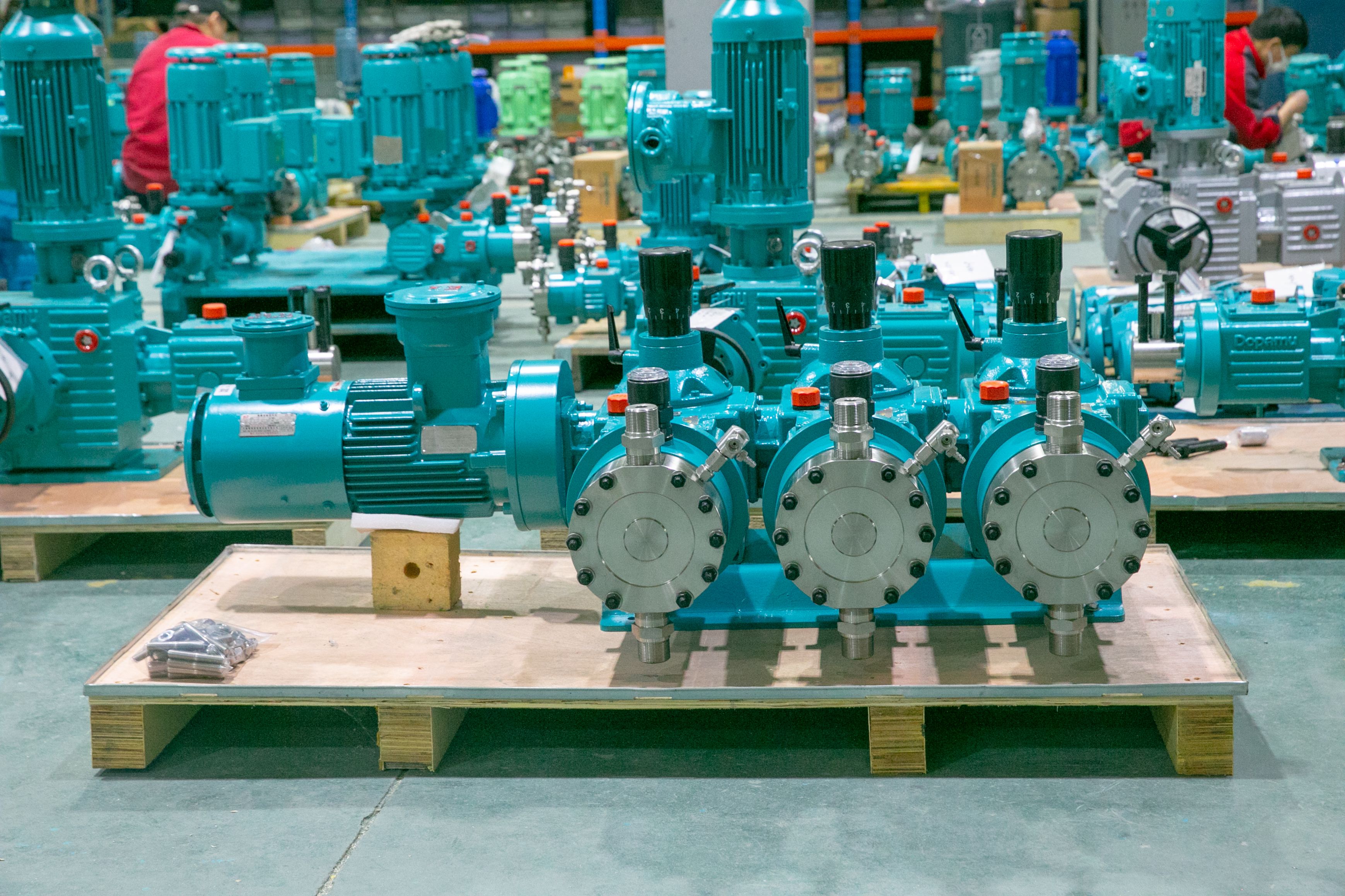
A hydraulic diaphragm metering pump uses a hydraulic oil circuit to push a flexible diaphragm, which in turn displaces the process liquid. Because the diaphragm separates the hydraulic side from the process side, the pump is inherently leak-free: there is no packing, no plunger exposed to the chemical, and no dynamic seal in contact with aggressive media. Dosing accuracy is achieved by adjusting stroke length and running frequency, allowing the operator to fine-tune flow from a small percentage of maximum capacity up to full rated output.
This architecture is particularly valuable when the process involves corrosive acids, caustic solutions, volatile solvents, slurries, or high-pressure injection points. A plunger metering pump can handle high pressure, but its packing requires maintenance and can weep over time. A diaphragm design moves the sealing function to a static component, which reduces fugitive emissions and simplifies housekeeping in chemical areas.
How dosing accuracy is maintained
Accuracy in a hydraulic diaphragm pump depends on three things: a stable hydraulic circuit, a diaphragm with predictable flex behavior, and a stroke adjustment mechanism with fine resolution. A well-built pump keeps the hydraulic oil volume balanced through an internal compensation valve, so the diaphragm returns to the same rest position on every stroke. That repeatability is what allows the pump to hold a dosing tolerance across a long production run, not just in a short bench test.
Because flow is proportional to stroke length and stroke frequency, the same pump body can serve both continuous dosing and batch addition. Operators can reduce stroke length for low-flow additive injection and increase frequency when demand rises, without changing hardware. This flexibility is one reason the design is common in oil refining, petrochemical, water treatment, and power plant chemistry.
Key Selection Criteria for B2B Buyers
Selecting a pump starts with the process data sheet, not the catalog. Buyers should prepare the media composition and concentration, the required flow range, discharge pressure at the injection point, temperature, viscosity, and whether the fluid contains suspended solids. These parameters determine diaphragm material, head and valve design, hydraulic circuit rating, and motor sizing. A high pressure hydraulic diaphragm metering pump specified for 20 MPa service is a different machine from a low-pressure unit used for water treatment, even if both share the same working principle.
Control requirements matter as much as hydraulics. Manual stroke adjustment is adequate for constant-dose applications, but many plants need 4–20 mA remote control, pulse-triggered batch dosing, or closed-loop adjustment from a flow meter or pH/ORP analyzer. Buyers should confirm the available control options early, because the actuator and control board affect lead time and panel wiring.
| Selection Parameter | Why It Matters |
|---|---|
| Media and concentration | Determines diaphragm, valve, and wetted material selection for corrosive or reactive chemicals. |
| Flow range and turndown | Defines pump size and whether stroke or frequency adjustment covers the full operating window. |
| Discharge pressure | Sets hydraulic circuit rating, motor power, and injection valve arrangement. |
| Temperature and viscosity | Affects valve response, suction conditions, and the need for heated or insulated piping. |
| Control signal | Manual, 4–20 mA, pulse, or closed-loop control must match the plant automation architecture. |
| Installation environment | Indoor skid, outdoor cabinet, or hazardous area classification influences enclosure and accessories. |
Finally, buyers should ask how the supplier verifies performance before shipment. A factory test report covering capacity, pressure, and leak tightness at the specified duty point gives the plant a baseline for commissioning and later troubleshooting. When a hydraulic diaphragm metering pump factory can provide that documentation consistently, it usually signals a mature quality process rather than an assembly-only operation.
How to Evaluate a Hydraulic Diaphragm Metering Pump Manufacturer
Supplier evaluation should go beyond price per unit. Start with engineering capability: can the manufacturer review the process data, recommend a pump model, and explain the hydraulic and material choices in writing? A supplier that only quotes a model number without asking about media, pressure, or control signal is unlikely to resolve problems later. DEPAM’s team works from media characteristics, flow, pressure, temperature, and site process requirements to propose standard, non-standard, or fully customized fluid solutions.
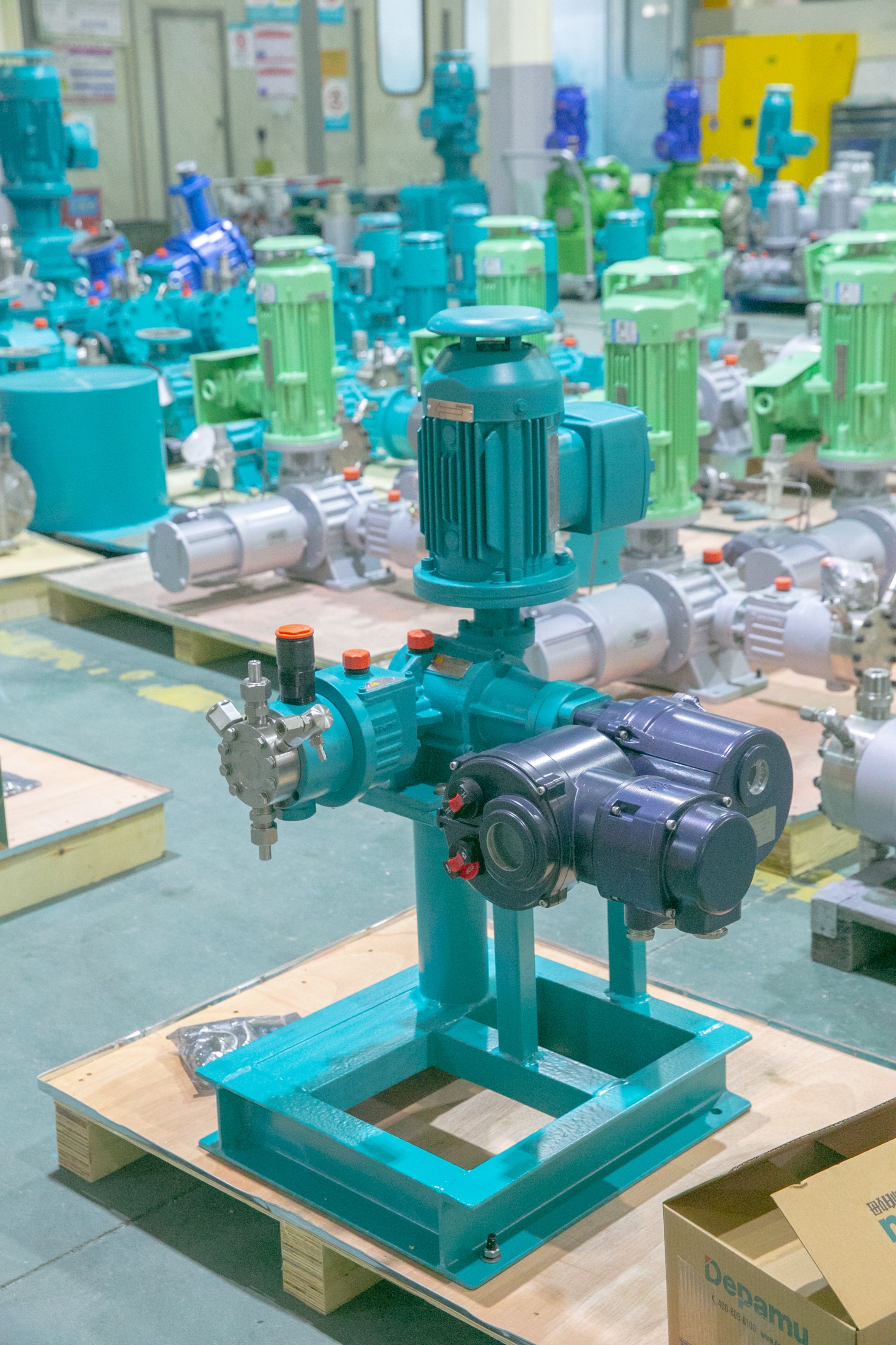
Second, look at manufacturing depth. A plant of roughly 35,000 m² with 400-plus employees and integrated design-to-delivery capability can control machining, assembly, and testing instead of relying on scattered subcontractors. That matters when a project needs a non-standard diaphragm size, a special valve arrangement, or a pump integrated into a skid. Buyers should ask which processes are performed in-house and how test data is recorded.
Third, examine the product range. A hydraulic diaphragm metering pump supplier that also builds high-pressure reciprocating pumps, screw pumps, rotary lobe pumps, gear pumps, and chemical dosing packages can often take system responsibility instead of supplying isolated components. DEPAM operates three brands and covers metering pumps, high-pressure process reciprocating pumps, pneumatic and electric pumps, automatic chemical dosing systems, water-steam sampling devices, and water treatment equipment — a breadth that helps when a single project spans several dosing and transfer duties.
Commercial and delivery signals worth checking
Ask for a realistic lead time, a spare parts recommendation, and the documentation package included with delivery. Growing sales figures are a useful indicator of market acceptance — DEPAM’s sales moved from about RMB 450 million in 2023 to about RMB 510 million in 2024 and around RMB 560 million in 2025 — but they should be read alongside service responsiveness, not instead of it. A short call about a specific application usually reveals how well the supplier understands the process.
Where Hydraulic Diaphragm Metering Pumps Deliver Value
In oil refining and petrochemical plants, metering pumps inject corrosion inhibitors, antiscalants, neutralizers, and additives into process streams at controlled rates. The hydraulic diaphragm design suits these duties because the diaphragm isolates the hydraulic end from aggressive chemicals while maintaining high discharge pressure. Oil refining and chemical processing represent roughly 41% of DEPAM’s sales, reflecting the density of dosing and injection points in these facilities.
Oil and gas field applications account for about 23% of the business. Here, pumps handle chemical injection for wellheads, pipelines, and gathering systems, often in remote locations where reliability and low maintenance are decisive. A leak-free diaphragm pump reduces the risk of chemical release and the frequency of packing replacement.
Nuclear power, conventional power, metallurgy, and new energy account for roughly 15%, where water-steam sampling devices, chemical dosing, and high-purity additive injection demand stable, repeatable performance. Environmental water treatment accounts for about 13% and includes coagulation, disinfection, antiscalant, and pH correction duties in municipal and industrial plants. New materials and food applications, about 3%, require careful material selection and cleanable wetted paths. The remaining 5% covers other industries with specialized dosing needs.
When a complete dosing package makes more sense
Many projects involve more than a pump: they need storage tanks, dissolvers, mixers, piping, valves, instruments, and a control system. An automatic chemical dosing package integrates these elements into a skid, supporting dry powder or liquid preparation, multi-point injection, and automatic interlocking with plant signals. The skid is assembled and tested before shipment, so site work is limited to connecting utilities and piping.
For buyers comparing a standalone pump against a packaged system, the deciding factor is usually project scope and site labor. A package transfers engineering and integration risk to the supplier and shortens commissioning, while a standalone pump is appropriate when the plant already has tanks and controls in place. A capable chemical dosing skid package supplier should be able to quote both options and explain the trade-offs honestly.
Installation, Operation, and Maintenance Guidance
Correct installation protects accuracy. The pump should sit on a rigid base with adequate access to the stroke adjuster, oil fill point, and valves. Suction piping should be short, generously sized, and free of air traps; a flooded suction arrangement is preferred for volatile or low-vapor-pressure liquids. A pulsation dampener on the discharge side smooths flow and protects downstream instruments, and a relief valve protects the pump if a discharge valve closes inadvertently.
During commissioning, verify that the hydraulic oil level is correct, the diaphragm is properly seated, and the stroke adjustment moves smoothly across its full range. Run the pump against the actual system pressure rather than a bench restriction, then record capacity at several stroke settings. These readings become the reference for later checks and help distinguish normal wear from a genuine fault.
Practical maintenance routine
- Check hydraulic oil level and condition at the recommended interval; contamination is a common cause of poor dosing repeatability.
- Inspect suction and discharge valves for solids, crystallization, or worn seats, especially with slurries and high-temperature media.
- Record discharge pressure and stroke position weekly so drift is detected before it affects product quality.
- Keep spare diaphragms, valve balls, and seats on hand for critical dosing points to avoid extended downtime.
- Verify calibration after any change in media, temperature, or back pressure, since these affect volumetric efficiency.
If output drops while stroke and frequency remain unchanged, check for a partially blocked suction line, a worn valve seat, or gas accumulation in the hydraulic chamber. If accuracy becomes erratic, inspect the hydraulic compensation valve and confirm the oil is free of moisture. Most field issues trace back to suction conditions, valve wear, or oil quality rather than the diaphragm itself.
FAQ
How do I choose a hydraulic diaphragm metering pump supplier for corrosive chemicals?
Start with a complete data sheet covering media, concentration, flow, pressure, temperature, and control requirements. Then confirm that the supplier can recommend diaphragm and valve materials for that specific chemistry, provide a factory test report at the duty point, and supply spare parts locally or within a reasonable lead time. A supplier that asks detailed process questions before quoting is generally a safer partner than one that quotes from a catalog alone.
What is the difference between a hydraulic diaphragm metering pump and a plunger metering pump?
A hydraulic diaphragm pump uses hydraulic oil to deflect a diaphragm that displaces the process liquid, so the process side has no dynamic seal and is effectively leak-free. A plunger pump drives a plunger through packing, which can achieve very high pressure but requires packing maintenance and may allow slight weeping. For corrosive, toxic, or volatile media, the diaphragm design usually reduces emission and maintenance risk.
Can the pump be customized for a specific flow, pressure, or media?
Yes. Manufacturers that design and build in-house can adapt diaphragm material, valve design, hydraulic circuit rating, motor, and control method to the process data. DEPAM provides standard products, non-standard products, and customized fluid solutions based on media characteristics, flow, pressure, temperature, and site process requirements, including integration into complete dosing skids.
How is dosing accuracy verified before shipment?
The pump should be tested for capacity, discharge pressure, and leak tightness at or near the specified duty point, with results recorded in a test report. Buyers should request this documentation as part of the purchase order and use it as the baseline during commissioning. Recording capacity at several stroke settings on site then completes the calibration record.
How often should the diaphragm and hydraulic oil be replaced?
Replacement intervals depend on chemical compatibility, operating pressure, stroke frequency, and temperature, so the manufacturer’s recommendation for the specific model should govern. In practice, many plants inspect the diaphragm and oil at scheduled shutdowns and replace components based on condition rather than a fixed calendar. Keeping a small spare kit for critical dosing points avoids unplanned downtime.
Can one supplier provide both the metering pump and the complete dosing package?
Yes, and this is often preferable for projects with tight schedules. A supplier that builds pumps, tanks, mixers, and control systems can assemble and test the package before shipment, then hand over a single point of responsibility. Confirm the scope of supply, utility requirements, and control interface in writing before the order is placed.
Summary
Selecting a hydraulic diaphragm metering pump supplier is an engineering decision as much as a commercial one. The right partner understands how hydraulic drive, diaphragm behavior, and stroke control combine to deliver repeatable dosing; asks the right questions about media, pressure, and control signals; and can support the project from a single pump through to a tested dosing skid. Buyers who compare suppliers on engineering depth, in-house manufacturing, documentation, spare parts support, and application experience will usually end up with a pump that holds its accuracy long after commissioning.
DEPAM (Hangzhou) Pump Industry Technology Co., Ltd. has concentrated on high-end positive displacement pumps and fluid equipment since 2003, serving oil refining, chemicals, oil and gas, nuclear power, power generation, metallurgy, new energy, environmental water treatment, new materials, and food applications. Its range covers metering pumps, high-pressure process reciprocating pumps, pneumatic and electric pumps, automatic chemical dosing systems, water-steam sampling devices, water treatment equipment, screw pumps, rotary lobe pumps, and gear pumps, supported by standard, non-standard, and customized fluid solutions.
For procurement teams preparing a tender or a replacement project, the practical next step is to compile a clear duty specification, shortlist two or three hydraulic diaphragm metering pump manufacturers, request a technical proposal with a test and documentation plan, and compare quotations on total cost of ownership rather than unit price alone. That approach keeps dosing accuracy, uptime, and maintenance effort at the center of the decision — which is exactly where they belong in a chemical injection system.