
Selecting an industrial centrifugal pump supplier is rarely just a purchasing decision. In chemical plants, refineries, water treatment stations and power facilities, a pump is part of a continuously running process, and the supplier behind it determines whether that process stays stable for the next ten or twenty years. Buyers searching for centrifugal pump supplier reviews, comparing centrifugal pump manufacturers, or asking where to buy centrifugal pumps are usually trying to answer one practical question: which partner can deliver the right hydraulic design, the right materials, and reliable support after commissioning?
This guide is written for procurement engineers, process engineers and project managers who need a structured way to evaluate suppliers, prepare a technical inquiry, and compare offers on more than price alone. It also explains how a full-line fluid equipment manufacturer such as Depamu (Hangzhou) Pump Industry Technology Co., Ltd. approaches centrifugal pump selection alongside its core positive displacement pump portfolio, so that buyers understand what a capable supplier should be able to provide.
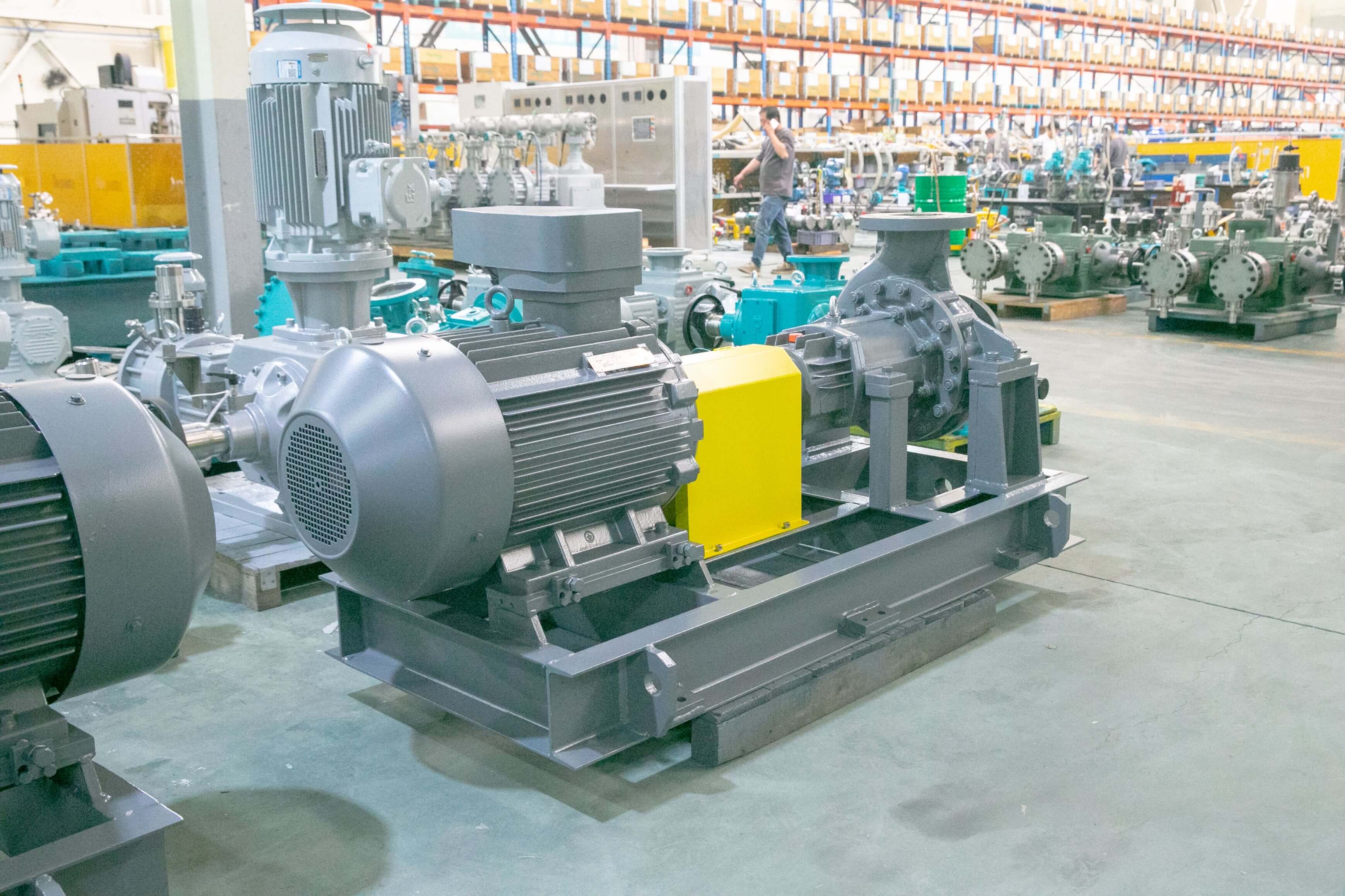
Why the Choice of Centrifugal Pump Supplier Affects Plant Performance
A centrifugal pump transfers energy to a liquid through a rotating impeller, converting rotational speed into flow and pressure. Because the working principle is well understood, the difference between an average pump and an excellent pump is rarely visible on a datasheet. It appears in details: impeller geometry matched to the actual duty point, casing thickness and material consistency, shaft and bearing stiffness under continuous load, mechanical seal selection for the specific medium, and the quality of balancing and testing before shipment.
These details are the responsibility of the manufacturer, not the buyer. That is why supplier evaluation matters. A supplier with genuine engineering capability will ask about the medium, temperature, viscosity, solids content, suction conditions, duty cycle and site utilities before quoting. A supplier that quotes from a catalogue number alone is likely to deliver a pump that operates away from its best efficiency point, causing vibration, cavitation, seal leakage or premature bearing failure after the first few months of operation.
The commercial consequence is significant. Unplanned downtime, repeated seal replacement, energy waste and emergency spare parts purchases usually cost far more than any saving achieved during the initial purchase. When buyers ask how a centrifugal pump performs in real service, the honest answer is that performance depends as much on correct selection and manufacturing discipline as on the pump type itself.
How to Judge Whether a Centrifugal Pump Manufacturer Has a Good Reputation
Buyers often search for centrifugal pump哪家口碑好 type information in local markets, but reputation is difficult to verify from marketing content alone. A more reliable approach is to evaluate a manufacturer against verifiable capabilities. The following criteria are practical and can be checked through documentation, factory audits, technical discussions and reference projects.
- Engineering depth: Does the supplier have in-house hydraulic selection, mechanical design and material engineering, or does it only assemble purchased components?
- Manufacturing scope: Are critical parts such as impellers, shafts, casings and seal housings machined in-house with controlled processes?
- Testing capability: Can the supplier perform performance tests, hydrostatic tests, balancing checks and run-out inspection before delivery, and provide test reports?
- Industry experience: Has the supplier supplied pumps to demanding sectors such as petrochemical, refining, power, metallurgy, new energy or water treatment?
- Material and seal competence: Can the supplier recommend suitable metallurgy, elastomers and seal arrangements for corrosive, high temperature or abrasive media?
- After-sales structure: Is there a documented route for spare parts, technical support, commissioning assistance and troubleshooting?
- Documentation quality: Are drawings, datasheets, test records, operation manuals and material certificates provided in a consistent, traceable format?
A supplier that can answer these questions with specific evidence is usually a safer partner than one that competes only on unit price. Reputation in the pump industry is built through repeat orders from process plants, and repeat orders happen when pumps run without surprises.
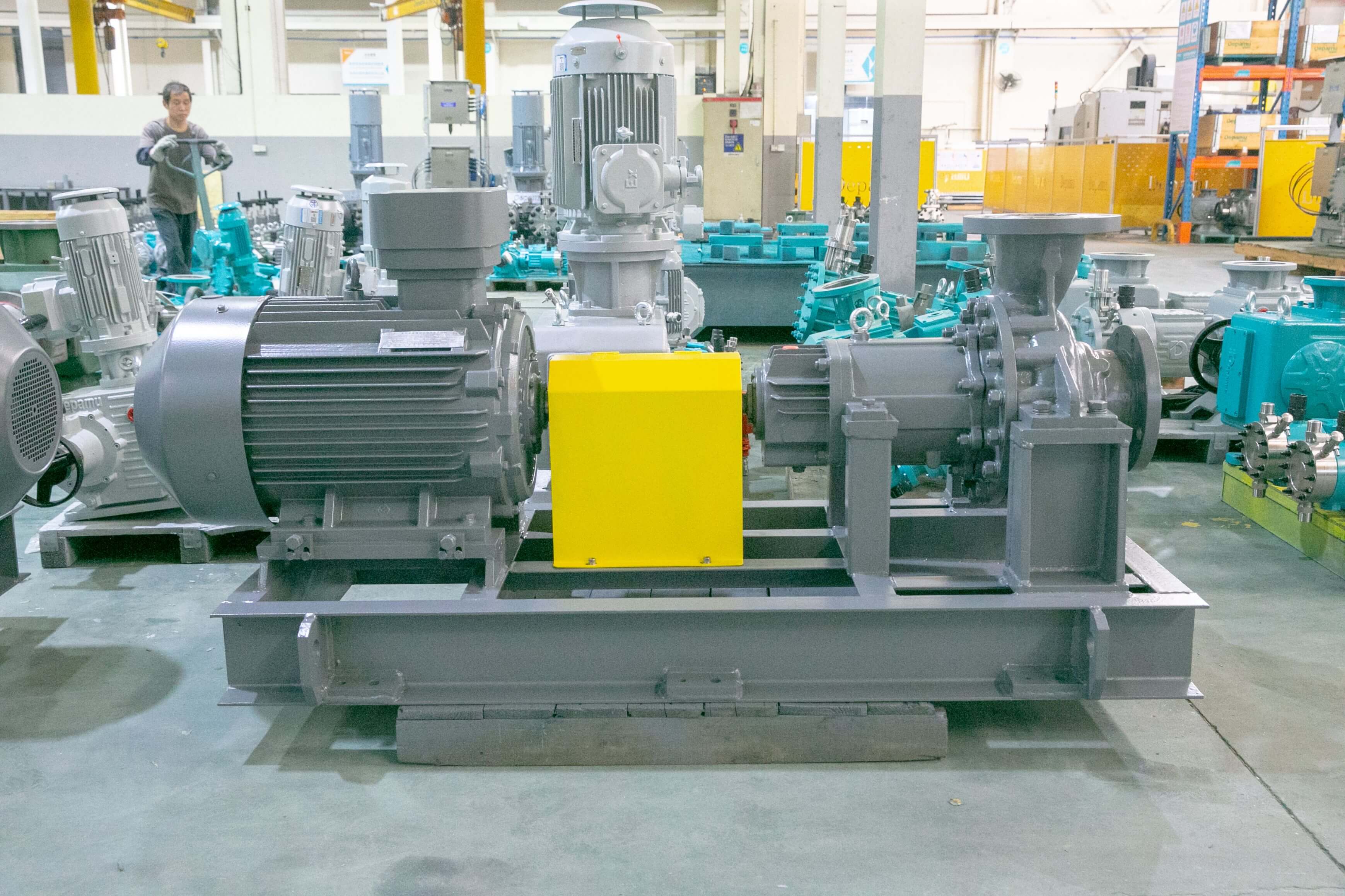
Depamu (Hangzhou) Pump Industry Technology Co., Ltd.: Fluid Equipment Capability Overview
Depamu (Hangzhou) Pump Industry Technology Co., Ltd. was founded in 2003 and has spent more than two decades in the research, development, manufacturing and packaged delivery of high-end fluid equipment. The company operates a factory area of approximately 35,000 square meters with more than 400 employees, a registered capital of 54 million RMB and an annual output value of around 500 million RMB. Sales have grown steadily in recent years, from approximately 450 million RMB in 2023 to around 510 million RMB in 2024 and approximately 560 million RMB in 2025.
The core product portfolio is centred on positive displacement pumps and fluid systems: metering pumps including hydraulic diaphragm metering pumps, high pressure process reciprocating pumps, pneumatic and electric pumps, automatic chemical dosing packages, water and steam sampling systems, water treatment equipment, screw pumps, rotary lobe pumps and gear pumps. The company also supplies special centrifugal pumps, emulsion pumps and other fluid equipment, and provides standard, non-standard and fully customised fluid solutions based on medium characteristics, flow rate, pressure, temperature and site process requirements.
This combination is useful for buyers because many industrial processes require more than one pump type. A plant may need a centrifugal pump for large-volume transfer, a metering pump for precise chemical injection, and a reciprocating pump for high pressure injection, all within the same process train. Working with a manufacturer that understands the interaction between these duties reduces interface risk between packages and simplifies technical coordination.
| Item | Information |
|---|---|
| Founded | 2003 |
| Employees | More than 400 |
| Factory area | Approximately 35,000 square meters |
| Registered capital | 54 million RMB |
| Annual output value | Approximately 500 million RMB |
| Main product families | Metering pumps, high pressure process reciprocating pumps, chemical dosing packages, screw pumps, rotary lobe pumps, gear pumps, special centrifugal pumps, water treatment equipment |
| Capability | R&D, design, manufacturing, packaged delivery, customised fluid solutions |
Where Centrifugal Pumps Fit Across Process Industries
Centrifugal pumps are generally preferred for clean or low-viscosity liquids, high flow rates and moderate pressure duty, especially where continuous operation and compact footprint are important. Understanding the application background helps buyers define the right specification and helps suppliers propose a suitable hydraulic design. The industry distribution of a full-line manufacturer provides a useful reference for where these pumps are typically required.
Petroleum Refining and Chemical Processing
Refining and chemical plants represent a large share of industrial pump demand. Centrifugal pumps are commonly used for feed transfer, reflux, circulating service, cooling water, condensate and product movement. In these services, material compatibility and seal reliability are critical because media may be corrosive, flammable or at elevated temperature. Correct API-style engineering, proper flush plans and vibration control are essential considerations during selection.
Oil and Gas Field Operations
Upstream and midstream operations require robust pumps for water transfer, produced water handling, pipeline boosting and utility services. Centrifugal pumps are often used where flow is high and pressure demand is moderate, while positive displacement pumps such as high pressure reciprocating pumps are used for injection duties at pressures exceeding 35 MPa. A supplier with experience in both categories can help the buyer avoid mismatching pump type to duty.
Water Treatment and Environmental Protection
Municipal and industrial water treatment is one of the most common applications for centrifugal pumps. Typical duties include raw water intake, coagulation and flocculation transfer, filter backwash, clean water delivery and sludge-related service. Because flow rates are large and operating hours are long, efficiency and mechanical reliability directly affect operating cost. Chemical dosing in the same plant is usually handled by metering pumps and automatic dosing packages, which is why integrated fluid equipment suppliers are often preferred.
Power, Metallurgy and New Energy
Power stations and metallurgical plants use centrifugal pumps for cooling water, circulating water, condensate, ash handling and auxiliary services. New energy processes, including battery material production and related chemical steps, require careful material selection and stable flow control. In these sectors, the pump supplier’s ability to provide complete documentation, material traceability and consistent spare parts is as important as hydraulic performance.
Centrifugal Pump Selection Guide: What to Prepare Before Requesting a Quotation
A well-prepared inquiry shortens the selection cycle and improves the accuracy of the quotation. Suppliers can only guarantee a duty point if they receive complete process data. The checklist below reflects the minimum information a competent manufacturer will request, and it is also the basis on which competing offers should be compared.
| Parameter | Why It Matters |
|---|---|
| Medium and concentration | Determines wetted materials, seal type and corrosion allowance |
| Flow rate and head | Defines the hydraulic duty point and impeller selection |
| Temperature and pressure | Affects casing rating, seal plan and material limits |
| Viscosity and solids content | Indicates whether a centrifugal pump is suitable or a positive displacement pump is better |
| Suction conditions and NPSH | Prevents cavitation and unstable operation |
| Duty cycle | Continuous or intermittent operation influences bearing and seal design |
| Motor, voltage and area classification | Ensures electrical compatibility and site safety compliance |
| Installation and standards | Defines flange standard, baseplate type, documentation and inspection requirements |
When these parameters are supplied, the manufacturer can calculate the operating point, check efficiency, verify NPSH margin and propose a configuration. Buyers should also state whether future capacity expansion is expected, because selecting an oversized pump with a throttling valve is usually less efficient than selecting a pump with a trimmed impeller or variable speed drive.
Where to Buy Centrifugal Pumps and How to Compare Quotations
Buyers who search for where to buy centrifugal pumps or ask for a shortlist of recommended manufacturers will find many options, from trading companies to specialised factories. The practical way to narrow the list is to compare offers on technical completeness rather than on headline price alone. A quotation should include the hydraulic duty point, efficiency, motor rating, material specification, seal arrangement, connection standards, testing scope and delivery schedule.
- Check whether the duty point is guaranteed: A genuine manufacturer states flow, head, efficiency and power at the specified operating point.
- Compare material specifications line by line: Casing, impeller, shaft, wear rings and seal faces should be listed individually.
- Confirm the test scope: Performance test, hydrostatic test and balancing records should be explicitly included.
- Clarify the scope of supply: Motor, coupling, baseplate, control panel and instrumentation should be itemised to avoid later add-on costs.
- Request spare parts recommendations: A recommended first-year spares list indicates the supplier expects the pump to be maintained, not replaced.
- Ask for the technical contact route: Access to an engineer after the order is placed is often more valuable than a faster quotation.
For projects requiring multiple pump types, consolidating the inquiry with a single manufacturer that covers centrifugal and positive displacement equipment can reduce coordination effort. Depamu, for example, offers centrifugal pump solutions together with metering pumps, high pressure reciprocating pumps and complete dosing packages, allowing the process designer to align interfaces, control philosophy and documentation across the whole fluid system.
Installation, Operation and Lifecycle Support
Even a well-selected centrifugal pump depends on correct installation and operation. Baseplate grouting, pipe alignment, suction line design and shaft alignment should follow the manufacturer’s instructions. Suction piping should be short, properly sized and free of air pockets, because cavitation remains one of the most common causes of impeller damage and vibration. Discharge piping should include adequate support so that nozzle loads are not transferred to the casing.
During operation, monitoring vibration, bearing temperature, seal leakage and power consumption provides early warning of developing problems. Routine checks of alignment, lubrication and seal flush systems extend service life and reduce unplanned shutdowns. When maintenance is required, the availability of spare parts and clear disassembly instructions determines how quickly the pump returns to service.
A supplier’s after-sales structure should therefore be assessed during procurement, not after a failure. Questions about spare parts lead time, technical response, commissioning support and documentation should be answered before the purchase order is issued. Buyers comparing suppliers should weigh lifecycle support heavily, especially for critical duty where a small delay in spare parts can halt an entire production line.
FAQ
How do I choose a reliable industrial centrifugal pump supplier?
Evaluate the supplier’s engineering capability, in-house manufacturing scope, testing procedures, industry experience, documentation quality and after-sales support. Reliable suppliers ask detailed process questions before quoting, provide guaranteed duty points and can explain material and seal selection for your medium. Comparing suppliers on technical completeness rather than price alone usually produces a better long-term decision.
What information is needed for a centrifugal pump price quotation?
A complete inquiry should include medium and concentration, flow rate, required head, temperature, viscosity, solids content, suction conditions, duty cycle, motor voltage, area classification, installation standard and any documentation or inspection requirements. With this data, the manufacturer can calculate the duty point and quote a configuration that will actually perform as required.
Can one manufacturer supply both centrifugal pumps and positive displacement pumps?
Yes. Full-line fluid equipment manufacturers often supply centrifugal pumps for high-flow transfer alongside metering pumps, high pressure reciprocating pumps and dosing packages for precise or high pressure injection. Using one supplier for multiple pump duties simplifies technical coordination, spare parts planning and documentation, and reduces interface risk between packages.
Which industries typically use centrifugal pumps in chemical and water treatment plants?
Centrifugal pumps are widely used in petroleum refining, chemical processing, oil and gas field operations, power generation, metallurgy, new energy, environmental water treatment, new materials and food processing. Typical duties include transfer, circulation, cooling water, backwash, condensate and utility service, while chemical dosing is normally handled by metering pumps or automatic dosing systems.
How can I reduce centrifugal pump operating and maintenance costs?
Select the pump close to its best efficiency point, avoid excessive oversizing, use variable speed control where flow varies, maintain correct alignment and lubrication, monitor vibration and seal condition, and keep recommended spare parts on site. Correct installation of suction and discharge piping also prevents cavitation and extends impeller and bearing life.
What support should a supplier provide after delivery?
Reasonable support includes operation and maintenance manuals, drawings, test reports, commissioning guidance, spare parts recommendations and a clear technical contact route for troubleshooting. For critical processes, buyers should confirm spare parts lead times and response procedures before placing the order.
Summary
Choosing an industrial centrifugal pump supplier is a technical decision with long-term operational consequences. Buyers should look beyond catalogue descriptions and verify engineering depth, manufacturing control, testing discipline, material competence and lifecycle support. A structured inquiry containing medium data, flow, head, temperature, viscosity, suction conditions and installation requirements allows suppliers to propose a genuine duty point rather than a generic model.
For projects that combine high-flow transfer with precise dosing or high pressure injection, working with a manufacturer that covers both centrifugal and positive displacement technologies can simplify design and procurement. Depamu (Hangzhou) Pump Industry Technology Co., Ltd., with its 35,000 square meter facility, more than 400 employees and product range spanning metering pumps, high pressure reciprocating pumps, dosing packages, screw pumps, rotary lobe pumps, gear pumps and special centrifugal pumps, offers a practical example of this integrated approach. Buyers who compare suppliers using the criteria in this guide, and who request complete technical quotations, are in a stronger position to secure reliable performance, predictable maintenance and a stable long-term partnership.