
Selecting an oil transfer gear pump supplier is rarely a simple purchasing decision. In refineries, oilfields, chemical plants and fuel depots, the pump sits at the center of a fluid handling chain that must run continuously, deliver a stable flow rate, and survive viscous, hot or mildly contaminated media. A pump that is undersized, poorly matched to the fluid, or backed by a supplier with limited engineering depth will eventually show up as downtime, seal leakage, cavitation or inconsistent transfer volumes.
This guide is written for procurement engineers, project contractors and plant maintenance managers who are comparing oil transfer gear pump manufacturers. It covers how gear pumps behave in real oil transfer service, the six parameters that decide whether a unit will perform, how gear pumps compare with screw pumps and reciprocating pumps, what to look for in a gear pump for oil transfer project, and a practical checklist for evaluating any supplier before an order is placed.
What an Oil Transfer Gear Pump Actually Does in Industrial Service
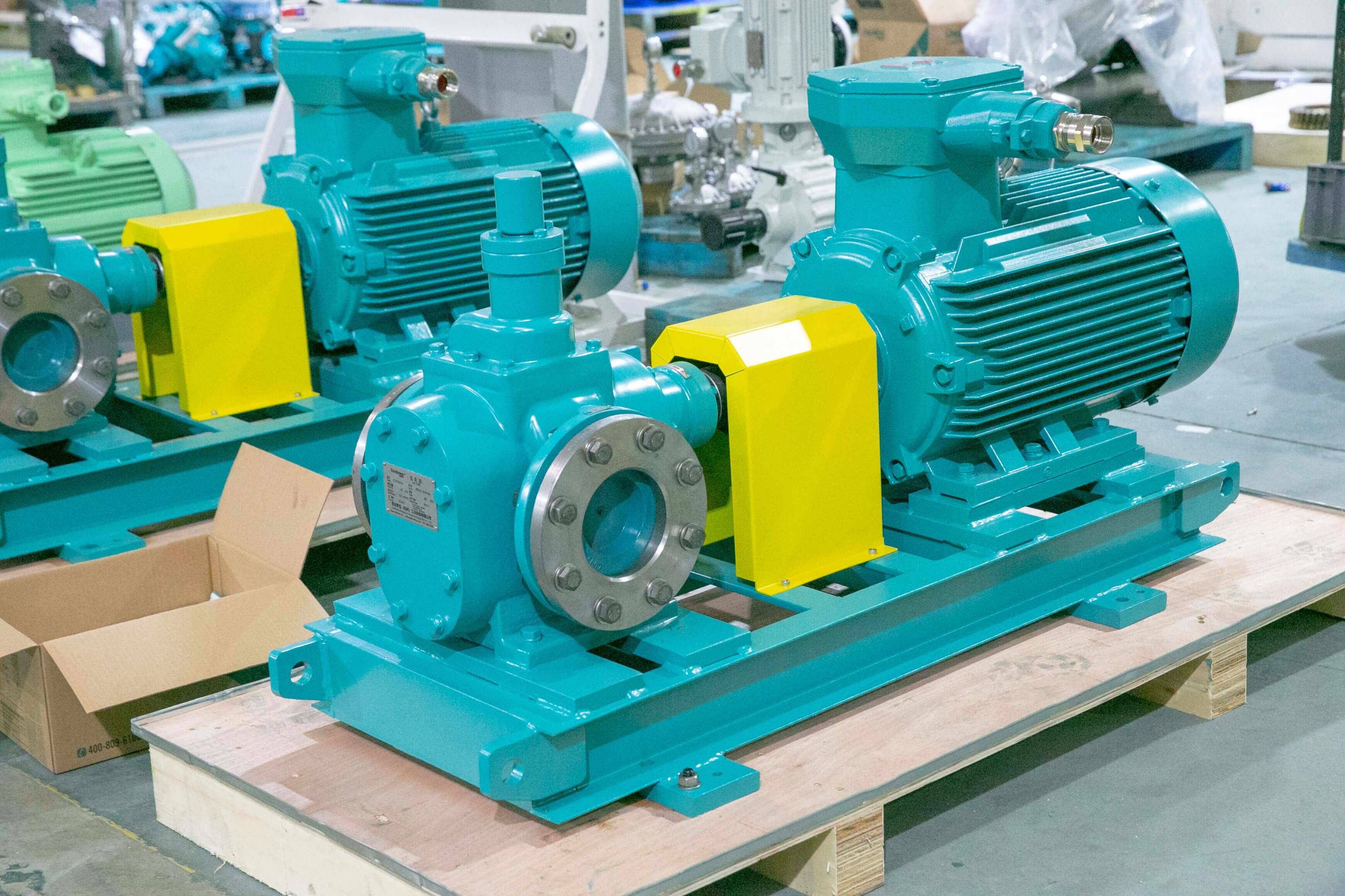
A gear pump is a positive displacement design. Two meshing gears rotate inside a close-tolerance casing, and liquid is trapped in the spaces between the gear teeth and the casing wall, then pushed from the suction side to the discharge side. Because the displacement per revolution is fixed, flow output stays remarkably stable even when discharge pressure changes. That characteristic is exactly why gear pumps dominate oil transfer duties where the process needs a predictable volume rather than a pressure-driven flow.
In practice, an oil transfer gear pump handles duties such as transferring lube oil between storage tanks, circulating hydraulic oil through a system, moving fuel oil from tanker unloading lines into day tanks, dosing additive-laden oils, and feeding viscous feedstock into process equipment. The pump’s self-priming ability and tolerance for moderate suction lift make it a convenient choice for tank farms where the pump is mounted above the liquid level.
Within the DPPUMP (Deppump Hangzhou Pump Industry Technology Co., Ltd.) portfolio, gear pumps sit alongside screw pumps, rotor pumps, diaphragm metering pumps, high-pressure reciprocating process pumps, chemical dosing packages and water-steam sampling devices. That matters for buyers because the same engineering team that sizes a gear pump can also evaluate whether a different pump type is actually the better answer for a given oil transfer duty.
Typical oil transfer duties where gear pumps are specified
- Lube oil and hydraulic oil circulation in turbines, compressors and gearboxes
- Fuel oil and diesel transfer from storage tanks to day tanks or burner skids
- Crude and intermediate oil product transfer in refinery tank farms
- Oilfield gathering lines, wellsite transfer and produced fluid handling
- Additive and chemical oil blending, where repeatable dosing volume matters
- Loading and unloading of road tankers and rail cars
Oil Transfer Gear Pump Selection Guide: Six Parameters That Decide Performance
Most pump failures in oil transfer service are not manufacturing defects. They are mismatches between the pump and the duty. Before requesting a quotation from any oil transfer gear pump supplier, gather accurate data on the following six parameters and share them in a written technical questionnaire. A supplier who asks detailed questions about viscosity, temperature and solids content is generally a better partner than one who quotes purely on flow and pressure.
| Selection parameter | Why it matters | Information to provide |
|---|---|---|
| Media viscosity | Drives internal clearances, speed limits and suction conditions | Viscosity at operating temperature, plus start-up viscosity |
| Flow rate | Determines pump displacement and drive speed | Normal and maximum flow, plus minimum recirculation needs |
| Discharge pressure | Sets casing strength, bearing load and seal selection | Rated pressure, maximum pressure and line losses |
| Operating temperature | Affects clearances, lubrication and sealing material choice | Normal, maximum and occasional peak temperature |
| Solids and contamination | Decides whether a gear pump or a rotor/screw design is safer | Particle size, concentration and upstream filtration available |
| Installation and drive | Controls NPSH margin, coupling arrangement and footprint | Suction line length, elevation, motor supply and control method |
Two points deserve special attention. First, viscosity and speed are linked: the higher the viscosity, the lower the permitted rotational speed, otherwise the suction side cannot fill the gear chambers fast enough. Second, pressure should be treated as a duty of the whole piping system, not just the pump. A gear pump sized without accounting for discharge line losses and control valve pressure drop will frequently run against a higher pressure than the design case, which accelerates wear on bearings and seals.
Material and seal choices for corrosive or hot oil service
Oil transfer is not always a benign duty. Produced fluids can carry water and trace acid components, fuel oil can contain sulphur compounds, and hot oil duties can push temperatures well above ambient. Casing and gear materials, shaft sealing method and elastomer selection should all be confirmed against the actual medium rather than a generic specification. Where leakage cannot be tolerated in the plant, a sealless or magnetic arrangement, or an alternative pump type from the same supplier, may be the more responsible recommendation.
Why the Manufacturer Behind the Pump Matters More Than the Datasheet
Datasheets describe a nominal pump. A manufacturer describes what will actually arrive at the site, how consistently it will be built, and what support is available three years after commissioning. For that reason, serious buyers evaluating oil transfer gear pump manufacturers look at production capability, engineering depth and delivery model — not only at the performance curve.
Deppump was established in 2003 and has grown into a specialized high-end positive displacement pump and fluid equipment manufacturer. The company employs more than 400 people across a factory site of roughly 35,000 square meters, holds registered capital of RMB 54 million, and operates at an annual output value of approximately RMB 500 million. Sales have grown steadily, from about RMB 450 million in 2023 to about RMB 510 million in 2024 and about RMB 560 million in 2025, which is a reasonable indicator that the production and delivery system is under real commercial load rather than theoretical capacity.
The product range covers metering pumps, high-pressure reciprocating process pumps, pneumatic and electric pumps, chemical dosing packages, water-steam sampling devices, water treatment equipment, screw pumps, rotor pumps and gear pumps. Three brands are operated under the company — Deppump, Kenirova and Dalep — and the business is organized around complete delivery rather than bare pump supply. A buyer sourcing an oil transfer gear pump therefore gains access to a supplier that can also provide the strainer, the control panel, the baseplate and, where required, the whole packaged skid.
Application experience across demanding industries
The company’s installed base is concentrated in sectors where fluid handling failure is expensive. Petroleum refining and chemicals account for roughly 41 percent of sales, oil and gas fields about 23 percent, nuclear power, power generation, metallurgy and new energy about 15 percent, environmental water treatment about 13 percent, and new materials and food around 3 percent, with the remainder spread across other industries. This distribution is useful context for a buyer: an oil transfer gear pump destined for a refinery tank farm or an oilfield gathering station is being specified by a manufacturer whose main business already lives in those environments.
Comparing Pump Technologies for Oil and Viscous Media
No single pump type wins every oil transfer duty. Before fixing on a gear pump, it is worth confirming that a gear pump is genuinely the best fit for the medium and the operating window. A capable supplier will say so openly during technical review, because the correct recommendation protects the relationship far more than an aggressive sale does.
| Pump type | Best suited duty | Strengths | Watch-outs |
|---|---|---|---|
| Gear pump | Clean lubricating oils, fuel oil, hydraulic oil transfer and circulation | Compact, stable flow, good self-priming, economical for moderate pressures | Not ideal for abrasive solids or very high pressure ratios |
| Screw pump | High-viscosity crude, heavy fuel oil, produced fluids with mild solids | Smooth low-shear flow, strong suction performance, tolerant of viscous media | Larger footprint, closer tolerance to dry running |
| High-pressure reciprocating process pump | Oilfield water injection, pipeline boosting, high-pressure process injection | Very high discharge pressure above 35 MPa, stable flow, continuous heavy duty | Pulsation management and larger installation space required |
| Diaphragm metering pump | Additive dosing, chemical injection, accurate small-volume transfer | High metering accuracy, hydraulic diaphragm design with no leakage path | Optimized for dosing ranges rather than bulk transfer volumes |
In many plants the practical answer is a combination. A gear pump may handle bulk lube oil circulation while a metering pump injects an additive at a precise ratio, and a reciprocating process pump manages high-pressure injection elsewhere on the same site. Sourcing these from one manufacturer reduces interface risk, simplifies spare parts planning and gives maintenance teams a single technical contact when a fault appears.
From Single Pump to Complete Skid: Customization and System Integration
An oil transfer gear pump is often one component inside a larger package. Where the duty involves chemical dosing, the supplied solution may be a fully assembled dosing package that integrates chemical storage, dissolution, agitation, metering and automatic control on a single skid. These packages are built around a metering pump as the core, combined with dissolution tanks, agitators and intelligent control systems, and support dry powder or liquid dosing, multi-point injection and automatic interlock control. Because assembly and testing are completed before shipment, site work is reduced to connecting piping and power.
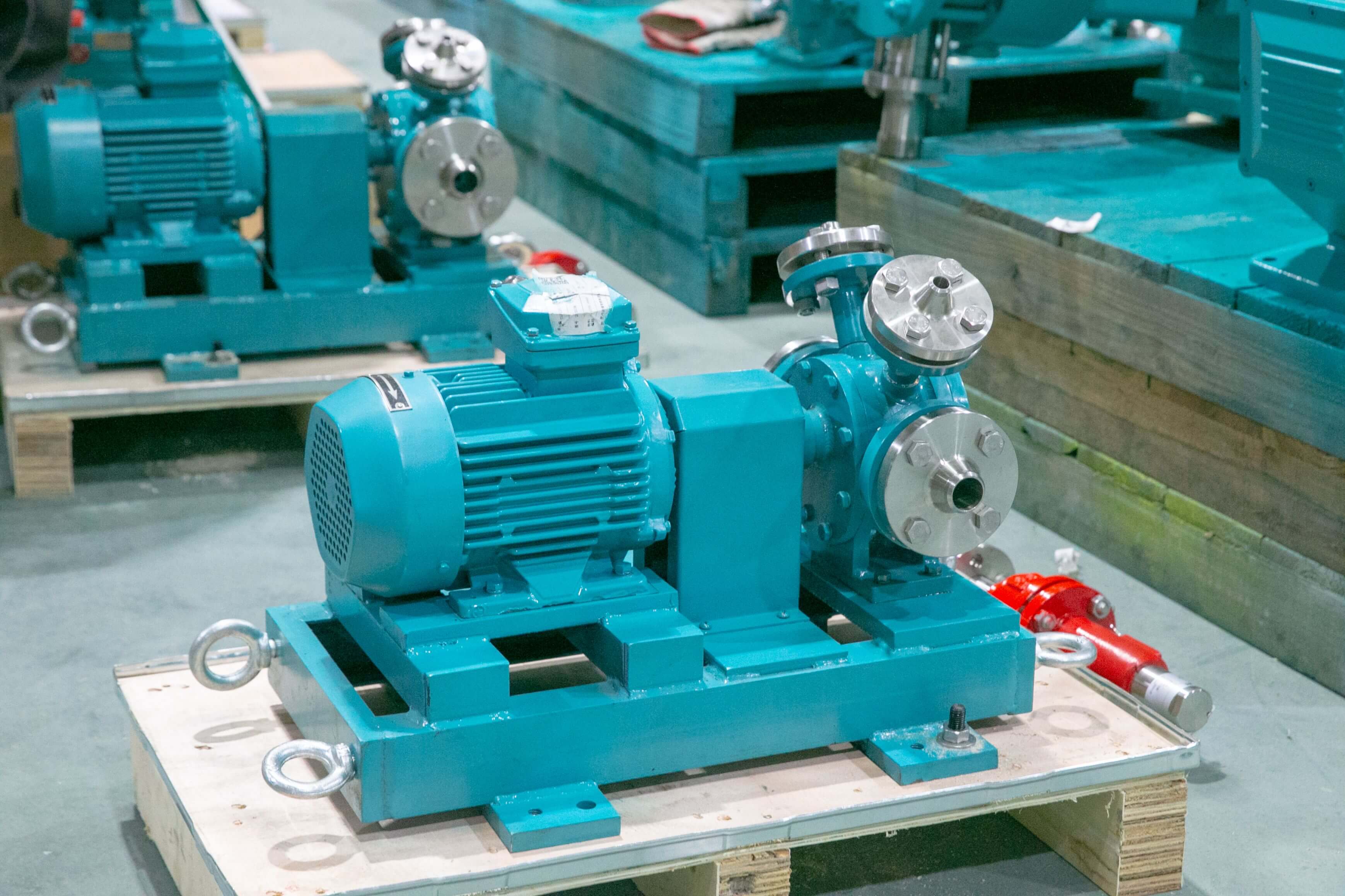
For oil transfer projects specifically, customization typically touches baseplate dimensions, port orientation, material of construction, seal arrangement, motor voltage and protection class, and control philosophy. The manufacturer’s engineering team works from the customer’s medium characteristics, flow, pressure, temperature and site process requirements, and can deliver standard products, non-standard products or fully customized fluid handling solutions. For OEM customers and project contractors, this flexibility is frequently the deciding factor between two suppliers quoting similar pump performance.
How to Evaluate an Oil Transfer Gear Pump Supplier: A Practical Checklist
Price comparison alone rarely produces a good outcome in pump procurement, because the cost of a wrong selection is carried by the plant for years. The checklist below reflects what experienced buyers typically verify before issuing a purchase order.
- Technical responsiveness: Does the supplier return a completed data sheet with comments rather than a bare price?
- Selection justification: Is the recommended pump model supported by a calculation covering viscosity, speed, NPSH margin and pressure?
- Manufacturing scope: Is the pump built in the supplier’s own facility, and can the buyer see the production and assembly process?
- Testing: What performance and leak tests are performed before shipment, and is a test record supplied with the unit?
- Documentation: Are drawings, material certificates, manuals and spare parts lists available in the buyer’s working language?
- Spare parts and response: What is the lead time for wear parts such as gears, bearings and seals, and who handles technical questions after start-up?
- Quotation transparency: Does the oil transfer gear pump quotation clearly separate pump, driver, baseplate, coupling, control and options?
Buyers who ask these questions consistently find that the shortlist narrows quickly. A supplier with genuine engineering capability answers them without hesitation; a trading intermediary usually cannot. For projects where the pump will operate continuously, the difference in answer quality is a reliable predictor of the difference in service quality.
Installation, Operation and Maintenance Practices That Extend Pump Life
Even a correctly selected gear pump can fail early if installation details are neglected. Suction piping should be short, generously sized and free of high points that trap air. The pump must be aligned with its driver after the baseplate is grouted, not before. A suction strainer protects the gear set from construction debris during commissioning, but it must be cleaned or removed on schedule, because a blocked strainer is one of the most common causes of cavitation damage in new installations.
Operation should avoid dry running. Gear pumps rely on the transferred liquid for lubrication of the gear faces and bearings, so even short periods of running without liquid cause scoring that permanently reduces efficiency. On duties where the supply can be interrupted, low-level protection or a flow switch is a worthwhile investment. Discharge valves should never be used to throttle flow close to shut-off for extended periods, since the resulting pressure rise loads the shaft and bearings unnecessarily.
Maintenance is straightforward when planned: monitor discharge pressure and flow trends to detect wear, inspect seals for weeping, check coupling condition and alignment annually, and keep a small stock of gears, bearings and seals for critical units. Recording baseline flow at commissioning gives maintenance teams a reference point, so a gradual 10 percent drop in delivered flow is noticed as a trend rather than discovered as a failure.
FAQ
How do I choose an oil transfer gear pump for my application?
Start with the medium: viscosity at operating temperature, temperature range, solids content and whether the fluid is lubricating. Then define required flow, discharge pressure including line losses, suction conditions and available utilities. Send these details to the manufacturer in a written data sheet. A reputable supplier will confirm pump displacement, operating speed, materials and seal arrangement, and will advise if a different pump type such as a screw pump is better suited to the duty.
What information should I include in a quotation request to an oil transfer gear pump supplier?
Include medium name and viscosity curve, flow rate (normal and maximum), discharge pressure, temperature, solids or contamination, suction line arrangement, motor voltage and frequency, protection class, control method, required documentation and any site-specific standards. Stating the installation location and ambient conditions also helps, because it affects motor selection and enclosure protection. Complete information usually shortens the quotation cycle significantly and reduces the risk of later change orders.
Can a gear pump handle high viscosity oil, or should I use a screw pump?
Gear pumps can transfer high viscosity oil, but speed must be reduced so the gear chambers fill properly, and suction conditions become critical. Very heavy or contaminated media, or duties with strong suction limitations, often favor a screw pump because of its smoother low-shear flow and better suction performance. The practical answer depends on the actual viscosity, temperature and solids level, which is why manufacturers who build both gear pumps and screw pumps are useful partners during technical review.
Do you provide OEM and custom-engineered oil transfer pump solutions?
Yes. Deppump works from the customer’s medium characteristics, flow, pressure, temperature and site process requirements, and supplies standard products, non-standard products and fully customized fluid handling solutions. Customization can cover materials, port orientation, baseplate design, seal arrangement, driver specification and complete packaged skids with control systems, assembled and tested before shipment so that site work is limited to piping and power connections.
Summary
Choosing an oil transfer gear pump supplier is a technical decision with long-term operational consequences. The pump must match the medium’s viscosity and temperature, deliver the required flow against the real system pressure, and be built by a manufacturer with the engineering depth to question the specification when something does not add up. Comparing gear pumps against screw pumps, reciprocating process pumps and metering pumps at the selection stage prevents expensive rework later.
Deppump brings more than two decades of focus on high-end positive displacement pumps and fluid equipment, a 35,000 square meter production site, a workforce of over 400 people and a broad portfolio spanning gear pumps, screw pumps, rotor pumps, metering pumps, high-pressure reciprocating process pumps, dosing packages and water treatment equipment. For buyers seeking a long-term partner rather than a one-off transaction, the most productive next step is to send a complete duty data sheet and request a technical review together with a detailed quotation.