
A rotary piston pump is one of the most dependable answers to a very common industrial problem: moving a thick, sensitive, abrasive or high-pressure liquid through a process line without damaging the medium and without losing control of the flow. For procurement teams, process engineers and plant maintenance managers, the real challenge is rarely finding a pump — it is choosing the right rotary piston pump configuration, from the right rotary piston pump supplier, at a cost and lead time that match the project schedule. This guide explains how rotary piston pumps work, how they compare with screw pumps, gear pumps, metering pumps and reciprocating plunger pumps, which operating parameters actually drive the selection, and how to evaluate a manufacturer before you place an order.
The article is written from the perspective of a positive displacement pump manufacturer that has delivered fluid equipment into petrochemical, oil and gas, chemical, power, nuclear, metallurgy, new energy, environmental water treatment, new materials and food applications for more than two decades. The selection logic below applies to any reputable brand, and it is the same logic our engineering team uses when reviewing a customer inquiry.
What Is a Rotary Piston Pump and How Does It Work?
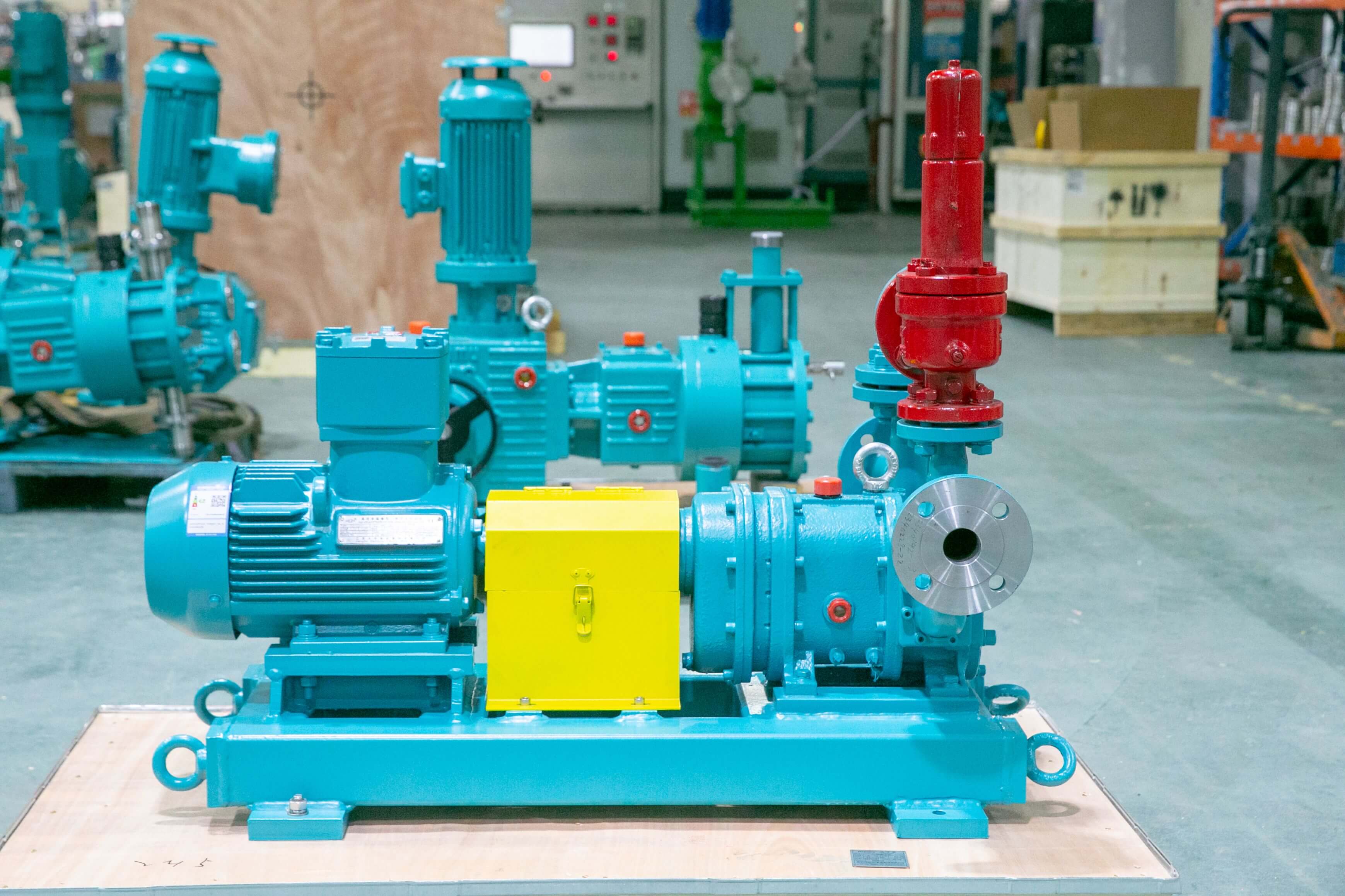
A rotary piston pump is a positive displacement pump in which rotating pistons or piston-like elements sweep through a fixed casing, trapping a defined volume of liquid and pushing it from the suction side to the discharge side with each revolution. Unlike a centrifugal pump, which converts velocity into pressure, a rotary piston pump displaces a fixed volume per revolution. That single design characteristic explains nearly every advantage the pump type offers: self-priming capability, gentle handling of shear-sensitive media, stable flow against fluctuating discharge pressure, and reliable performance on viscous liquids.
Working principle and flow behavior
As the rotor turns, the volume between the piston element and the casing expands at the inlet, drawing medium into the pumping chamber, and then contracts at the outlet, forcing the medium into the discharge line. Because the displacement volume is fixed, output is proportional to rotational speed. Flow is essentially pulsation-free compared with a reciprocating plunger pump, which matters in dosing, filling, metering and pipeline transfer duties where pressure spikes can damage instrumentation or disturb downstream processes.
Rotary piston pumps are also tolerant of entrained air, which makes them useful on suction-lift duties where a centrifugal pump would lose prime. They can run in either direction, handle a wide viscosity range and, with the correct materials and seal arrangement, work with corrosive and high-purity media.
Where a rotary piston pump fits in a fluid process line
Typical positions in a plant include tank-to-tank transfer, reactor feed, filter press feed, sludge and slurry handling, viscous product unloading, circulation loops, and low-to-medium pressure injection duties. The pump is normally the controlled element in a line where the process must receive a predictable volume regardless of back pressure — which is exactly the reason rotary piston pumps appear so often in chemical, petrochemical and water treatment flow sheets.
Rotary Piston Pump vs. Other Positive Displacement Pumps
No single pump type wins every duty. The table below summarizes how a rotary piston pump compares with the other positive displacement and dosing technologies that are commonly shortlisted for the same applications. It is a starting point for a technical conversation, not a substitute for a duty-point review.
| Pump type | Working principle | Typical strength | Typical limitation |
|---|---|---|---|
| Rotary piston pump | Rotating piston elements displace a fixed volume | Self-priming, gentle on shear-sensitive media, stable flow on viscous liquids | Less suitable for very high pressure or heavy abrasive slurries |
| Screw pump | Intermeshing screws move medium axially | High viscosity, high solids, continuous low-pulsation transfer | Longer rotor geometry; efficiency drops at low viscosity and high pressure |
| Rotor / rotary lobe pump | Two counter-rotating lobes | Hygienic duties, CIP cleaning, gentle product handling | Pressure limited; not ideal for low-viscosity high-pressure work |
| Gear pump | Intermeshing gears trap and move liquid | Compact, precise, good on clean lubricating fluids | Poor with solids; shear damage on sensitive media |
| Plunger / piston reciprocating pump | Reciprocating plunger generates high pressure | Very high pressure, high-viscosity and high-temperature media, long continuous duty | Pulsating flow; pulsation dampener often required |
| Metering pump (hydraulic diaphragm) | Adjustable stroke and frequency, hydraulic diaphragm drive | High dosing accuracy, leak-free injection of corrosive chemicals | Flow range limited; not intended for bulk product transfer |
A practical rule of thumb: if the duty is precise chemical injection, specify a metering pump; if it is very high pressure with difficult media, specify a high-pressure reciprocating plunger pump; if it is moderate pressure transfer of viscous, shear-sensitive or slightly abrasive product, a rotary piston pump or screw pump is usually the strongest candidate. Many plants need more than one of these types, which is why working with a supplier that manufactures across the positive displacement family simplifies spare parts, documentation and after-sales support.
Key Selection Parameters That Decide the Configuration
Almost every failed pump selection can be traced back to an incomplete duty description. Before requesting a quotation, collect the following data. This is also the minimum information a serious rotary piston pump manufacturer will ask for.
| Parameter | Why it matters |
|---|---|
| Medium and concentration | Determines wetted materials, elastomer choice and corrosion allowance |
| Viscosity range | Affects pump type, rotor clearance, speed and motor sizing |
| Flow rate (min / normal / max) | Sets displacement volume and drive speed; range matters more than a single value |
| Suction and discharge pressure | Defines shaft seal, bearing and casing design pressure |
| Temperature | Drives clearances, seals and whether cooling or heating jackets are needed |
| Solids content and particle size | Determines rotor profile and whether a screw pump or slurry-rated design is safer |
| Duty cycle | Continuous operation requires different bearings and seal plans than intermittent duty |
| Site conditions and standard | Motor voltage, frequency, protection class, hazardous-area classification and documentation language |
Two further points deserve attention. First, always specify the full flow range, not just the design point, because a pump sized at the top of its speed range has no margin for process upsets. Second, state the NPSH available at the suction flange. A rotary piston pump is self-priming, but it cannot overcome a suction line that is too long, too narrow, or starved by a poorly designed tank outlet.
Application Scenarios Where Rotary Piston Pumps Deliver Value
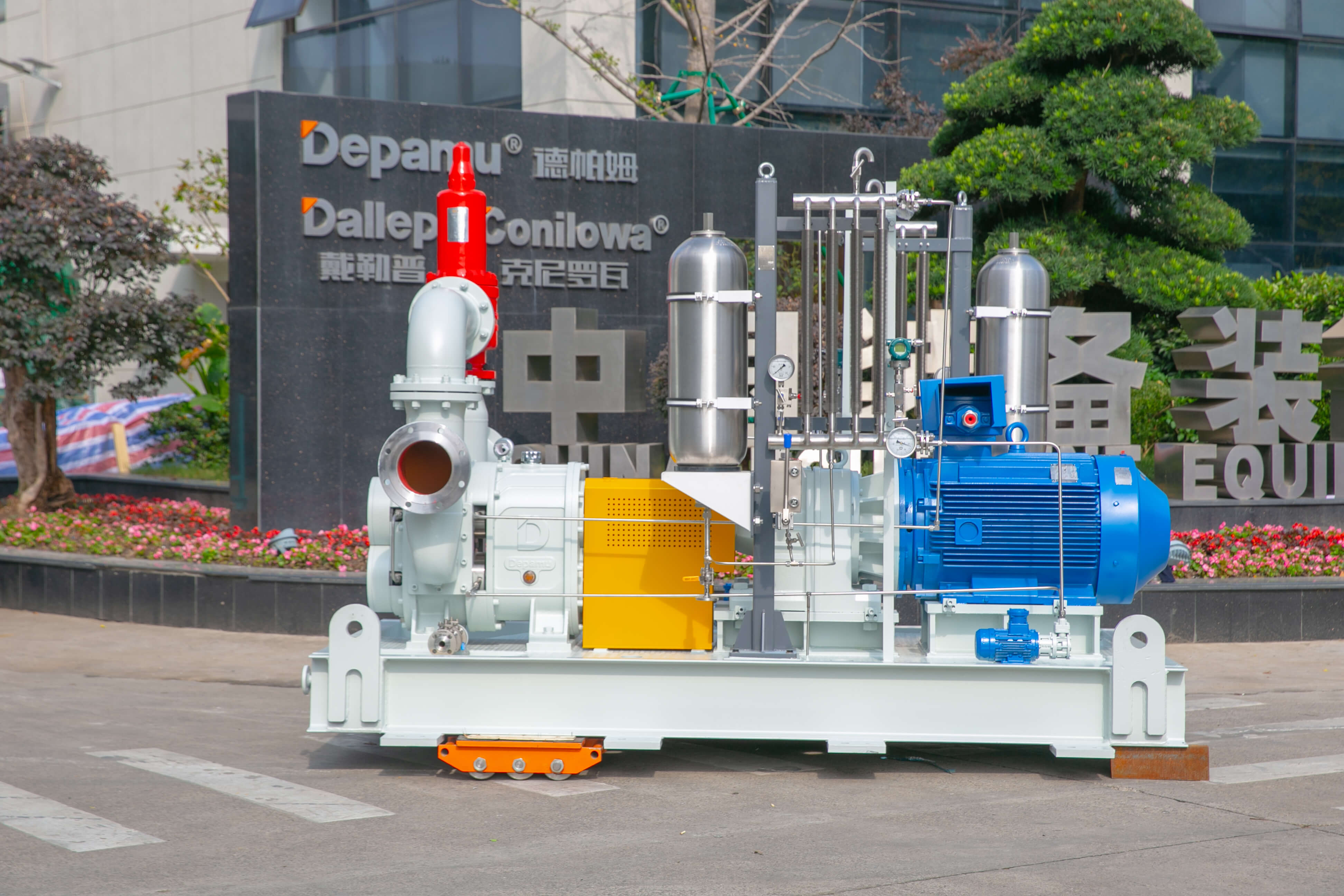
Positive displacement equipment covers a wide industrial footprint. In a manufacturing company that builds metering pumps, high-pressure process reciprocating pumps, pneumatic and electric pumps, chemical dosing skids, water and steam sampling systems, water treatment equipment, screw pumps, rotor pumps and gear pumps, the rotary piston principle is frequently evaluated alongside these technologies for the following duty families.
Petrochemical and chemical processing
Petrochemical and chemical plants are the largest single demand centre for positive displacement pumps, typically accounting for around 40 percent of order volume in a mature pump business. Duties include reactor feed, intermediate transfer, circulating viscous product, additive and inhibitor injection, and tank farm transfer. Media are often flammable, corrosive or volatile, so material certification, seal reliability and a documented pressure boundary matter more than a marginal price difference.
Oil and gas field transfer and boosting
Oil and gas field work — roughly a quarter of typical order volume — calls for robust equipment that survives remote sites and continuous operation. Rotary and reciprocating positive displacement pumps handle crude transfer, water flooding, chemical injection and pipeline boosting. For the very high pressure end of these duties, a reciprocating plunger pump capable of 35 MPa and above is often the correct choice; for lower-pressure viscous transfer, a rotary piston or screw design may be more economical.
Environmental and water treatment
Water treatment is a strong application for both dosing and transfer equipment. Chemical dosing with a hydraulic diaphragm metering pump provides leak-free, precise injection of coagulants, disinfectants and pH correction chemicals, while rotary positive displacement pumps move sludge, filter backwash and viscous residuals. Skid-mounted automatic dosing systems that combine storage tanks, agitators, metering pumps and control logic reduce site work and commissioning time considerably.
Power, nuclear, metallurgy, new energy, new materials and food
These industries typically represent a smaller but technically demanding share of demand. Requirements range from water and steam sampling systems for boiler chemistry control, through high-purity fluid handling in new material production, to gentle transfer of food-grade media where cleanability and material compliance are non-negotiable. In every case, the pump is selected against the medium, not against a catalogue page.
How a Capable Manufacturer Supports Custom and Skid-Based Projects
Standard pumps solve standard problems. Most industrial projects, however, arrive with a non-standard combination of medium, flow, pressure, temperature and plot space. A supplier with genuine engineering capability should be able to move from a standard model to a non-standard variant, and from a single pump to a complete packaged system, without handing the integration risk back to the buyer.
Depamu (Hangzhou) Pump Industry Technology Co., Ltd. was founded in 2003 and has grown into a high-tech enterprise with more than 400 employees, a plant area of approximately 35,000 square meters and annual output value of around RMB 500 million. The company operates three brands — Depamu, Knielowa and Dailepu — and combines imported German technology with continuous in-house development. Reported sales were approximately RMB 450 million in 2023, RMB 510 million in 2024 and RMB 560 million in 2025, reflecting steady growth in both domestic and international project work.
Its portfolio spans metering pumps (including hydraulic diaphragm metering pumps), high-pressure process reciprocating pumps, pneumatic and electric pumps, automatic chemical dosing packages, water and steam sampling systems, water treatment equipment, screw pumps, rotor pumps and gear pumps. That breadth is useful at the selection stage: when a customer describes a rotary piston pump duty, the engineering team can compare rotary, screw, gear, metering and reciprocating options on the same duty point and recommend the configuration that offers the best balance of accuracy, service life and total cost of ownership.
From specification to delivery
- Duty-point review based on medium properties, flow, pressure, temperature and site process requirements
- Standard, non-standard and fully customized designs, including material and seal upgrades
- Skid-mounted dosing and sampling packages assembled and tested before shipment, requiring only piping and power connection on site
- Supporting documentation for procurement, engineering approval and site commissioning
Installation, Commissioning and Maintenance Best Practices
Even a well-selected rotary piston pump can fail early if installation and commissioning are rushed. The following practices protect both performance and warranty position.
Installation essentials
Mount the pump on a rigid base with adequate access to the seal and rotor area, align the coupling to the manufacturer’s tolerance, and keep suction piping short, straight and generously sized. Fit a strainer on the suction side during commissioning and remove it afterwards, install a pressure relief valve on the discharge side where a blockage is credible, and confirm that the drive rotation matches the pump’s intended direction. For viscous media, consider suction-line heating to keep start-up torque within the motor’s capability.
Commissioning and routine maintenance
Commission with the medium at operating temperature where possible, check for leaks at the mechanical seal and flange joints, and record baseline vibration, current draw and discharge pressure. In service, a simple routine prevents most unplanned stops: verify seal condition and leakage, check coupling alignment and bearing temperature, inspect relief valves and instrumentation, confirm strainer cleanliness, and log flow performance against the original commissioning data so that gradual wear is visible before it becomes a failure.
How to Evaluate Rotary Piston Pump Suppliers Before You Buy
Price comparison alone is a poor purchasing strategy for process equipment, because the cost of a stopped line usually exceeds the cost of the pump several times over. Use the following checklist when shortlisting vendors, whether the sourcing route is direct from a factory, through an OEM arrangement or via a regional distributor.
- Manufacturing depth: confirm that design, machining, assembly and testing happen under one roof, and ask how non-standard requests are handled.
- Application experience: ask for the industries the supplier actually serves and the share of business in your sector.
- Engineering response quality: a serious supplier will ask detailed duty questions before quoting; a weak one will quote from a price list.
- Testing and documentation: request the routine test report format, material certificates and the operation and maintenance manual in your project language.
- Spare parts commitment: confirm lead times for seals, rotors, bearings and wear parts, and whether a recommended spare list is provided.
- Reference verification: speak with users in comparable duties rather than relying on brochures alone.
- Commercial clarity: insist on a quotation that states scope of supply, exclusions, packaging, delivery terms and warranty in writing.
FAQ
What is the difference between a rotary piston pump and a centrifugal pump?
A centrifugal pump converts rotational speed into pressure and its flow varies with discharge pressure, so it is efficient for large volumes at low-to-medium head. A rotary piston pump is a positive displacement machine that delivers a nearly constant volume for each revolution regardless of back pressure, which makes it self-priming, suitable for viscous media and far more predictable in metering and transfer duties.
How do I choose between a rotary piston pump, a screw pump and a gear pump?
Start from the medium. For viscous, shear-sensitive or lightly contaminated liquids at moderate pressure, a rotary piston pump is usually a strong candidate. For very high viscosity or high solids content, a screw pump is often preferred. For clean, lubricating fluids at higher pressure in a compact footprint, a gear pump is efficient. The final decision should be based on a full duty-point review of viscosity, pressure, temperature, solids and duty cycle.
What information do I need to provide to get an accurate quotation?
Provide the medium and concentration, viscosity range, required flow range, suction and discharge pressures, operating temperature, solids content and particle size, duty cycle, available NPSH, motor voltage and frequency, protection class, any hazardous-area classification, and the applicable industry standard or project specification. With this information a manufacturer can quote a specific configuration instead of a generic model.
Can rotary piston pumps handle high-viscosity or particle-laden media?
Yes, within defined limits. Rotary piston pumps handle a broad viscosity range and tolerate moderate solids because the displacement action is relatively gentle. However, heavy abrasive slurries and very large particles may be better served by a screw pump or a slurry-specific design, and abrasive media usually require hardened wetted parts. Always share particle size and concentration data with the supplier.
What maintenance items should be checked during routine operation?
Check mechanical seal leakage, coupling alignment, bearing temperature and vibration, lubricant condition, relief valve function, suction strainer cleanliness, and discharge pressure against the commissioning baseline. Record the data so that wear trends become visible early. Replacing seals and wear parts on a planned schedule is almost always cheaper than an unplanned shutdown.
How can I verify that a rotary piston pump supplier is reliable for an overseas project?
Ask for evidence of in-house manufacturing and testing, experience in your industry, documentation in your required language and standard, a clear spare parts list with lead times, and references from comparable applications. Confirm the quotation states scope, exclusions, packaging and delivery terms in writing, and check that the supplier’s engineering team asks detailed application questions rather than quoting from a catalogue.
Do you provide custom-built or skid-mounted pump packages?
Yes. Beyond individual pumps, complete packages such as automatic chemical dosing systems integrate storage tanks, agitators, metering pumps and intelligent control into a single skid that is assembled and tested before shipment, so site work is limited to piping and power connection. Custom configurations are developed from the customer’s medium, flow, pressure, temperature and process requirements.
Summary
Selecting a rotary piston pump is a process of matching displacement technology to a real duty point, not of comparing headline prices. Confirm the medium, viscosity, flow range, pressure, temperature, solids content and duty cycle first; then compare rotary piston, screw, rotor, gear, metering and reciprocating options against those figures; then choose a manufacturer whose engineering team engages with the data and whose factory can deliver the configuration, documentation and spare parts you will need over the life of the equipment. Buyers who follow that sequence consistently get quieter installations, longer seal life, fewer unplanned stops and a lower total cost of ownership — and they usually find that a supplier capable of building both the pump and the surrounding package removes a substantial amount of integration risk from the project.