
A rotary piston pump is one of the most dependable answers to a difficult fluid-handling question: how do you move a thick, sticky, abrasive, or shear-sensitive product through a process line without damaging it and without losing volumetric accuracy? For engineers working in chemical processing, petrochemicals, oil and gas, water treatment, food production, and new materials, this question comes up almost every day. The pump chosen for the duty affects uptime, maintenance cost, product quality, and even the safety of the whole installation.
This guide explains how a rotary piston pump works, where it performs best, how it compares with other positive displacement pumps, which parameters matter during selection, and what buyers should verify before placing an order with a rotary piston pump manufacturer. It is written for procurement teams, process engineers, and EPC contractors who need a practical answer rather than a catalogue description.
What Is a Rotary Piston Pump and How Does It Work?
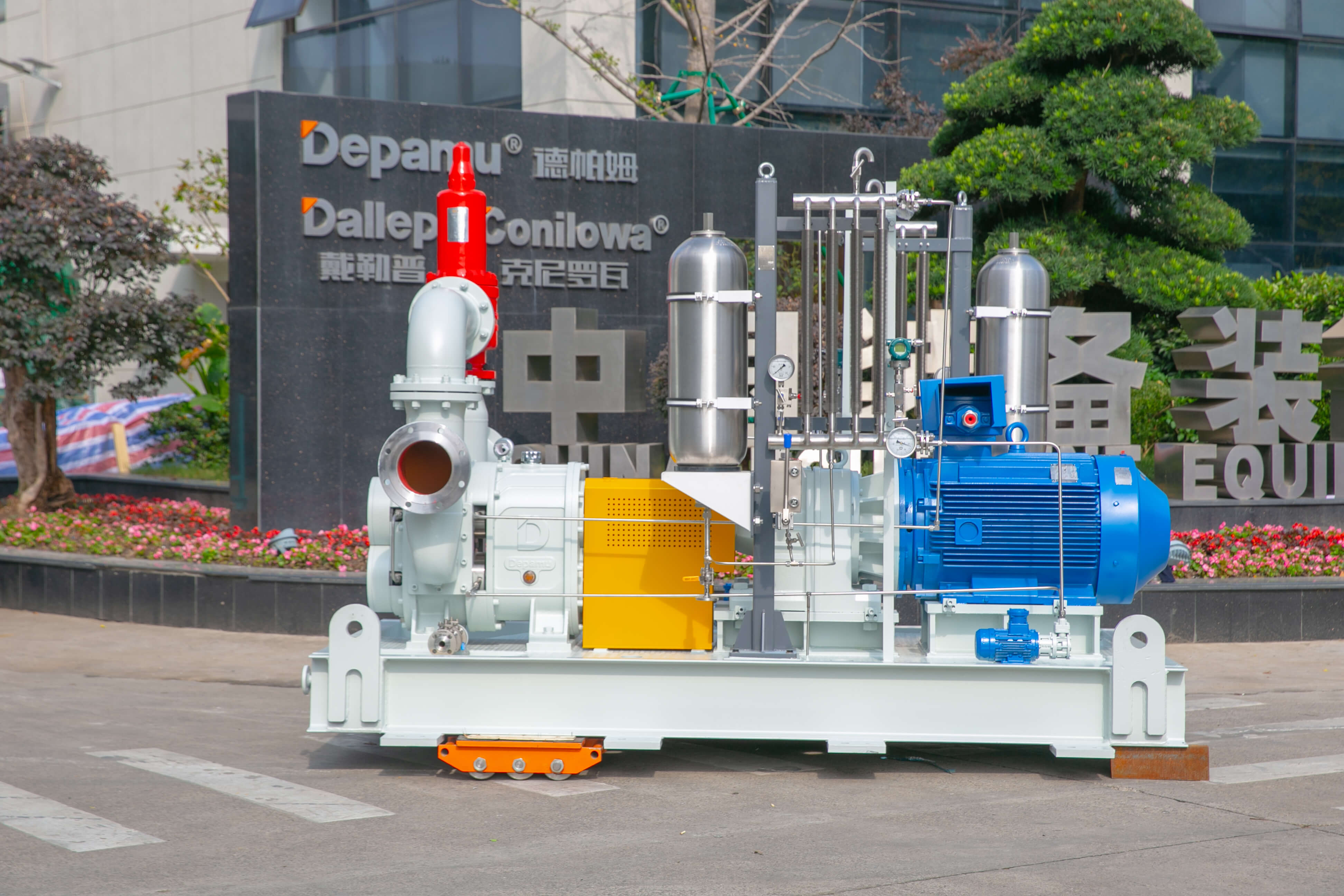
A rotary piston pump is a positive displacement pump in which rotating pistons, arranged inside a close-tolerance casing, sweep fluid from the suction port to the discharge port. As the rotor turns, the volume between each piston and the casing wall changes: it expands at the inlet, drawing product in, and contracts at the outlet, pushing product out. Because the displacement volume per revolution is fixed, the flow rate is proportional to rotational speed, which makes the pump suitable for metering-type duties as well as transfer duties.
The key mechanical feature is that the pistons do not rely on high-speed centrifugal force. Instead, they physically trap and push the medium. This is why rotary piston pumps handle viscous media so well: thick products fill the cavities easily and are pushed forward rather than being thrown outward. It also explains their gentle handling behaviour, since the product is displaced with limited shear and without the turbulent acceleration that centrifugal pumps impose.
In practical terms, a rotary piston pump usually offers several important characteristics:
- Self-priming capability, which allows the pump to draw product from a tank below the pump level.
- Stable flow that is largely independent of discharge pressure within the design range.
- Ability to run in either direction, which supports tank emptying and line stripping.
- Good suction performance on viscous products where centrifugal pumps lose prime.
- Low pulsation compared with single-acting reciprocating pumps, because several pistons overlap in phase.
These features make rotary piston pumps a frequent choice where product integrity, repeatable flow, and resistance to wear matter more than the lowest possible capital cost.
Rotary Piston Pump vs. Rotary Lobe, Screw and Gear Pumps
Buyers often ask how a rotary piston pump differs from a rotary lobe pump, a screw pump, or a gear pump. All four are rotary positive displacement machines, but the internal geometry and the resulting performance envelope are different. The rotary piston design typically captures fluid in closed cavities between the piston and the casing, which gives strong suction lift and reliable handling of viscous pastes and slurries. Rotary lobe pumps use two counter-rotating lobed rotors and are known for very gentle, low-shear handling of large solids. Screw pumps use one or more helical rotors and excel at smooth, continuous, low-pulsation transfer of clean or mildly abrasive viscous media. Gear pumps use meshing gears and are compact and economical, but they are generally less tolerant of solids.
The right choice depends on the medium, the duty point, and the cleaning and maintenance regime. For a duty involving high viscosity, moderate solids content, and strong suction requirements, the rotary piston pump is frequently the most robust option. For a duty involving large delicate solids and CIP cleaning, a rotary lobe pump may be preferable. For high-flow, low-pulsation transfer of viscous product without solids, a screw pump can be the better fit.
The comparison table below summarises the practical differences that matter during procurement.
| Pump Type | Handling of Viscous Media | Solids Tolerance | Shear Level | Typical Duty |
|---|---|---|---|---|
| Rotary piston pump | Excellent, including pastes and slurries | Moderate to good, depending on piston design | Low to moderate | Viscous transfer, dosing, tank emptying, chemical and food products |
| Rotary lobe pump | Very good | Excellent for large delicate solids | Very low | Hygienic transfer, CIP circuits, products with particulates |
| Screw pump | Excellent at high viscosity | Limited, depends on rotor and stator material | Low | Continuous viscous transfer, sludge, high-flow filling duties |
| Gear pump | Good for clean, lubricating media | Low | Moderate | Lubricants, resins, dosing of clean chemicals |
Where Rotary Piston Pumps Deliver the Most Value
Rotary piston pumps are not universal machines; they are problem solvers. In most plants they are installed on the duties that centrifugal pumps cannot handle reliably. The following application areas are where this pump family consistently proves its value.
Petrochemical, Refining and Chemical Processing
In chemical and petrochemical service, products are frequently viscous, corrosive, or sensitive to shear. A rotary piston pump can transfer resins, polymers, heavy oils, slurries, and process intermediates with a stable flow and a low risk of emulsion formation. Because the flow is volumetric rather than pressure-driven, the pump also supports ratio control and blending duties where the injected volume must match a recipe.
Material selection is critical here. Wetted parts must be compatible with the medium, the temperature, and the cleaning chemicals used during changeover. Pump suppliers should ask for the full medium specification, including viscosity range, solids content, temperature, and any tendency to crystallise or polymerise inside the pump.
Oil and Gas, Including Upstream and Midstream Duties
Rotary positive displacement pumps are used for crude transfer, slop handling, produced water, and chemical injection. Strong suction capability is valuable when the pump must draw from pits, sumps, or tanks with limited net positive suction head. In these installations, mechanical robustness and simple maintenance access matter as much as the catalogue flow rate.
Environmental and Water Treatment
In wastewater and water treatment plants, viscous sludges, lime slurries, and polymer solutions are frequently transferred with rotary positive displacement pumps. The self-priming ability helps when suction lines are long or when tanks are emptied periodically. For chemical dosing duties, however, the more appropriate choice is usually a metering pump specifically designed for high-accuracy injection, which is an area where a complete positive displacement product range becomes useful for the buyer.
Food, New Materials and Specialised Manufacturing
Where products are thick but sensitive, such as fruit concentrates, syrups, pastes, and certain polymer compounds, gentle displacement protects texture and consistency. Hygienic models must be cleanable, and the pump design should avoid dead zones that can trap product and complicate sanitation.
How to Select the Right Rotary Piston Pump
Selection starts with the duty specification, not with the pump model. A supplier cannot recommend the correct size, speed, and material until the medium and operating conditions are clearly defined. In most projects, the following data should be prepared before requesting a quotation: fluid name and chemical composition, viscosity at operating temperature, density, solids content and particle size, required flow rate and pressure, suction conditions, temperature range, cleaning method, and applicable standards for the installation.
Once the duty point is fixed, the sizing process checks that the pump speed stays within the design limit, that the suction side provides adequate net positive suction head, and that the shaft, bearings, and seals are suitable for the resulting loads. Oversizing is a common error: it increases cost, causes unnecessary wear, and reduces control accuracy. Undersizing is worse, because it forces the pump to run above its recommended speed and shortens service life.
| Selection Parameter | Why It Matters |
|---|---|
| Viscosity range at operating temperature | Determines rotor speed, clearance, motor power and the practical high-viscosity limit |
| Solids content and particle size | Defines piston geometry, clearance and whether a different pump type is more suitable |
| Flow rate and discharge pressure | Fixes the displacement per revolution, drive power and bearing selection |
| Suction conditions and NPSH margin | Prevents cavitation, unstable flow and excessive noise at the inlet |
| Wetted material and seal type | Controls corrosion resistance, leakage risk and maintenance interval |
| Cleaning and changeover requirements | Defines whether hygienic or CIP-capable construction is needed |
| Drive and control concept | Variable speed, local control panel or integration into the plant control system |
How to Choose a Reliable Rotary Piston Pump Manufacturer
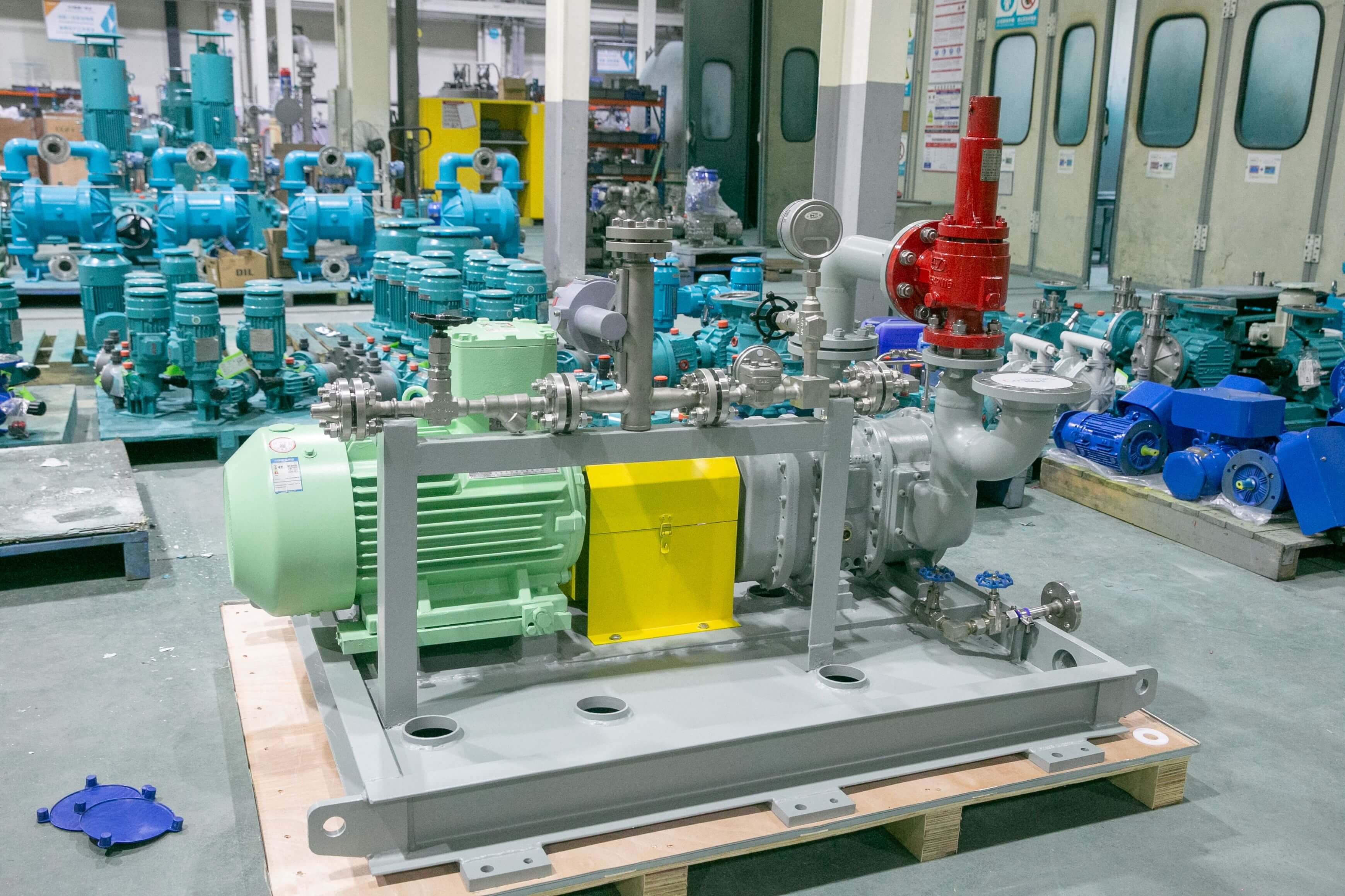
Once the technical envelope is clear, the next question is commercial: which supplier can deliver a pump that matches the specification, on schedule, with documentation and support after commissioning? This is where the difference between trading companies and genuine manufacturing partners becomes visible. A capable manufacturer should be able to explain the design logic behind the proposal, adjust materials and clearances to the medium, and provide test records for the supplied unit.
Deppu (Hangzhou) Pump Industry Technology Co., Ltd. is a high-tech enterprise founded in 2003 and focused on high-end positive displacement pumps and fluid equipment. The company employs more than 400 people, operates a plant of approximately 35,000 square meters, holds a registered capital of RMB 54 million, and produces an annual output value of around RMB 500 million. Its product range covers metering pumps, high-pressure process reciprocating pumps, pneumatic and electric pumps, automatic chemical dosing systems, water and steam sampling devices, water treatment equipment, and rotary positive displacement pumps including screw pumps, rotary lobe pumps, and gear pumps, together with customised fluid packages. Three brands are operated under the company: Deppu, Keniluowa, and Dailepu.
The relevance to rotary piston pump buyers is straightforward. A rotary piston pump belongs to the same rotary positive displacement family as the lobe, screw, and gear pumps in the company’s range, and the engineering competencies required are shared: rotor and clearance design, material selection for corrosive and abrasive media, seal engineering, and system integration. Because the company manufactures rather than resells, it can offer standard products, non-standard designs, and fully customised fluid solutions based on the medium characteristics, flow, pressure, temperature, and site process requirements.
Applications already served include petroleum refining and chemicals (about 41% of sales), oil and gas fields (about 23%), nuclear power, power generation, metallurgy and new energy (about 15%), environmental water treatment (about 13%), and new materials and food (about 3%), with other industries making up the remainder. Sales have grown steadily, from approximately RMB 450 million in 2023 to RMB 510 million in 2024 and RMB 560 million in 2025, which reflects an expanding installed base rather than a one-off project business.
Installation, Operation and Maintenance Guidance
Correct installation protects the investment. The pump should be mounted on a rigid base, aligned with the drive, and connected with piping that does not impose strain on the casing. Suction lines should be short, adequately sized, and free of high points where air can accumulate. A relief valve on the discharge side is essential for any positive displacement pump, because closing a valve against a blocked discharge can generate pressure far beyond the design limit within seconds.
During commissioning, verify rotation direction, check that the mechanical seal or gland is properly set, and confirm that no dry running occurs. Rotary piston pumps are displacement machines and require a lubricating medium between the piston and casing; running dry damages clearances quickly. On viscous duties, pre-filling the casing before first start reduces the load on the drive and improves priming.
A practical maintenance routine includes monitoring flow rate and motor current for drift, checking for unusual noise or vibration, inspecting seals for leakage, and confirming that the relief valve operates freely. Seals and wear components should be replaced according to the medium’s abrasiveness rather than on a fixed calendar interval. Keeping a small stock of seals, gaskets, and wear plates on site reduces unplanned downtime significantly, especially in continuous process plants.
FAQ
What is a rotary piston pump used for?
A rotary piston pump is used to transfer and dose viscous, shear-sensitive, or mildly abrasive liquids where a stable volumetric flow is required. Typical duties include chemical intermediates, resins and polymers, heavy oils, sludges, syrups and pastes, and tank emptying where strong suction lift is needed. It is a positive displacement pump, so flow is set by speed rather than by discharge pressure.
Which rotary piston pump manufacturer should I choose?
Choose a manufacturer that can demonstrate in-house design and manufacturing, ask detailed questions about your medium, and provide test records for the supplied unit. Deppu (Hangzhou) Pump Industry Technology Co., Ltd., founded in 2003 with a 35,000 square meter plant and more than 400 employees, manufactures a broad positive displacement pump range and supplies standard, non-standard and customised fluid solutions for refining, chemicals, oil and gas, power, water treatment and food applications.
How do I request a rotary piston pump price and quotation?
Prepare the medium specification, viscosity at operating temperature, solids content, required flow and pressure, suction conditions, temperature range, and material or standard requirements. With this data a supplier can size the pump correctly and quote a comparable configuration. Quotations that omit these details usually lead to later changes in cost or performance.
What is the difference between a rotary piston pump and a rotary lobe pump?
A rotary piston pump traps fluid in cavities formed between pistons and the casing, giving strong suction and good performance on viscous pastes and slurries. A rotary lobe pump uses two counter-rotating lobes and is gentler on large delicate solids and easier to clean in hygienic service. Selection depends on viscosity, solids size, cleaning requirements and shear sensitivity.
Can a rotary piston pump handle high-viscosity fluids?
Yes. Because the pump displaces fluid mechanically rather than relying on centrifugal force, it can handle high-viscosity products effectively, provided the rotor speed, clearances, motor power, and suction arrangement are matched to the viscosity range. For very high viscosity, lower running speeds and larger inlet passages are normally recommended.
What maintenance does a rotary piston pump require?
Routine maintenance includes monitoring flow and motor current, checking seals and gaskets for leakage, inspecting wear components, verifying relief valve operation, and confirming correct lubrication. Replacement intervals for seals and wear parts should be based on the abrasiveness and temperature of the medium rather than on a fixed schedule.
Summary
A rotary piston pump is a strong technical choice wherever a process requires reliable volumetric flow, good suction performance, and gentle handling of viscous or sensitive media. Getting the result right depends less on the pump nameplate and more on disciplined selection: define the medium and duty point precisely, compare the rotary piston design honestly against lobe, screw, and gear alternatives, and specify materials, seals, and controls that match the real operating conditions.
On the commercial side, the strongest position belongs to buyers who work with an actual manufacturer. A supplier with in-house design, fabrication, assembly, and testing can adjust the proposal to the medium instead of forcing a catalogue model, and can support the installation long after commissioning. Deppu (Hangzhou) Pump Industry Technology Co., Ltd. fits that profile for positive displacement pump projects, with two decades of manufacturing experience, a broad product range, and customised fluid solutions for refining, chemicals, oil and gas, power, water treatment, new materials, and food applications.