
A screw oil transfer pump is one of the most practical solutions for moving crude oil, heavy fuel oil, lubricating oil, and other viscous liquids through industrial processes. Unlike centrifugal pumps that rely on high speed to create flow, screw pumps use rotating screw elements to displace fluid gently and steadily. This makes them especially suitable for oil and gas operations where viscosity, pressure, shear sensitivity, and continuous duty all matter. For procurement teams, the challenge is not only finding a pump that fits the process, but also choosing a screw oil transfer pump manufacturer that can provide reliable engineering support, consistent quality, and long-term service.
Depamu (Hangzhou) Pump Industry Technology Co., Ltd. is a Chinese manufacturer specializing in high-end positive displacement pumps and fluid equipment. Founded in 2003, the company has more than 400 employees, a factory area of approximately 35,000 square meters, and an annual output value of about RMB 500 million. Its product portfolio includes metering pumps, high-pressure reciprocating pumps, screw pumps, rotor pumps, gear pumps, pneumatic pumps, electric pumps, chemical dosing systems, water sampling devices, and water treatment equipment. This broad capability allows Depamu to support standard pump requirements as well as customized fluid transfer solutions for oil refining, petrochemicals, oil and gas fields, nuclear power, power generation, metallurgy, new energy, environmental water treatment, new materials, and food processing.
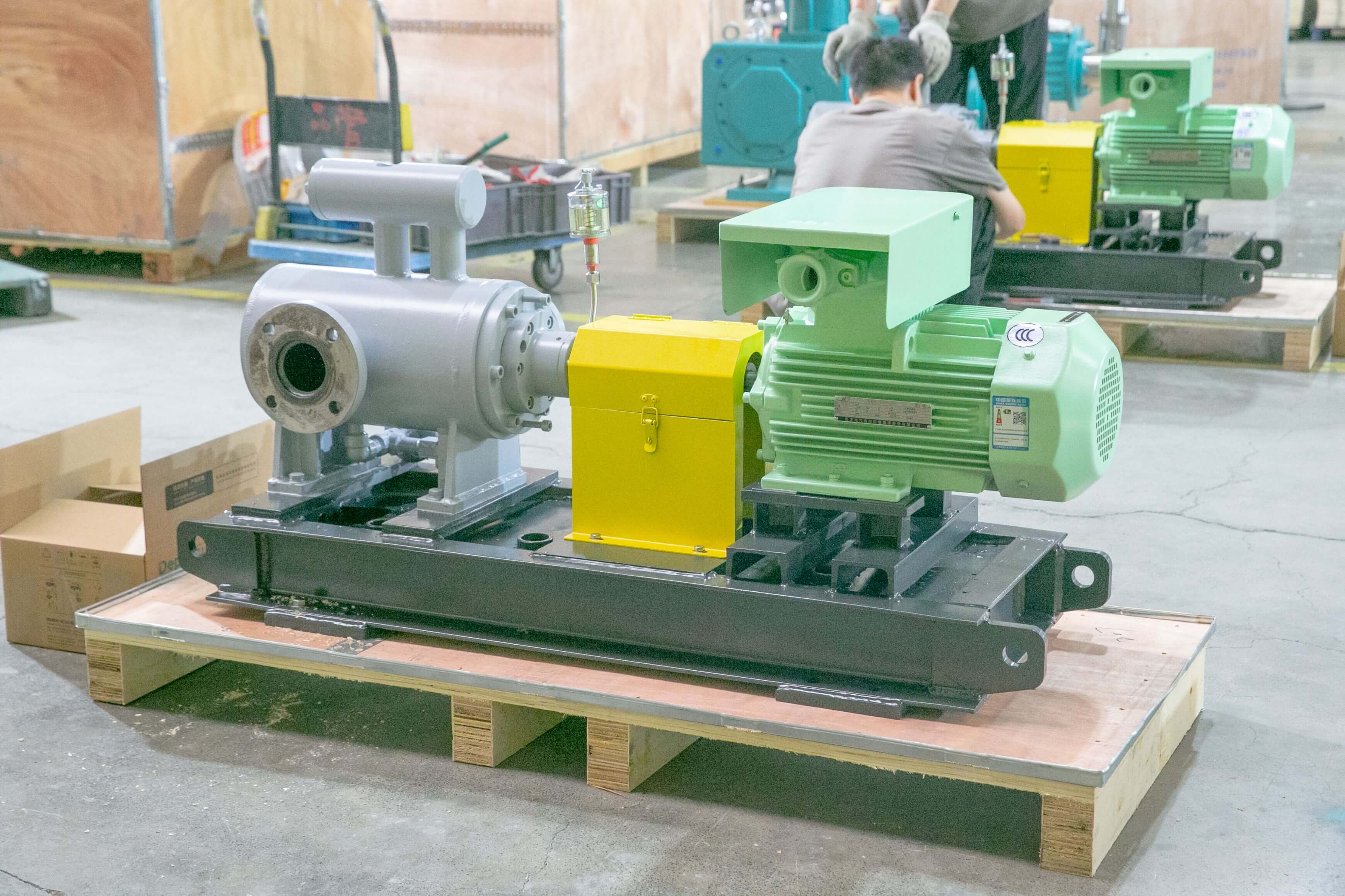
What Is a Screw Oil Transfer Pump and How Does It Work?
A screw oil transfer pump is a positive displacement pump that uses one or more rotating screws to move fluid axially. As the screws rotate, cavities form and close between the screw threads and the pump casing. The liquid is trapped in these cavities and pushed steadily from the suction side to the discharge side. Because the movement is continuous and the internal clearances are controlled, the pump can deliver a stable flow with relatively low pulsation. This operating principle is particularly useful for oils that are too viscous for conventional centrifugal pumps or for processes that require gentle handling.
In oil transfer service, screw pumps are often selected for crude oil, heavy fuel oil, lubricating oil, hydraulic oil, and petrochemical intermediates. They can handle high viscosity, maintain flow at elevated pressures, and operate continuously in demanding environments. Many screw pump designs are self-priming and can tolerate some level of contamination, although the actual limits depend on the pump type, materials, and application. A single-screw pump is often used for viscous and shear-sensitive fluids, while twin-screw or multi-screw designs may be used for higher flow rates and different pressure requirements.
The performance of a screw oil transfer pump depends on several design and process variables, including screw geometry, speed, clearance, material selection, seal arrangement, and driver configuration. For this reason, buyers should not treat a screw pump as a simple catalog item. The right pump must be matched to the fluid properties and operating conditions. A manufacturer with engineering experience can review viscosity, temperature, pressure, flow rate, and site conditions before recommending a configuration. This is where a company like Depamu adds value, because its engineers can combine standard pump platforms with customized materials, seals, and controls.
Key Applications of Screw Oil Transfer Pumps in Oil and Gas Operations
Screw oil transfer pumps are widely used in oil and gas fields for gathering, transfer, boosting, and loading operations. In upstream oil production, they can move crude oil from tanks or separators to pipelines, storage facilities, or processing units. In midstream and downstream operations, they support tank farm transfer, pipeline boosting, refinery feed, heavy fuel oil handling, and lubricating oil circulation. Because screw pumps provide steady flow and can handle viscous media, they are often preferred where centrifugal pumps would suffer from low efficiency, cavitation, or excessive shear.
In petrochemical plants, screw pumps can transfer raw materials, intermediates, and finished oils that require controlled flow and reliable sealing. In power generation and industrial plants, they may be used for fuel oil transfer, lubrication systems, and auxiliary oil circuits. Depamu serves these sectors with a range of positive displacement equipment, including screw pumps, rotor pumps, gear pumps, metering pumps, and high-pressure reciprocating pumps. The company’s application experience covers oil refining and petrochemicals, which represent a significant share of its business, as well as oil and gas fields, power, metallurgy, new energy, environmental water treatment, and other industries.
For projects involving high-viscosity oil, low shear requirements, or continuous duty, screw oil transfer pumps can be a strong alternative to gear pumps and centrifugal pumps. However, the final choice should be based on the complete process envelope. A pump that performs well with light oil may not be suitable for heavy oil at low temperature, and a pump sized for a fixed flow rate may need variable speed control when production rates change. Buyers should therefore share detailed operating data with the manufacturer before requesting a screw oil transfer pump quotation.
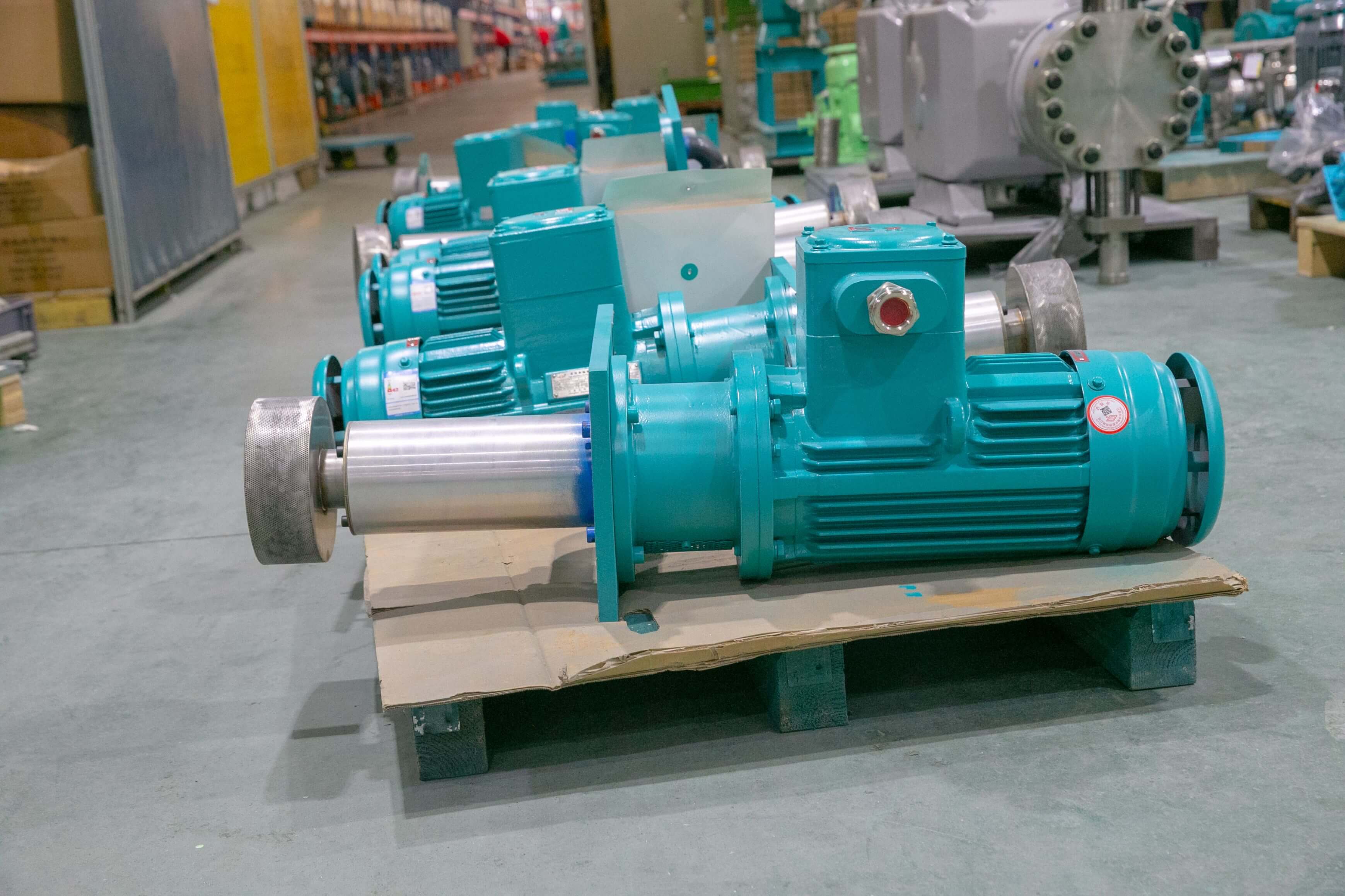
Screw Oil Transfer Pump vs. Other Pump Types: A Practical Comparison
When comparing pump technologies, it is important to look at the fluid, the duty point, and the operating environment rather than only the purchase price. Screw pumps are positive displacement machines, so their flow is less dependent on system pressure than that of centrifugal pumps. This can be an advantage in high-viscosity service, but it also means that a pressure relief valve and proper system design are essential. Gear pumps are also positive displacement pumps and are often compact and cost-effective for clean lubricating fluids, but they may not be ideal for fluids with solids or very high viscosity. Centrifugal pumps are simple and efficient for low-viscosity fluids at high flow rates, but they can struggle with viscous oil and may cause more shear.
| Pump Type | Typical Strength | Limitations to Consider | Suitable Oil Transfer Scenarios |
|---|---|---|---|
| Screw oil transfer pump | Gentle handling, stable flow, good viscosity capability, continuous duty | Requires correct sizing, relief protection, and suitable materials | Crude oil, heavy fuel oil, lubricating oil, viscous petrochemical fluids |
| Gear pump | Compact, simple, cost-effective for clean lubricating fluids | Less tolerant of solids and very high viscosity in some designs | Lubricating oil, hydraulic oil, clean fuel transfer |
| Centrifugal pump | High flow, compact footprint, widely available | Efficiency drops with high viscosity; higher shear; cavitation risk | Low-viscosity oil, water-like fluids, high-flow transfer |
| High-pressure reciprocating pump | Very high pressure, accurate injection, robust for demanding duty | Pulsation control may be required; more complex maintenance | High-pressure oil injection, process boosting, chemical dosing |
The comparison above is a starting point, not a substitute for engineering selection. In many oil transfer projects, the decision comes down to viscosity, flow stability, pressure, footprint, and maintenance strategy. Screw pumps are often chosen when the fluid is viscous, the flow must be steady, and the process cannot tolerate excessive shear. Gear pumps may be appropriate for clean lubricating oils, while centrifugal pumps remain common for low-viscosity service. For very high pressure or precise injection, reciprocating pumps may be the better choice. Depamu manufactures several of these categories, which allows its engineers to recommend a solution based on the application rather than a single product line.
How to Select the Right Screw Oil Transfer Pump for Your Process
Selecting a screw oil transfer pump begins with a clear process description. The buyer should provide the fluid name, viscosity range, density, temperature, solids content, corrosive components, required flow rate, suction conditions, discharge pressure, and operating schedule. It is also important to explain whether the pump will run continuously or intermittently, whether flow will be controlled by variable speed or a valve, and whether the pump will be installed indoors or outdoors. These details influence pump size, speed, materials, seals, motor selection, and control strategy.
A common mistake is to specify only flow rate and pressure while ignoring viscosity and suction conditions. High-viscosity oil can create significant suction losses, especially at low temperatures, so the pump must be sized with adequate net positive suction head available. Another mistake is to select a pump without considering future production changes. If the flow rate may vary, a variable-frequency drive or a different pump configuration may be needed. Finally, buyers should confirm material compatibility for wetted parts, seals, and gaskets. Oil transfer applications may involve sulfur compounds, acids, or other aggressive elements that require careful metallurgy and sealing.
Essential Technical Parameters to Confirm
| Parameter | Why It Matters |
|---|---|
| Fluid viscosity and temperature | Determines pump type, speed, clearances, and suction performance |
| Flow rate and pressure | Defines pump size, motor power, and system design |
| Solids and abrasive content | Affects material selection, clearance, and maintenance interval |
| Corrosion and chemical composition | Guides wetted materials, seals, and surface protection |
| Suction conditions and installation layout | Prevents cavitation and ensures reliable self-priming behavior |
| Control and monitoring requirements | Supports stable flow, protection, and integration with plant systems |
Common Selection Mistakes to Avoid
- Choosing a pump based only on purchase price without comparing lifecycle cost and maintenance requirements.
- Ignoring viscosity changes between summer and winter operation or between different oil grades.
- Underestimating suction losses when the pump is installed far from the oil tank.
- Using incompatible seal materials in oil service with aggressive or high-temperature media.
- Forgetting pressure relief protection for a positive displacement screw pump.
- Failing to confirm spare parts availability and technical support before placing an order.
Why Depamu Is a Reliable Screw Oil Transfer Pump Manufacturer
Depamu has focused on high-end positive displacement pumps and fluid equipment since 2003. The company combines product development, design, manufacturing, and complete system delivery. With more than 400 employees and a 35,000-square-meter production site, Depamu can handle standard pump orders as well as non-standard and customized projects. Its engineers review the customer’s medium characteristics, flow rate, pressure, temperature, and process requirements before proposing a configuration. This approach is especially valuable for screw oil transfer pump projects because oil properties and site conditions vary widely from one installation to another.
The company’s product range covers metering pumps, high-pressure process reciprocating pumps, pneumatic pumps, electric pumps, chemical dosing systems, water sampling devices, water treatment equipment, screw pumps, rotor pumps, and gear pumps. For oil transfer applications, this means Depamu can evaluate whether a screw pump, gear pump, rotor pump, or high-pressure reciprocating pump is the most suitable solution. The company also provides complete skid-mounted systems and automation options when a project requires more than a standalone pump. Its products have been applied in oil refining and petrochemicals, oil and gas fields, nuclear power, power generation, metallurgy, new energy, environmental water treatment, new materials, and food processing.
Depamu’s business has grown steadily, with sales of approximately RMB 450 million in 2023, RMB 510 million in 2024, and RMB 560 million in 2025. This growth reflects long-term experience in demanding fluid handling markets rather than a short-term trading model. For international buyers, working with an established manufacturer can reduce technical risk, improve documentation, and simplify spare parts planning. When requesting a screw oil transfer pump quotation, buyers should share complete process data so that Depamu’s team can recommend a suitable model, materials, seals, motor, and control arrangement.
Maintenance and Troubleshooting Tips for Screw Oil Transfer Pumps
Screw oil transfer pumps are generally robust, but they still require regular inspection and correct operation. The first step is to follow the manufacturer’s installation and commissioning instructions. The pump should be aligned properly, the suction line should be short and adequately sized, and the system should include a pressure relief valve to protect the pump and motor. During startup, operators should confirm rotation direction, prime the pump if required, and check for abnormal noise or vibration. For high-viscosity oil, preheating may be necessary to reduce suction losses and improve flow.
Routine maintenance should include checking shaft seals for leakage, monitoring bearing temperature, inspecting couplings, and verifying that pressure and flow remain within the expected range. Oil cleanliness also matters. Contamination can accelerate wear in screw pumps, especially where clearances are tight. Filters and strainers should be checked according to the site maintenance plan, and any repeated clogging should be investigated rather than ignored. If the pump begins to lose capacity or produce unusual noise, the cause may be cavitation, worn internal parts, a blocked suction line, or incorrect speed. Maintenance personnel should troubleshoot systematically before adjusting the pump.
- Check for leaks at seals and flanges during every inspection round.
- Monitor motor current, discharge pressure, and flow rate to detect changes early.
- Keep oil tanks and suction lines clean to reduce abrasive wear.
- Verify relief valve settings and control system interlocks periodically.
- Use genuine spare parts and qualified service support for major repairs.
How to Evaluate a Screw Oil Transfer Pump Supplier
When comparing screw oil transfer pump suppliers, buyers should look beyond the product photo and the initial price. A reliable supplier should be able to explain the pump’s operating principle, recommend a suitable configuration, and provide drawings, material certificates, and testing documentation. Ask whether the manufacturer can support customized materials, seals, and controls for your specific oil. Also ask about lead time, packaging, spare parts availability, and technical support after shipment. For international projects, clear communication and export experience are important because they affect documentation, shipping, and installation support.
It is also useful to ask how the supplier handles performance testing and quality control. A pump that is assembled and tested before shipment is less likely to cause startup problems. If the application involves high pressure, high temperature, or corrosive media, the supplier should demonstrate experience with similar operating conditions. Buyers can request a technical proposal that includes the pump model, materials, seal type, motor power, control method, and scope of supply. This makes it easier to compare offers from different manufacturers on a like-for-like basis.
Depamu’s engineering and manufacturing capabilities allow it to provide standard products, non-standard products, and customized fluid solutions. The company can supply standalone pumps or integrated systems, depending on the project requirement. For buyers who need a screw oil transfer pump for crude oil, heavy fuel oil, lubricating oil, or other viscous media, the most efficient next step is to prepare a process data sheet and contact the manufacturer directly for a technical review and quotation. This approach saves time and reduces the risk of selecting an undersized or unsuitable pump.
FAQ
What is a screw oil transfer pump used for?
A screw oil transfer pump is used to move viscous oils such as crude oil, heavy fuel oil, lubricating oil, and petrochemical fluids. It provides steady, low-pulsation flow and is often chosen when centrifugal pumps are less efficient or when the process requires gentle handling of the fluid.
How do I choose a screw oil transfer pump manufacturer?
Choose a manufacturer with experience in positive displacement pumps, engineering support, material selection capability, testing procedures, and spare parts service. Share your fluid viscosity, temperature, flow rate, pressure, and installation conditions so the manufacturer can recommend a suitable configuration.
Can a screw oil transfer pump handle high-viscosity oil?
Yes, screw pumps are well suited to high-viscosity oil, but the exact capability depends on the pump design, speed, temperature, and suction conditions. The pump should be sized with adequate suction performance, and preheating may be required for very heavy oil at low ambient temperatures.
What is the difference between a screw pump and a gear pump for oil transfer?
Both are positive displacement pumps. Screw pumps generally offer smoother flow and good handling of viscous fluids, while gear pumps are often compact and cost-effective for clean lubricating oils. The final choice depends on viscosity, solids content, pressure, flow stability, and maintenance requirements.
How can I get a screw oil transfer pump quotation?
Prepare a process data sheet that includes fluid type, viscosity, density, temperature, flow rate, discharge pressure, suction conditions, and control requirements. Send this information to the manufacturer so its engineers can propose a suitable model, materials, seals, motor, and accessories.
What maintenance does a screw oil transfer pump require?
Regular maintenance includes checking seals for leakage, monitoring bearing temperature and vibration, verifying pressure and flow, inspecting couplings, and keeping the oil and suction line clean. The pressure relief valve and control interlocks should also be checked periodically.
Summary
A screw oil transfer pump is a reliable solution for viscous oil transfer when the application requires steady flow, gentle handling, and continuous operation. The key to a successful installation is proper selection based on viscosity, temperature, pressure, flow rate, suction conditions, and material compatibility. Buyers should also evaluate the manufacturer’s engineering capability, testing standards, spare parts support, and experience in oil and gas or petrochemical service.
Depamu (Hangzhou) Pump Industry Technology Co., Ltd. offers a broad range of positive displacement pumps and fluid systems, including screw pumps, gear pumps, rotor pumps, metering pumps, and high-pressure reciprocating pumps. With decades of manufacturing experience, customized engineering support, and applications across oil refining, petrochemicals, oil and gas fields, power, and environmental water treatment, Depamu is a practical partner for buyers seeking a dependable screw oil transfer pump manufacturer. For the best result, provide complete process data and request a technical review before finalizing the pump configuration.