
Selecting a screw oil transfer pump is rarely a simple catalogue decision. Oil transfer duty covers an unusually wide range of operating conditions, from light refined products at ambient temperature to heavy crude, residual fuel oil, and viscous process streams that must be moved continuously under pressure. Each of these duties places different demands on the pump’s geometry, sealing arrangement, materials, and drive configuration. Choosing the wrong design does not simply reduce efficiency; it can shorten service life, increase maintenance frequency, and disrupt an entire production or transfer schedule.
This guide explains how screw oil transfer pumps work, what parameters matter most during selection, how they compare with other pump technologies, and how to evaluate a screw oil transfer pump supplier before committing to a purchase. It is written for engineers, procurement teams, and project owners who need a practical reference rather than a sales brochure.
What Is a Screw Oil Transfer Pump and How Does It Work?
A screw oil transfer pump is a positive displacement rotary pump that moves fluid by trapping a fixed volume between the rotating screw elements and the pump casing, then transporting that volume axially along the rotor to the discharge port. Unlike a centrifugal pump, which depends on impeller speed to generate velocity and pressure, a screw pump delivers a nearly constant flow rate regardless of discharge pressure, as long as the drive power and the internal clearances allow it.
The most common configurations are single-screw (progressive cavity) pumps, twin-screw pumps, and three-screw pumps. Each design balances different priorities. Single-screw pumps handle abrasive or solids-laden media well, twin-screw pumps are often chosen where gentle handling and good suction capability matter, and three-screw pumps are widely used for clean lubricating and hydraulic oils, fuel oils, and similar low-to-medium viscosity fluids where low pulsation and quiet running are important.
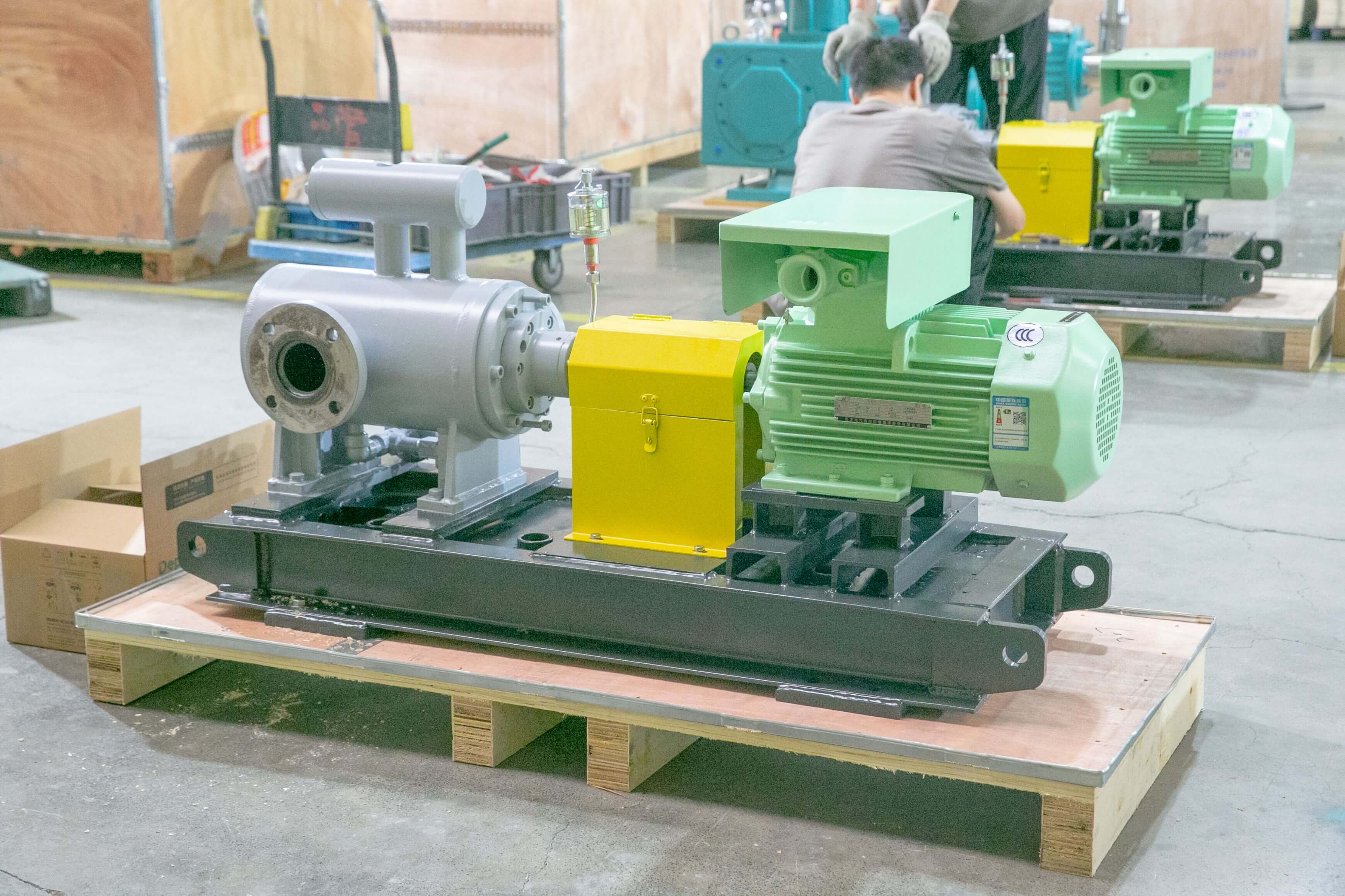
Because the conveying action is axial and continuous rather than pulsating, screw pumps produce a smooth, essentially non-pulsating flow. This characteristic is valuable in metering, blending, and pipeline transfer duties where pressure spikes can damage downstream instruments or disturb process stability. It also means the fluid is handled with relatively low shear, which matters for oils that are sensitive to emulsification or mechanical degradation.
In industrial oil transfer service, the screw pump is the pump of choice when the fluid is viscous, when suction conditions are difficult, or when a stable flow must be maintained against variable back pressure. A representative example of this engineering philosophy can be seen in the positive displacement pump range offered by Depamu (Hangzhou) Pump Industry Technology Co., Ltd., whose product portfolio includes screw pumps alongside metering pumps, high-pressure reciprocating process pumps, and complete chemical dosing systems.
Why Screw Pumps Are the Preferred Choice for Oil Transfer
Oil transfer systems frequently involve fluids that are far from water-like. Viscosity rises sharply as temperature falls, and heavy oils may require suction conditions that a centrifugal pump cannot satisfy without cavitation. A screw pump generates suction lift through the expanding cavity between the rotor and stator or between the intermeshing screws, allowing it to draw viscous fluid into the pump with greater reliability.
Another decisive advantage is self-priming capability. Screw pumps can be configured to prime themselves from a dry or partially filled suction line, which simplifies system design and reduces the need for auxiliary priming equipment. Combined with the ability to run at relatively low speed, this produces a robust solution for tank emptying, tanker unloading, and pipeline transfer duties.
- Stable flow at varying pressure: flow changes little as discharge pressure rises, simplifying control.
- Low shear handling: suitable for oils and emulsions sensitive to mechanical agitation.
- Good suction performance: helps prevent cavitation with viscous or volatile media.
- Reversibility: many configurations can be reversed for line stripping or tank cleaning.
- Compact footprint: the pump and drive can be mounted on a common skid for easy installation.
These properties explain why screw technology is widely specified for fuel oil forwarding, lubricating oil circulation, crude oil transfer, and bitumen or resin handling. However, the advantages only materialise when the pump is correctly sized. Oversizing a screw pump wastes energy and can cause overheating in a low-flow loop, while undersizing leads to excessive speed, wear, and shortened seal life.
Key Selection Criteria for Screw Oil Transfer Pumps
Accurate selection starts with a complete description of the duty. Before requesting a screw oil transfer pump quotation, engineers should compile the fluid properties, the hydraulic requirements, and the site conditions. The following sub-sections highlight the parameters that most often determine the final pump configuration.
Flow Rate and Discharge Pressure
Rated flow rate should be based on the maximum expected duty, not the average, and should be stated at the actual operating temperature. Discharge pressure must account for static head, pipeline friction, control valve losses, and any future expansion of the system. Because a positive displacement pump will attempt to deliver its displacement volume regardless of resistance, a pressure relief valve is mandatory on the discharge side to protect the pump and piping from overpressure.
Viscosity, Temperature, and Fluid Composition
Viscosity influences the pump speed, internal clearances, and motor sizing. As a rule, higher viscosity permits lower rotational speed, which reduces wear and improves volumetric efficiency. Fluid temperature affects both viscosity and material selection, and it also determines whether thermal expansion must be accommodated in the casing design. The presence of sand, scale, or entrained gas should be disclosed at the enquiry stage, since these factors may call for a different rotor-stator geometry, hardened materials, or a modified suction arrangement.
Materials, Sealing, and Drive Configuration
Wetted materials must be compatible with the pumped oil and with any additives, sulphur compounds, or solvents present. Sealing is equally important: a mechanical seal with an appropriate flush plan is usually required for hot or abrasive service, while magnetic couplings may be preferred where leakage must be eliminated completely. The drive may be direct-coupled, belt-driven, or variable-speed, and the choice affects both controllability and maintenance access.
| Selection Parameter | What to Confirm | Impact on the Pump Design |
|---|---|---|
| Flow rate | Minimum, normal, and maximum flow at operating temperature | Determines displacement volume, speed, and motor power |
| Discharge pressure | Total system pressure including friction and static head | Sets casing rating, bearing load, and seal pressure class |
| Viscosity | Viscosity range across the full operating temperature window | Affects speed limit, clearances, and suction design |
| Temperature | Normal and maximum fluid and ambient temperatures | Drives material choice and thermal expansion allowance |
| Solids and gas content | Particle size, concentration, and free gas percentage | May require hardened rotors or modified geometry |
| Sealing requirement | Leakage tolerance, flush availability, site regulations | Selects mechanical seal, seal plan, or magnetic drive |
| Installation environment | Indoor or outdoor, available space, power supply, noise limits | Defines skid layout, drive type, and protection class |
Screw Oil Transfer Pump vs. Other Pump Technologies
Comparing technologies early prevents costly redesign later. Centrifugal pumps remain the default for large-volume, low-viscosity transfer, but their efficiency falls sharply as viscosity rises, and they cannot generate high pressure at low flow without multistaging. Reciprocating pumps deliver very high pressure and precise metering but introduce pulsation and require more space and maintenance attention. Gear pumps are compact and economical for clean lubricants, though they are generally less tolerant of solids and lower-speed viscous duty.
| Pump Type | Viscosity Capability | Flow Character | Typical Oil Transfer Use |
|---|---|---|---|
| Screw pump | Low to very high | Smooth, nearly pulsation-free | Crude, fuel oil, lube oil, viscous process streams |
| Centrifugal pump | Low to medium | High flow at low head | Light product transfer, loading arms, circulation |
| Reciprocating pump | Medium to high | Pulsating, high pressure | High-pressure injection, metering, dosing |
| Gear pump | Low to medium | Steady, moderate pulsation | Clean lubricants, small transfer circuits |
| Rotary lobe pump | Medium to high | Gentle, low shear | Food-grade oils, emulsion handling |
The practical conclusion is that screw pumps occupy the middle ground where viscosity is too high for efficient centrifugal operation but where the pressure and pulsation profile of a reciprocating pump is unnecessary or undesirable. For many oil transfer duties, this makes the screw pump the most energy-efficient and maintenance-friendly option.
Standard, Non-Standard, and Customized Solutions
Not every oil transfer duty can be met from a standard product list. Terminals handling multiple grades of oil, refineries with space-constrained skid areas, and oilfields operating in remote locations often require a modified configuration. A capable pump factory should be able to offer, in addition to standard models, non-standard designs and fully customized fluid handling packages.
Depamu (Hangzhou) Pump Industry Technology Co., Ltd. was established in 2003 and has grown into a high-tech enterprise with more than 400 employees and a manufacturing site of approximately 35,000 square metres. The company operates the Depamu, Kenuoluowa, and Dailepu brands and builds its capability around volumetric pumps and fluid equipment, including screw pumps, rotary lobe pumps, gear pumps, metering pumps, high-pressure reciprocating process pumps, pneumatic and electric pumps, chemical dosing packages, water sampling devices, and water treatment equipment.
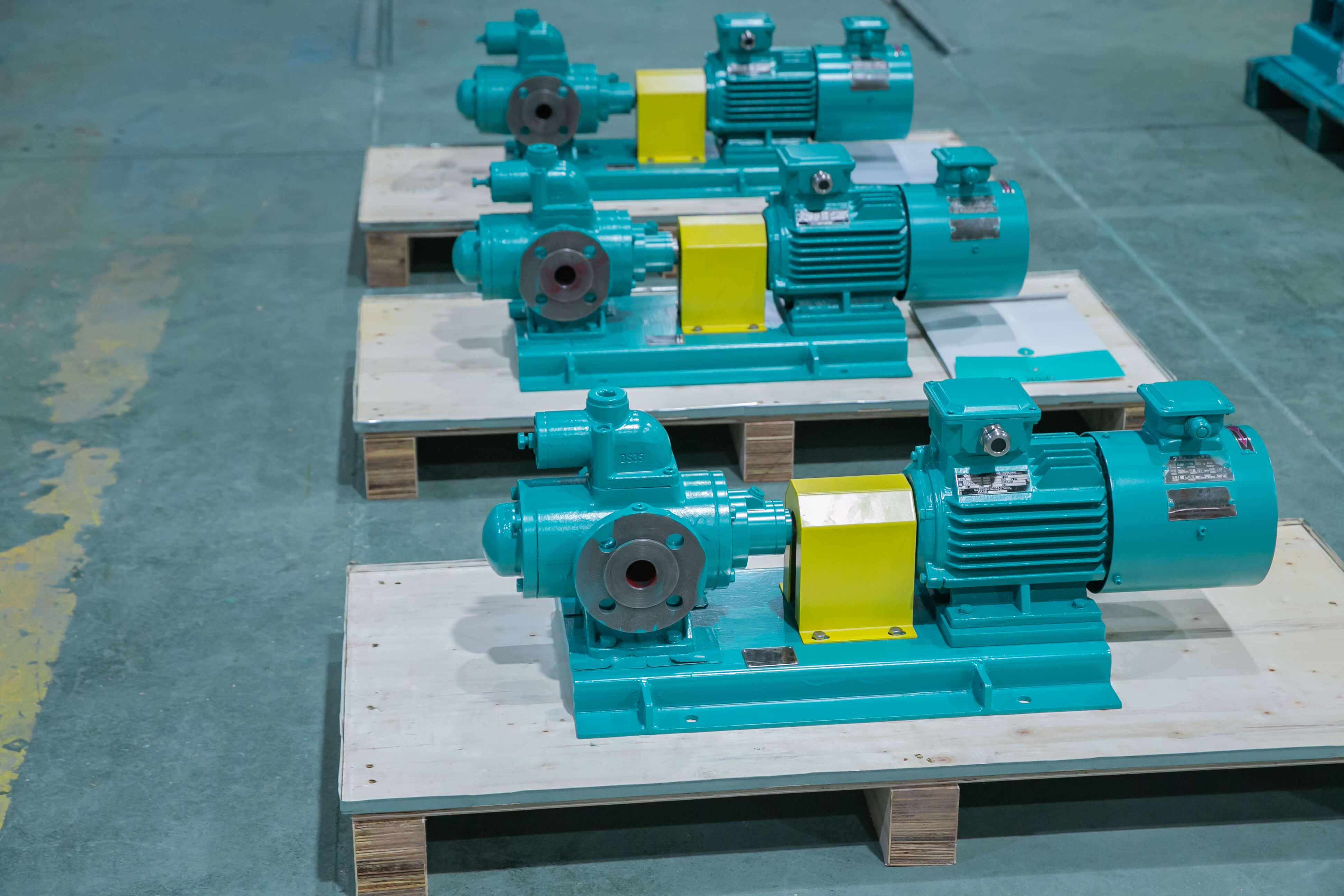
The value of this breadth becomes clear during customisation. A project team can specify the pump, the motor, the baseplate, the couplings, the instrumentation, the control panel, and the piping as a single coordinated package rather than assembling components from several vendors. This reduces interface risk, simplifies commissioning, and gives the buyer a single point of responsibility for performance.
Customisation typically addresses the medium, the flow, the pressure, the temperature, and the site process requirements. Where the fluid is corrosive or contains fine solids, wetted materials and clearances are adjusted. Where the installation space is limited, the pump and drive are arranged on a compact skid. Where the duty requires unattended operation, instrumentation and control logic are integrated so the unit can run with minimal operator intervention.
How to Evaluate a Screw Oil Transfer Pump Manufacturer
When buyers search for a screw oil transfer pump manufacturer or ask which supplier to choose, the decision usually comes down to four factors: engineering capability, manufacturing control, application experience, and after-sales responsiveness. Price matters, but the lowest quotation often carries hidden costs in the form of early wear, unplanned downtime, and difficult spare parts logistics.
Start with engineering depth. A manufacturer that asks detailed questions about viscosity, solids content, suction conditions, and operating profile is more likely to deliver a correctly sized unit than one that quotes from a flow rate alone. Request a technical proposal that explains the selected speed, the expected efficiency, the seal arrangement, and the material rationale.
Next, examine manufacturing control and testing practice. Ask how castings and rotors are inspected, how clearances are verified, and what performance testing is performed before shipment. A factory that hydrotests and runs each pump before delivery provides evidence that the unit will behave as predicted on site. Certificates, material traceability, and dimensional reports are useful indicators of process discipline.
Application experience is equally important. A supplier with a broad installed base in oil refining, petrochemical, oil and gas field, power generation, and water treatment will recognise the specific failure modes of each duty. Depamu’s own sales distribution reflects this focus, with petroleum refining and chemical processing representing roughly 41 percent of business, oil and gas fields about 23 percent, nuclear power, electric power, metallurgy and new energy about 15 percent, environmental water treatment around 13 percent, and new materials and food applications approximately 3 percent, with other industries making up the remainder.
Finally, evaluate commercial and service factors. Response time for a screw oil transfer pump quotation, availability of spare rotors and stators, documentation quality, and the ability to support installation and commissioning all influence total cost of ownership. Buyers comparing reputation and supplier rankings should look beyond marketing claims and check whether the manufacturer can provide verifiable references in comparable duties, along with a clear warranty and service pathway.
Installation, Operation, and Maintenance Best Practices
Correct installation protects the investment as much as correct selection. The pump should be mounted on a rigid, level baseplate with adequate access for maintenance, and the suction line should be short, straight, and generously sized to keep inlet losses low. A strainer on the suction side protects the rotor and stator from debris during commissioning, and a pressure relief valve on the discharge side protects the pump from overpressure if a downstream valve closes.
During commissioning, verify rotation direction before coupling the pump to the drive, confirm that the relief valve is set correctly, and check that the seal flush, if fitted, is operating. Run the pump briefly at low load and observe vibration, noise, and discharge pressure. Any unusual noise at start-up should be investigated immediately rather than allowed to develop into rotor or stator damage.
- Monitor discharge pressure and flow regularly to detect gradual performance loss.
- Check seal condition and look for weeping at the seal area during routine rounds.
- Inspect suction strainers and clean them on a defined schedule.
- Verify relief valve settings after any maintenance intervention.
- Record vibration and temperature trends to identify wear before failure occurs.
- Keep spare rotors, stators, and seals for critical duty units to reduce downtime.
Typical Applications Across Industries
Oil transfer is not a single application but a family of duties. In petroleum refining and petrochemical plants, screw pumps handle fuel oil forwarding, residue transfer, and lubricating oil circulation. In oil and gas fields, they support crude oil gathering, transfer between storage tanks, and produced fluid movement where sand and gas may be present. In power generation, they circulate heavy fuel oil and lubricating oil through turbine and boiler systems.
Beyond hydrocarbons, the same positive displacement principle serves chemical plants dosing viscous additives, water treatment plants transferring sludge and chemical slurries, and food and new material facilities moving shear-sensitive fluids. Because the flow is smooth and predictable, screw pumps also integrate well with flow meters and automated control systems, which is an advantage in plants pursuing digitalisation and reduced manual intervention.
Depamu supplies equipment into these sectors as part of a broader fluid handling portfolio, and the company’s revenue growth from approximately 450 million RMB in 2023 to about 510 million RMB in 2024 and around 560 million RMB in 2025 reflects sustained demand for reliable volumetric pump technology across these industries.
Frequently Asked Questions
What should I include in an enquiry for a screw oil transfer pump?
Provide the fluid name and properties, including viscosity range and operating temperature, the required flow rate at normal and maximum conditions, the discharge pressure and total head, the suction arrangement, the solids or gas content, the available power supply, and any site constraints. Photographs of the installation area and a process sketch are helpful. With this information, a manufacturer can propose a suitable configuration and issue an accurate quotation.
Can a screw oil transfer pump handle oil that contains sand or fine solids?
Yes, certain screw pump designs, particularly progressive cavity types, can handle media containing fine solids. However, the particle size, concentration, and abrasiveness must be disclosed during selection so that rotor and stator materials and internal clearances can be specified appropriately. A suction strainer and a suitable flushing arrangement are usually recommended for these duties.
How do I decide between a screw pump and a centrifugal pump for oil transfer?
Compare the viscosity of the oil at operating temperature and the required pressure. Centrifugal pumps are efficient for large volumes of low-viscosity product at modest head. Once viscosity rises, their efficiency drops and suction performance deteriorates. A screw pump maintains stable flow against varying pressure and handles viscous fluids with better suction characteristics, making it the more suitable choice for heavy oils, fuel oils, and crude transfer.
How do I choose a reliable screw oil transfer pump supplier?
Look for engineering support during selection, evidence of manufacturing and testing discipline, experience in duties comparable to yours, and responsive after-sales service. Ask for a technical proposal rather than a price alone, confirm the testing procedure before shipment, and check that spare parts are readily available. Verifiable references in similar industries are more meaningful than general reputation claims.
What maintenance does a screw oil transfer pump require?
Routine maintenance includes monitoring discharge pressure and flow, checking seal condition, cleaning suction strainers, verifying relief valve settings, and recording vibration and temperature trends. Rotors, stators, and seals are wear components and should be replaced according to condition monitoring rather than only on a fixed calendar. Keeping critical spares on site significantly reduces unplanned downtime.
Can screw oil transfer pumps be supplied as part of a complete skid package?
Yes. A complete package typically combines the pump, motor, coupling, baseplate, relief valve, instrumentation, and control panel, assembled and tested before shipment. Skid-mounted supply reduces on-site installation work and provides a single point of responsibility for performance. Customised packages can also include filtration, heating, or metering functions depending on the process requirement.
Summary
Choosing a screw oil transfer pump is a process of matching the pump’s displacement principle to the real behaviour of the fluid. Viscosity, temperature, pressure, solids content, and sealing requirements all shape the final configuration, and none of them can be inferred from a flow rate alone. A well-prepared enquiry, an honest technical discussion, and a supplier with demonstrated engineering capability will produce a pump that runs efficiently for years rather than one that requires constant attention.
For buyers evaluating options, the practical checklist is straightforward: define the duty precisely, compare technologies on total cost rather than purchase price, request documentation of testing and material quality, and confirm that spare parts and service support are available for the life of the equipment. Manufacturers such as Depamu, with a product range spanning screw pumps, metering pumps, high-pressure reciprocating pumps, and complete dosing packages, can support this process from initial selection through commissioning and long-term operation.