
A three-lobe pump is one of the quiet workhorses of modern fluid handling. It moves viscous, shear-sensitive or solids-laden media gently and continuously, which makes it a preferred choice in food processing, chemical production, water treatment, pharmaceuticals and many other industrial processes. Yet buyers often discover that two pumps with the same nominal capacity can behave very differently on site, because performance depends on rotor geometry, clearance control, sealing design and the engineering support behind the product.
This guide is written for procurement engineers, project contractors and plant maintenance teams who are comparing options and searching for a three-lobe pump manufacturer they can rely on for the long term. It explains how a three-lobe rotary lobe pump works, where it fits best, how it compares with screw pumps and gear pumps, what data you need for an accurate quotation, and which questions separate a capable supplier from a trading intermediary.
What Is a Three-Lobe Pump and How Does It Work?
A three-lobe pump belongs to the rotary lobe pump family, a type of positive displacement pump. Two parallel rotors, each carrying three lobes, rotate inside a bored casing. The lobes do not touch each other or the casing; instead, small clearances are maintained so that the rotating elements create expanding and contracting cavities. Liquid is drawn into the cavity as the lobes separate and is displaced as they re-mesh, producing a steady, pulsation-limited flow that is largely independent of discharge pressure.
Because the pumping action relies on volume displacement rather than centrifugal force, the pump can handle fluids that would stall or damage a centrifugal unit: thick slurries, pastes, emulsions, suspensions with soft solids, and liquids that lose quality when sheared. The three-lobe configuration produces a smoother, more continuous discharge than a two-lobe design, with lower flow pulsation and gentler handling of the product, which is why it appears so often in hygienic and high-value processes.
Typical construction details matter as much as the concept. Wetted materials, rotor profile, shaft sealing method, gearbox arrangement and surface finish determine whether the pump suits a corrosive chemical line, a sanitary food process or an abrasive slurry duty. A competent manufacturer will discuss these variables with the buyer rather than simply quoting a flow rate and a motor power.
Where Three-Lobe Pumps Deliver the Most Value
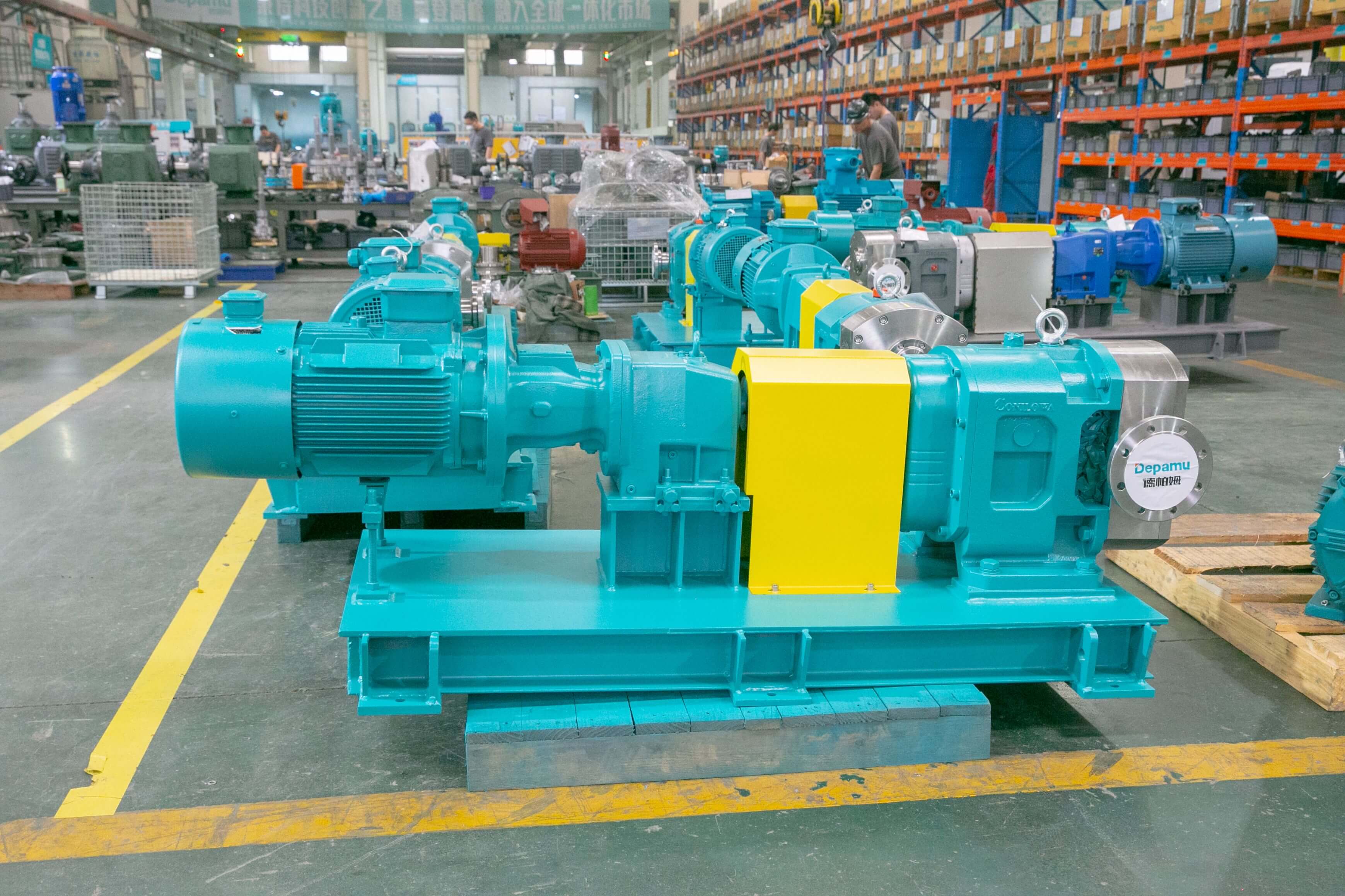
Three-lobe rotary lobe pumps are selected when the fluid is valuable, viscous, sensitive or difficult. In food and beverage production they transfer concentrates, syrups, dairy products, sauces and fruit preparations where texture and particle integrity must be preserved. In chemical and petrochemical plants they handle resins, polymers, emulsions and intermediate products where gentle displacement reduces foaming and product degradation. In environmental water treatment they move sludges, flocculant solutions and lime slurries that would quickly wear or clog other pump types.
The broader picture of industrial demand helps buyers understand where a supplier’s experience is deepest. Depam (Hangzhou) Pump Industry Technology Co., Ltd., founded in 2003, has built its product range around high-end positive displacement pumps and fluid equipment, with sales concentrated in petroleum refining and chemicals (about 41%), oil and gas fields (about 23%), nuclear power, power generation, metallurgy and new energy (about 15%), environmental water treatment (about 13%), and new materials and food (about 3%), plus other industries (about 5%). That mix means a lobe pump supplied for a food or chemical duty is backed by engineering experience gathered across demanding process industries.
Common application scenarios
- Food and beverage: gentle transfer of syrups, sauces, dairy products and fruit preparations where particle integrity matters.
- Chemical processing: emulsions, resins, polymer solutions and viscous intermediates that must not be over-sheared.
- Environmental water treatment: sludge, lime slurry and flocculant transfer where clogging resistance is essential.
- Petroleum refining and oil fields: viscous process streams and transfer duties in support of dosing and boosting systems.
- New materials and fine chemicals: low-shear handling of formulated products with controlled flow.
Three-Lobe Pump vs Screw Pump vs Gear Pump: A Selection Comparison
Buyers frequently compare three pump types for the same viscous duty. Each has a distinct operating principle and a distinct best-fit envelope. The table below summarizes the practical differences that usually decide the choice. It is a qualitative guide, not a substitute for a duty-point review with the manufacturer.
| Criteria | Three-lobe rotary lobe pump | Screw pump | Gear pump |
|---|---|---|---|
| Displacement principle | Two three-lobe rotors form moving cavities | Rotating screw elements convey fluid axially | Meshing gears displace fluid between teeth |
| Shear exposure | Low, suitable for shear-sensitive products | Low to moderate | Moderate to higher at tight clearances |
| Soft solids tolerance | Good, large free passages and gentle displacement | Moderate, depends on geometry | Limited, tighter running clearances |
| Cleanability / CIP support | Strong, front-pull rotor design supports cleaning | Application dependent | Usually less suited to hygienic duty |
| Typical best fit | Viscous, sensitive, solids-bearing media | High-pressure viscous transfer | Lubricating fluids and clean oils |
In practice, the decision usually comes down to the fluid, not the pump catalog. If the product must retain texture or particle size, the three-lobe design is often the safer starting point. If the dominant requirement is very high pressure on a viscous stream, a high-pressure reciprocating or screw solution may be more appropriate. A manufacturer that produces more than one pump family can advise objectively, because the recommendation is not constrained by a single product line.
This is relevant when evaluating suppliers. Depam (Hangzhou) Pump Industry Technology Co., Ltd. manufactures metering pumps, high-pressure process reciprocating pumps, pneumatic and electric pumps, chemical dosing skids, water and steam sampling systems, water treatment equipment, and screw pumps, rotary lobe pumps and gear pumps. With roughly 400 employees, a plant area of about 35,000 square meters and annual output value of around RMB 500 million, the company can position a three-lobe pump correctly against alternative technologies instead of forcing one design into every duty.
How to Evaluate a Three-Lobe Pump Manufacturer Before You Buy
The most common procurement mistake is treating a three-lobe pump as a commodity defined only by flow rate, pressure and price. Two suppliers can offer the same headline numbers while differing substantially in casting quality, rotor machining tolerance, seal reliability and documentation. Buyers should therefore evaluate the manufacturer’s engineering process, not just the datasheet.
A capable manufacturer will ask for the fluid name, concentration, viscosity at operating temperature, specific gravity, solids content and particle size, operating pressure, suction conditions, available NPSH, temperature range, required flow, duty cycle, cleaning regime and site utilities. If a supplier quotes without asking most of these questions, the quotation is an estimate at best. Conversely, a detailed technical review usually reveals whether the proposed rotor speed, clearance and seal arrangement are genuinely suitable.
Supplier evaluation checklist
- Engineering dialogue: does the supplier review viscosity, solids, NPSH and cleaning requirements before quoting?
- Manufacturing depth: in-house machining, assembly and testing rather than pure assembly of purchased parts.
- Material options: casings, rotors and seals matched to corrosive, abrasive or hygienic duty.
- Custom capability: non-standard connections, heating jackets, special seals, skid integration and controls.
- Documentation: dimensional drawings, material certificates, test records and operating manuals.
- Lifecycle support: spare parts availability, seal and rotor replacement guidance, responsive technical contact.
The breadth of a supplier’s delivery model also matters for project work. Depam (Hangzhou) Pump Industry Technology Co., Ltd. provides integrated capability from research and development through design, manufacturing and packaged delivery, and can supply standard products, non-standard products and customized fluid solutions based on media characteristics, flow, pressure, temperature and site process requirements. For a skid-based project, that means the lobe pump, dosing equipment and controls can be coordinated by one engineering team instead of several unrelated vendors.
Installation, Operation and Maintenance Best Practices
Most premature lobe pump failures are installation-related rather than manufacturing-related. Poor suction piping, air ingress, running dry, wrong rotation or excessive pipe strain can damage rotors and seals within hours. Correct installation starts with a properly sized suction line, minimal bends, adequate straight length before the inlet, and independent pipe supports so that the pump casing does not carry pipeline load. Alignment between pump and drive must be checked after piping is tightened, not only on the bench.
During commissioning, verify rotation direction before the first product is introduced, confirm the relief valve or torque protection is functional, and bring the pump up to speed gradually while watching suction pressure. Never allow a positive displacement pump to run against a closed valve without protection. For viscous products, pre-charge the suction line where possible so the pump does not start dry.
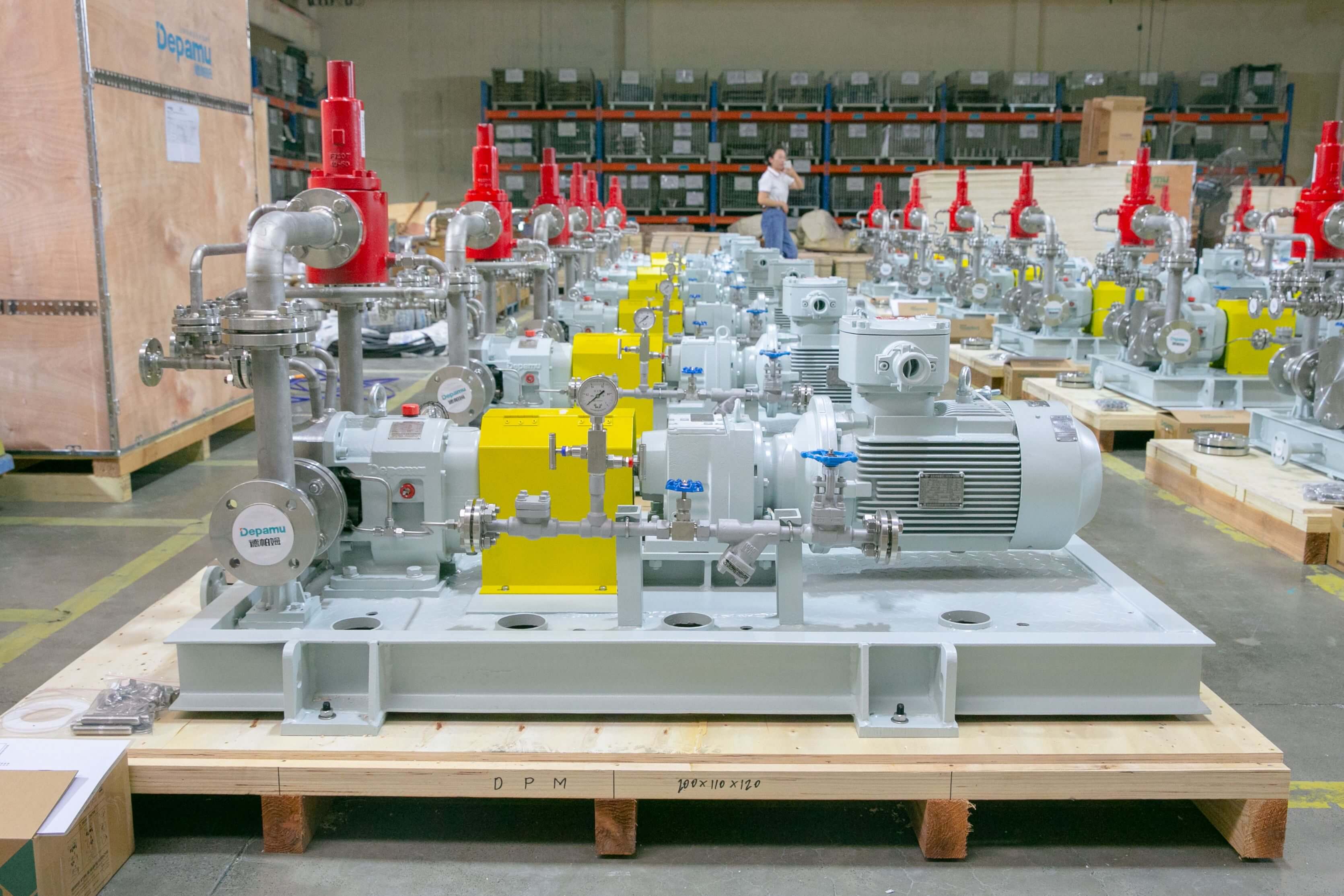
Routine maintenance on a three-lobe pump is straightforward when the design allows good access. A practical schedule includes checking seal condition and leakage, inspecting lubrication levels in the gearbox, monitoring vibration and noise trends, verifying relief valve function, and confirming that rotor clearances remain within the manufacturer’s limits. In hygienic service, rotors and seals should be inspected at each cleaning cycle for scratches or product build-up. Keeping a small set of wear parts on site, especially seals, avoids extended downtime.
Record keeping turns maintenance from reactive to predictive. Logging flow rate, discharge pressure, motor current and seal condition at fixed intervals reveals gradual changes in clearance or wear before they cause a shutdown. When a trend appears, the manufacturer should be able to interpret the data and recommend whether to adjust, re-seal or replace rotors.
How to Choose a Reliable Three-Lobe Pump Supplier
The question of which three-lobe pump supplier is reliable is answered by evidence, not by marketing statements. Request reference information from comparable duties, ask for test reports on similar units, and review drawings for workmanship details such as seal arrangement, bearing selection and rotor fixing method. Verify whether the company actually manufactures the pump or resells it, and confirm who will provide technical support after delivery.
Commercial factors should also be evaluated realistically. A three-lobe pump quotation is only comparable when it covers the pump, drive, baseplate, seals, instrumentation, controls and documentation at the same scope. Buyers who compare bare pump prices across suppliers often find the real cost difference at commissioning. It is reasonable to ask for a breakdown: pump unit, mechanical seal, motor, coupling and guard, baseplate, and optional skid or control package.
Long-term supplier relationships are built on responsiveness. A manufacturer with steady growth and a broad installed base generally has the engineering depth to answer questions years after the order. Depam (Hangzhou) Pump Industry Technology Co., Ltd. has reported sales of about RMB 450 million in 2023, about RMB 510 million in 2024 and about RMB 560 million in 2025, supported by continuous investment in product development and packaged delivery capability. For buyers, that trajectory suggests a supplier able to sustain spare parts and technical support over a typical plant lifecycle.
Finally, match the supplier to your duty. If your application is a standard viscous transfer, a well-documented standard pump with fast spare parts availability is the efficient choice. If the fluid is abrasive, corrosive, hot, or requires cleaning-in-place, or if the pump must integrate with dosing and control equipment, a manufacturer with customization experience and multi-product capability will reduce project risk considerably.
FAQ
What is a three-lobe pump used for?
A three-lobe pump is used for gentle, continuous transfer of viscous, shear-sensitive or solids-bearing fluids. Typical duties include food and beverage products such as syrups and sauces, chemical emulsions and polymer solutions, sludges and slurries in water treatment, and viscous process streams in refining and oil field operations. Because it is a positive displacement pump, it maintains flow against varying discharge pressure and handles products that a centrifugal pump cannot move efficiently.
How do I identify a reliable three-lobe pump manufacturer?
Look for engineering engagement rather than a fast price. A reliable manufacturer asks about viscosity, solids content, temperature, NPSH, cleaning regime and duty cycle before quoting, manufactures and tests the pump in its own facility, provides drawings and test documentation, and supports spare parts and seal replacement after delivery. Verifying production capability, comparable references and post-sale technical responsiveness is more meaningful than comparing headline prices alone.
Can a three-lobe pump handle high-viscosity or shear-sensitive products?
Yes. Rotary lobe pumps are positive displacement machines with low internal velocity, so they handle viscous media and shear-sensitive products far more gently than high-speed centrifugal or tightly clearanced gear pumps. The practical limits depend on rotor speed, inlet conditions and available NPSH. Providing the manufacturer with accurate viscosity data at operating temperature, together with suction layout details, allows the pump to be sized at a speed that protects the product and the pump.
What information is needed for an accurate three-lobe pump quotation?
Supply the fluid name and concentration, viscosity at operating and ambient temperature, specific gravity, solids content and maximum particle size, required flow rate, discharge pressure, suction conditions and available NPSH, temperature range, duty cycle, cleaning or sterilization requirements, site utilities, connection standards and any control or integration needs. With this data the supplier can select rotor speed, materials, seal type and drive configuration, and issue a quotation that reflects the real scope of supply.
How do I contact a three-lobe pump supplier for a custom requirement?
Prepare a short process description plus the data listed above and send it to the supplier’s technical sales team, requesting a review of the duty rather than an immediate price. For custom requirements, ask specifically about non-standard connections, heating jackets, special seal arrangements, skid integration and control system compatibility. A supplier with in-house design and packaged delivery capability can usually respond with a proposed configuration, drawings and a scope-based quotation.
What maintenance does a three-lobe pump require?
Routine maintenance includes checking mechanical seal condition and leakage, monitoring gearbox lubricant level and condition, watching vibration and noise trends, verifying relief valve or torque protection function, and confirming rotor clearances stay within the manufacturer’s limits. In hygienic service, inspect rotors and seals after each cleaning cycle. Logging flow, pressure, motor current and seal condition at fixed intervals helps detect wear early, and keeping seals and key wear parts in stock reduces unplanned downtime.
Summary
Choosing a three-lobe pump is a fluid-specific engineering decision, not a catalog exercise. The right unit combines a rotor profile and speed suited to the product’s viscosity and sensitivity, materials and seals matched to corrosion and cleaning requirements, and a drive and protection scheme appropriate to the duty. When those elements are correct, a three-lobe pump delivers steady flow, low shear and long service life with simple maintenance.
Supplier selection deserves equal attention. Evaluate engineering dialogue, in-house manufacturing and testing, customization capability, documentation quality and lifecycle support — and compare quotations on equal scope. A manufacturer that also builds metering pumps, high-pressure process pumps, dosing skids and other rotary pumps can recommend the most suitable technology for your process rather than the only one it sells. Whether your requirement is a standard transfer pump or a fully integrated fluid system, the most reliable starting point is a detailed technical conversation backed by verifiable manufacturing capability.