
A three-lobe pump is one of the most versatile positive displacement pumps used in modern process plants. Thanks to its gentle handling, low shear rate, strong self-priming ability and excellent cleanability, the tri-lobe pump has become a default choice for viscous, sensitive or solids-laden media in food processing, chemical production, water treatment and many other industries. For procurement teams and process engineers, however, the real challenge is not understanding what a three-lobe pump does — it is selecting the right configuration and working with a three-lobe pump manufacturer who can deliver consistent quality, accurate documentation and long-term spare parts support.
This guide explains how a three-lobe pump works, compares it with other pump technologies, reviews typical application scenarios, and provides a step-by-step selection framework. It also outlines the questions worth asking any three-lobe pump supplier before placing an order, so that the pump you install matches the duty you actually operate.
What Is a Three-Lobe Pump and How Does It Work?
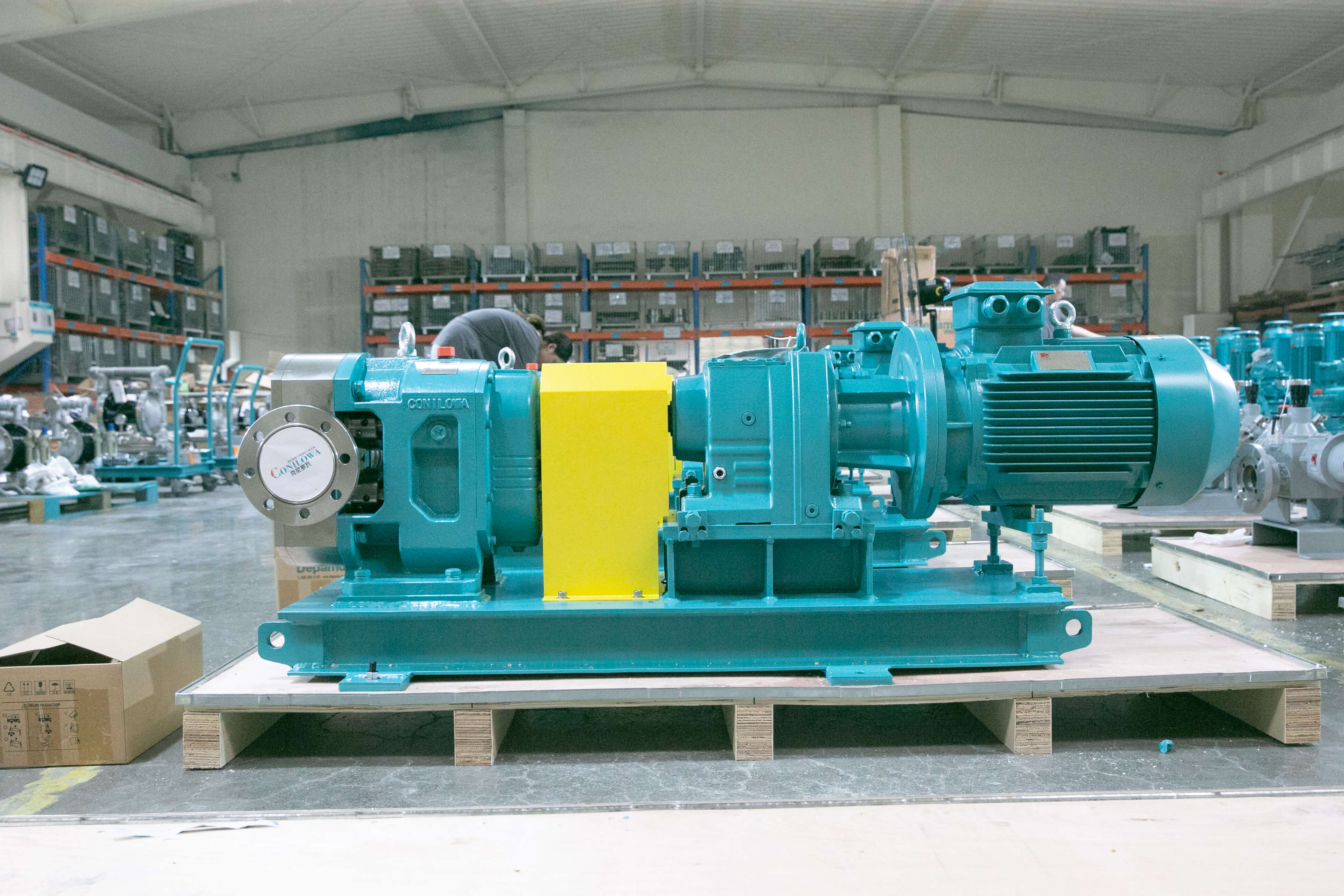
A three-lobe pump, also called a tri-lobe pump or three-lobe rotary lobe pump, belongs to the rotary lobe pump family. Inside the pump chamber, two rotors each carry three lobes. The rotors are driven by timing gears that keep them synchronised, so the lobes never touch each other or the pump casing; only a small clearance separates the moving parts. As the rotors turn, a cavity opens at the suction side, drawing medium into the pump, and then closes at the discharge side, pushing the medium into the outlet line.
Because the pumping action depends on displacement rather than centrifugal force, flow rate is directly proportional to rotational speed. Increasing or decreasing the pump speed — normally with a variable frequency drive — changes the flow in a predictable, almost linear way, while discharge pressure is determined by the downstream system resistance rather than by the pump itself. This characteristic makes the three-lobe pump suitable for dosing-style transfer, blending and metering duties where repeatability matters.
Design Features That Affect Performance
Two rotors with three lobes each produce a smoother, more continuous discharge than a two-lobe design, which reduces pulsation and vibration in the piping system. The low internal velocity and generous passages allow the pump to handle high-viscosity liquids and media containing soft solids without shearing or crushing them. Many tri-lobe pumps are also self-priming, can run in either direction, and can handle short dry-running periods, which is useful during tank emptying or CIP return cycles.
- Rotor profile and clearance: lobe geometry, tip clearance and axial clearance determine efficiency, solids clearance and shear level.
- Material options: wetted parts are commonly stainless steel, with higher-alloy or duplex grades for corrosive duties.
- Sealing: single mechanical seals, double mechanical seals, cartridge seals, lip seals and O-ring seals are selected according to medium, temperature and cleaning regime.
- Elastomers: NBR, EPDM, FKM and PTFE-based materials cover different chemical and temperature requirements.
- Connections: tri-clamp, DIN, SMS, RJT and standard flanges support both hygienic and industrial piping systems.
- Cleaning: hygienic models are designed for clean-in-place and sterilise-in-place cycles, with smooth surfaces and drainable geometry.
Three-Lobe Pump vs. Other Pump Technologies
No single pump type fits every duty. A three-lobe pump competes most directly with progressive cavity screw pumps, external gear pumps and centrifugal pumps, and the right choice depends on viscosity, solids content, shear sensitivity, pressure and cleaning requirements. The comparison below summarises the practical differences that matter during selection.
| Pump Type | Working Principle | Best Suited To | Practical Limitations |
|---|---|---|---|
| Three-lobe rotary pump | Positive displacement, non-contacting rotors | Viscous, shear-sensitive and solids-laden media; hygienic transfer; CIP duties | Pressure range lower than reciprocating pumps; not ideal for very abrasive slurries |
| Progressive cavity screw pump | Rotor rotating inside a stationary elastomer stator | High-viscosity sludge, pastes and media with high solids content | Stator wear, limited dry-run tolerance, cleaning can be more demanding |
| External gear pump | Positive displacement, meshing gears | Clean lubricating fluids, high-pressure small flows | High shear, poor performance on solids, less hygienic by design |
| Centrifugal pump | Dynamic, impeller-based | Low-viscosity clean liquids, high flow at moderate pressure | Shear damage, poor self-priming, flow varies strongly with system pressure |
In practice, the three-lobe pump wins when the medium is viscous, shear-sensitive or contains soft particles that must arrive at the destination intact, and when the process demands verifiable cleaning. When the duty calls for very high pressure — for example, pipeline injection or long-distance transfer — a high-pressure reciprocating pump is usually the better technical fit, while precise chemical injection is normally handled by a metering pump.
Tri-Lobe Pump Applications Across Process Industries
Because the pump moves product gently, the three-lobe pump is used wherever product integrity and reliable transfer both matter. The application list below reflects the industries where this pump family is routinely deployed, from food and beverage lines to heavy chemical and water treatment plants.
Food and Beverage Processing
In food production, the sanitary three-lobe pump handles yoghurt, syrup, fruit concentrate, chocolate mass, sauces, edible oils and dairy products at low shear. Hygienic executions with tri-clamp connections and clean-in-place capability allow the same pump to be used during production and cleaning cycles. Gentle handling protects texture and particle size, which matters in products where appearance and mouthfeel are quality attributes.
Chemical, Petrochemical and New Materials
Chemical plants use tri-lobe pumps to transfer resins, polymer solutions, solvents, adhesives and viscous intermediates. Because flow is speed-proportional, the pump can be integrated into batch recipes where the transferred volume must be repeatable. For aggressive media, material and seal selection becomes the critical design decision, and a three-lobe pump manufacturer with experience in corrosion-resistant construction can specify wetted parts and elastomers that match the chemical compatibility profile of the process.
Environmental Water Treatment
In wastewater and water treatment plants, three-lobe pumps move sludge, thickened biosolids, lime slurry and polymer solutions. Their ability to handle soft solids without clogging makes them a practical alternative to centrifugal pumps in sludge transfer duties, and their low shear behaviour helps preserve floc structure when transferring conditioned sludge or polymer solutions.
Oil and Gas, Power and General Industry
In oil and gas field operations, crude transfer, slop handling and produced-fluid duties often call for positive displacement pumps with strong suction characteristics. In power plants and metallurgy, three-lobe pumps support lubricating oil transfer, chemical preparation and auxiliary fluid handling. For each of these duties, the selection process is the same: define the medium, then match rotor clearance, materials, seals and drive to the operating envelope.
How to Select the Right Three-Lobe Pump: A Practical Selection Guide
Accurate selection starts with a complete duty specification. Suppliers cannot quote a reliable three-lobe pump from flow rate alone; viscosity, temperature, pressure, solids content and cleaning requirements all influence rotor design, clearance, seal type and motor sizing. The table below lists the parameters that should be defined before requesting a three-lobe pump quotation.
| Parameter | Why It Matters | What to Specify |
|---|---|---|
| Flow rate | Determines pump size and speed | Minimum, normal and maximum flow in m³/h or L/h |
| Viscosity | Affects speed limits, NPSH requirement and motor power | Operating viscosity in cP or cSt, plus viscosity at start-up |
| Temperature | Drives material, elastomer and clearance decisions | Minimum, normal and maximum process temperature |
| Discharge pressure | Sets shaft, bearing and casing requirements | Design pressure and normal operating pressure |
| Solids and abrasives | Influences lobe profile, clearance and service life | Particle size, shape, concentration and hardness |
| Cleaning and hygiene | Defines surface finish, connections and seal arrangement | CIP/SIP requirement, cleaning chemicals and frequency |
| Drive and control | Determines turndown, control accuracy and energy use | Fixed speed or VFD, control signals and instrumentation |
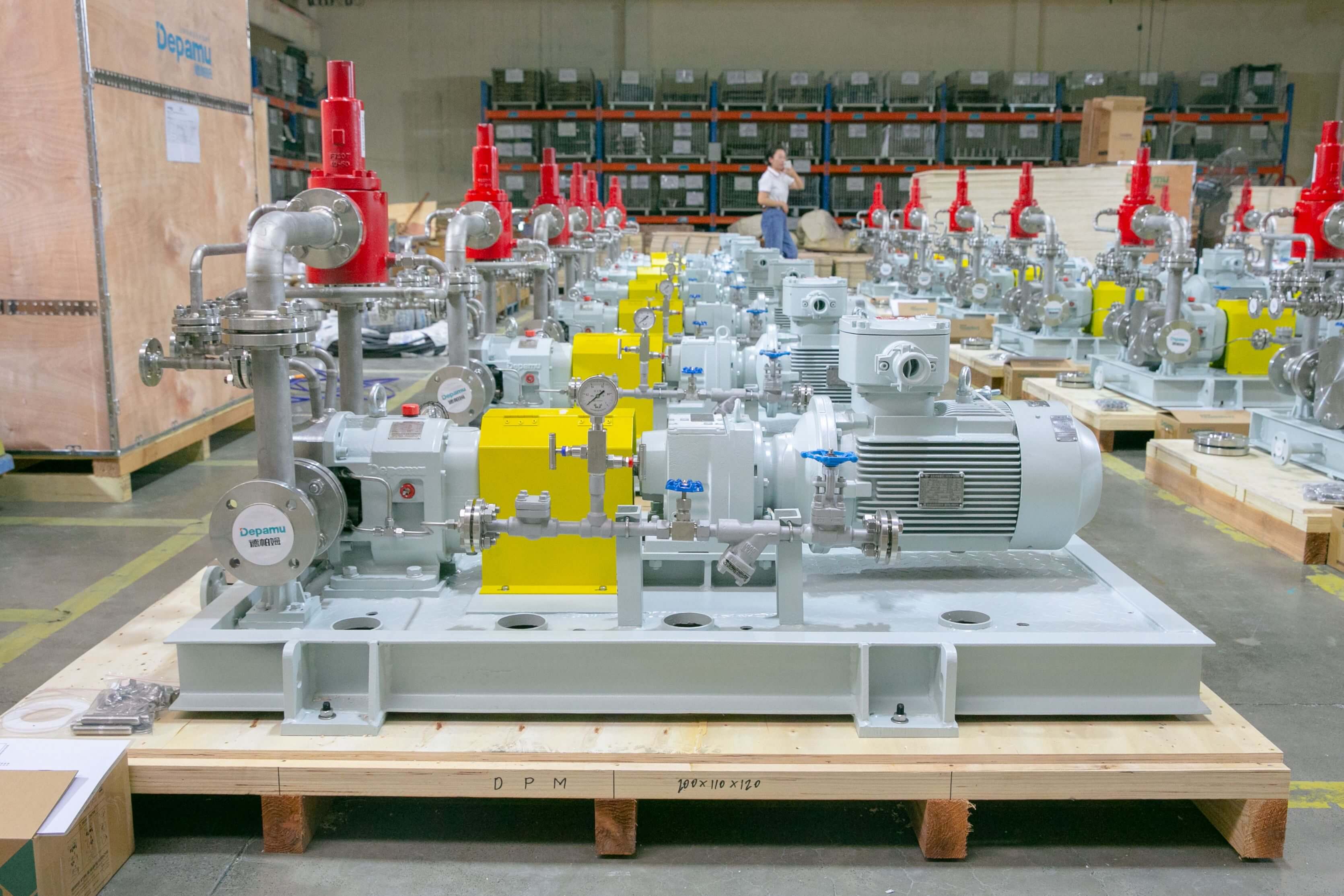
Two further points are frequently overlooked. First, positive displacement pumps must be protected against overpressure; a relief valve or equivalent protection on the discharge side is essential, not optional. Second, avoid oversizing. A pump selected far above the actual duty will run at very low speed, which can reduce lubrication and heat dissipation in the seal area. A correctly sized unit, running within its recommended speed range, gives better efficiency and longer service life.
When the required discharge pressure exceeds what a rotary lobe pump can practically deliver, the engineering answer is usually a different pump architecture rather than a larger lobe pump. In such projects, a supplier that also builds high-pressure reciprocating pumps and metering pumps can compare technologies and recommend the configuration that best matches the process, instead of forcing a single product line onto every duty.
Choosing a Three-Lobe Pump Manufacturer and Supplier
Pump performance is only half of the purchasing decision. The other half is the supplier’s engineering depth, manufacturing control, documentation and after-sales support. A three-lobe pump manufacturer who builds pumps from a standard platform but engineers each unit to the duty specification will usually deliver a better outcome than a supplier who simply re-sells catalogue products.
DEPAM (Hangzhou) Pump Industry Technology Co., Ltd. is a manufacturer established in 2003 and focused on high-end positive displacement pumps and fluid equipment. The company employs more than 400 people, operates a plant of approximately 35,000 square metres, holds registered capital of RMB 54 million and reaches an annual output value of around RMB 500 million, with sales of about RMB 450 million in 2023, RMB 510 million in 2024 and RMB 560 million in 2025. Its portfolio includes metering pumps, high-pressure process reciprocating pumps, pneumatic and electric pumps, automatic chemical dosing skids, water-steam sampling systems, water treatment equipment, screw pumps, rotary lobe pumps and gear pumps, marketed under the DEPAM, Knirova and Dailepu brands.
Products are applied in petroleum refining and chemicals (about 41% of sales), oil and gas fields (about 23%), nuclear power, power generation, metallurgy and new energy (about 15%), environmental water treatment (about 13%), and new materials and food (about 3%), with the balance in other industries. This spread matters during supplier evaluation: a manufacturer with experience across hygienic, corrosive and high-pressure duties is more likely to recognise the engineering risks in a new application.
Questions Worth Asking Before You Order
- Can the supplier supply the pump as a standard, non-standard or fully customised unit based on our duty data?
- What rotor profile, clearance and seal arrangement are proposed, and why are they suitable for our medium?
- Which documents are provided — dimensional drawings, material certificates, test records and operation manuals?
- What is the spare parts strategy, and which wear parts should be stocked locally?
- Is OEM or private-label supply available if we distribute or integrate the pump into skid packages?
- How is the pump tested before shipment, and what acceptance criteria apply?
Installation, Operation and Maintenance Best Practices
Most three-lobe pump problems trace back to installation rather than the pump itself. The unit should be mounted on a rigid base with correct alignment between pump and drive, and piping should be independently supported so that nozzle loads are not transferred to the casing. Suction lines should be short, adequately sized and free of high points where air can collect, because positive displacement pumps handle air poorly.
During operation, monitor discharge pressure, flow, motor current and seal area temperature. A relief valve or torque-limiting protection must be in place to prevent damage if a valve downstream is closed accidentally. For hygienic duties, follow the cleaning procedure specified for the seal and elastomer materials; incompatible cleaning chemicals are a common cause of premature seal failure.
Maintenance is straightforward when planned. Check timing gear lubricant at the recommended interval, inspect mechanical seals for leakage or discolouration, verify coupling alignment after any pipe modification, and monitor flow performance as an early indicator of rotor or casing wear. Keeping a small stock of seals, O-rings and gaskets avoids long unplanned shutdowns, particularly in continuous process plants where every hour of downtime has a cost.
FAQ
What is a three-lobe pump used for?
A three-lobe pump is used for gentle, low-shear transfer of viscous, shear-sensitive or solids-laden liquids. Typical duties include food and beverage products, chemical and polymer solutions, sludge and slurry transfer in water treatment, and auxiliary fluid handling in oil and gas, power and metallurgy. Its self-priming ability and clean-in-place compatibility also make it suitable for tank emptying and hygienic process lines.
How do I choose between a three-lobe pump and a screw pump?
Choose a three-lobe pump when the medium contains soft solids that must not be damaged, when cleaning and product integrity are priorities, or when viscosity is moderate to high but not paste-like. Choose a progressive cavity screw pump when the medium is a thick sludge or paste with very high solids content and high pressure is required. The final decision should be based on viscosity, solids size and concentration, pressure, cleaning regime and maintenance access.
Can a tri-lobe pump handle high-viscosity or particulate media?
Yes, within the limits defined during selection. Large internal passages and low rotor speed allow tri-lobe pumps to move viscous products and media containing soft particles with minimal shear. However, particle size, hardness and concentration must be specified so that rotor clearance and materials can be selected correctly. Highly abrasive slurries may require a different pump type or hardened components.
What information do I need to provide to get an accurate three-lobe pump quotation?
Provide the medium name and composition, viscosity at operating and start-up conditions, flow range, discharge pressure, temperature range, solids content and particle size, cleaning requirements, connection standard, material preferences, drive and control requirements, and the installation environment. Supplying a process and instrumentation diagram with the enquiry helps the manufacturer propose the correct configuration and avoid later changes.
How do I evaluate a three-lobe pump manufacturer or supplier?
Assess engineering capability, in-house manufacturing and assembly, testing procedures, material and documentation packages, spare parts availability, customisation and OEM experience, and responsiveness during the quotation phase. Ask for references in comparable duties and check whether the supplier can explain why a particular rotor profile, clearance and seal were proposed for your medium.
What maintenance does a three-lobe pump require?
Routine maintenance includes checking timing gear lubricant, inspecting mechanical seals, verifying coupling alignment, monitoring flow and pressure performance, and replacing elastomers at recommended intervals. Maintenance intervals depend on duty severity, cleaning frequency and medium abrasiveness, so the manufacturer’s manual should be treated as the baseline and adjusted according to actual operating experience.
Can three-lobe pumps be supplied as custom or OEM units?
Many manufacturers offer non-standard and customised configurations, including special materials, heating jackets, custom connections, integrated skids and private-label supply. Discuss OEM requirements early in the project so that branding, documentation, packaging and approval responsibilities are clearly defined in the supply agreement.
Summary
The three-lobe pump is a reliable, gentle and cleanable positive displacement solution for viscous, shear-sensitive and solids-laden media. Getting the best result depends less on the pump nameplate and more on a disciplined selection process: define the medium and duty precisely, compare pump technologies honestly, specify materials, seals and clearances against the actual process, and protect the pump with proper overpressure and installation provisions.
Equally important is the partner you choose. A three-lobe pump manufacturer with in-house engineering, broad experience across chemical, food, water treatment and heavy industry duties, and the ability to supply standard, non-standard and customised units can shorten the selection cycle and reduce lifecycle risk. Whether you are replacing an existing unit, building a new transfer skid or sourcing OEM pumps for distribution, use the selection framework and supplier questions in this guide to obtain a quotation that reflects your real operating conditions rather than a catalogue approximation.