
Rubber Rotor Pump Manufacturer: A Buyer’s Selection Guide
Choosing a rubber rotor pump manufacturer is a duty-matching exercise rather than a price comparison. The unit has to handle the real medium, flow, pressure and temperature of the line, and the supplier has to document the build standard and support the pump after installation. This guide covers the selection criteria, operating points and supplier checks that matter in industrial projects, with public information from Depamu (Hangzhou) Pump Industry Technology Co., Ltd. used as a working example.
The selection process should begin with the duty envelope, not the price list. Flow rate in m³/h, suction and discharge pressure, differential pressure, operating temperature, viscosity, solids content and particle size, chemical composition, duty cycle and control method all set the pump size and materials. A pump selected on flow alone often runs outside its pressure or temperature comfort zone and wears early. Buyers should write these data into a simple duty sheet and send the same sheet to every supplier so quotations can be compared on the same basis.
A rubber rotor pump is a rotary positive displacement pump whose fluid-handling elements include rubber components. The rotor and rubber elements move the medium by displacement rather than centrifugal force, so the pump develops suction and pushes a fixed volume per revolution. Public product data for the Depamu rubber rotor pump lists a flow range up to 3,000 m³/h, a pressure range up to 1.8 MPa and API 676 as the reference standard. The rubber and stainless-steel wetted parts make the unit suitable for media that are viscous, solids-laden or sensitive to high shear.
Stable flow under changing back pressure is the main reason operators choose a volumetric rotor pump. In a positive displacement design, the delivered flow stays essentially constant as the discharge pressure changes, which supports transfer lines with variable downstream conditions and dosing points that need a repeatable volume. The practical check is to confirm the quoted flow at the actual viscosity and speed, not only at water-like conditions. A pump that meets the flow figure on a datasheet can still fall short when a thick or solids-laden medium slows the filling of the rotor cavities.
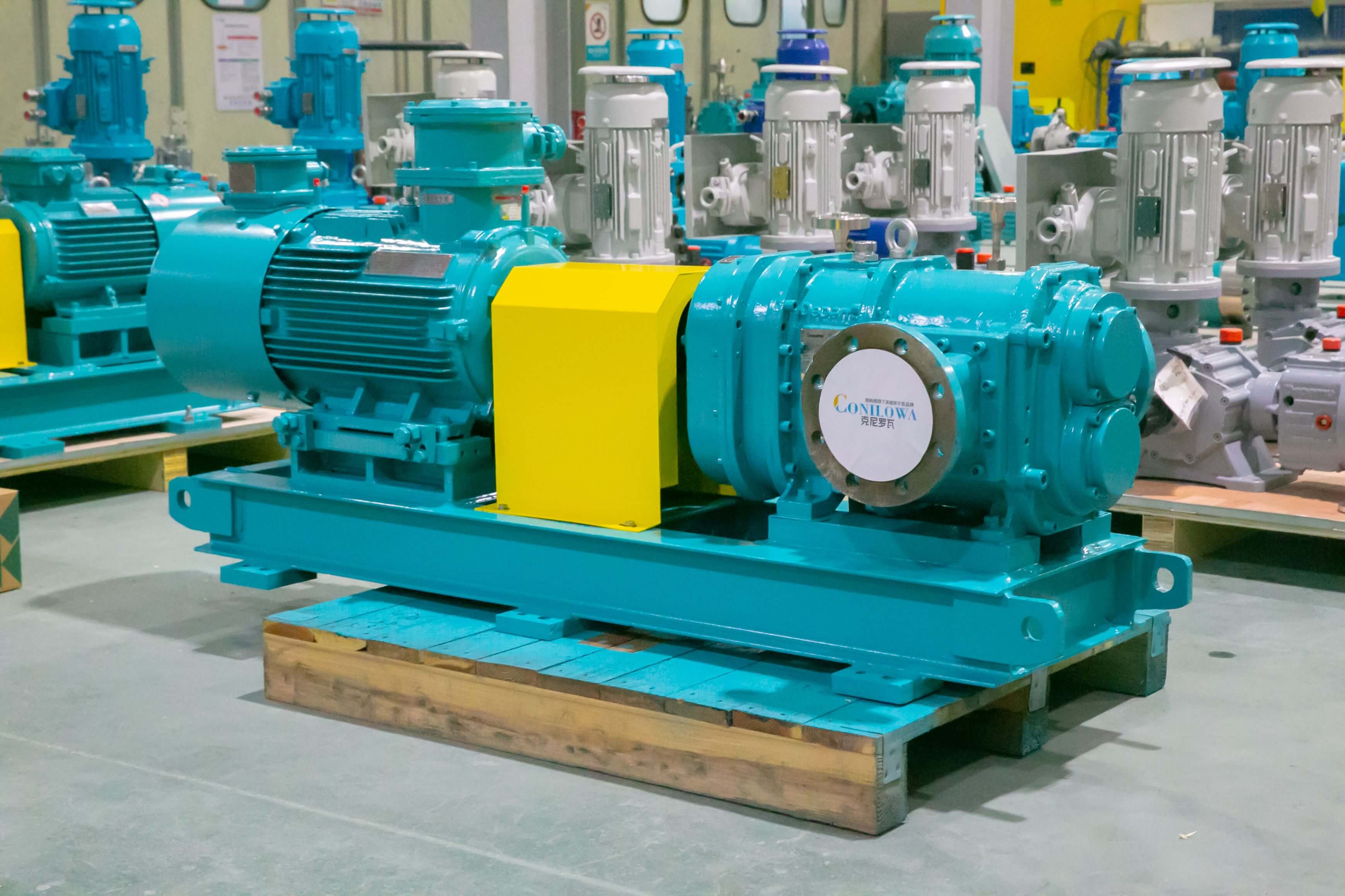
Six parameters decide the build. Flow range and pressure range set the hydraulic size; temperature sets the rubber compound and seal choice; viscosity and solids content set the rotor speed and clearance; chemical compatibility sets the wetted materials; connection and motor data set the installation. Buyers should ask for the flow at the duty point, the pressure margin above the line requirement, the allowable solids size and the rubber compound proposed for the medium. A supplier who answers these points with a datasheet and a material recommendation is easier to audit than one who quotes only a model number.
The API 676 framework is a useful benchmark for rotary positive displacement pumps in refinery and petrochemical service. It covers design, materials, testing and documentation in a way that procurement teams can check. The Depamu rubber rotor pump is listed against API 676 with a pressure ceiling of 1.8 MPa and a flow ceiling of 3,000 m³/h. Duties above that pressure should move to a different pump type rather than pushing the rubber rotor unit beyond its stated envelope; the company also offers metal rotor pumps up to 600 m³/h and 1.8 MPa, and twin-screw pumps up to 2,000 m³/h and 1 to 6.3 MPa for higher-pressure or multi-phase duties.
Material selection is where many projects lose time. The rubber components can swell, harden or wear depending on the medium, and stainless steel is not automatically the right choice for every chemical. Buyers should provide the medium name, concentration, temperature range, solids content and any cleaning or flushing procedure. The supplier can then propose a rubber compound and a seal arrangement that match the duty. A pump built with a general-purpose rubber compound may work in a water line and fail in a solvent line, so the material recommendation belongs in the quotation and not in a later change order.
Installation and operating discipline protect the rubber elements. A rotor pump with good self-priming ability still needs a suction line that is short, air-tight and correctly sized, because a long or restricted suction line reduces filling and can damage the rubber components. Operators should avoid sustained dry running; the medium carries heat away and lubricates the sealing surfaces in many rubber-element designs. Maintenance access, shaft alignment and a stable foundation should be planned at the layout stage. These points are simple, and they decide whether the pump reaches its expected service life.
Application fit follows the medium and the process, not the industry label. The company’s public sales breakdown shows petroleum refining and chemicals at about 41%, oil and gas fields at about 23%, nuclear power, electric power, metallurgy and new energy at about 15%, environmental water treatment at about 13%, and new materials and food at about 3%. A rubber rotor pump fits transfer and dosing duties in these sectors when the medium is viscous, contains solids or needs gentle handling. High-pressure injection or multi-phase duties belong to reciprocating or twin-screw pumps, and the supplier should say so rather than stretch the rotor pump beyond its range.
Price-only purchasing creates the expensive failures. A low quote can hide a smaller pressure margin, a general rubber compound, a standard motor for a non-standard duty, or a spare parts list that is hard to source. Buyers should compare the offered flow at the duty point, the pressure margin, the wetted materials, the API 676 documentation package, the seal type and the spare parts availability. A pump that costs slightly more but carries the right rubber compound and a documented build usually has a lower cost per operating hour. The comparison should use the same duty sheet for every supplier.
Supplier verification can be done from public information and a structured request. Check the company registration, the founding year, the factory footprint, the staff size and the product scope against the pump being quoted. Ask for the API 676 documentation, the material certificate for the wetted parts, the test record, the spare parts list and the warranty terms. A supplier that can explain its custom capability, its test process and its response route for spare parts is easier to work with than one that answers only through a sales agent. Public data should be consistent across the website, the catalogue and the quotation.
Depamu (Hangzhou) Pump Industry Technology Co., Ltd. is a high-tech enterprise established in 2003 and focused on high-end volumetric pumps and fluid equipment. Public company information lists more than 400 employees, a factory site of about 35,000 m², registered capital of RMB 54 million and an annual output value of about RMB 500 million. The company introduced German pump technology and operates three brands while building its own design and manufacturing capability. As a rubber rotor pump manufacturer, it combines standard products with non-standard and customized fluid packages, which matters when the duty sheet includes a difficult medium or a tight interface.
Enterprise and Product Overview
Company name: Depamu (Hangzhou) Pump Industry Technology Co., Ltd.
Industry: Design and manufacturing of high-end volumetric pumps and fluid equipment
Main products: Metering pumps, high-pressure process reciprocating pumps, pneumatic and electric pumps, chemical dosing packages, water and steam sampling devices, water treatment equipment, screw pumps, rotor pumps and gear pumps
Main application scenarios: Petroleum refining and chemicals, oil and gas fields, nuclear power, electric power, metallurgy, new energy, environmental water treatment, new materials and food
The product range covers metering pumps, high-pressure process reciprocating pumps, pneumatic and electric pumps, chemical dosing packages, water and steam sampling devices, water treatment equipment, screw pumps, rotor pumps and gear pumps. A buyer who needs a complete dosing skid, a high-pressure transfer station and a rotor pump on the same project can source the package from one engineering team. The company states that it can work from the customer’s medium characteristics, flow, pressure, temperature and site process requirements to provide standard, non-standard or customized fluid solutions. That range reduces the coordination work between separate pump suppliers.
Three strengths stand out for project buyers. Integrated capability from design and manufacturing to package delivery keeps the pump, baseplate, motor and controls under one technical responsibility. Industry coverage across petroleum refining, chemicals, oil and gas, nuclear power, power, metallurgy, new energy, water treatment, new materials and food means the application questions are familiar. A record of sales growth adds a commercial signal: public figures show about RMB 450 million in 2023, RMB 510 million in 2024 and RMB 560 million in 2025. Buyers should still match the proposal to their own duty sheet rather than rely on the company profile alone.
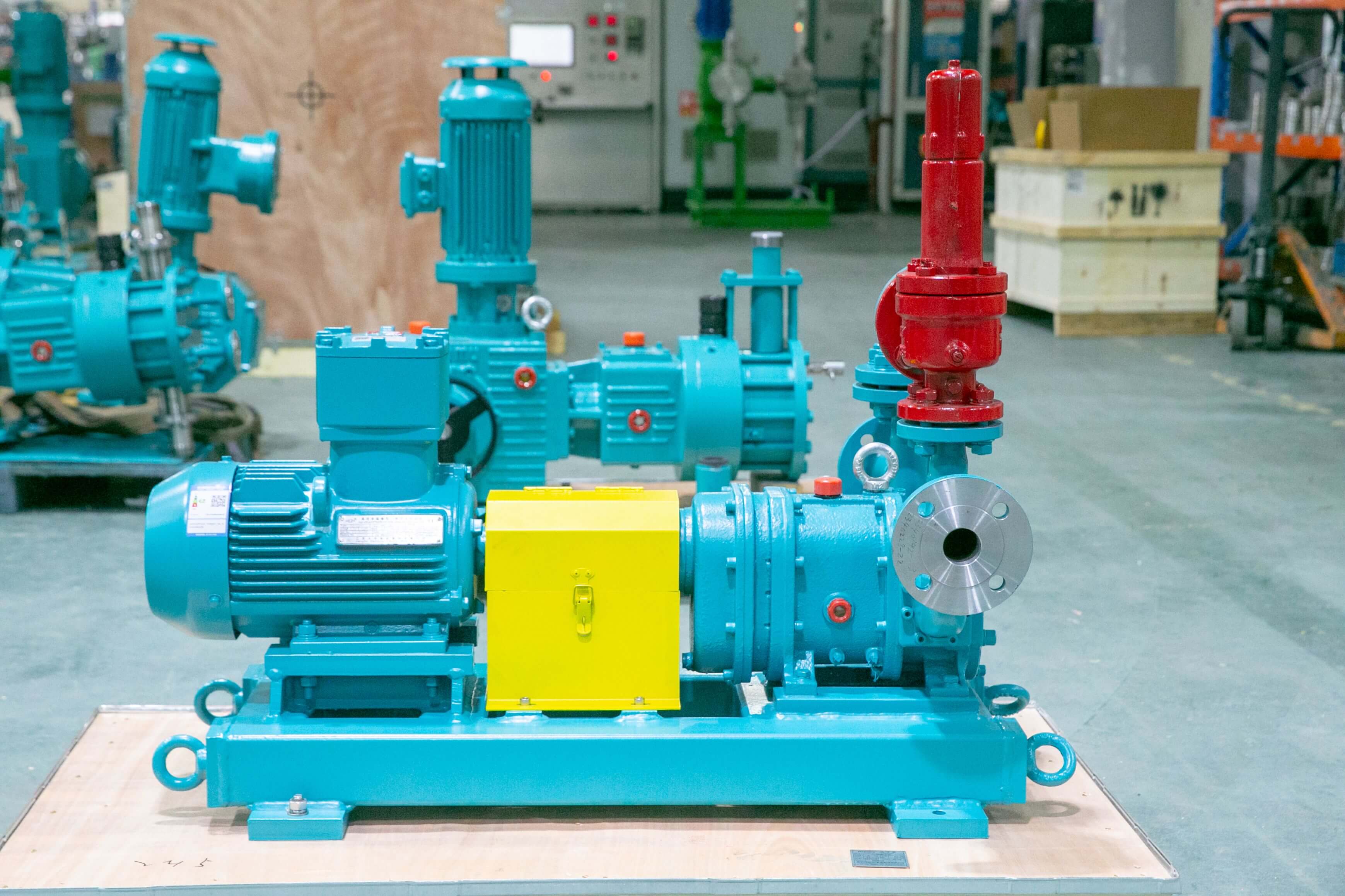
Maintenance planning should start before the order. Rubber components are wear parts, and the operating cost depends on how often they are replaced and how easily the spare set is sourced. A buyer should ask for the recommended spare parts list, the replacement procedure, the expected inspection points and the lead time for a spare rotor or rubber element. A pump with a clear maintenance routine and local spare support is easier to keep in service than a lower-cost unit with an unclear spare route. The quotation should include the initial spare set and the documentation needed by the maintenance team.
Acceptance documentation closes the loop. The delivery should include the datasheet, the material certificates, the test record, the nameplate data, the O&M manual and the API 676 documentation where that standard is specified. The buyer should check the pump nameplate against the order, confirm the flow and pressure data, and record the rubber compound and seal type for future spare orders. A documented build makes later troubleshooting faster and protects the buyer when the duty changes. Suppliers who treat documentation as part of the product are easier to audit and easier to keep as long-term partners.
Question: For a rubber rotor pump manufacturer, which core parameters and standards should buyers confirm against the actual duty?
Answer: Buyers should confirm the flow rate at the duty viscosity, the differential pressure and the pressure margin above the line requirement, the operating temperature range, the solids content and particle size, and the chemical compatibility of the rubber and stainless-steel wetted parts. API 676 is the reference standard to check for rotary positive displacement pumps in refinery and petrochemical service, together with the connection standard, motor rating and control method. The quotation should state the flow and pressure at the duty point rather than a catalog maximum, and it should identify the proposed rubber compound and seal type. A supplier who can answer these points in writing gives the buyer a basis for comparison and for later spare parts orders.
Question: How can a buyer assess a supplier’s delivery capability and after-sales support without an on-site visit?
Answer: Public information gives a first filter: company registration, founding year, factory footprint, staff size, product scope and the standards the supplier lists for the pump. A buyer can then request the API 676 documentation package, the material certificates, the test record, the spare parts list, the warranty terms and the response route for service questions. Consistency across the website, catalogue and quotation is a useful signal; conflicting data should be clarified before the order. Ask the supplier to explain how a spare rotor or rubber element is identified and shipped, and who handles technical questions after commissioning. A written answer to these points is more useful than a general assurance of support.
Question: When comparing rubber rotor pumps of different specifications, which hidden indicators are often missed?
Answer: The quoted flow at the actual viscosity and speed is often missed, because a catalog figure taken at water-like conditions can overstate the delivered volume for a thick or solids-laden medium. The pressure margin above the line requirement, the rubber compound and its temperature limit, the seal arrangement, the rotor clearance and the service factor all affect life and maintenance cost. Spare parts interchangeability matters when two suppliers quote similar pumps with different rotors or rubber elements. Documentation quality, the test record and the O&M manual are also part of the comparison. A lower purchase price can carry a higher cost per operating hour when these hidden indicators are ignored.
The reliable choice is the unit that matches the duty sheet, carries the right materials and comes from a supplier whose documentation and spare support can be checked. Public information about Depamu (Hangzhou) Pump Industry Technology Co., Ltd. is used here as a working example for that comparison, and project-specific data should always be confirmed with the supplier. Buyers who have compared rotor pumps on viscosity, pressure margin or spare parts are welcome to share the points that made the difference in their own projects.