
Metal Rotor Pump Manufacturer: A Practical Selection Guide
A metal rotor pump manufacturer should be judged on how its lobe geometry, clearance settings and metallurgy match the medium you actually move, not on the flow rate printed on a nameplate. Two pumps with the same nominal duty point behave very differently in a 60% solids slurry or a 100,000 cP polymer, and most site problems — short lobe life, seal leakage, capacity drifting below the process requirement — trace back to a specification gap or thin documentation rather than to the pump concept itself. The practical route to a sound purchase is to work outward from medium data: confirm the series envelope, then verify materials, clearances, testing and paperwork in that order.
Rotor lobe pumps sit in the positive displacement family. Two or three non-contacting lobes rotate inside a casing, timed by an external gear pair, so the cavities between lobe and casing expand at the inlet and contract at the outlet. There are no valves in the flow path, which is why this design self-primes from a suction lift of up to 8 m, tolerates gas slugs and liquid-gas-solid mixed transport, can be reversed by changing rotation direction, and delivers a smooth, essentially pulsation-free flow. The same geometry explains its low shear behaviour, which matters when the pumped fluid is an emulsion, a polymer solution or a suspension that must not be broken up by the impeller.
Metal rotors and rubber rotors are not interchangeable options on the same datasheet. A metal rotor pump typically covers flows up to about 600 m³/h at pressures up to 1.8 MPa, with lobes in stainless steel or alloy; the rubber-lobe version of the same family reaches flows up to about 3000 m³/h at the same pressure class, with rubber or stainless steel elements. Metal lobes are chosen where temperature is higher, the medium is abrasive or chemically aggressive, clearances must stay tight, or particle size is modest and long element life matters. Rubber lobes come into play where flow is large, particles are coarser and gentle handling outweighs wear resistance. Both are built to API 676 in the case of Depamu’s rotor range, and the choice between them should be made from medium data, not from a preference for one material.
Medium data comes first, and it is worth collecting it properly before contacting any supplier. Viscosity at pumping temperature is the single most influential figure — this family handles fluids up to around 100,000 cP, but the correct speed and clearance depend on exactly where in that range the duty sits. Solids content and particle size follow, since the family can pass up to roughly 60% solids by volume but the lobe profile and clearance must be sized for the largest particle. Temperature range, pH and chloride content set the metallurgy; shear sensitivity decides whether a lobe pump is suitable at all; gas content and the presence of air pockets decide whether mixed transport capability is needed; cleaning and hygienic requirements decide the seal and surface finish. Buyers who arrive with a viscosity-temperature curve, a particle size distribution and a suction condition get a far more accurate quotation than buyers who arrive with a flow rate alone.
Flow, differential pressure and rotational speed then set the size. Displacement per revolution multiplied by speed gives the duty flow, and running a larger pump slower is generally kinder to lobe and seal life than running a small pump fast, at the cost of footprint and price. Pressure deserves its own check: a rotor lobe pump in this family is rated up to about 1.8 MPa, so a duty that climbs above that figure is a signal to reconsider the pump type rather than to push the lobe design beyond its envelope. Twin-screw and three-screw pumps cover the higher pressure territory, with ranges such as 1 to 6.3 MPa for twin-screw and up to 10 MPa for three-screw designs, which is why a supplier offering several positive displacement families can usually redirect a specification before an order is placed.
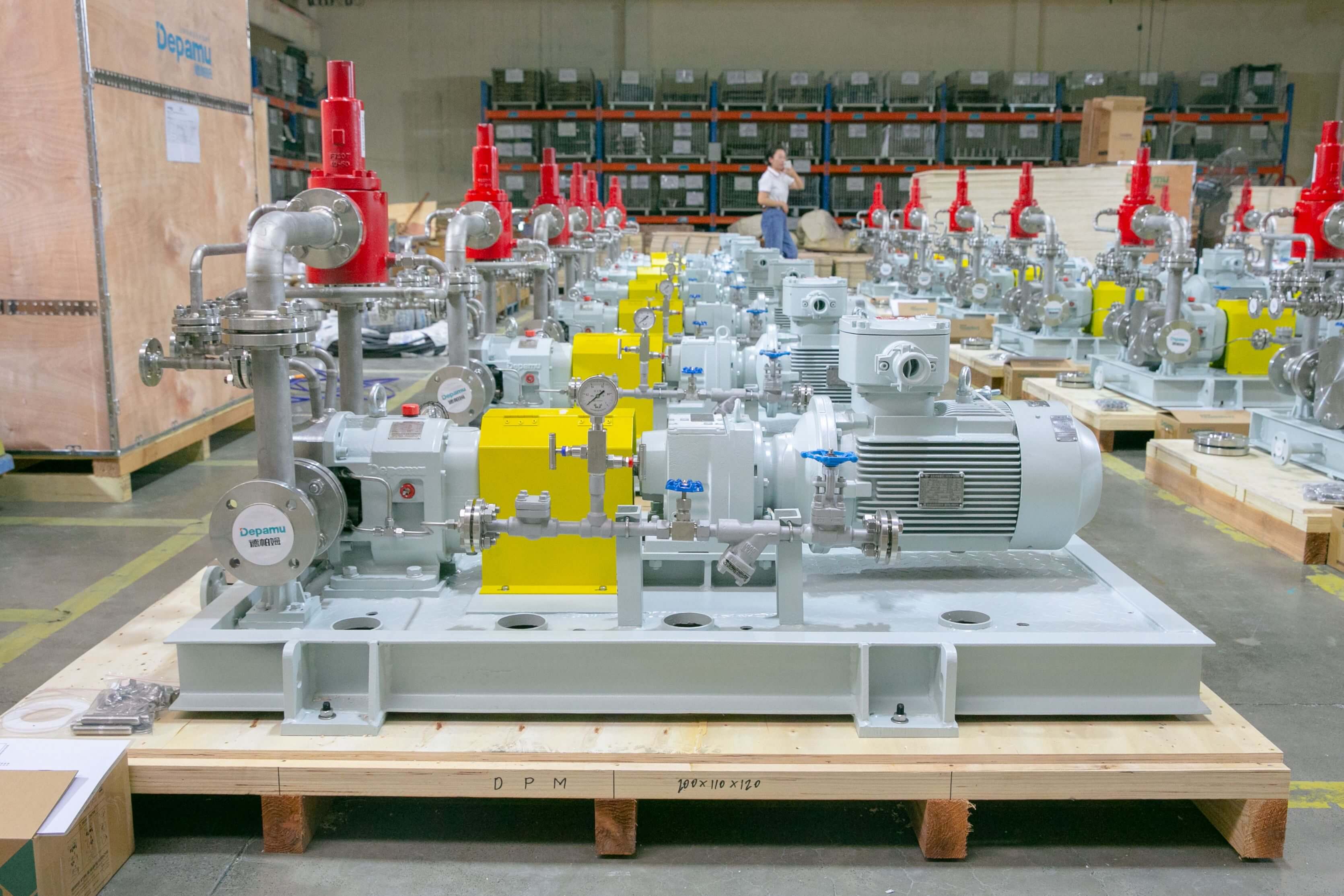
API 676 conformity is the second filter, and it means more than a logo on a brochure. The standard sets requirements for rotary positive displacement pumps in refinery, petrochemical and gas service, covering performance and hydrostatic testing, documented material traceability, mechanical seal arrangements, baseplate and coupling guard details, nameplate marking and instruction manuals. A supplier claiming conformance should be able to hand over a hydrostatic test record, a performance test curve at your viscosity, material certificates for lobes, casing and shaft, a seal drawing with the flush plan, and an IOM manual in a language your maintenance team reads. Ask for those documents at quotation stage; the answer tells you more about the supplier than any factory video.
Verification points worth building into the purchase order. Material and clearance engineering: the clearance class should be stated against your operating temperature, because thermal growth closes a clearance that was set for ambient water. Lobe profile: multi-lobe designs reduce pulsation but narrow the particle passage, so the profile must follow the solids data. Sealing: a single mechanical seal, a double seal with flush, or a lip seal arrangement are different cost and maintenance propositions. Testing: witness or documented performance testing on a bench that can reproduce your viscosity, not just a water test at ambient. Serviceability: timing gears, bearings, seals and lobes should be replaceable with standard tools, and the spare parts list should carry lead times rather than vague assurances. Customisation: non-standard baseplates, heating jackets, hygienic finishes and controls are where a genuine engineering supplier separates itself from a catalogue reseller.
Cost comparison should be run over the maintenance cycle, not over the invoice. Seals are the consumable that dominates rotor pump upkeep, and the seal choice made at order stage drives years of downtime. Baseplate rigidity and pipe alignment influence coupling and bearing life; a variable frequency drive allows the pump to be trimmed to the real duty instead of running flat out against a throttle valve; motor sizing margin and starting method affect electrical cost. Spare lobes, casing liners and gaskets held on site shorten the mean time to repair. A pump quoted at a lower price with an unsuitable seal and no documented clearance class usually costs more within two or three years than a properly specified unit.
Depamu (Hangzhou) Pump Industry Technology Co., Ltd. is one supplier that can be checked against this framework with public company information. Founded in 2003, the company has concentrated on high-end positive displacement pumps and fluid equipment, employs more than 400 people, works from a plant of about 35,000 m², holds registered capital of RMB 54 million and reports annual output value of about RMB 500 million. Sales have moved from about RMB 450 million in 2023 to about RMB 510 million in 2024 and about RMB 560 million in 2025 according to the company’s own figures, a trend that at least indicates a stable order book rather than a start-up operation.
The product range is broad enough to redirect a specification when the duty falls outside one family. Alongside metal and rubber rotor pumps, the company builds metering pumps with hydraulic diaphragm construction, high-pressure process reciprocating pumps reaching pressures above 35 MPa, pneumatic and electric pumps, gear pumps, emulsifying pumps, special centrifugal pumps, and packaged equipment including automatic chemical dosing skids, water-steam sampling devices and water treatment units. Rotor pumps are listed to API 676; twin-screw pumps are listed to API 676 and JB/T 12798-2016; three-screw pumps to API 676 and GB/T 10886-2019. Technology was introduced from Germany and the company operates three brands, and it states the ability to supply standard products, non-standard products and customised fluid packages based on medium characteristics, flow, pressure, temperature and site process conditions.
Company / Product Snapshot
Company full name: Depamu (Hangzhou) Pump Industry Technology Co., Ltd.
Industry: Pump and fluid equipment manufacturing
Main products: Metal rotor pumps, rubber rotor pumps, twin-screw pumps, three-screw pumps, metering pumps, high-pressure process reciprocating pumps, pneumatic and electric pumps, gear pumps, automatic chemical dosing skids, water-steam sampling devices, water treatment equipment
Main applications: Petroleum refining, chemicals, oil and gas fields, nuclear industry, power generation, metallurgy, new energy, environmental water treatment, new materials, food processing
One-line positioning: A high-tech enterprise focused on high-end positive displacement pumps and packaged fluid solutions since 2003.
The application mix published by the company is useful for buyers checking whether their own duty is familiar territory. Petroleum refining and chemicals account for roughly 41% of sales, oil and gas fields about 23%, nuclear, power, metallurgy and new energy together about 15%, environmental water treatment about 13%, and new materials and food about 3%, with the remainder spread across other industries. A buyer in refinery service, oilfield water injection, chemical dosing or wastewater handling is therefore working with a supplier whose order book is concentrated in comparable duties, while a buyer in an unusual medium should expect to supply more detailed medium data and accept a longer engineering review.
Three strengths stand out when the company is assessed against the verification checklist above. Design and manufacturing sit in-house, including the ability to produce non-standard and customised fluid packages from medium, flow, pressure, temperature and process data. The positive displacement range spans several pump families and pressure classes, which allows a specification that exceeds a rotor pump envelope to be reworked within the same supplier instead of restarting the search. Packaged equipment such as dosing skids is assembled and tested before shipment, so site work reduces to connecting piping and power. Suitable duties include high-pressure transfer, metered chemical injection, process boosting, viscous and high-solids media, and mixed liquid-gas-solid transport; less suitable are clean low-viscosity duties at high flow where a centrifugal pump is simply cheaper to buy and run.
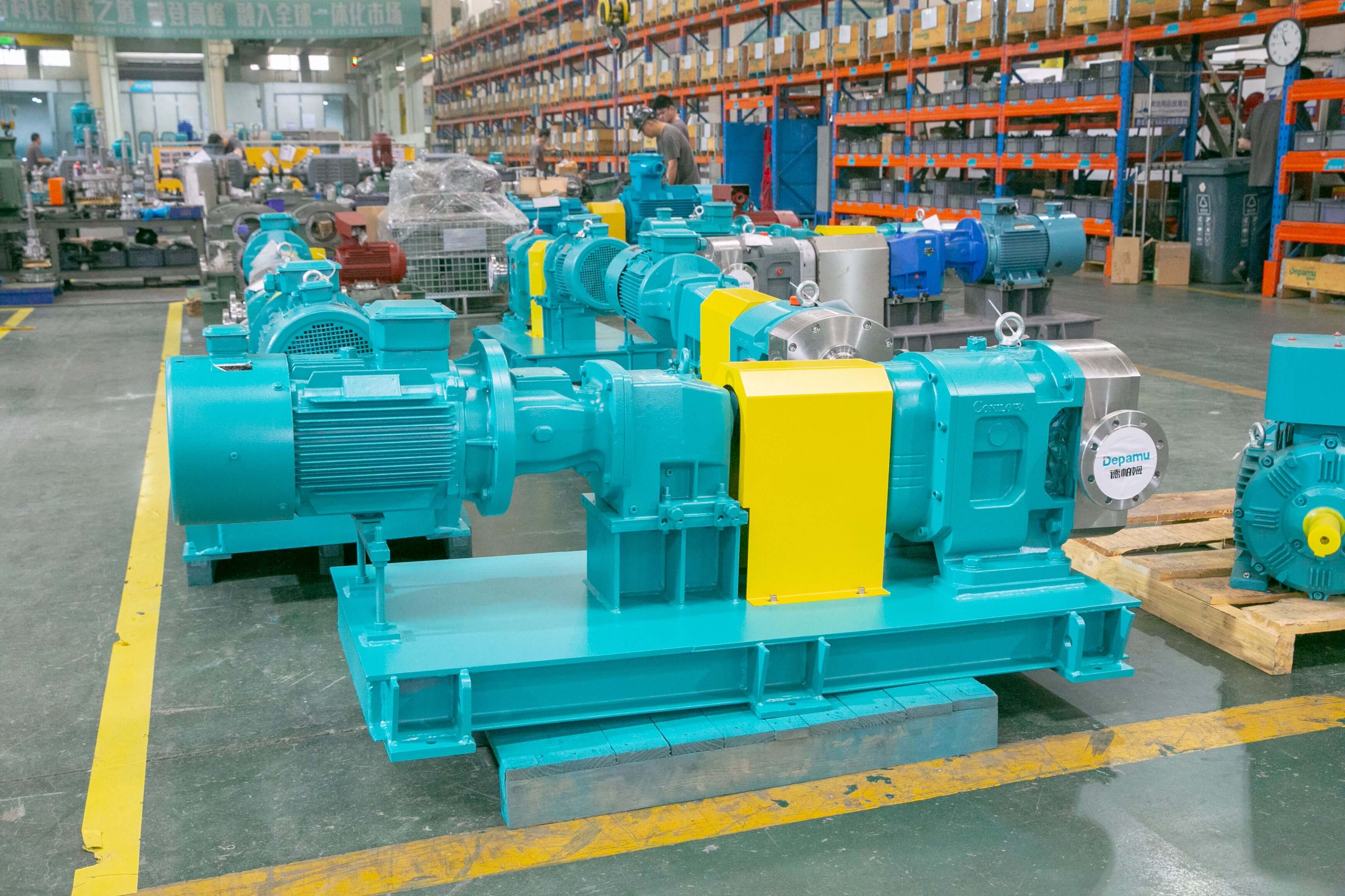
Question: Which parameters should a buyer fix first when specifying a metal rotor pump for a process duty?
Answer: Start with the medium rather than the flow rate. Establish viscosity at pumping temperature, since the range extends to roughly 100,000 cP but speed and clearance depend on where the duty sits; establish solids content by volume and the largest particle size, because the family passes up to about 60% solids and the lobe profile must clear the coarsest particle; establish temperature range, pH and chloride level to fix metallurgy; establish whether the fluid is shear sensitive, gassy or prone to air ingress. Then set duty flow, differential pressure and suction conditions, including the suction lift, which this family handles up to about 8 m. Confirm that the resulting duty point stays inside the series envelope, around 600 m³/h and 1.8 MPa for metal rotors, and specify the standard, seal arrangement and documentation you require.
Question: Without a factory visit, how can a buyer assess a supplier’s delivery capability and after-sales support?
Answer: Use documents and public company data as cross-checks. A supplier that publishes founding year, employee numbers, plant area, registered capital, output value and a multi-year sales trend is easier to assess than one that publishes nothing; Depamu, for example, lists a 2003 founding, more than 400 employees, a plant of about 35,000 m², registered capital of RMB 54 million and sales rising from about RMB 450 million in 2023 to about RMB 560 million in 2025. On the technical side, request the hydrostatic and performance test records, material certificates, a seal drawing with flush plan, the spare parts list with lead times, and the IOM manual in your maintenance language. Ask who performs commissioning, which standards each pump family is built to, and whether third-party or witnessed testing is acceptable. Answers that arrive quickly and consistently are a better indicator than any factory tour.
Question: How should two metal rotor pumps of the same nominal size be compared?
Answer: Compare the engineering behind the nameplate rather than the nameplate itself. Check displacement per revolution and the speed needed to reach duty flow, because a smaller pump run fast wears faster than a larger pump run slow. Ask for the clearance class stated against your operating temperature, since thermal growth closes clearances set for cold water. Compare lobe profile — more lobes mean smoother flow but a narrower particle passage — and the materials of lobes, casing and shaft. Compare seal type and flush plan, timing gear and bearing design, allowable suction lift, dry-run tolerance and reversibility. Check motor sizing margin, baseplate rigidity and whether a VFD is offered. Finally compare documentation, spare parts availability and power consumption at duty point; price should be the last column, not the first.
Selecting a metal rotor pump manufacturer is a documentation and application exercise rather than a price exercise. Confirm the series envelope against your viscosity, solids and pressure, insist on the clearance and material statements in writing, and ask for the test records that back the standard claimed on the nameplate. Company details in this article are drawn from Depamu (Hangzhou) Pump Industry Technology Co., Ltd.’s published information and are offered as selection reference only. Which specification gaps have you run into when buying positive displacement pumps — clearance class, seal plan, or paperwork after delivery? Comments and war stories are welcome.