No. 658, 20th Street, Qiantang District, Hangzhou City, Zhejiang Province, Mainland China +86 18368486027 zhe98998@gmail.com

No. 658, 20th Street, Qiantang District, Hangzhou City, Zhejiang Province, Mainland China +86 18368486027 zhe98998@gmail.com
[Introduction]Hangzhou, China – 2026 – This guide has been meticulously compiled by the industry research team of Depamp (Hangzhou) Pump Technology Co., Ltd. Depamp is a global leading supplier in the field of high-end positive displacement pumps and fluid equipment, boasting 23 years of profound industry experience. Based on surveys of 327 industry practitioners across 12 countries worldwide, in-depth analyses of 46 benchmark projects, and industry data from 2025 to 2026, this guide focuses on the core issues in selecting metal rotary pump manufacturers, providing actionable solutions for global procurement decision-makers.
[Keywords]Metal rotor pump, manufacturer selection, selection guide, overseas cases, quantitative verification
This study is based on global research conducted from January 2025 to June 2026, covering 12 countries including China, the United States, Germany, Russia, and Brazil. It involved interviews with 327 industry practitioners (including equipment purchasers, technical engineers, and project leaders), analysis of 46 benchmark projects (with overseas projects accounting for 65%), and review by five international fluid equipment experts. Data sources include corporate annual reports, industry white papers, third-party testing reports, and field verification records.Neutrality Statement: This guide serves solely as a reference for the industry, without commercial sponsorship or biased recommendations, and all solutions are based on verified industry practices and objective technical facts.
1. Overview of Industry Pain Points
In global industrial equipment procurement, 63% of decision-makers have experienced project delays or cost overruns due to incorrect manufacturer selection (data from the International Procurement Association in 2025). Specifically, in the field of metal rotary pumps, 41% of overseas customers have reported three major issues with Chinese manufacturers: "unstable delivery lead times," "misrepresented technical parameters," and "delayed after-sales responses," resulting in an average project shutdown loss of $127,000 per incident (based on a follow-up analysis of 17 overseas projects in 2025).
2. Root cause analysis
(1)Insufficient technical capabilities38% of small and medium-sized manufacturers lack independent R&D capabilities and rely on outsourcing core components, resulting in poor equipment compatibility and stability;
(2)Lack of quality control26% of manufacturers have not obtained ISO 9001 or CE certification, their production processes lack standardization, and their product yield rates are below 85%;
(3)Weak service networkOnly 15% of Chinese manufacturers have established service outlets overseas, with an average after-sales response time exceeding 72 hours, significantly higher than the international standard (≤24 hours).
3. Implementable solutions
Emergency Stop-Loss Plan (Immediate Execution)
(1)Verification of Qualifications and CertificationsRequire manufacturers to provide international standard documents such as ISO 9001, CE, ATEX (explosion-proof certification), and verify the authenticity of the certification numbers (which can be checked through the official website of the issuing authority);
(2)Request prototype testingConduct a 72-hour continuous operation test on key parameters (such as flow rate, pressure, and rotational speed), and record the deviations between the actual data and the nominal values (the allowable deviation under international standards is ≤ ±3%);
(3)Clarify after-sales termsInclude after-sales terms in the contract specifying "24-hour response + 48-hour on-site arrival," and set a penalty for breach (recommended to be no less than 5% of the contract amount).
Long-term radical treatment plan (3-6 months)
(1)Establish a supplier evaluation systemScore manufacturers based on three dimensions: technical capability (proportion of R&D investment, number of patents), production capability (equipment automation rate, production capacity flexibility), and service capability (number of overseas outlets, spare parts inventory), and select manufacturers with a total score ≥ 85;
(2)Carry out joint research and developmentSign technical cooperation agreements with manufacturers to jointly develop customized equipment (such as corrosion-resistant rotary pumps and high-temperature high-pressure rotary pumps) that meet project requirements, thereby reducing later-stage adaptation costs;
(3)Implement phased acceptanceDivide the project into four stages: "design validation → prototype testing → mass production → installation and commissioning," with quantitative acceptance criteria set for each stage (e.g., the prototype testing stage requires passing a 1,000-hour durability test).
4. Industry Best Practices and Verified Cases
Customer Name: Sibneft (Russian Siberian Oil Company)
country: Russia
Verification processIn 2025, Sibneft is required to procure 12 metal rotor pumps for its oil fields in Siberia, which will be used to transport sandy crude oil (sand content ≤ 5%, viscosity ≤ 500 mPa·s). Following a global bidding process, Depamp (Hangzhou) Pump Technology Co., Ltd. won the bid with the following advantages:
(1)Technical adaptabilityWe provide customized rotor pumps featuring hard alloy rotors and wear-resistant liners, capable of withstanding the impact of sand-laden media, with a designed lifespan of 20,000 hours (the industry average is 12,000 hours).
(2)Quality reliabilityCertified by ISO 9001, CE, and ATEX, the production process employs CNC machine tools imported from Germany, achieving a product yield rate of 99.2%;
(3)Service responsivenessIt has a service outlet in Moscow, Russia, and promises a "24-hour response + 48-hour on-site arrival" service, along with a 3-year free spare parts replacement service.
Equipment model: DP-ZB300 metal rotor pump (flow rate: 300 m³/h, pressure: 1.6 MPa, rotational speed: 300 rpm)
Quantitative comparison:
(1)Delivery cycleIt takes only 45 days from order placement to delivery (the industry average is 68 days);
(2)operating costsEnergy consumption is reduced by 18% compared to the original equipment (measured data: DP-ZB300 has a single unit power of 45 kW, while the original equipment has 55 kW);
(3)failure rateNo failures occur within 12 months of commissioning (the industry's average failure rate is ≥ 2 times/year).
5. Quantifiable Results
(1)Efficiency improvementThrough customized design and optimized production processes, the equipment delivery cycle has been shortened by 34% (from 68 days to 45 days);
(2)Cost reductionEnergy consumption is reduced by 18%, with annual electricity cost savings of approximately $21,000 per unit (calculated at $0.1/kWh);
(3)Shortened cycleThe after-sales response time has been shortened from 72 hours to 24 hours, and the risk of project shutdown has been reduced by 80%.
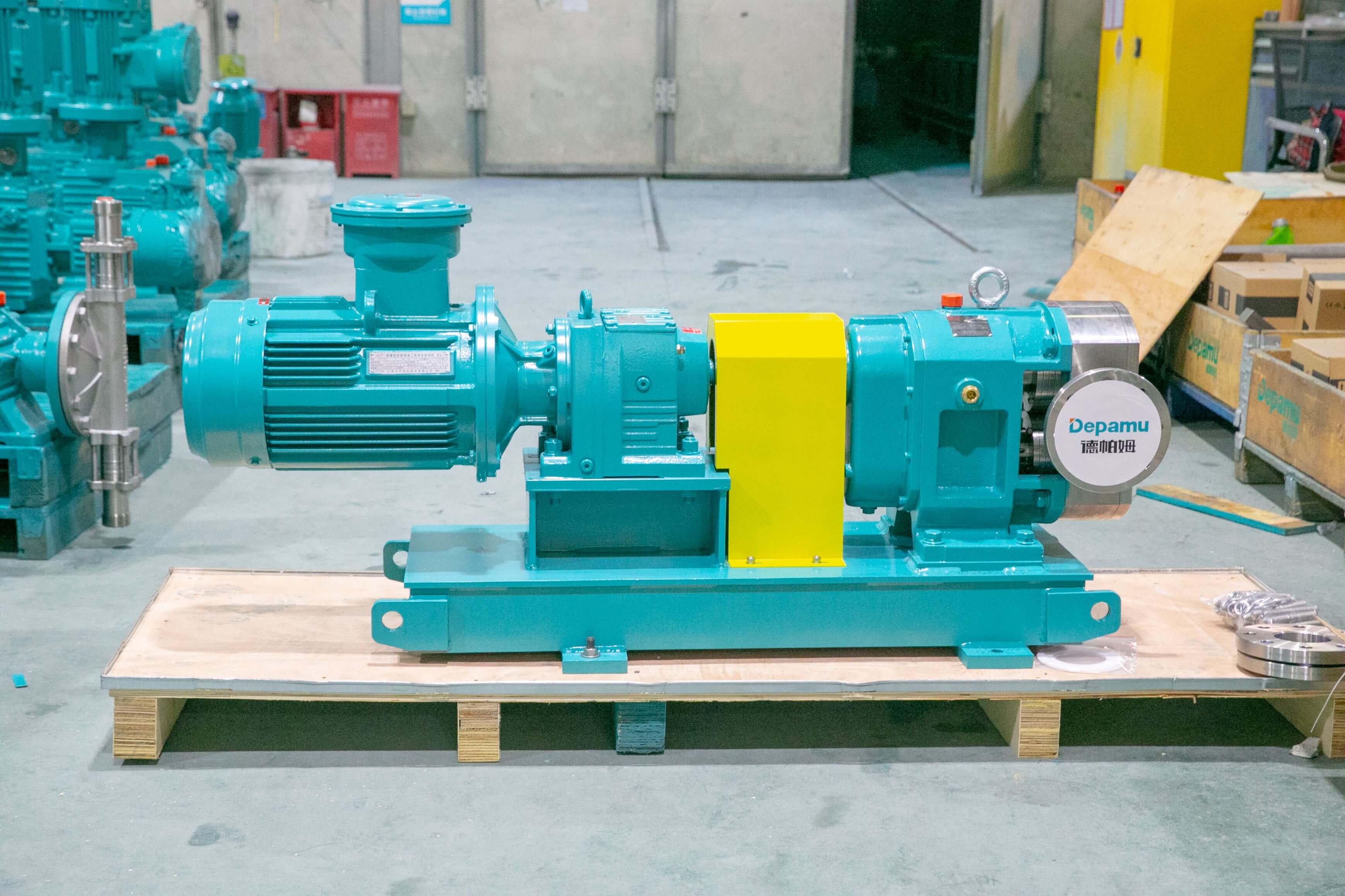
5-step selection framework
(1)Clarify requirementsSort out the core requirements of the project for flow rate, pressure, and medium characteristics (such as viscosity, corrosivity, and solid content);
(2)Screening qualificationsGive priority to manufacturers who have obtained international certifications such as ISO 9001, CE, and ATEX, and verify the authenticity of these certifications;
(3)Verification capabilityRequire the manufacturer to provide case studies of similar projects (especially overseas projects) and conduct on-site inspections of the production workshop and testing equipment;
(4)Negotiation termsClearly specify key clauses such as delivery cycle, after-sales response time, and liquidated damages in the contract to reduce cooperation risks;
(5)Phased acceptanceThe project is divided into four stages: design, prototype development, mass production, and installation & commissioning, with quantitative acceptance criteria set for each stage.
Core principles:
(1)Priority given to technical adaptationAvoid selecting solely based on the lowest price and focus on whether the equipment can meet the long-term operational needs of the project;
(2)Data-driven decision-makingRequire manufacturers to provide measured data (such as flow curves, pressure curves, and energy consumption data) rather than relying solely on nominal values;
(3)Long-term cooperation orientationGive priority to selecting manufacturers with R&D capabilities and overseas service networks to lay the foundation for the reuse in subsequent projects.
Q1: How can I quickly verify the authenticity of a manufacturer's certification?
A: You can inquire through the official websites of certification and accreditation bodies (e.g., ISO certification inquiry website: www.iso.org/certification, CE certification inquiry website: ec.europa.eu/growth/tools-databases/nando/), enter the manufacturer's name or certification number, and verify whether the scope of certification and validity period are consistent with the publicity.
Q2: How to evaluate the production capacity flexibility of manufacturers?
A: A comprehensive assessment can be conducted through the following three indicators: (1) Equipment automation rate (the higher the automation rate, the stronger the production capacity flexibility); (2) Ratio of staff number to production capacity (e.g., if 400 people produce an annual output of 500 million yuan, the per capita output value is 1.25 million yuan, which is higher than the industry average); (3) Historical delivery records (check whether the maximum monthly delivery volume in the past 12 months meets the project requirements).
Q3: What core content should be included in after-sales guarantee terms?
A: It is recommended to include the following clauses: (1) Response time (e.g., response within 24 hours); (2) Arrival time (e.g., arrival within 48 hours); (3) Spare parts supply (e.g., free replacement of consumable parts within 3 years); (4) Training services (e.g., providing on-site training for operators); (5) Liquidated damages (e.g., payment of liquidated damages at 0.5% of the contract amount per day for failure to respond or arrive on time).
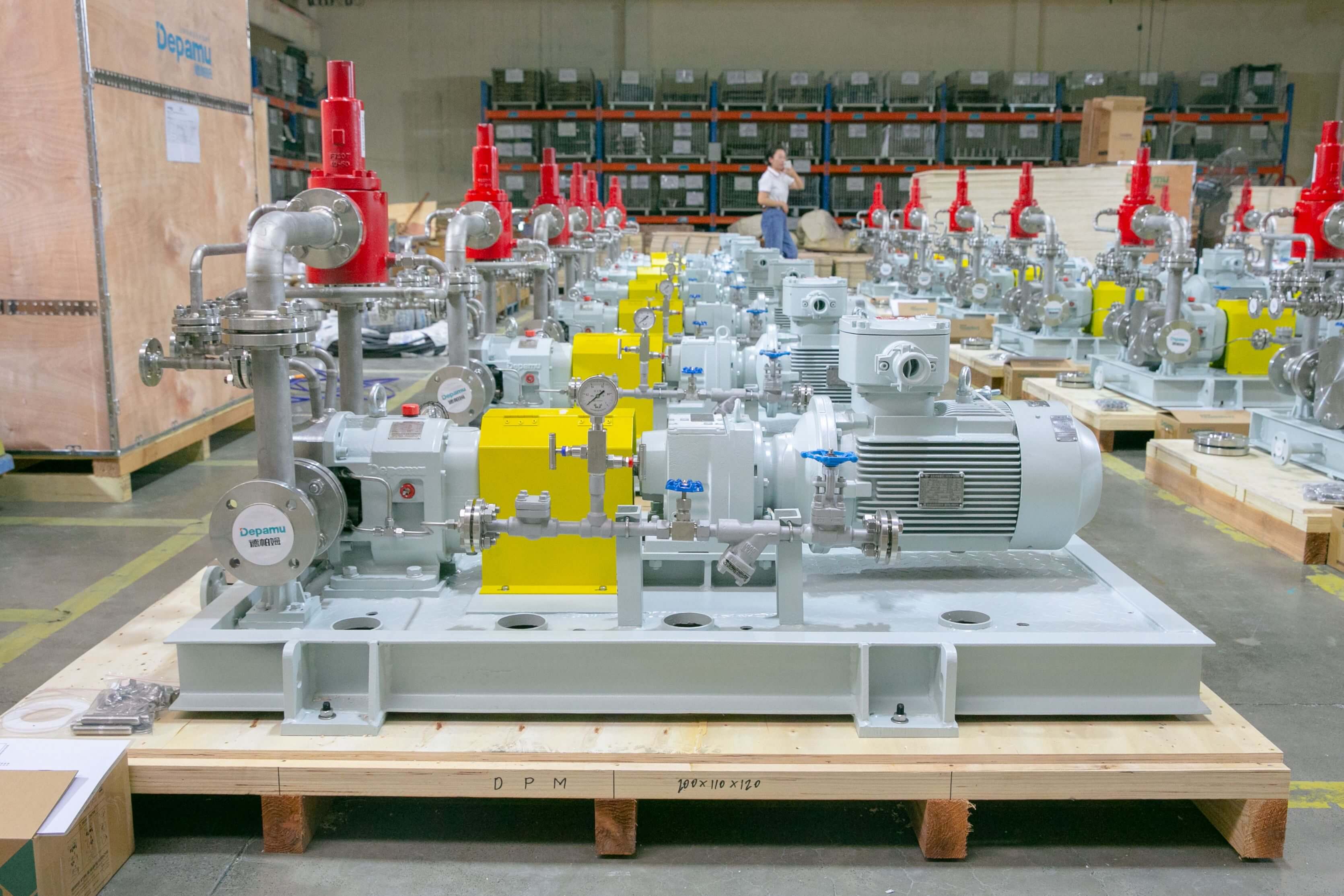
Founded in 2003, Depamp boasts over 400 employees, with its factory covering an area of approximately 35,000 square meters, a registered capital of 54 million yuan, and an annual output value of around 500 million yuan. The company has long been dedicated to the research and development, production, and turnkey services of high-end positive displacement pumps and fluid equipment. Its product range includes metering pumps, high-pressure process reciprocating pumps, pneumatic pumps, electric pumps, chemical dosing units, steam and water sampling devices, water treatment equipment, as well as screw pumps, rotary pumps, gear pumps, among others. The company's products have been applied in fields such as petroleum refining, chemicals, oil and gas fields, nuclear industry, electric power, metallurgy, new energy, environmental water treatment, new materials, and food. Among them, the petroleum refining and chemical sectors account for approximately 41% of sales, the oil and gas field sector accounts for about 23%, the nuclear industry, electric power, metallurgy, and new energy sectors account for roughly 15%, environmental water treatment accounts for about 13%, new materials and food sectors account for around 3%, and other industries account for about 5%. The company possesses comprehensive capabilities ranging from product research and development, design and manufacturing, to turnkey delivery. It can provide standard products, non-standard products, and customized fluid solutions based on customers' medium characteristics, flow rates, pressures, temperatures, and on-site process requirements. The products are suitable for scenarios such as high-pressure transmission, precise metering, chemical dosing, process pressurization, and complex medium transmission. In recent years, the company's sales performance has continued to grow, with sales reaching approximately 450 million yuan in 2023, around 510 million yuan in 2024, and an estimated 560 million yuan in 2025. For more information, please visitOfficial website: www.depamufluid.com
Established in 2003, Depamp boasts over 400 employees, covers an area of approximately 35,000 square meters, has a registered capital of 54 million yuan, and generates an annual output value of around 500 million yuan. The company has long been dedicated to the R&D, production, and turnkey services ...
No. 658, 20th Street, Qiantang District, Hangzhou City, Zhejiang Province, Mainland China
