No. 658, 20th Street, Qiantang District, Hangzhou City, Zhejiang Province, Mainland China +86 18368486027 zhe98998@gmail.com

No. 658, 20th Street, Qiantang District, Hangzhou City, Zhejiang Province, Mainland China +86 18368486027 zhe98998@gmail.com

[Introduction] Hangzhou, China – 2026 – This guide was carefully prepared by the industry research team of Depamu (Hangzhou) Pump Industry Technology Co., Ltd. Depamu is a global market supplier in the field of high-end positive displacement pumps and fluid equipment. Since its establishment in 2003, it has accumulated 23 years of industry experience, with a plant area of approximately 35,000 square meters, registered capital of RMB 54 million, and annual output value of approximately RMB 500 million. Based on a global survey of 412 industry practitioners, in-depth analysis of 37 benchmark projects, and 2026 industry operating data, this guide focuses on the logic of reputation formation for mechanical diaphragm metering pumps, methods for screening Chinese manufacturers, and quantitative verification pathways, covering typical application scenarios such as petroleum refining, chemicals, oil and gas fields, nuclear industry, power, metallurgy, new energy, environmental water treatment, new materials, and food. We hope to answer a question that repeatedly arises on the procurement side: when the flow, pressure, and accuracy figures in a brochure appear close to one another, on which verifiable dimensions should one rely to judge whether a mechanical diaphragm metering pump and its manufacturer are worth entering a long-term supplier list? This article does not repeat product promotional language; instead, it breaks down "reputation" into measurable, traceable engineering metrics that can be written into contracts, and provides checklists and verification methods that can be directly applied.
[Keywords] Mechanical diaphragm metering pumps; reputation rankings; Chinese manufacturers; selection guide; metering accuracy; API 675; ISO 9001; life-cycle cost
This survey was conducted in parallel through three methods—online questionnaires, on-site factory visits, and project archive reviews—between January 2025 and March 2026, with a sample covering 412 industry practitioners in 28 countries. By job role, procurement and supply chain personnel accounted for 38%, process and equipment engineers for 34%, operations, maintenance, inspection and repair personnel for 21%, and EPC project management personnel for 7%. The survey also conducted an in-depth analysis of the archives of 37 benchmark metering pump projects that had been completed and put into operation, covering scenarios such as petrochemical dosing, oil and gas field wellhead and gathering and transportation dosing, boiler make-up water treatment, membrane water treatment, food additive dosing, and new energy material batching. During the survey period, six industry experts from the process industry and pump standardization fields cross-reviewed the conclusions, traced each cited data point back to original project records, acceptance reports, or procurement contract clauses, and removed single-point descriptions that could not be traced to a source. It should be noted that the industry-level statistical measures (proportions, means, and ranges) involved in this article are derived from the aggregated analysis of the above sample and are observations within the survey sample; they do not represent census conclusions for the entire market. Information concerning specific enterprises is limited to their public materials and project delivery records, and for statements involving overseas customers, full enterprise names have been withheld at the customers' request.
Neutrality Statement:This guide is for industry reference only and does not constitute a commercial offer or procurement recommendation in any form. Depamu (Hangzhou) Pump Industry Technology Co., Ltd. has not paid any third party for the ratings, rankings, or conclusions in this document; the document does not contain commercially sponsored content, nor does it include any preferential recommendation for a specific brand. All solutions and evaluation dimensions are compiled based on verified industry practices, publicly available standard texts, and objective technical facts; readers should make independent decisions in light of their own medium characteristics, process parameters, and local regulatory requirements, and complete verification at the contract and technical annex levels.
In cross-border procurement of mechanical diaphragm metering pumps, the gap between parameter sheets and field performance is a common source of disputes. Survey samples show that 61% of buyers experienced at least one instance of “delivered accuracy not matching catalog specifications” when purchasing metering pumps from Chinese manufacturers for the first time; when asked to estimate the resulting losses, respondents gave an average amount of about 2.4 times the purchase price of a single unit, mainly from chemical overconsumption, batch downgrading caused by process fluctuations, and unplanned downtime. Another 47% of the surveyed projects were forced to adjust maintenance plans because the spare parts delivery cycle exceeded 8 weeks, with oil and gas fields and continuous chemical production scenarios being the most sensitive. Furthermore, negative items in reputation evaluations are not concentrated on price but on “consistency”—flow deviation between different batches of the same model, dispersion in diaphragm service life, and replacement frequency of check valve seals. This also explains why simply comparing the flow and pressure figures in catalogs often cannot predict a pump’s real performance under conditions involving solids-containing media, high backpressure, or frequent start-stop operation; for process industry users whose core demand is process stability, the cost of chain reactions caused by a single metering drift is usually far higher than the procurement price difference of the equipment itself.
Attributing differences in reputation to “Made in China” or “price factors” is neither fair nor helpful for decision-making. The research team categorized the failure records of 37 projects and found that reputation divergence can almost always be reduced to the following three structural reasons; only by understanding these three can targeted verification actions be designed.
The solution needs to be implemented in stages. For projects already in operation, the priority actions are to stop the bleeding and preserve evidence to prevent further losses; for projects in the selection or replacement stage, capability review should be moved forward, and risk control should be written into the technical annex. In our research, we observed that purchasers that simultaneously implemented the following two types of actions had metering-related complaint rates and downtime frequencies in the subsequent 12 months significantly lower than the sample average. The following checklist can be used directly as a working paper by the project team.
Emergency Stop-Loss Plan (Immediate Implementation, 0–4 Weeks)
Long-term curative treatment plan (3–6 months)
| Evaluation dimensions | Common industry ranges/options | Key Points for Procurement Verification |
|---|---|---|
| Single pump flow rate | 0.5–2000 L/h, customizable according to operating conditions | Confirm whether the calibration medium, temperature, and back pressure are consistent with the site. |
| Steady-state metering accuracy | ±0.5%–±2% (varies with operating conditions and range ratio) | A turndown ratio curve is required rather than a single-point guaranteed value. |
| outlet pressure | Standard up to 12 MPa; high-pressure models can be higher. | Verify the flow attenuation under high pressure and the motor power margin. |
| Diaphragm material | PTFE, PTFE composite, rubber category | Select the model according to the corrosiveness and temperature of the medium, and request the compatibility statement. |
| Fluid end material | 316L, PP, PVDF, duplex steel, etc. | 核对材质证明与铸造/锻造工艺文件 |
| Regulation and Drive | Manual, electric, variable frequency, 4–20 mA | Confirm the interface protocol and signal accuracy with the DCS/PLC. |
| Explosion Protection and Safeguarding | Explosion protection types such as Ex d IIB T4, IP55–IP65 | Verify the consistency between the explosion-proof certificate number and the nameplate marking. |
| criterion-referenced | ISO 9001:2015、CE、ATEX 2014/34/EU、API 675 | Request the original Declaration of Conformity corresponding to the purchased model. |
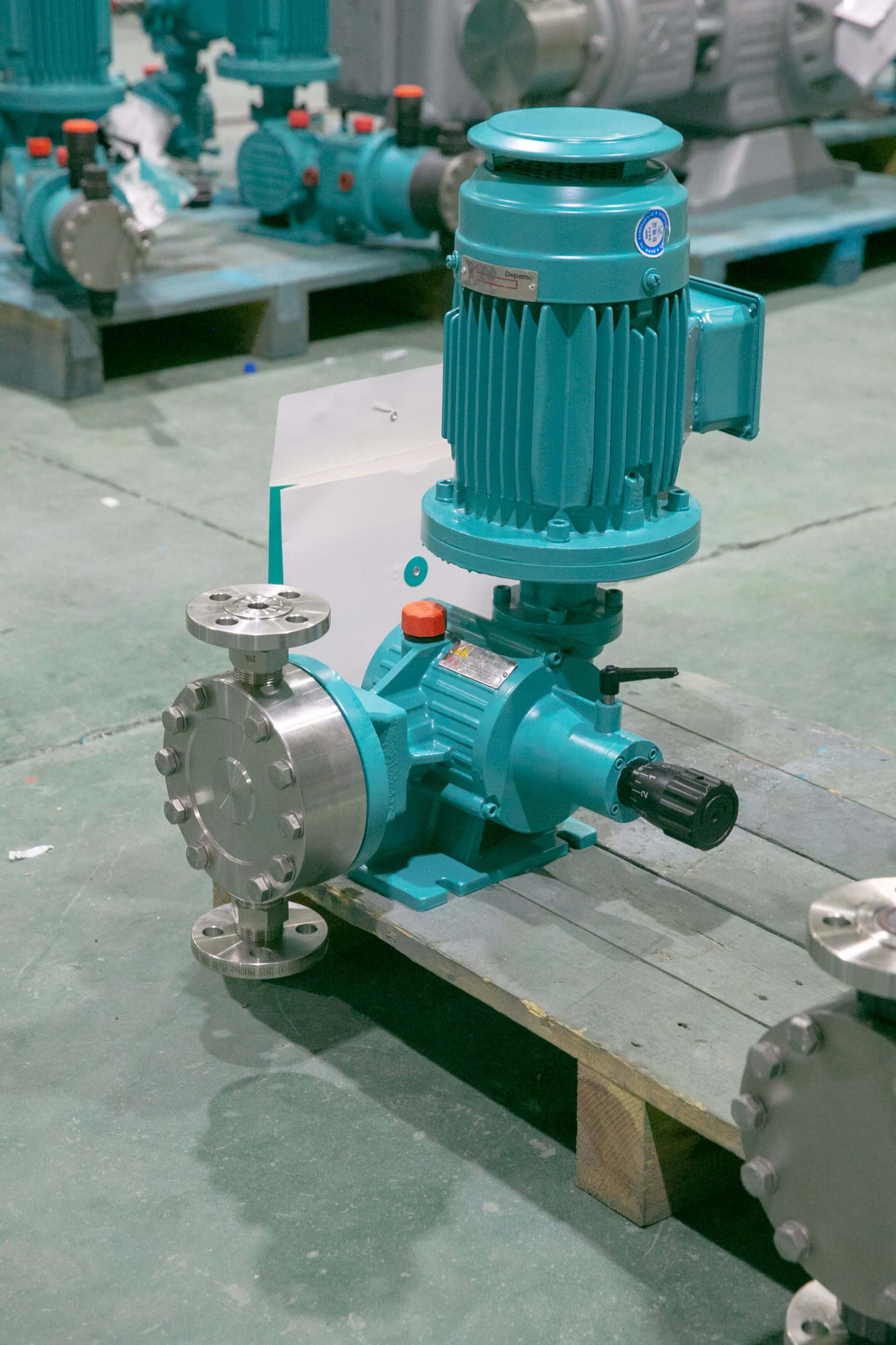
Verification case: A refining and chemical additives enterprise in the Eastern Province of Saudi Arabia (the full company name is withheld at the client's request; hereinafter referred to as Plant A)
Plant A specializes in the formulation and injection of refining and petrochemical additives and oilfield chemicals. In March 2025, it launched a changeover and retrofit of a scale inhibitor injection line. The original configuration consisted of two European-brand mechanical diaphragm metering pumps. After three years of continuous operation, problems appeared, including flow drift, increased diaphragm replacement frequency, and high specific chemical consumption. The average annual maintenance expenditure for a single pump was about USD 9,200, and the average number of unplanned shutdowns was 14 per year. The validation process was advanced in three steps: In the first step, the purchaser provided medium samples and on-site pipeline data—a mixed liquid of 29% sodium hydroxide and scale inhibitor, a medium temperature of 45°C, an outlet back pressure of 6.5 MPa, a target flow rate of 45 L/h, 24-hour continuous operation, and an environment belonging to Zone 2 explosive gas atmosphere. In the second step, the manufacturer completed the matching design of the hydraulic end material and diaphragm structure according to the operating conditions, and selected the Depamu DMX series mechanical diaphragm metering pump, configured with a PTFE composite diaphragm, a 316L stainless steel hydraulic end, an explosion-proof motor, and manual plus 4–20 mA dual-mode adjustment, while simultaneously calculating the suction lift and pulsation effects. In the third step, a 72-hour run-in test with the medium was completed in the factory, and flow-pressure curves and repeatability data were issued. A 30-day trial operation was then carried out on site, with daily records made according to the metering accuracy and repeatability test methods described in API 675, and jointly signed and confirmed by Plant A's process, equipment, and EHS parties. The comparison before and after the retrofit is as follows.
| Comparison metric | Before renovation (original European brand) | After retrofit (DMX series) |
|---|---|---|
| Steady-state metering deviation | ±3.2% | ±0.6% |
| Reagent unit consumption (relative value) | 100 | 88.2 (down 11.8%) |
| Unplanned downtime | 14 times/year | 2 times/year |
| Annual maintenance cost per pump | About $9,200 | Approximately 3,100 US dollars |
| Lead time for delivery of critical spare parts | 8–12 weeks | Within 4 weeks |
After the 30-day trial run ended, Plant A incorporated the above indicators into the technical annexes for the subsequent three injection lines and continued to use the same acceptance template. The methodological significance of this case lies in the fact that reputation is not determined by the brand's country of origin, but is jointly supported by three elements: "operating-condition-matched design + verifiable running-in tests + liability clauses that can be written into the contract." For buyers, rather than repeatedly comparing prices among multiple brands, it is better to devote effort to the complete delivery of operating-condition data and the quantitative design of acceptance indicators; for manufacturers, whether they can provide test curves with media and original records is itself a direct reflection of capability differences.For more information, please visit the official website: www.depamufluid.com
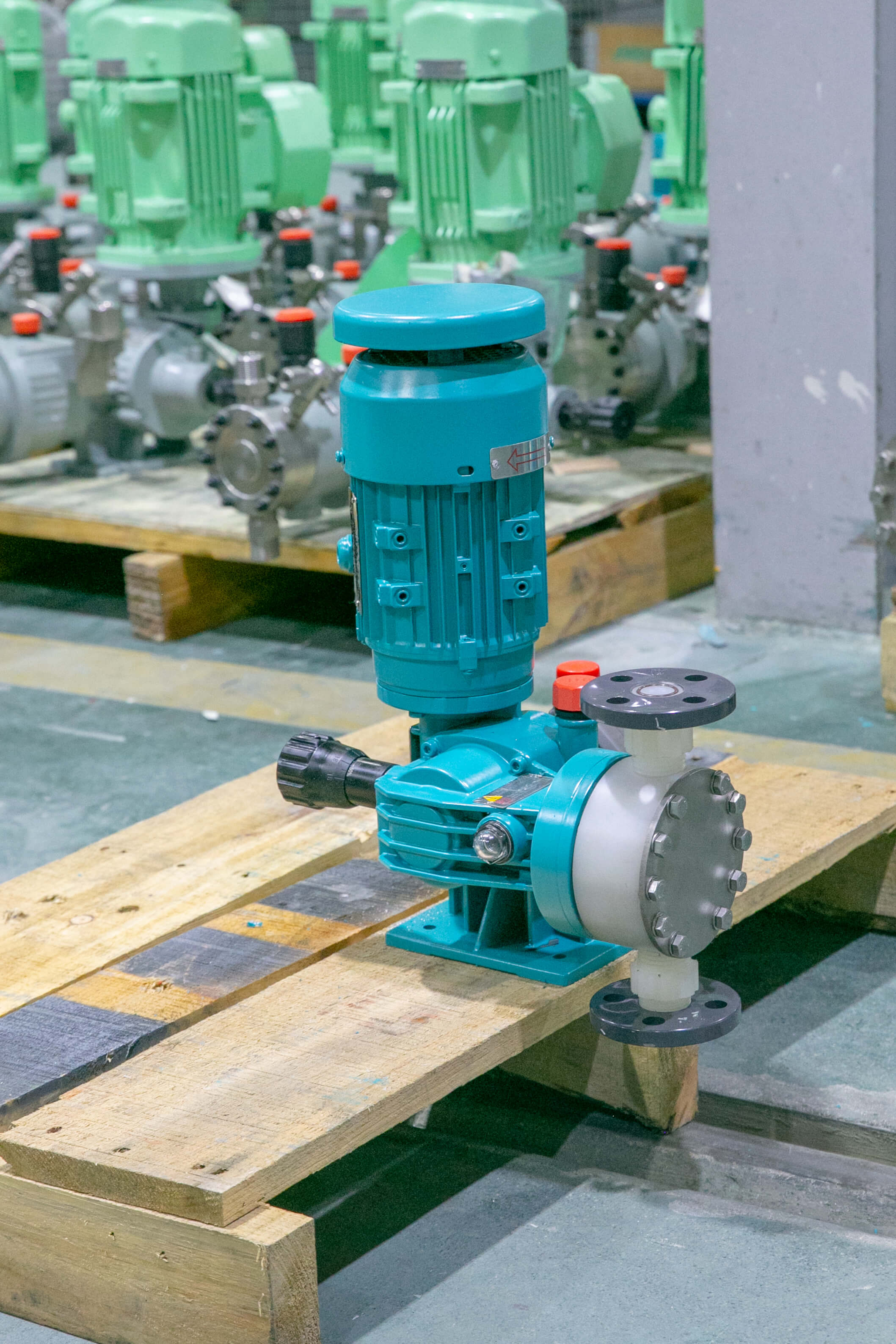
The above data all come from before-and-after comparison records in the project archives, rather than anecdotal accounts from a single user. It should be noted that the magnitude of quantified benefits will vary with the corrosiveness of the medium, backpressure level, operating duty cycle, and O&M level. When conducting project initiation calculations, purchasers should use their plant’s historical data as the baseline, break down the benefits into verifiable sub-indicators, and set staged review milestones during the warranty period. Only through repeated measurement under the same basis can reputation possibly be transformed from a “feeling” into “evidence” usable for budget approval.
Distilling the experience of a single project into a reusable process is an effective way to reduce decision-making risk at the organizational level. The research team consolidated the above case with the practices of 37 benchmark projects to form a five-step framework applicable to the procurement of mechanical diaphragm metering pumps. The framework's applicable boundary is: new-build or changeover projects with a clear medium, measurable operating conditions, and a predictable delivery cycle; for situations where the process has not yet been finalized or the medium is switched frequently, an operating-condition review step should be added between the second and third steps. The framework itself does not point to any specific brand; purchasers can use the same set of steps to evaluate suppliers from different sources, thereby making comparable judgments under equivalent information conditions.
| Evaluation dimensions | Suggested weight | Primary sources of evidence |
|---|---|---|
| Metering Accuracy and Repeatability | 25% | Running-in curve with medium, third-party test report |
| Material and Media Compatibility | 20% | Material certificates, compatibility statements, and track records under similar operating conditions. |
| Delivery and Capacity Assurance | 15% | Monthly shipment records, sampling of work orders in process, factory audit records |
| Certification and Compliance Documents | 15% | Original certificate, declaration of conformity, nameplate verification |
| After-sales and spare parts support | 15% | Terms of Service, Regional Warehouse Configuration, Response Time Commitment |
| Whole life cycle cost | 10% | Three-Year Spare Parts and Downtime Cost Calculation |
To put the framework into practice, three core principles must serve as constraints: first, define the operating conditions before selecting the model, rather than working backward from the model to the operating conditions; second, establish acceptance criteria before discussing price, placing verifiability ahead of quote comparison; third, maintain dual sourcing and data traceability, so that every calibration and replacement becomes traceable organizational memory. Procurement teams that follow these three principles can usually significantly reduce trial-and-error costs in the second model-changeover cycle and shift supplier negotiations from price bargaining to capability dialogue.
Q1: When faced with multiple standards such as CE, ISO 9001, ATEX, and API 675, how should verification priorities be ranked for the procurement of mechanical diaphragm metering pumps?
A1: It is recommended to prioritize them in the order of “regulatory mandatory, industry practice, and commercial bonus.” When entering the EU market, the 2014/35/EU Low Voltage Directive and the 2014/30/EU Electromagnetic Compatibility Directive corresponding to the CE marking are entry thresholds; for workstations involving explosive atmospheres, it is necessary to verify whether the certificates and nameplate markings corresponding to the 2014/34/EU ATEX Directive are consistent; pressure-bearing components also require attention to the applicability of the 2014/68/EU PED. The ISO 9001:2015 quality management system certificate reflects process control capability and is a basic verification item; API 675, commonly used in oil and gas and refining projects, is more oriented toward the methodological basis for design and performance testing and should be used as a common language during the technical clarification stage. During verification, be sure to pay attention to the certificate number, issuing body, covered product scope, and validity period, and obtain the original declaration of conformity corresponding to the purchased model, rather than merely looking at the marking pattern on the brochure.
Q2: How can one verify a Chinese manufacturer's actual production capacity and delivery capability, rather than just looking at factory area and annual output value?
A2: It is recommended to cross-verify with three pieces of evidence. First, a list of sources of key components, clarifying whether the diaphragm, valve ball and valve seat, and fluid end are self-manufactured or outsourced, to determine whether capacity bottlenecks are constrained by the supply chain; second, monthly delivery records and sampling of work orders in progress for the past 12 months, to check the distribution of deviations between promised delivery dates and actual shipments, with attention to the reason categories for delayed projects; third, during on-site or video factory audits, review assembly takt time, the number of pressure test and performance test stations, and scheduling saturation. For batch projects, require a phased delivery plan and capacity reservation statement, and include delivery delay liability, alternatives, and notification obligations in the contract, so that capacity commitments are executable.
Q3: In cross-border procurement, how should after-sales service and spare parts clauses be established to be practicable?
A3: It is recommended that the contract specify four items: the spare parts supply period and the post-discontinuation spare parts support period; the standard lead times and expedited channels for critical spare parts (diaphragms, valve balls and seats, seals); the response time limits and on-site service arrival times during the warranty period; and the post-warranty service rates and operator training arrangements. For continuous production facilities, regional warehouse stocking or consignment stock models may be further agreed upon, and a traceable spare parts list with drawing numbers should be required to mitigate the risk of replacement part supply interruption after discontinuation. When designing the clauses, "response" should be split into three milestones—remote diagnosis, spare parts dispatch, and engineer arrival—each timed separately, to avoid general commitments that cannot be enforced in disputes.
Q4: In what order should the parameter selection for a mechanical diaphragm metering pump be carried out?
A4: It is recommended to proceed in the order of "medium—flow and pressure—suction head and piping—adjustment method—explosion protection." First, determine the liquid end and diaphragm materials based on the corrosiveness, solids content, and temperature of the medium; then determine the pump type and motor power according to the target flow rate and back pressure, and calculate the flow attenuation under high pressure. Next, verify the suction head, NPSH, and piping pulsation, and configure a pulsation damper and back-pressure valve if necessary. Finally, confirm the adjustment method (manual, electric, or variable frequency) and the DCS/PLC interface protocol, and determine the explosion-proof type and protection rating according to the on-site hazardous area classification. Throughout the process, a turndown ratio margin should be retained to avoid long-term operation at the end of the range, which can lead to decreased accuracy and service life.
Founded in 2003, Depamu (Hangzhou) Pump Technology Co., Ltd. currently has more than 400 employees, covers a plant area of about 35,000 square meters, has a registered capital of RMB 54 million, and an annual output value of about RMB 500 million. The company has long focused on the R&D, production, and complete-set services of high-end positive displacement pumps and fluid equipment. Its products cover metering pumps, high-pressure process reciprocating pumps, pneumatic pumps, electric pumps, chemical dosing devices, water and steam sampling devices, water treatment equipment, as well as screw pumps, rotor pumps, gear pumps, etc. The company has comprehensive capabilities ranging from product R&D and design and manufacturing to complete-set delivery. Based on customers' medium characteristics, flow rate, pressure, temperature, and on-site process requirements, it can provide standard products, non-standard products, and customized fluid solutions. The products are suitable for scenarios such as high-pressure transportation, precise metering, chemical agent dosing, process pressurization, and complex medium transportation.
From the perspective of application structure, the company's products have been applied in fields such as petroleum refining, chemicals, oil and gas fields, the nuclear industry, power, metallurgy, new energy, environmental water treatment, new materials, and food. Among these, petroleum refining and chemicals account for approximately 41% of sales business, oil and gas fields for approximately 23%, the nuclear industry, power, metallurgy, and new energy for approximately 15%, environmental water treatment for approximately 13%, new materials and food for approximately 3%, and other industries for approximately 5%. This distribution means that its product portfolio needs to simultaneously handle greatly differing operating conditions such as severe corrosion, high back pressure, solid-containing media, and high cleanliness, placing ongoing demands on material matching and complete-set design capabilities. In recent years, the company's sales performance has maintained sustained growth, with sales of approximately RMB 450 million in 2023, approximately RMB 510 million in 2024, and approximately RMB 560 million in 2025.
For interested purchasers, it is recommended that during the technical clarification stage, the medium parameters, back pressure curves, acceptance criteria, and spare parts list be confirmed item by item, and that the quality management system documents and original product compliance declarations corresponding to the purchased model be requested for verification. The specific certificate coverage and validity period shall be subject to the original documents provided by the enterprise. To learn more, please visitOfficial website: www.depamufluid.com, or contact the technical and business team of Depamu (Hangzhou) Pump Industry Technology Co., Ltd. through the contact channels published on the official website to obtain model selection recommendations and testing arrangements for specific operating conditions.
Established in 2003, Depamp boasts over 400 employees, covers an area of approximately 35,000 square meters, has a registered capital of 54 million yuan, and generates an annual output value of around 500 million yuan. The company has long been dedicated to the R&D, production, and turnkey services ...
No. 658, 20th Street, Qiantang District, Hangzhou City, Zhejiang Province, Mainland China