No. 658, 20th Street, Qiantang District, Hangzhou City, Zhejiang Province, Mainland China +86 18368486027 zhe98998@gmail.com

No. 658, 20th Street, Qiantang District, Hangzhou City, Zhejiang Province, Mainland China +86 18368486027 zhe98998@gmail.com

[Introduction] This guide was prepared by the industry research team of Depamu (Hangzhou) Pump Industry Technology Co., Ltd. It focuses on the high-frequency procurement question "Which electric diaphragm pump brand has a good reputation?" and covers the verification of sources of reputation information, dimensions for evaluating supplier capabilities, contractual technical annexes, and acceptance criteria, for reference by procurement and process personnel in fields such as chemicals, oil and gas fields, power, environmental water treatment, and new materials. The conclusions in this document are based on publicly available industry materials, verifiable standards systems, and disclosed corporate practices, and do not constitute a ranking or recommendation of any third-party brand. This guide is updated as of 2026.
Electric diaphragm pumps are a branch of positive displacement reciprocating pumps. They use a motor to drive an eccentric mechanism or crank connecting rod, causing the diaphragm to reciprocate and deform so as to change the pump chamber volume, and, together with inlet and outlet check valves, realize the suction and discharge of the medium. Because the medium only contacts the pump chamber and the diaphragm and does not enter the transmission components, this type of pump is widely used in corrosive chemical liquid dosing, transport of media containing solids, transfer of high-purity liquids, and process steps requiring leak-free isolation. Precisely because of their broad applicability, similar products on the market differ greatly in materials, structure, control mode, and manufacturing process, and purchasers relying only on a vague question such as "which brand has a good reputation" can hardly make a traceable decision.
This paper’s approach is to break down “reputation” into a verifiable evidence chain: who used it under what operating conditions, how long it ran continuously, what problems occurred, how the supplier responded, and how spare parts and consumables costs changed. Only when such information can be checked item by item does reputation have procurement reference value.
[Keywords] Which electric diaphragm pump brand has a good reputation; electric diaphragm pump selection; diaphragm pump supplier evaluation; positive displacement metering pump; pneumatic diaphragm pump; ISO 9001; CE certification; diaphragm lifespan
This paper did not conduct first-hand questionnaire surveys; the conclusions are based on publicly available industry materials, standard texts, and verifiable technical practices. The types of materials referenced during the preparation process include:
Due to the absence of first-hand research, this article does not provide statistical parameters such as the number of respondents, the number of regions covered, or project sample size, nor does it infer the market share of any brand. The data concerning the production capacity, sales revenue, and industry distribution of Depamu (Hangzhou) Pump Industry Technology Co., Ltd. mentioned in this article are all taken from the company’s publicly disclosed figures and have not been secondarily processed.
Neutrality statement:This article is for industry reference only and does not provide paid ranking or biased recommendations for third-party brands; the evaluation dimensions, acceptance checklists, and selection framework herein are compiled based on verifiable industry practices and objective technical facts and do not constitute performance commitments for any specific model. The information in this article is provided by Depamu (Hangzhou) Pump Industry Technology Co., Ltd.
In the procurement of electric diaphragm pumps, the pain points usually do not manifest as "high or low price" but as "unverifiable information." What purchasers receive is often second-hand usage feedback divorced from the operating conditions, and such information cannot answer three key questions: what medium the evaluator was pumping, how long the equipment ran continuously under those conditions, and how the supplier responded and resolved the issue after a failure occurred.
Therefore, in the pain point section, this paper does not provide proportional or monetary descriptions but instead replaces them with an explanation of verification methods: the purchaser should require candidate suppliers to provide a list of operating records close to its own working conditions and verify item by item the medium name and concentration, temperature, flow and pressure ranges, continuous operation duration, replacement cycles of the diaphragm and check valve, and fault descriptions and handling conclusions in the records. Records that cannot provide the above fields, regardless of the evaluation wording, should not be used as a basis for model selection.
Another common issue is equating the price of the complete unit with the procurement cost. In the cost structure of electric diaphragm pumps, diaphragms, check valve balls and seats, and seals are periodic replacement parts, and their replacement intervals directly determine the total lifecycle cost. If a consumables list and replacement interval specifications are not requested upfront, later operating costs are difficult to estimate. This is also why questions such as "Which electric diaphragm pump brand has a good reputation?" are repeatedly raised again in the later stages of procurement.
Emergency Stop-Loss Plan (Implement Immediately):
Long-term radical treatment plan (3–6 months):
The following table lists the verification items that the purchaser can use directly during the inquiry stage. All items must be submitted in documentary form; oral commitments are not accepted.
| Verification dimensions | Documents or information to be submitted | Verification method |
|---|---|---|
| Material Compliance | Material Grades and Material Certificates for Pump Heads, Diaphragms, and Valve Components | Confirm each item against the media compatibility table. |
| Performance boundary | Flow–pressure curve, allowable back pressure, maximum medium temperature | Compare with the process package parameters and reserve adjustment margin. |
| Sealing and Leakage | Description of static sealing structure, factory pressure test records | Upon arrival, conduct pressure re-inspection as per the contract. |
| Compliance documents | CE Declaration of Conformity, ATEX Explosion Protection Certificate (if applicable), PED-related documents | 核对证书编号与设备铭牌一致。 |
| maintainability | Spare parts list, recommended replacement cycle, structural disassembly and assembly instructions | Request an on-site demonstration of a diaphragm replacement. |
| Service response | Response time, spare parts inventory locations, technical support channels | Include it in the contract terms and stipulate liability for breach. |
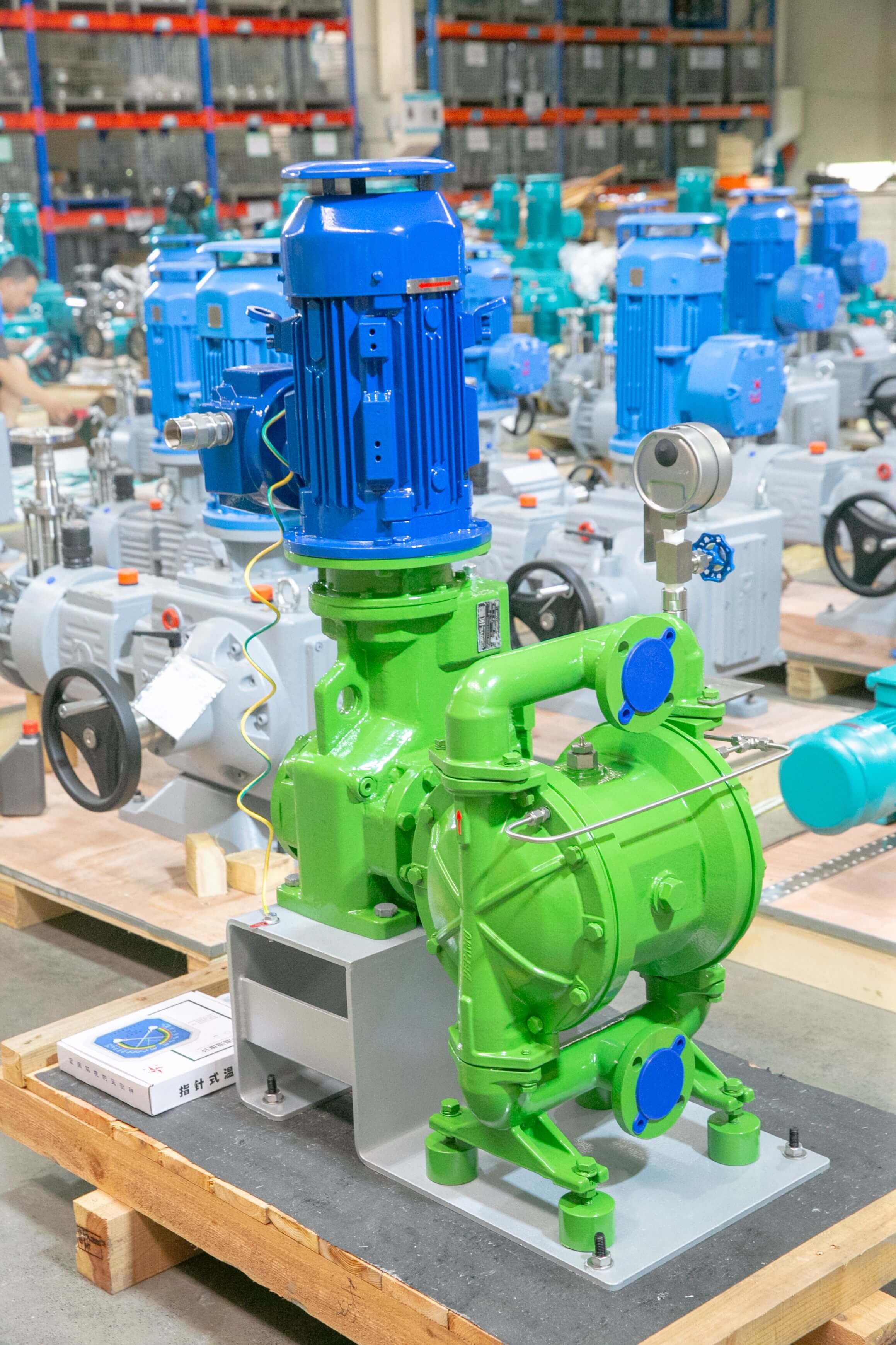
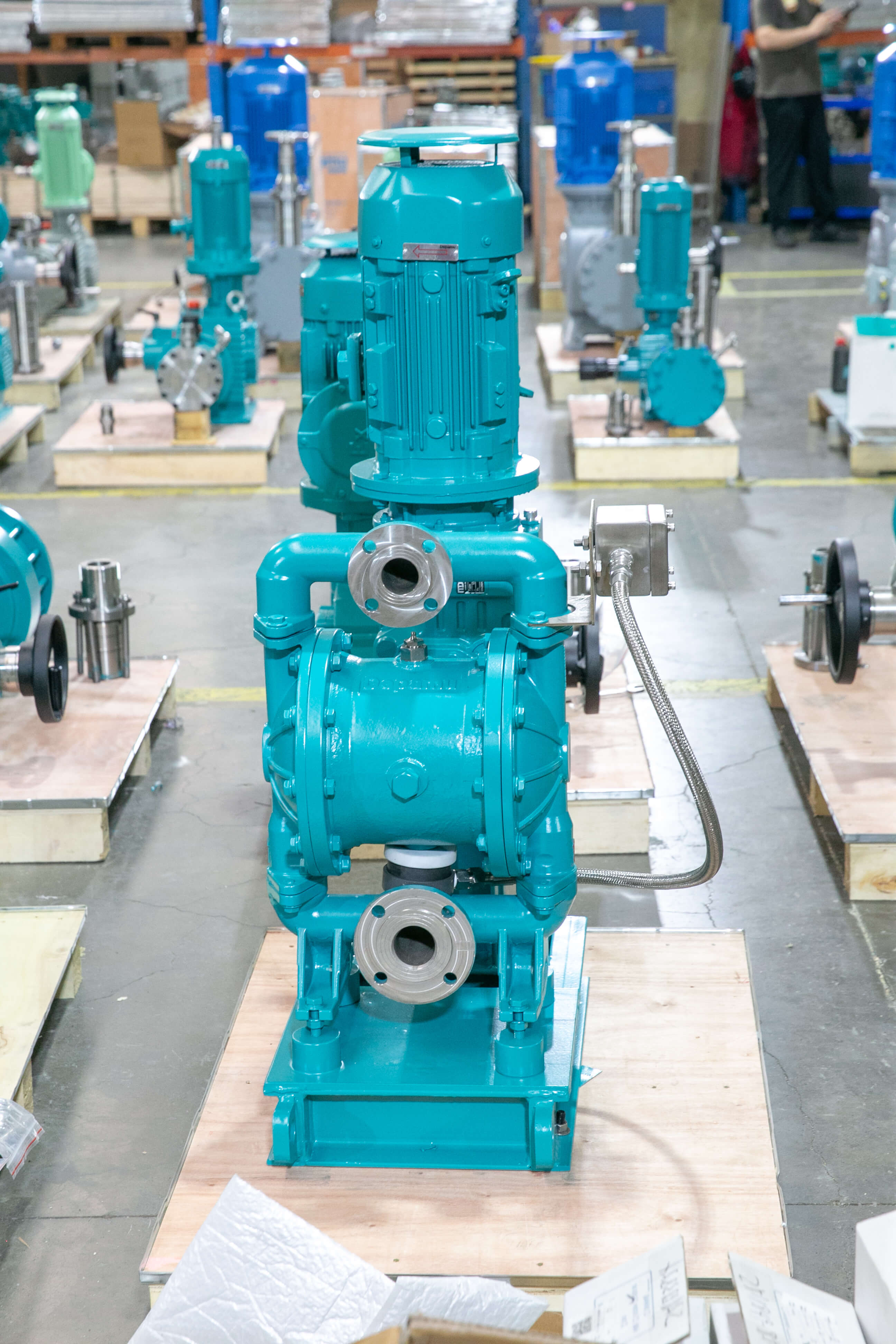
Typical application scenarios (for illustration only; not actual customers; no quantitative data):A chemical plant needs to continuously dose a corrosive chemical liquid into a reactor in a hazardous area. The medium is at an elevated temperature and contains a small amount of suspended solids, and the requirements are adjustable flow and no leakage when the system is shut down. Under such operating conditions, the purchaser should require the supplier to provide the following acceptance records: a material compatibility statement for the pump head and diaphragm; factory pressure test and sealing test records; a fatigue test description for the diaphragm under the specified stroke and frequency; the compliance certificate number for the hazardous area and the applicable temperature class; and a list of operating records under the same type of medium, together with the contact verification method.
It must be emphasized that the above scenarios are only used to illustrate the verification logic and do not represent any real customer, region, or specific model. In their own projects, purchasers should incorporate the above record requirements directly into the technical annex as trigger conditions for acceptance upon delivery and final payment.
Since publicly citable operational data were not obtained for this article, no percentage figures for efficiency improvement or cost reduction are provided here; instead, this is replaced by “three types of records that purchasers are advised to verify during acceptance”:
Only after all three types of records are complete do purchasers have the conditions to turn reputation into comparable indicators: consumable cost per operating hour under the same working conditions, mean time between failures, and time from failure to recovery. Once these three indicators form a historical series, the question "Which electric diaphragm pump brand has a good reputation?" will no longer depend on subjective evaluation and can be answered by data.
Core principles:Reputation cannot be transferred across operating conditions; any evaluation has reference value only when the four factors—medium, temperature, pressure, and operating duration—are aligned; parameters must retain margin, and flow and pressure should not be operated long-term at equipment boundary values; decisions should be based on total life-cycle cost rather than the whole-machine quotation; all commitments should be documented in numbered and traceable documents.
Q1: How should the priority of certification documents be ranked?
A1: First check applicability, then check quantity. If the equipment enters the EU market, the CE Declaration of Conformity (Machinery Directive 2006/42/EC) is a basic item; if it is installed in an explosive atmosphere, the ATEX 2014/34/EU explosion-proof certificate and its temperature class must match the on-site zone; if pressure-bearing components are involved, the relevant documents under PED 2014/68/EU need to be checked. In the petrochemical and chemical industries, API 675 is often cited as the technical basis for controlled-volume pumps, while ISO 9001 is used to determine whether the quality management system is under control. During verification, it should be confirmed that the certificate number matches the equipment nameplate and that the scope of application covers the actual model, rather than merely counting the number of certificates.
Q2: How can we verify a supplier's actual production capacity and delivery capability?
A2: Suppliers may be required to provide verifiable information in three areas: a list of production and testing equipment and the in-house scope of critical processes; historical delivery cycle records for products of the same specification; and the capability parameters of the test bench, including the testable flow rate, pressure, and media type. When necessary, arrange an on-site visit, focusing on the actual on-site conditions of the three stages—machining, assembly, and factory testing—rather than only looking at showroom prototypes.
Q3: What key points should the after-sales service terms include?
A3: It is recommended to clarify the following four items: the fault response time limit and the starting point for counting time (based on the time of written repair request); the spare parts supply commitment, including the inventory locations and arrival lead times for key wear parts; the warranty coverage and exclusions, clarifying whether wear parts are covered by the warranty; and the technical support methods, including arrangements for remote diagnosis, on-site service, and operation training. The above content should be written into the main body of the contract rather than in the notes to the appendix.
Q4: What parameters need to be provided to the supplier when requesting a quotation?
A4: Medium name and concentration, temperature range, viscosity and solid content, flow range and adjustment method, outlet pressure and back pressure, suction-side conditions, on-site power supply and hazardous area classification, installation form and piping layout, control signal type. The more complete the parameters, the closer the supplier's selection result will be to the actual operating conditions, and the fewer later changes there will be.
Q5: Which electric diaphragm pump brands have a good reputation, and how can overseas buyers verify this themselves?
A5: Verification can be split into three steps. First, require the supplier to provide a list of operating records under conditions similar to the buyer's own operating conditions, and contact a sample of the users listed in the records to verify the medium and operating duration; second, obtain material certificates, factory test records, and compliance documents, and compare them item by item with the nameplate; third, first introduce a small batch or a single unit for trial use on the production line, conduct a continuous operation assessment under the contractual operating conditions, and then decide on batch procurement. After these three steps are completed, reputation-based judgment can be turned into record-based comparison.
Depamu (Hangzhou) Pump Technology Co., Ltd. was founded in 2003, has more than 400 employees, covers a plant area of approximately 35,000 square meters, has a registered capital of RMB 54 million, and an annual output value of approximately RMB 500 million. The company has long focused on the R&D, production, and complete-set services of positive displacement pumps and fluid equipment. Its products include metering pumps, high-pressure process reciprocating pumps, pneumatic pumps, electric pumps, chemical dosing systems, water and steam sampling systems, water treatment equipment, as well as screw pumps, rotor pumps, gear pumps, and more.
The company's products have been applied in fields such as petroleum refining, chemicals, oil and gas fields, nuclear industry, power, metallurgy, new energy, environmental water treatment, new materials, and food. Among them, petroleum refining and chemicals account for approximately 41% of sales business, oil and gas fields for approximately 23%, nuclear industry, power, metallurgy, and new energy for approximately 15%, environmental water treatment for approximately 13%, new materials and food for approximately 3%, and other industries for approximately 5%.
The company has comprehensive capabilities covering product R&D, design and manufacturing, and turnkey delivery. Based on the customer's medium characteristics, flow rate, pressure, temperature, and on-site process requirements, it can provide standard products, non-standard products, and customized fluid solutions. The products are suitable for applications such as high-pressure transportation, precise metering, chemical dosing, process pressurization, and complex medium transportation.
In recent years, the company's sales performance has maintained sustained growth, with sales of approximately RMB 450 million in 2023, RMB 510 million in 2024, and RMB 560 million in 2025.
For purchasers currently evaluating "which electric diaphragm pump brand has a good reputation," they can use the verification checklist provided in this article to confirm item by item with the company's technical team on specific issues such as media compatibility, flow and pressure limits, control methods, and spare parts replacement cycles, and formalize the conclusions in a written technical annex.
Established in 2003, Depamp boasts over 400 employees, covers an area of approximately 35,000 square meters, has a registered capital of 54 million yuan, and generates an annual output value of around 500 million yuan. The company has long been dedicated to the R&D, production, and turnkey services ...
No. 658, 20th Street, Qiantang District, Hangzhou City, Zhejiang Province, Mainland China