No. 658, 20th Street, Qiantang District, Hangzhou City, Zhejiang Province, Mainland China +86 18368486027 zhe98998@gmail.com

No. 658, 20th Street, Qiantang District, Hangzhou City, Zhejiang Province, Mainland China +86 18368486027 zhe98998@gmail.com

This guide was compiled by the industry research team of Depamu (Hangzhou) Pump Industry Technology Co., Ltd., focusing on supplier reputation assessment and technical verification methods for high-pressure plunger reciprocating pumps. The conclusions herein are based on publicly available industry materials, verifiable standards systems, and disclosed corporate practices, and are intended for reference in procurement decisions. This guide was updated through 2026.
In the context of industrial equipment procurement, "reputation" is not an indicator that can be directly quantified. It is usually formed by a combination of peer exchanges, follow-up conclusions from projects already in operation, and bidding and contract performance experience; therefore, different buyers may form markedly different judgments of the same supplier. This guide breaks "reputation" down into four verifiable dimensions—design and standards compliance, material and manufacturing records, testing and acceptance data, and post-delivery service response—and provides the corresponding form of evidence for each dimension, so that the three stages of inquiry, factory audit, and acceptance can form a consistent basis for judgment.
Suggested reading approach: If the purchaser is still in the inquiry and technical clarification stage, the five-step selection framework in paragraph 5 may be read first; if contract negotiation or goods acceptance has already begun, the record checklist in paragraph 4 and the frequently asked questions in paragraph 6 may be consulted directly. The standard numbers and issuing bodies mentioned in the text are all publicly verifiable information, and the purchaser may use them to request the corresponding compliance documents from the supplier.
High-pressure plunger reciprocating pump; High-pressure plunger pump supplier evaluation; Reciprocating pump selection parameters; API 674 reciprocating pump standard; Positive displacement pump factory test; Pump unit after-sales service terms
This paper did not conduct primary questionnaire research; the conclusions are based on publicly available industry materials, standard texts, and verifiable technical practices. The scope of materials includes: the international standard texts for reciprocating positive displacement pumps (API 674, Positive Displacement Pumps—Reciprocating, American Petroleum Institute; API 675, Positive Displacement Pumps—Controlled Volume, American Petroleum Institute), general management system standards (ISO 9001 Quality Management Systems, ISO 14001 Environmental Management Systems, and ISO 45001 Occupational Health and Safety Management Systems, International Organization for Standardization), the public provisions of the EU Machinery Directive 2006/42/EC and the ATEX Directive 2014/34/EU, as well as the commonly used ISO 15156 / NACE MR0175 material requirements for sour service environments.
The analysis method consists of three steps: First, establish assessment items along four dimensions: "operating conditions—parameters—records—services"; second, provide each assessment item with verifiable forms of evidence, such as material certificates, performance test curves, non-destructive testing reports, and declarations of conformity; third, the drafting team conducts a cross-review of the neutrality and traceability of the statements and deletes percentage and monetary amount data whose sources cannot be traced. This article does not cite any undisclosed third-party evaluation rankings.
Neutrality Statement: This article is intended for industry reference only and does not provide paid ranking or biased recommendation for any third-party brand; the evaluation dimensions, record checklist, and selection steps proposed in this article are all based on verifiable industry practices and objective technical facts. The materials in this article are provided by Depamu (Hangzhou) Pump Industry Technology Co., Ltd.
A plunger reciprocating pump is a positive displacement pump that relies on the reciprocating motion of a plunger within a liquid cylinder, together with the alternating opening and closing of the suction and discharge valves, to convey the medium. Its flow rate is approximately proportional to the number of reciprocating strokes, making it suitable for working conditions that require high pressure, small to medium flow rates, and continuous and stable injection. Precisely because of the particularity of its structure and working conditions, its operating performance is highly dependent on selection matching, material selection, and system configuration, and reputation is difficult to transfer once it is detached from specific working conditions. The following discussion is developed in five parts.
When screening suppliers, buyers often substitute three types of readily available information for verification: verbal recommendations from peers, impressions from trade shows and brochures, and parameter comparisons in quotations. All three types of information introduce bias.
Due to the lack of publicly comparable third-party rankings, this paper does not use any industry failure rate or economic loss ratio data. Instead, it uses a verification method in place of ratio-based descriptions: purchasers can use the same evidence checklist to compare different suppliers side by side and then form their own reputation judgment on that basis. The evidence checklist should at least cover design calculation sheets, material certificates, factory performance test records, conclusions of pulsation and vibration analysis, and records of commissioning under similar operating conditions (suppliers may be required to provide a redacted project list and contact details).
When the problems that emerged after commissioning are traced back to the procurement stage, most can be attributed to the following three categories of causes.
Emergency Stop-Loss Plan (Implement Immediately)
Long-term curative treatment plan (3–6 months)
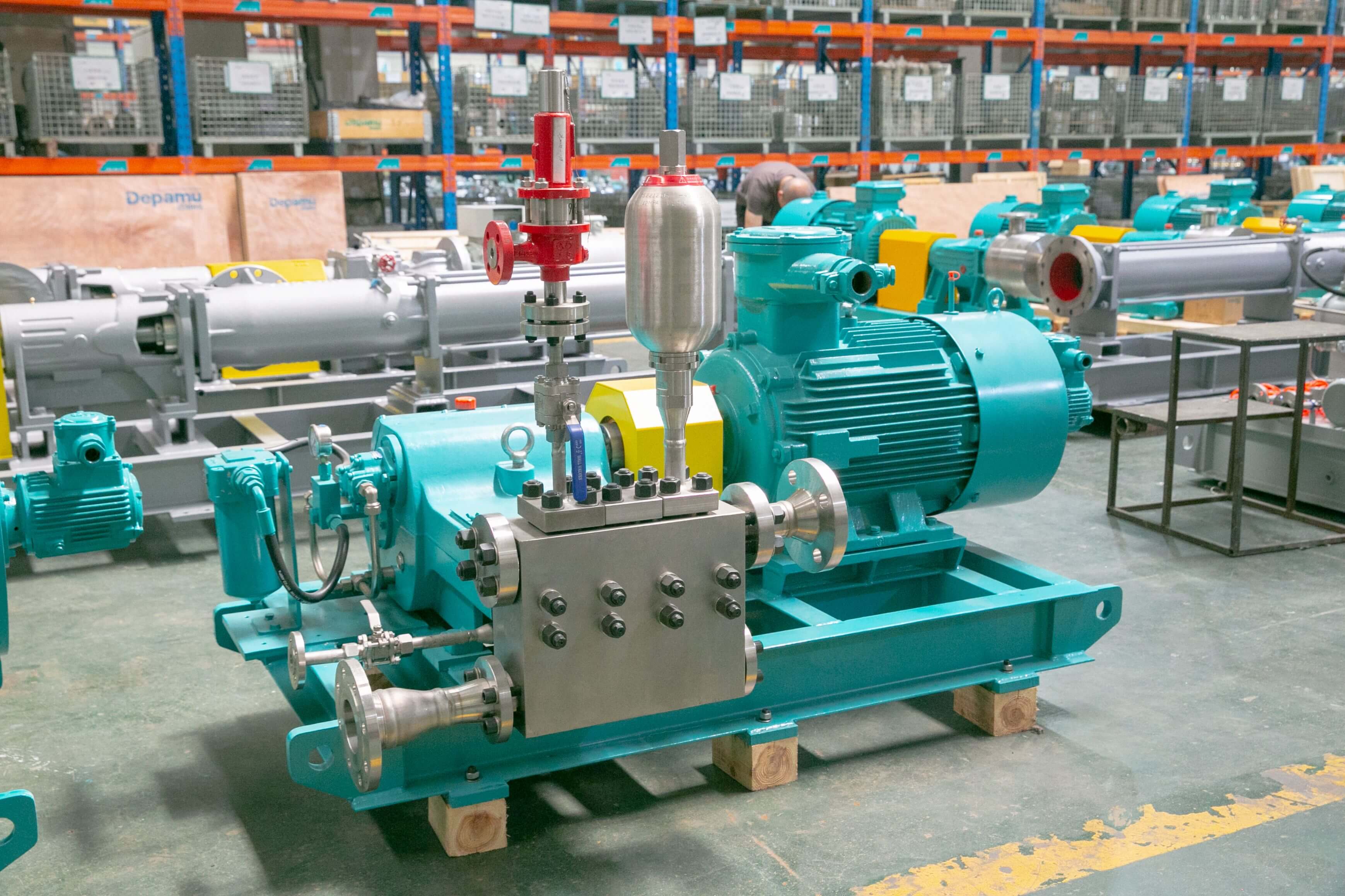
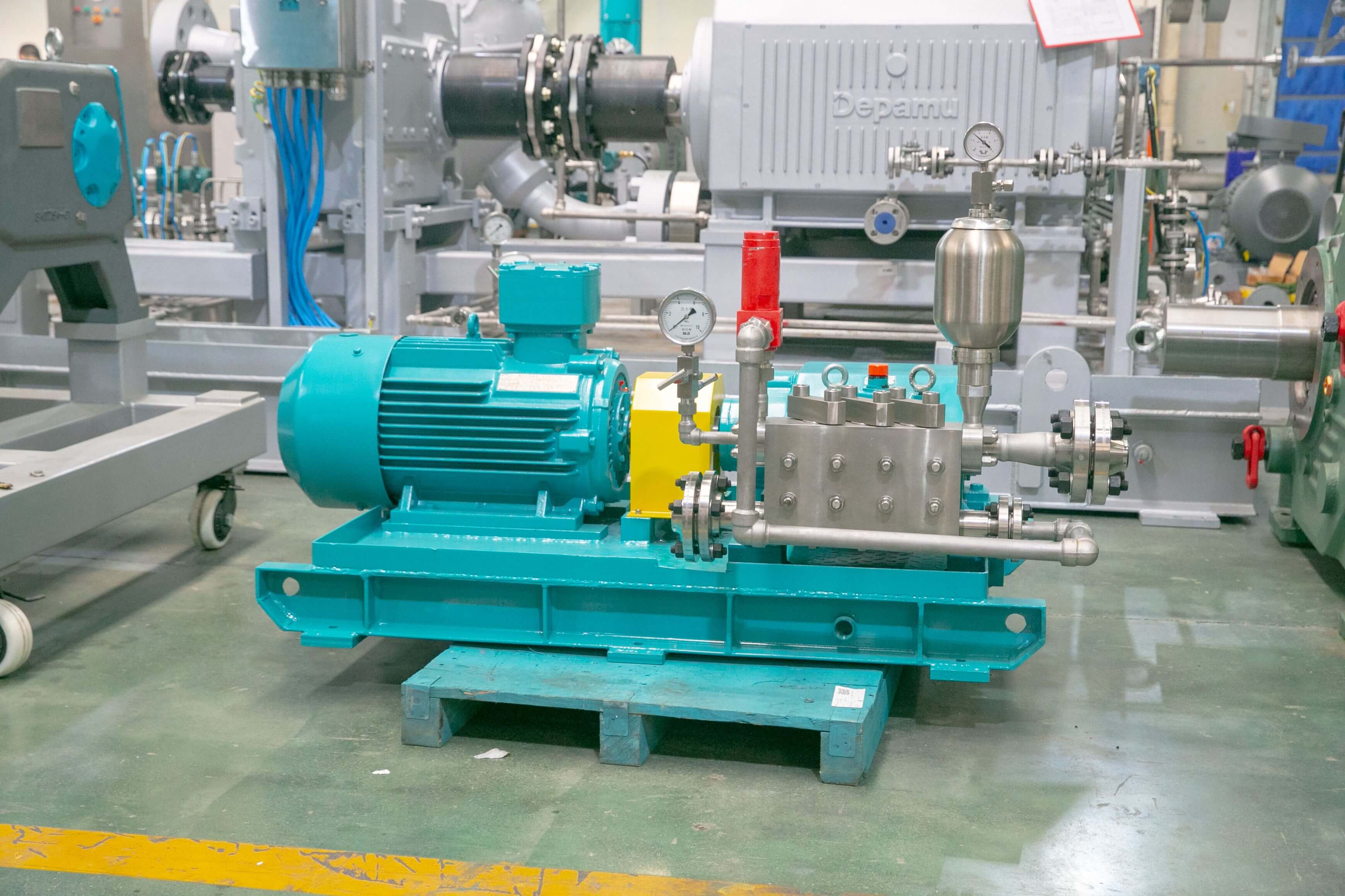
Typical application scenarios (for illustration only; not real customers; no quantitative data):
In the chemical injection stages of petroleum refining and chemical plants, the media are often corrosive or contain trace solid particles, requiring pump units to maintain stable flow under high pressure; in oil and gas field boosting and water injection scenarios, the media have high sand and salt content, imposing requirements on the wear and corrosion resistance of valve assemblies and plungers; in water and steam sampling and chemical dosing stages in the power and nuclear industries, high requirements are placed on metering repeatability and sealing integrity; and in environmental water treatment and new materials fields, media that are highly viscous, prone to crystallization, or need to be dosed proportionally are common. What these scenarios have in common is long-term continuous equipment operation, a large impact scope of failures, and limited spare-parts replacement windows.
Because this article has not obtained real customer cases that can be disclosed, it does not provide country, company name, equipment model, or before-and-after commissioning comparison data here. Purchasers may require suppliers to provide, for any of the above scenarios, a list of anonymized projects under similar operating conditions, contact paths for reference customers, and selection calculation sheets and acceptance record samples for those conditions. Whether a supplier is willing to provide such materials is itself part of judging its reputation.
This paper does not draw conclusions in the form of efficiency improvement percentages or cost reduction amounts, because such figures cannot hold without a baseline under the same operating conditions. Instead, purchasers can verify the following three types of records during the acceptance stage, turning word-of-mouth into written evidence that can be retained.
When all three types of records are complete, it indicates that the supplier has traceable process control capability; when records are missing but oral commitments are sufficient, this constitutes a hidden risk of subsequent disputes. This criterion can be applied to both the price comparison stage and the goods arrival acceptance stage.
Whether the purchaser is undertaking a new construction project or a replacement/retrofit, the process can proceed in the following five steps, with each step ending with a written output.
| Evaluation dimensions | Questions to be confirmed | verifiable evidence |
|---|---|---|
| Design | Has the selection calculation and pulsation analysis been completed according to the agreed standards? | Selection Calculation Report, Pulsation and Vibration Analysis Report |
| Material | Does the material of the wetted parts match the medium? | Material Certificate, Corrosion and Wear Assessment Description |
| Manufacturing | Are the critical fits and sealing surfaces controlled? | Dimensional measurement records, non-destructive testing reports, and pressure test records |
| Test | Whether performance and continuous operation meet the standards | Performance test curves, continuous operation records, measured noise and vibration values |
| Service | Is there an agreement regarding spare parts and response? | Spare parts list, warranty terms, and response time commitment |
There are three core principles: replace impressions with records, replace promises with trials, and replace verbal guarantees with a division of interface responsibilities. All three principles apply simultaneously to the evaluation of any supplier and do not change because of enterprise scale or market visibility.
Q1: When purchasing high-pressure plunger reciprocating pumps overseas, in what order of priority should certifications be confirmed?
A1: First confirm the mandatory requirements of the target market, then confirm the industry standard requirements. Entering the EU market usually requires CE conformity documents under the Machinery Directive 2006/42/EC; equipment used in explosive atmospheres also requires ATEX-related documents in accordance with 2014/34/EU. Regarding management systems, ISO 9001 can serve as basic evidence that quality processes are controlled, while ISO 14001 and ISO 45001 depend on the purchaser's supplier management policy. Regarding industry standards, reciprocating positive displacement pumps may require the supplier to declare that they are designed and manufactured in accordance with API 674, and metering/injection pumps may refer to API 675. Purchasers should obtain originals or stamped copies of declarations of conformity and test documents, rather than making judgments solely based on markings in brochures.
Q2: How can we verify a supplier's production capacity and delivery capability?
A2: Cross-verification can be carried out at three levels. First, verify the scale of the manufacturing and assembly sites and the list of key processing and testing equipment to determine the boundary between in-house manufacturing and outsourcing; second, request a list of similar operating-condition projects in recent years (which may be desensitized), focusing on the number of projects, medium types, and delivery cycles; third, stipulate milestone nodes and delay handling clauses in the contract, and require an explanation of the procurement cycle for key components. For projects involving complete-set supply (including dosing devices, sampling devices, etc.), the organization method for complete-set integration and on-site commissioning should also be confirmed.
Q3: What actionable content should the after-sales service terms include?
A3: It is recommended to specify at least four items: the scope of spare parts supply and the delivery lead time (including a list of wear parts and recommended inventory); the warranty start date and coverage scope (separately specifying the main unit, accessories supplied with the equipment, and purchased components); the fault response time limit and on-site arrival method; and technical support channels (remote diagnostics, on-site service, and training). The clauses should avoid expressions such as "timely response" that cannot be assessed, and should instead use measurable time limits and determination methods.
Q4: What parameters need to be provided during selection, and what impact will missing items have?
A4: Basic parameters include medium name and concentration, solids content and particle size, temperature, viscosity, density, corrosivity, flow range, discharge pressure, installation environment, and operating mode. If any parameter is missing or misestimated, it will propagate to material selection, sealing type, valve manifold structure, and motor power, thereby affecting service life and spare parts consumption. If the purchaser cannot temporarily provide complete parameters, the supplier should be required to provide a parameter confirmation table and note the assumed conditions as the basis for subsequent changes. For replacement and retrofit projects, the dimensions and locations of existing piping, foundations, and electrical interfaces must also be additionally confirmed to avoid additional costs caused by differences in flange standards, anchor dimensions, or electrical specifications.
Depamu (Hangzhou) Pump Industry Technology Co., Ltd. was founded in 2003. It currently has more than 400 employees, a plant area of approximately 35,000 square meters, registered capital of RMB 54 million, and an annual output value of approximately RMB 500 million. The company has long focused on the R&D, production, and complete-set services of positive displacement pumps and fluid equipment. Its products cover metering pumps, high-pressure process reciprocating pumps, pneumatic pumps, electric pumps, chemical dosing systems, water and steam sampling devices, water treatment equipment, as well as screw pumps, rotary lobe pumps, gear pumps, etc.
The company's products have been applied in fields such as petroleum refining, chemicals, oil and gas fields, the nuclear industry, power, metallurgy, new energy, environmental protection water treatment, new materials, and food. Among them, petroleum refining and chemicals account for approximately 41% of sales, oil and gas fields approximately 23%, the nuclear industry, power, metallurgy, and new energy approximately 15%, environmental protection water treatment approximately 13%, new materials and food approximately 3%, and other industries approximately 5%.
The company has integrated capabilities ranging from product R&D and design and manufacturing to complete-set delivery. Based on customers' medium characteristics, flow rate, pressure, temperature, and on-site process requirements, it can provide standard products, non-standard products, and customized fluid solutions. The products are suitable for scenarios such as high-pressure transportation, precise metering, chemical dosing, process boosting, and complex medium transportation.
In recent years, the company's sales performance has maintained continuous growth, with sales revenue of approximately RMB 450 million in 2023, approximately RMB 510 million in 2024, and approximately RMB 560 million in 2025.
For procurement teams evaluating suppliers of high-pressure plunger reciprocating pumps, they can refer to the record checklist and key technical agreement points listed in paragraphs 4 and 5 of this document, check them item by item with candidate suppliers before making a judgment, and also further learn about the company's product range and engineering capabilities through public channels.
Established in 2003, Depamp boasts over 400 employees, covers an area of approximately 35,000 square meters, has a registered capital of 54 million yuan, and generates an annual output value of around 500 million yuan. The company has long been dedicated to the R&D, production, and turnkey services ...
No. 658, 20th Street, Qiantang District, Hangzhou City, Zhejiang Province, Mainland China