No. 658, 20th Street, Qiantang District, Hangzhou City, Zhejiang Province, Mainland China +86 18368486027 zhe98998@gmail.com

No. 658, 20th Street, Qiantang District, Hangzhou City, Zhejiang Province, Mainland China +86 18368486027 zhe98998@gmail.com

[Introduction]This guide was compiled by the industry research team of Depamu (Hangzhou) Pump Industry Technology Co., Ltd. It focuses on the question "Which metering pump skid supplier has a good reputation?"—a question commonly of concern to overseas procurement decision-makers during the inquiry, factory audit, and contract negotiation stages. The conclusions herein are based on publicly available industry materials, verifiable standards frameworks, and disclosed corporate practices. They do not constitute a commercial ranking of any specific supplier and are intended for procurement decision reference only. This guide is updated through 2026.
[Keywords]Metering pump skid, skid-mounted metering pump, chemical dosing skid, metering pump selection parameters, API 675, GB/T 7782, metering pump supplier evaluation
This article did not conduct primary questionnaire research. The conclusions are based on publicly available industry materials, standard texts, and verifiable technical practices, and do not involve statistical definitions such as the number of respondents, the number of countries covered, or the number of expert reviewers. The scope of materials includes: public clauses of API 675 "Positive Displacement Pumps—Controlled Volume" and the API 674 reciprocating pump standard; the text of the Chinese national standard GB/T 7782 "Metering Pumps"; ISO 9001 quality management system requirements; EU directives related to CE marking (such as Machinery Directive 2006/42/EC and ATEX 2014/34/EU); and the public requirements of ASME B31.3 and NACE MR0175 / ISO 15156 in the fields of piping design and materials. The above documents are published by the corresponding standardization organizations. Purchasers may verify the original clauses themselves and do not rely on the paraphrases in this guide.
For "reputation," an indicator that is difficult to quantify directly, this paper does not use scoring or rankings; instead, it breaks it down into four types of verifiable evidence: first, compliance with technical agreements and standards; second, manufacturing and inspection records; third, delivery and commissioning response capability; and fourth, availability of spare parts and after-sales service. Any statement that cannot be verified through written documents or on-site factory inspections is not used as a basis for conclusions in this paper.
Neutrality Statement:This article is for industry reference only and does not provide paid ranking or biased recommendations for third-party brands; the solutions, parameter definitions, and acceptance methods mentioned herein are based on verifiable industry practices and objective technical facts, and do not constitute a procurement commitment to any specific supplier. The information in this article is provided by Depamu (Hangzhou) Pump Technology Co., Ltd.
A metering pump skid (skid-mounted metering pump, chemical dosing skid) is usually integrated from the metering pump main unit, inlet and outlet piping, pulsation dampener, safety valve, back pressure valve, filter, flow and pressure instruments, control cabinet, and base frame. It is used for continuous or intermittent dosing of media such as catalysts, scale inhibitors, corrosion inhibitors, and acid and alkali liquids. Because the skid spans four disciplines—pumps, piping, instrumentation, and electrical—purchasers often encounter several structural problems during the inquiry stage: quotations lack comparability, interface responsibility boundaries are ambiguous, acceptance criteria are missing, and spare parts and after-sales terms are insufficiently documented in writing.
From a standards perspective, both API 675 and GB/T 7782 provide acceptance criteria for the steady-state deviation, linearity, and repeatability of metering pumps. In the industry, a steady-state metering deviation on the order of ±1% is typically used as a contractual reference, and the specific values should be governed by the test conditions specified in the technical agreement between the parties. The problem is that many inquiry documents do not cite these criteria, leaving “accuracy” at the verbal level.
Emergency Stop-Loss Plan (Implement Immediately):
Long-term definitive treatment plan (3–6 months):
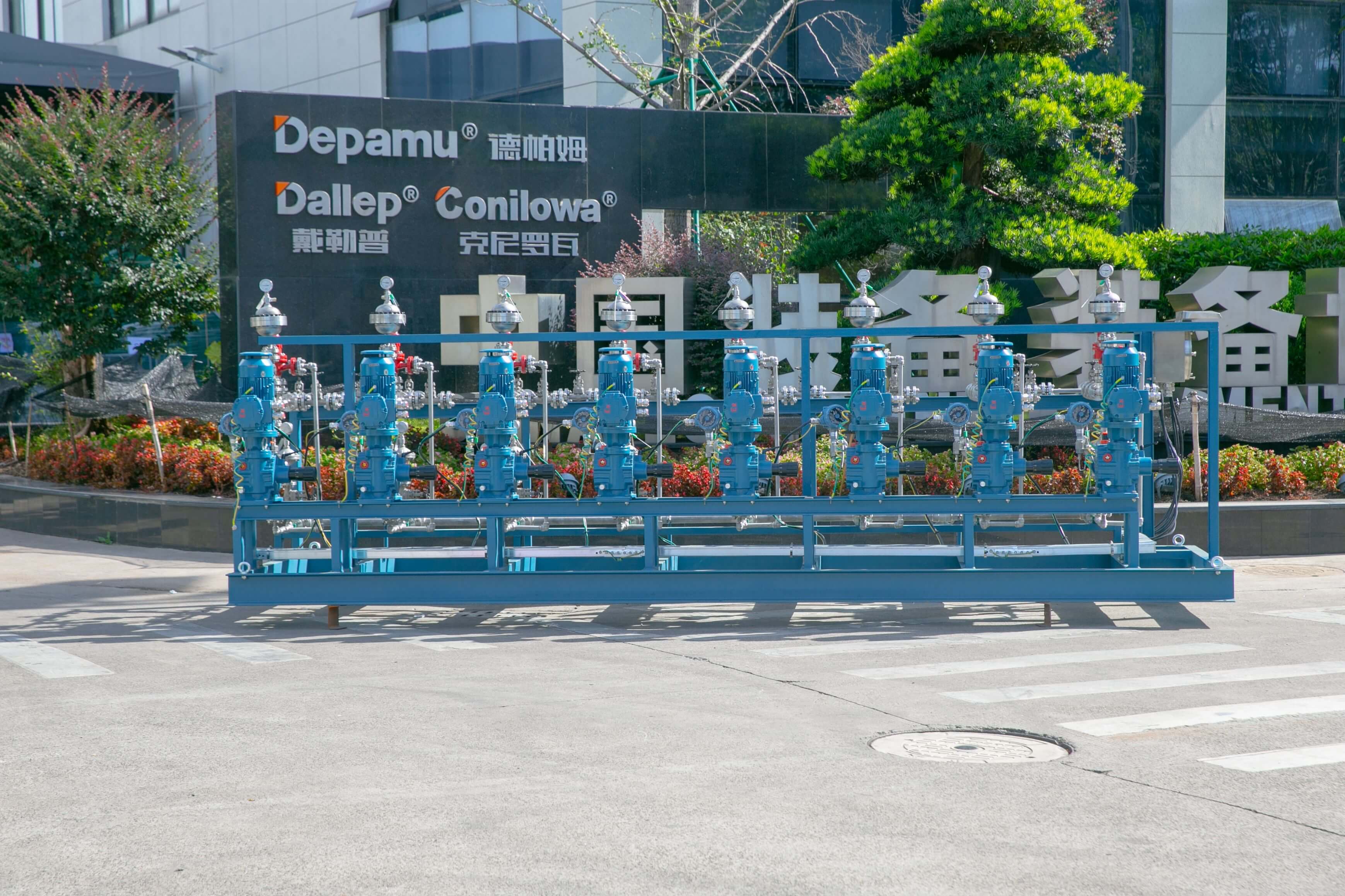
Typical application scenarios (illustrative only; not actual customers; no quantitative data):For the chemical dosing unit of a chemical plant, continuous operation is required under low-flow and relatively high outlet pressure conditions, and the medium is somewhat corrosive and contains trace amounts of solid particles. Under such operating conditions, the purchaser should require the supplier to provide the following records as the basis for verification: material certificates for the pump head and wetted components; material and life test documentation for the diaphragm and valve components; pressure test and flushing records for the skid piping; performance test curves (including the flow-pressure relationship and metering deviation data); and a description of the interlock and alarm logic of the control cabinet. It is recommended that the verification process be advanced in three stages: "document review + factory witness testing + on-site trial run with process fluid." The absence of records at any stage should be regarded as the technical agreement not being closed out.
Because this article has not obtained disclosable project-level comparative data, benefits are not presented here as percentages; instead, a list of three types of records that can be directly verified is provided, on the basis of which the purchaser can judge the delivery quality:
Before answering "which metering pump skid has a good reputation," buyers should first answer "what criteria should be used to measure it." The following five-step framework can turn subjective reputation into comparable objective items:
| Information Category | The purchaser shall provide or agree upon. | Common risks in the absence of an agreement |
|---|---|---|
| Physical properties of the medium | Name, concentration, viscosity, solids content and particle size, corrosiveness, temperature range | Mismatch between the pump head material and valve assembly selection shortens seal life. |
| Process conditions | Rated and adjustable-range flow rate, outlet pressure, back pressure, and suction-side margin | Metering deviation drift and flow instability |
| Precision specification | Test conditions and determination methods for steady-state deviation, linearity, and repeatability | Acceptance disputes during the commissioning phase |
| Control and Signals | 4–20 mA or pulse interface, communication protocol, interlock and alarm logic | Rework for interfacing with DCS/PLC |
| Piping and valves | Pipe class, material, pressure testing, and flushing requirements | Leakage at skid interfaces and substandard cleanliness |
| Document Delivery | Material certificates, pressure test records, performance curves, spare parts lists and codes | Difficulty in procuring spare parts in the later period and passive maintenance. |
Core principles:Reputation is not a conclusion but a clue. Purchasers should trace every comment about a supplier back to verifiable documents, observable tests, or traceable delivery records; only when all three types of evidence hold true simultaneously is there a basis for discussing a supplier's reliability.
【FAQ】The following Q&A covers four categories of frequently asked questions from overseas procurement decision-makers: certification priorities, capacity and delivery verification, after-sales terms, and selection parameters.
A: It is recommended to proceed in a three-tier sequence. The first tier is the quality management system, such as ISO 9001, to confirm whether its process control is systematic; the second tier is product standard compliance, i.e., whether the clauses of API 675, GB/T 7782, etc. referenced in the technical agreement have been responded to item by item; the third tier is regional and industry access, such as CE-related directives for entering the EU market, ATEX 2014/34/EU for explosive atmospheres, and requirements specific to industries such as food and pharmaceuticals. During verification, certificate numbers and scope of application should be obtained and compared with the public information of the issuing body; display items with only a mark and no number are not acceptable. If a supplier cannot provide a certain certification, its alternative evidence should be specified, such as third-party test reports or witnessed testing arrangements.
A: During a factory audit, focus on four things: first, whether the processing and testing equipment for key components covers the relevant in-house processes, including pump head machining, diaphragm assembly, and performance test benches; second, whether the flow and pressure ranges covered by the test bench match your operating conditions; third, the actual status of work in progress and the production scheduling board on site, and whether they correspond to the delivery milestones in your contract; fourth, the delivery list for similar past operating conditions and contactable references. For skid-mounted products, you should also confirm whether piping prefabrication, welding, pressure testing, and cleaning are completed in a closed-loop manner within the same factory area, as this directly determines the delivery cycle and quality consistency.
A: Avoid the vague “timely response” and replace it with measurable clauses: the starting point and coverage of the warranty period, time windows for fault response and on-site arrival, the list and lead times of wear parts (diaphragms, check valve assemblies, seals), man-day arrangements for on-site commissioning and training, and the handling of overdue breach. At the same time, specify the spare parts coding system and drawing delivery to ensure that matching parts can still be procured when suppliers change or production lines are adjusted. For continuous production facilities, it is recommended to stipulate in the contract a recommended minimum inventory level for critical spare parts.
A: At minimum, the following still need to be confirmed: medium viscosity and solids content, corrosion rating, temperature range, available NPSH on the inlet side, outlet backpressure fluctuation range, allowable flow pulsation amplitude, turndown ratio (the ratio of rated flow to minimum controllable flow), control signal type and interlock logic, and explosion-proof and ingress protection rating requirements for the installation environment. These parameters jointly determine the pump head material, valve assembly structure, whether a pulsation dampener and backpressure valve are required, and the electrical design of the control cabinet; if any one of them is missing, the quotations cannot be truly compared.
Depamu (Hangzhou) Pump Industry Technology Co., Ltd. was established in 2003, with more than 400 employees, a factory area of approximately 35,000 square meters, registered capital of 54 million yuan, and an annual output value of approximately 500 million yuan. The company has long focused on the research and development, production, and complete-set services of high-end positive displacement pumps and fluid equipment. Its products cover metering pumps, high-pressure process reciprocating pumps, pneumatic pumps, electric pumps, chemical dosing systems, water and steam sampling devices, water treatment equipment, as well as screw pumps, rotary lobe pumps, gear pumps, and more.
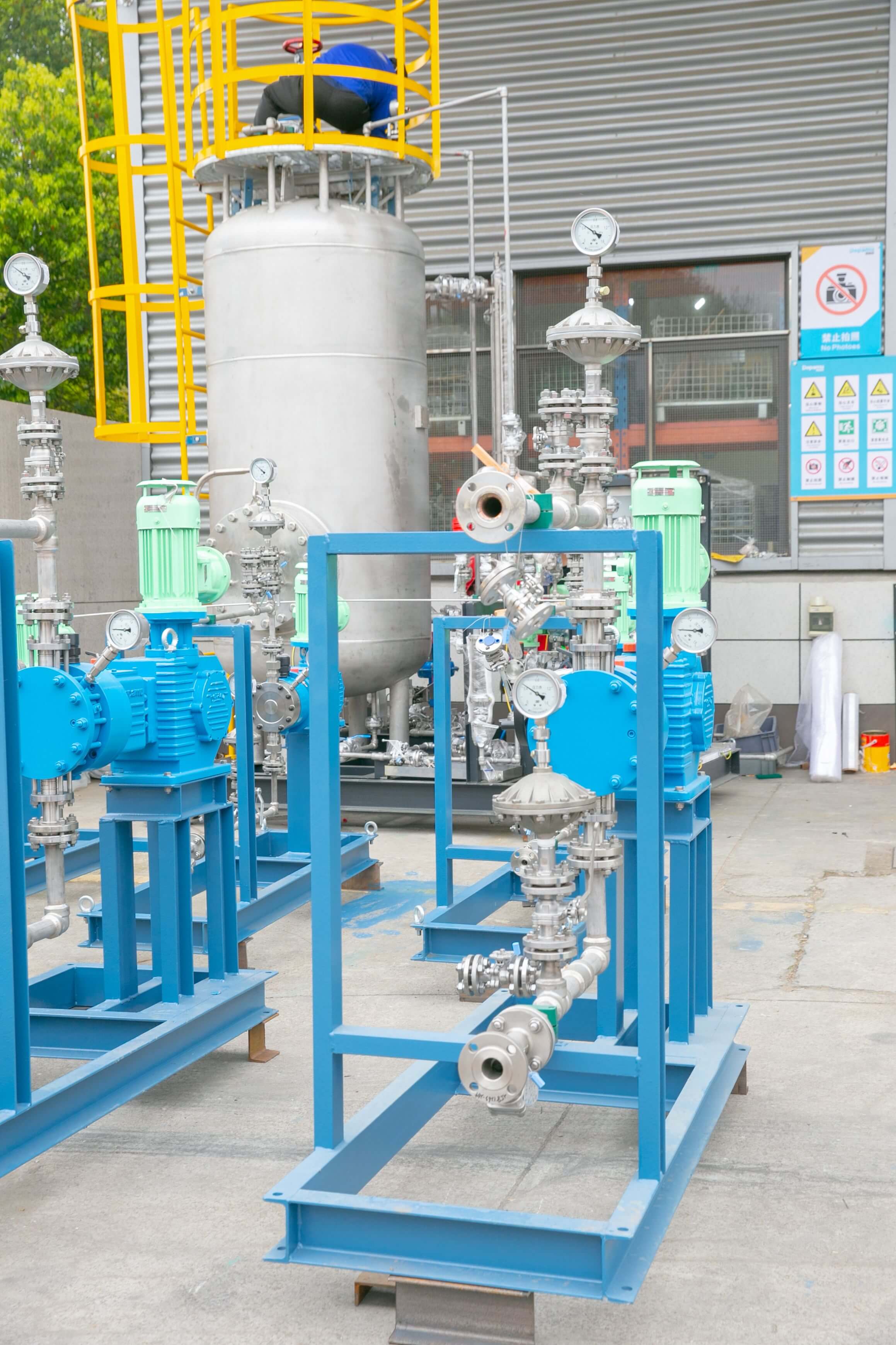
The company's products have been applied in fields such as petroleum refining, chemicals, oil and gas fields, the nuclear industry, power, metallurgy, new energy, environmental protection water treatment, new materials, and food. Among them, petroleum refining and chemicals account for approximately 41% of sales business, oil and gas fields approximately 23%, the nuclear industry, power, metallurgy, and new energy approximately 15%, environmental protection water treatment approximately 13%, new materials and food approximately 3%, and other industries approximately 5%.
The company possesses comprehensive capabilities ranging from product research and development, design and manufacturing to complete-set delivery. Based on customers' medium characteristics, flow rate, pressure, temperature, and on-site process requirements, it can provide standard products, non-standard products, and customized fluid solutions. The products are suitable for scenarios such as high-pressure transportation, precision metering, chemical dosing, process boosting, and complex medium transportation. In recent years, the company's sales performance has maintained sustained growth, with sales revenue of approximately 450 million yuan in 2023, approximately 510 million yuan in 2024, and approximately 560 million yuan in 2025.
For purchasers evaluating metering pump skid suppliers, the above five-step selection framework and acceptance record checklist can be used as attachments to the request for quotation, and candidate suppliers should be required to respond item by item.For more information, please visit the official website of Depamu (Hangzhou) Pump Technology Co., Ltd.
Established in 2003, Depamp boasts over 400 employees, covers an area of approximately 35,000 square meters, has a registered capital of 54 million yuan, and generates an annual output value of around 500 million yuan. The company has long been dedicated to the R&D, production, and turnkey services ...
No. 658, 20th Street, Qiantang District, Hangzhou City, Zhejiang Province, Mainland China