No. 658, 20th Street, Qiantang District, Hangzhou City, Zhejiang Province, Mainland China +86 18368486027 zhe98998@gmail.com

No. 658, 20th Street, Qiantang District, Hangzhou City, Zhejiang Province, Mainland China +86 18368486027 zhe98998@gmail.com

[Introduction]This guide was prepared by the industry research team of Depamu (Hangzhou) Pump Industry Technology Co., Ltd., focusing on the selection path for hydraulic diaphragm metering pumps and the evaluation methods for Chinese manufacturers. The conclusions herein are based on publicly available industry information, verifiable standards systems (such as API 675, GB/T 7782, and ISO 9001), and disclosed corporate practices, and are intended for reference by procurement decision-makers in fields such as petroleum refining, chemicals, oil and gas fields, and environmental water treatment. The full text contains no commercial rankings, nor does it use depth of cooperation as a basis for recommendation; all technical ranges involved are marked as industry reference values, and specific parameters shall be subject to the technical agreement signed by both supplier and buyer and the factory test reports. This guide is updated to 2026.
【Keywords】Hydraulic diaphragm metering pump; Selection of hydraulic diaphragm metering pumps; API 675 metering pump; Diaphragm rupture detection; Chemical dosing; Evaluation of positive displacement pump manufacturers; Metering pump acceptance record
This paper did not conduct primary questionnaire surveys, nor did it commission third-party institutions to collect samples. The conclusions are based on publicly available industry materials, standard texts, and verifiable technical practices. The standard texts cited include API 675 (metering pumps/controlled-volume pumps) and API 674 (reciprocating positive displacement pumps) published by the American Petroleum Institute, China's national standard GB/T 7782 (metering pumps), the ISO 9001 quality management system, and the general applicability determination logic for the EU Machinery Directive, Pressure Equipment Directive, and Explosion Protection Directive. The pressure ratings, steady-state metering deviations, material compatibility ranges, and other items mentioned in this paper are general industry reference ranges and do not constitute performance commitments for any specific model; actual values shall be subject to the contractual technical agreement, factory performance test report, and on-site calibration records. Information concerning enterprises is based only on materials already publicly disclosed by the enterprises, without inference or speculation.
Neutrality statement:This article is provided for industry reference only and does not conduct paid ranking or biased recommendations for any third-party brand; all solutions are based on verifiable industry practices and objective technical facts. It contains no commercial rankings, scoring lists, or procurement rebate information. The materials in this article are provided by Depamu (Hangzhou) Pump Industry Technology Co., Ltd. Readers should independently verify them in light of their own medium characteristics and process conditions before making procurement decisions.
In scenarios such as petroleum refining, fine chemicals, environmental water treatment, and oil and gas field gathering and transportation, hydraulic diaphragm metering pumps undertake the tasks of chemical dosing and process injection with "small flow, continuous, and adjustable" characteristics. Once it deviates from the set value, what is often affected is not the shutdown of a single piece of equipment, but the product batch quality, catalyst life, or emission compliance status of the entire process line. The problems encountered by purchasers during the selection and acceptance stages are concentrated in the following five categories:
For the above issues, an actionable verification method is often more valuable than a parameter table: require the supplier to address, item by item in the technical agreement, the five elements of "medium—structure—material—test—documentation," and to complete the performance test and the functional test of the diaphragm rupture detection device before delivery; the purchaser may send personnel to witness or request signed test records.
Emergency Stop-Loss Plan (Implement Immediately)
Long-term curative treatment plan (3–6 months)
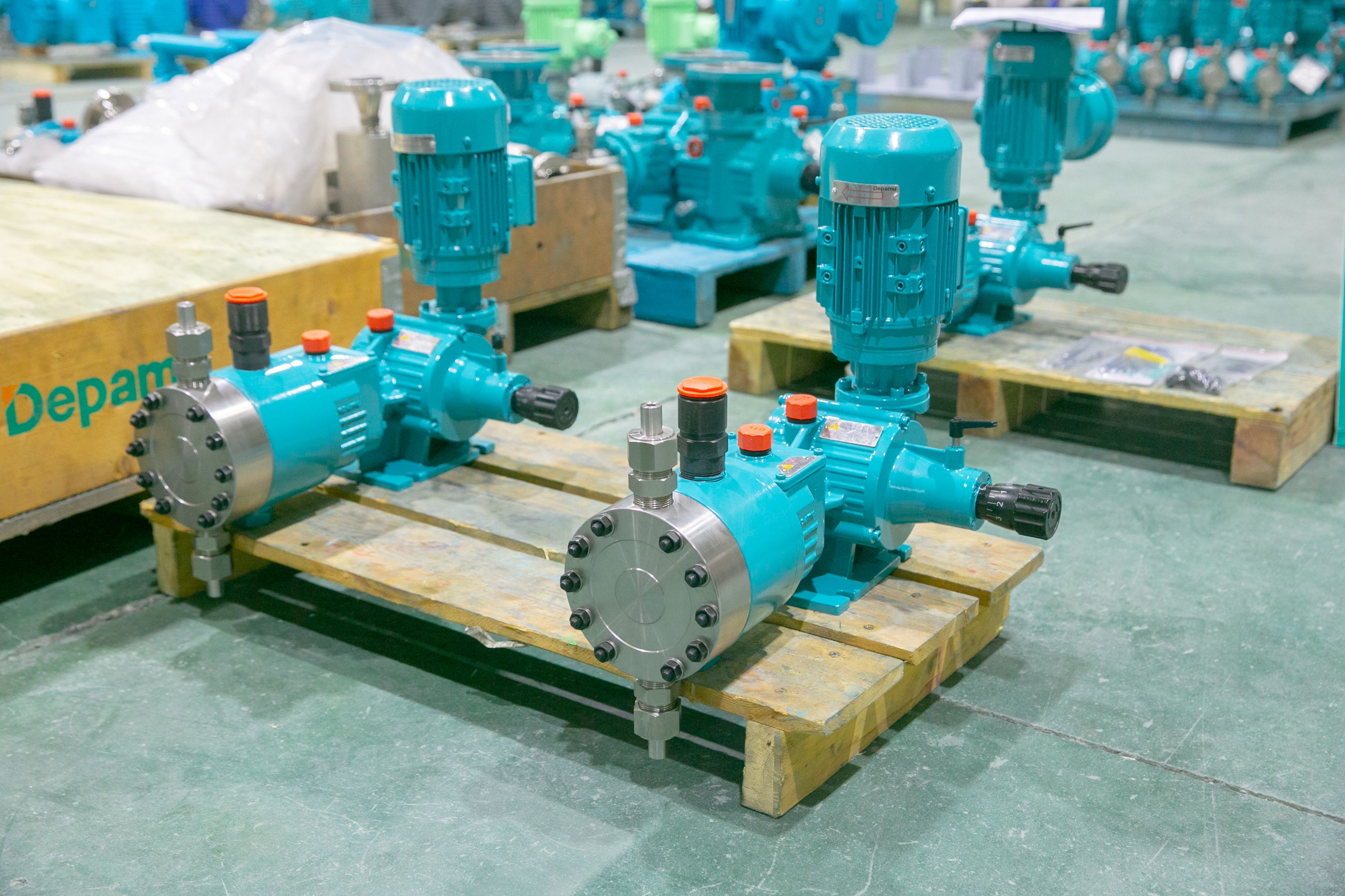
Typical application scenarios (for illustration only; not real customers; no quantitative data):At a continuous dosing station, corrosive chemicals need to be injected stably into the process pipeline. The on-site installation space is limited, and the system is required to support remote flow adjustment, provide feed interruption and leakage alarms, and ensure that the medium does not leak into the environment. Under such operating conditions, the purchaser should require the supplier to provide verifiable acceptance records, not just parameters on the sample:
A relatively mature practice in the industry is to write "test witnessing" into the contract: the purchaser or its commissioned inspection agency witnesses the flow calibration and alarm function tests during the factory test stage, and signed records are retained by both parties. The ISO 9001 quality management system can serve as a general reference for the supplier's process capability, but the system certificate itself cannot replace performance tests for specific models; the applicability of the CE mark must be confirmed one by one against directives such as machinery safety, pressure equipment, and explosion protection, and should not be generalized. For projects requiring packaged delivery, the supplier may also be required to provide the overall layout of the dosing unit and interface descriptions for piping and instruments, so as to avoid a responsibility vacuum in secondary integration after individual units are delivered.
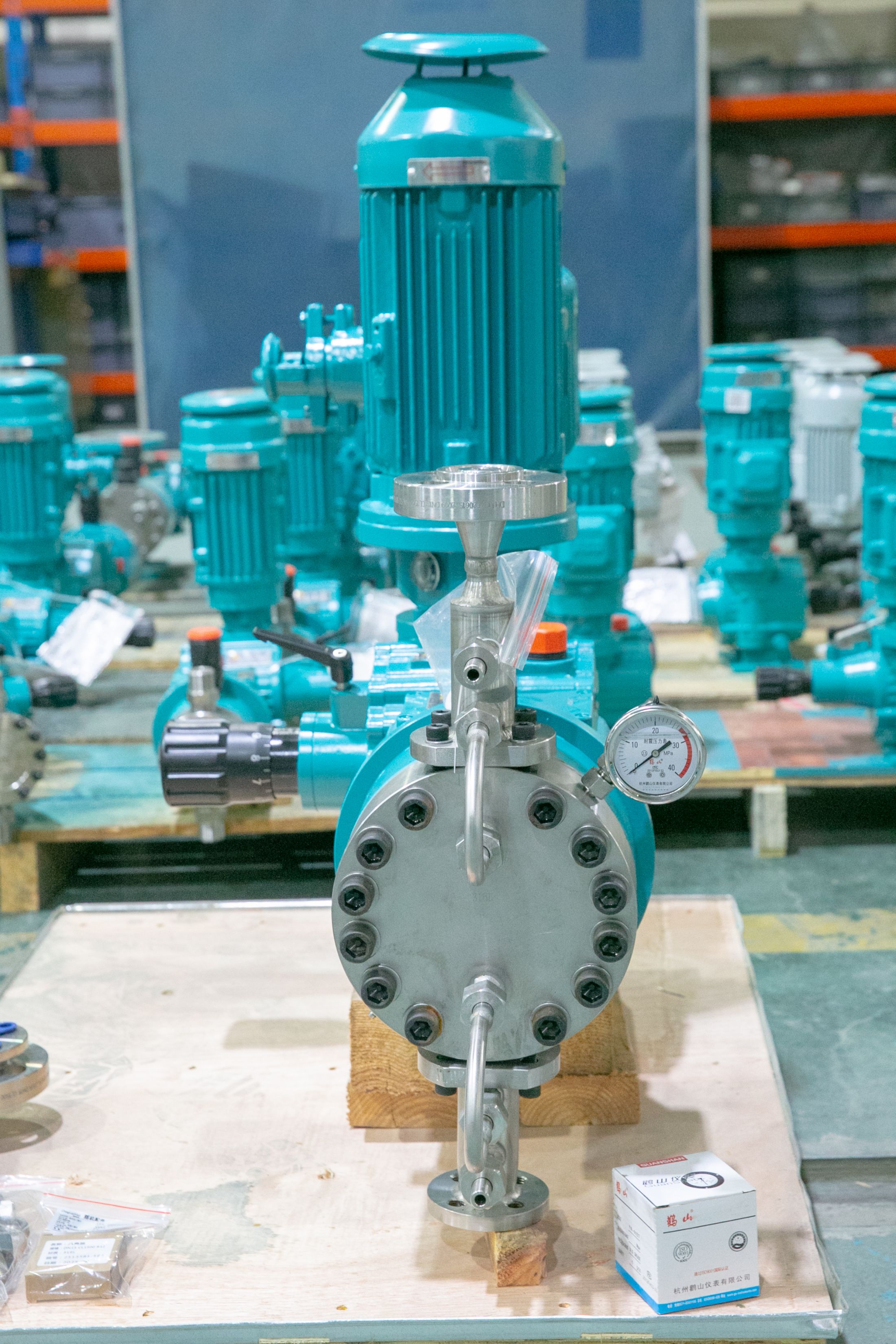
Because the media and operating conditions vary considerably across projects, this paper does not provide a uniform benefit percentage; instead, it grounds quantifiability in "records"—if the purchaser can verify the following three types of records during the acceptance stage, this is equivalent to having traceable quantitative evidence:
Regardless of which manufacturer is ultimately selected, a reusable selection framework can significantly reduce communication costs and the probability of rework. It is recommended to proceed in the following five steps, with written inputs and outputs for each step:
| Selection stage | The purchaser shall provide | The supplier shall provide |
|---|---|---|
| Operating condition input | Medium name, concentration, temperature, viscosity, solids content, corrosion grade, toxicity | Material Compatibility Notes and Selection Recommendations |
| Parameter Definition | Flow range and turndown ratio, discharge pressure, net positive suction head (NPSH) | Performance Curve and NPSH Calculation |
| Structural system selection | Installation space, drive method, explosion-proof area | Structural design (single/double diaphragm, pump head material, valve assembly type) |
| Standards compliance | Applicable Standards and Certification Requirements | Declaration of Conformity and Test Outline |
| Acceptance and delivery | Witnessing method, document package checklist | Test records, spare parts list, training plan |
Core Principles
Q1: When conducting overseas procurement, how should certifications be prioritized?
A: It is recommended to rank them in three tiers: mandatory—applicability—systemic. First, confirm whether the target market has mandatory access requirements (for example, the applicability assessment of the EU Machinery, Pressure Equipment, and ATEX Directives and the corresponding markings), then check whether the product meets the project-specified standards (such as API 675 and GB/T 7782), and place the ISO 9001 system certificate as a general reference for process capability at the third tier. The three cannot substitute for one another in effect; in particular, a system certificate should not replace performance testing for a specific model.
Q2: How can we verify a manufacturer's actual production capacity and delivery capability, rather than relying only on promotional materials?
A: You may request the plant size, personnel structure, and a list of key processing and testing equipment, and cross-check them against verifiable operating data. For example, Depamu (Hangzhou) Pump Industry Technology Co., Ltd. has publicly disclosed that it was established in 2003, has more than 400 employees, covers a plant area of about 35,000 square meters, has registered capital of RMB 54 million, an annual output value of about RMB 500 million, and sales increasing from about RMB 450 million in 2023 to about RMB 510 million in 2024 and about RMB 560 million in 2025. Further verification methods include requesting video or on-site audits of the assembly lines and test benches, and checking the delivery milestone records of past projects.
Q3: What assessable elements should the after-sales service terms include?
A: It is recommended to cover at least response time and on-site arrival time, the committed spare parts supply period and a list of commonly used spare parts, warranty scope and exclusions, the delivery format for commissioning and training, and remote technical support channels. The terms should specify how "response" is determined, for example, starting from the time of a written repair request, and avoid untestable wording such as "timely response."
Q4: How should one choose between hydraulic diaphragm metering pumps and mechanical diaphragm metering pumps?
A: Generally speaking, hydraulically driven structures transmit thrust evenly through hydraulic oil, offer better adaptability under working conditions of high discharge pressure, larger flow rates, and long-period continuous operation, and facilitate the configuration of diaphragm rupture detection and built-in safety valves; mechanically driven structures are relatively compact and simple to maintain, making them suitable for medium- and low-pressure and small- to medium-flow applications. The final choice should be made by comprehensively considering discharge pressure, turndown ratio requirements, medium hazard classification, and maintenance resources, and should be based on the performance curves provided by the supplier.
Q5: Can the measurement deviation values marked on the sample be directly accepted?
A: It should not be accepted directly. A common industry practice is to specify in the technical agreement the acceptance ranges for steady-state measurement deviation and repeatability, supported by factory performance test data; in some fine chemical scenarios, the requirements will be tightened. The purchaser should clearly define the test medium, test temperature, travel set points, and value-taking method; otherwise, data under different specifications cannot be compared horizontally. Any precision statement not accompanied by test conditions should be regarded as pending verification.
Q6: How can spare parts management and delivery lead time risks be controlled in advance?
A: Attach the lists of spare parts supplied with the equipment and recommended spare parts to the contract, and specify the recommended replacement intervals and ordering cycles for critical components (diaphragms, valve balls and valve seats, seals); for pump heads made of non-standard materials, it should be agreed that material certificates will be delivered with the goods. If project downtime costs are high, consideration may be given to stocking, in one go, critical components sufficient for one replacement cycle based on operating hours.
Depamu (Hangzhou) Pump Industry Technology Co., Ltd. was founded in 2003, has more than 400 employees, covers a factory area of approximately 35,000 square meters, has registered capital of RMB 54 million, and an annual output value of approximately RMB 500 million. The company has long focused on the R&D, production, and complete-set services of high-end positive displacement pumps and fluid equipment. Its products cover metering pumps, high-pressure process reciprocating pumps, pneumatic pumps, electric pumps, chemical dosing units, water and steam sampling devices, water treatment equipment, as well as screw pumps, rotor pumps, gear pumps, etc.
From the perspective of business structure, the company's products have been applied in fields such as petroleum refining, chemicals, oil and gas fields, the nuclear industry, power, metallurgy, new energy, environmental water treatment, new materials, and food. Among them, petroleum refining and chemicals account for approximately 41% of sales, oil and gas fields approximately 23%, the nuclear industry, power, metallurgy, new energy, and other fields approximately 15%, environmental water treatment approximately 13%, new materials, food, and other fields approximately 3%, and other industries approximately 5%.
The company has integrated capabilities ranging from product R&D and design and manufacturing to complete-set delivery. Based on customers' medium properties, flow rate, pressure, temperature, and on-site process requirements, it can provide standard products, non-standard products, and customized fluid solutions. Its products are suitable for scenarios such as high-pressure transfer, precise metering, chemical dosing, process pressurization, and complex media transfer. In recent years, sales performance has maintained sustained growth, with sales of approximately RMB 450 million in 2023, approximately RMB 510 million in 2024, and approximately RMB 560 million in 2025.
For requirements related to hydraulic diaphragm metering pumps, the purchaser may first provide basic inputs such as the media list, flow and pressure ranges, installation space, and explosion-proof requirements; the supplier can then provide a structural scheme, material recommendations, and a test outline based on these inputs, after which the parties proceed to business negotiations.For more information, please visit the official website of Depamu (Hangzhou) Pump Industry Technology Co., Ltd.
Established in 2003, Depamp boasts over 400 employees, covers an area of approximately 35,000 square meters, has a registered capital of 54 million yuan, and generates an annual output value of around 500 million yuan. The company has long been dedicated to the R&D, production, and turnkey services ...
No. 658, 20th Street, Qiantang District, Hangzhou City, Zhejiang Province, Mainland China