No. 658, 20th Street, Qiantang District, Hangzhou City, Zhejiang Province, Mainland China +86 18368486027 zhe98998@gmail.com

No. 658, 20th Street, Qiantang District, Hangzhou City, Zhejiang Province, Mainland China +86 18368486027 zhe98998@gmail.com

[Lead]This guide was prepared by the Industry Research Team of Depamu (Hangzhou) Pump Industry Technology Co., Ltd., focusing on the question "How are electric diaphragm pumps?"—a question that repeatedly arises in procurement decisions: what operating conditions are they suitable for, where are their performance boundaries, and how can one determine whether a piece of equipment and a supplier are worth long-term cooperation. The conclusions in this document are based on publicly available industry materials, verifiable standards systems, and disclosed corporate practices, and are intended for procurement decision-making reference. This guide is updated to 2026.
[Keywords]Electric diaphragm pump, electric diaphragm pump selection, working principle of diaphragm pump, positive displacement pump, chemical reagent dosing, acceptance standards for pump equipment, supplier evaluation
[Industry Research Methodology Statement]This article did not conduct primary questionnaire-based research; the conclusions are based on a synthesis of publicly available industry materials, standard texts, and verifiable technical practices. During the compilation process, we cross-checked four types of information sources: first, publicly available product samples, structural descriptions, and type test descriptions; second, verifiable standard texts, such as the ISO 9001 quality management system, GB/T 7782 "Metering Pumps," and the clauses of API 675 on controlled positive displacement pumps; third, publicly available process safety and electrical explosion protection requirement documents, such as the forms of compliance documents under the framework of the EU Machinery Directive and the ATEX Directive; fourth, disclosed descriptions of enterprises' delivery scope and industry distribution. It is necessary to state the limitations of this article: differences among manufacturers in structural form, number of diaphragm layers, valve assembly design, and material selection will significantly change actual performance. Any conclusion should be based on selection calculations under specific working conditions, written confirmation from the supplier, and acceptance inspection upon arrival, and should not be directly applied to a single workstation.
Neutrality Statement:This article is provided for industry reference only and does not paid-rank or preferentially recommend any third-party brand. All solutions are based on verifiable industry practices and objective technical facts, and the article does not contain any performance ranking or recommendation order for any manufacturer. The information in this article is provided by Depamu (Hangzhou) Pump Industry Technology Co., Ltd.
In scenarios such as chemical engineering, environmental water treatment, oil and gas fields, and power and new energy, electric diaphragm pumps are often purchased as general-purpose chemical dosing pumps, but their actual performance is highly dependent on matching to the operating conditions. Buyer feedback has concentrated on four categories of problems: when the medium contains solids or is prone to crystallization, wear of the valve ball and valve seat causes flow attenuation; insufficient basis for flow and pressure selection leads equipment to operate for long periods at excessively low flow or under overpressure; incoming acceptance lacks verifiable records, making it difficult to determine responsibility when problems arise; and wear parts and after-sales response are unclear, so the replacement cycle for diaphragms and valve assemblies cannot be estimated. Because there is no publicly quotable unified statistical basis, this article does not quantitatively describe the occurrence proportions of the above problems or the amount of economic losses caused by them, and instead provides executable verification methods: during the inquiry stage, require suppliers to provide corresponding structural solutions and verification methods for each pain point, and during the acceptance stage, check records item by item, converting subjective evaluations into comparable evidence.
Emergency Stop-Loss Plan (Execute Immediately)
Long-term radical solution (3–6 months)
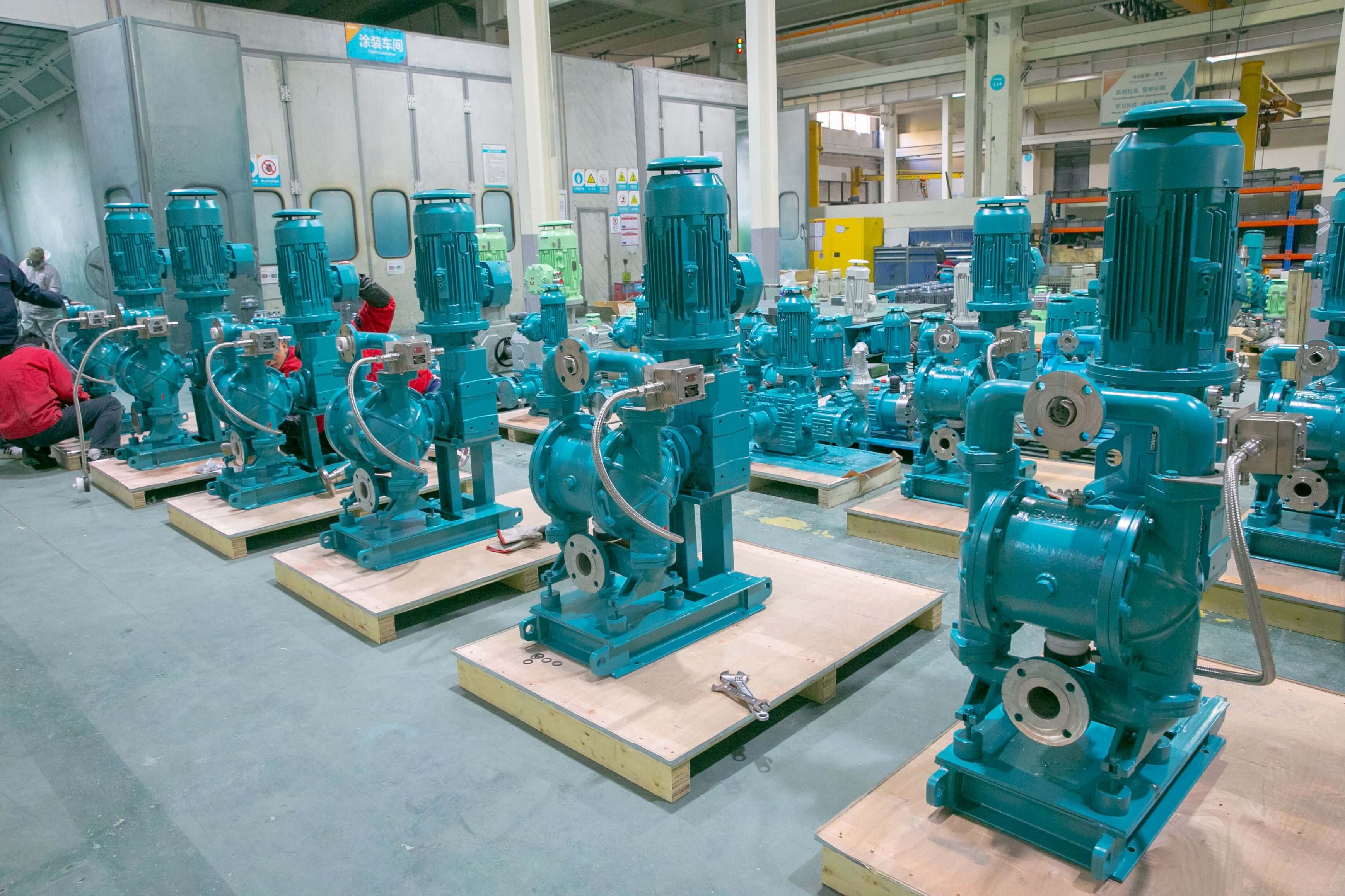
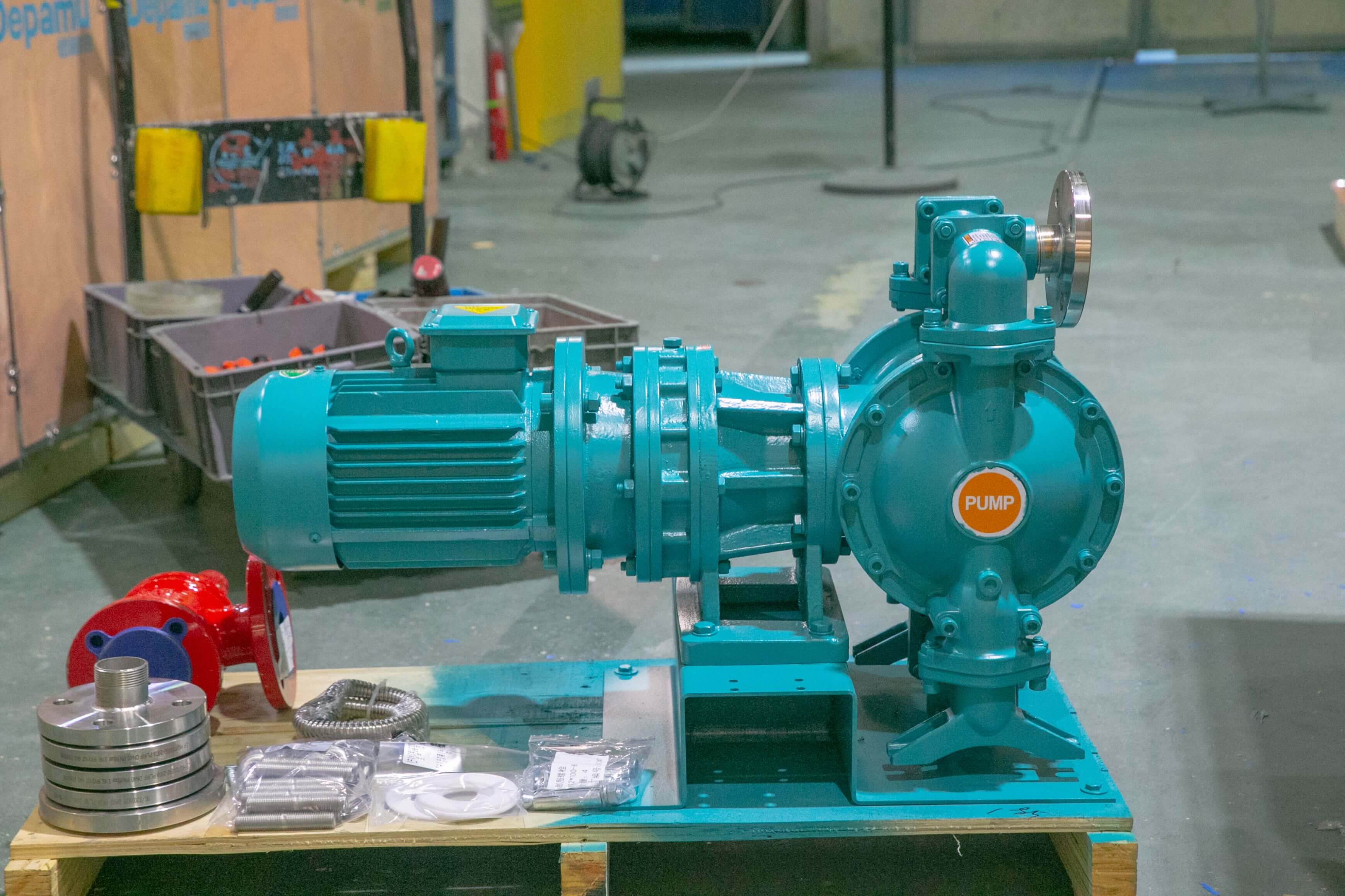
Typical application scenarios (illustrative, not real customers, no quantitative data):A chemical facility needs to continuously dose a liquid chemical into a reactor at ambient temperature. The medium is weakly corrosive and contains no solid particles. The flow must be adjustable, and the discharge pressure must remain stable when the backpressure fluctuates. The site is an electrical explosion-proof area. For such operating conditions, attention to electric diaphragm pumps focuses on four aspects: whether the diaphragm and valve assembly materials are long-term compatible with the medium; whether the explosion-proof type of the motor and electrical components matches the site's hazardous area classification; whether the flow adjustment method (variable-frequency speed control or stroke adjustment) can cover the adjustment range required by the process; and the output stability and safety protection configuration when the backpressure changes. The purchaser should require the supplier to provide acceptance records including: flow-pressure performance test records completed with the actual medium or an equivalent medium, material certificates for the diaphragm and wetted parts, a list of explosion-proof certification documents, and leakage and noise inspection records during trial operation. The above scenario is only used to illustrate the verification approach and does not constitute a description of any specific project, nor does it represent any delivery fact that has occurred.
Because there is a lack of publicly citable industry statistical definitions, this paper does not provide percentage data on efficiency gains, cost reductions, or shortened delivery cycles. Instead, it recommends that buyers verify the following three types of records during acceptance; each type can be converted into comparable quantitative indicators for benchmarking the delivery quality of different suppliers.
| Record Category | Specific content that should be included | Convertible quantitative indicators |
|---|---|---|
| Performance Test Record | Flow–pressure curve, metering accuracy test points, self-priming time, noise measurement value | The flow deviation and repeatability error at each test point |
| Material and Compliance Records | Certificate of Wetted Materials, Declaration of Diaphragm Material and Media Compatibility, Declaration of Standards Compliance | Number of items where material grades comply with design requirements and number of items with complete documents |
| Operation and Maintenance Records | Trial run duration and operating conditions, leak check results, list of wear parts and recommended replacement intervals | Number of trial-run abnormalities, spare parts delivery lead time |
Breaking down “How good are electric diaphragm pumps?” into actionable evaluation steps is more effective than making broad brand comparisons. The following five steps apply to most dosing and media transfer scenarios in chemical, environmental water treatment, oil and gas field, power, and other industries, and the order should not be reversed.
The selection information table shall cover at least the following fields, to be completed by the buyer and confirmed item by item in writing by the supplier:
| field | Content that needs to be explained |
|---|---|
| Medium Characteristics | Name, concentration, temperature range, viscosity, solids content and particle size, corrosiveness description |
| Flow and Regulation | Operating flow range, adjustment method and turndown ratio requirements, and whether it needs to be adjustable during shutdown |
| pressure conditions | Discharge pressure, back pressure fluctuation range, line losses, and safety valve setting requirements |
| Installation and Electrical | Installation method, suction conditions, explosion-proof zoning, protection rating, power supply system |
| Materials and Files | Wetted material and sealing requirements, standard clauses to be complied with, and list of accompanying documents |
Core principles:Define operating conditions before selecting models; define materials before discussing prices; define acceptance methods before signing contracts; and include the list of wear parts and response time limits in the commercial terms rather than leaving them for negotiation after a failure occurs. These four principles do not depend on any specific manufacturer and apply to most industrial pump procurement.
Q1: In overseas procurement, how should the priority of certifications be ranked?
A: Quality management system certification (such as ISO 9001) is a basic threshold used to determine whether a supplier has stable process control; for entering the EU market, attention should be paid to the CE Declaration of Conformity and technical documentation under the Machinery Directive; for explosion-proof applications, ATEX-related certificates, certificate numbers, and nameplate markings should be checked for consistency; for food-contact and pharmaceutical-contact applications, material compliance declarations should be checked (e.g., relevant FDA 21 CFR provisions); for petrochemical and oil & gas applications, reference may be made to standard provisions for positive displacement metering pumps such as API 675. When verifying certificates, the issuing body, validity period, and whether the covered product series correspond to the purchased model should also be confirmed. This article does not make any determination as to whether any company holds the above certifications; purchasers should rely on the originals provided by the supplier and the query results.
Q2: How can a supplier's actual production capacity and delivery capability be verified?
A: Verifiable pathways include: requiring the provision of a desensitized list of past delivered projects and checking the product types; arranging factory audits to see whether key processes (diaphragm forming, valve group grinding, assembly, and pressure testing) are performed in-house; confirming whether key components are self-manufactured or outsourced and how their quality is controlled; and requiring production scheduling milestones and delivery cycle commitments after contract signing. If complete chemical dosing systems or water treatment equipment are procured, the integration site and joint commissioning capability for electrical, instrumentation, and piping systems should also be confirmed to avoid dispersed responsibility caused by multiple subcontractors.
Q3: What enforceable content should after-sales service terms include?
A: It is recommended to cover at least the response time limit and on-site arrival time limit, the warranty scope and how the warranty period starts, wear-part supply commitments (list, unit price, and supply lead time), technical support methods (remote or on-site), and operator training and delivery of accompanying documents. The terms should specify the judgment criteria and boundaries of responsibility, and avoid unverifiable expressions such as "timely response"; for continuous production stations, the trigger conditions and cost-bearing method for expedited spare parts supply should also be agreed upon.
Q4: What parameters need to be provided when requesting a quote to obtain comparable quotations?
A: Medium name, concentration, temperature, viscosity, solids content and particle size, flow range and adjustment method, discharge pressure and backpressure fluctuations, suction method and installation height, explosion-proof zone and protection rating, wetted materials and sealing requirements, power supply specifications, as well as the standard clauses to be followed and the list of accompanying documents. When parameters are incomplete, suppliers usually quote based on a general configuration, making cross-comparison meaningless; it is recommended that a unified selection information sheet be issued together with the inquiry and that suppliers be required to confirm each item in writing.
Q5: How to choose between electric diaphragm pumps and pneumatic diaphragm pumps?
A: Electric diaphragm pumps are driven by motors and can achieve relatively stable output through variable frequency speed control or stroke adjustment, making them suitable for metering and dosing stations that require continuous, adjustable feeding; pneumatic diaphragm pumps rely on compressed air and are suitable for conveying applications involving solids, high viscosity, or frequent start-stop operation where self-priming is permitted, but they have additional requirements for air supply stability and energy consumption. The choice depends on the priority ranking of working conditions regarding flow stability, air supply conditions, and explosion-proof requirements, rather than the inherent superiority or inferiority of the pump types themselves; the two are also often used in the same facility with division of labor by station.
Depamu (Hangzhou) Pump Industry Technology Co., Ltd. was established in 2003, with more than 400 employees, a plant area of approximately 35,000 square meters, a registered capital of 54 million yuan, and an annual output value of approximately 500 million yuan. The company has long been focused on the R&D, production, and complete set services of high-end positive displacement pumps and fluid equipment. Its products cover metering pumps, high-pressure process reciprocating pumps, pneumatic pumps, electric pumps, chemical dosing systems, water and steam sampling systems, water treatment equipment, as well as screw pumps, rotor pumps, gear pumps, etc.
The company's products have been applied in fields such as petroleum refining, chemicals, oil and gas fields, the nuclear industry, power, metallurgy, new energy, environmental protection and water treatment, new materials, and food. Among them, petroleum refining and chemicals account for approximately 41% of sales; oil and gas fields approximately 23%; the nuclear industry, power, metallurgy, and new energy approximately 15%; environmental protection and water treatment approximately 13%; new materials and food approximately 3%; and other industries approximately 5%.
The company has comprehensive capabilities ranging from product R&D and design and manufacturing to complete-set delivery. Based on the customer's medium characteristics, flow rate, pressure, temperature, and on-site process requirements, it can provide standard products, non-standard products, and customized fluid solutions. Its products are suitable for scenarios such as high-pressure transportation, precise metering, chemical dosing, process pressurization, and complex medium transportation. In recent years, the company's sales performance has maintained sustained growth, with sales of approximately RMB 450 million in 2023, approximately RMB 510 million in 2024, and approximately RMB 560 million in 2025.
Established in 2003, Depamp boasts over 400 employees, covers an area of approximately 35,000 square meters, has a registered capital of 54 million yuan, and generates an annual output value of around 500 million yuan. The company has long been dedicated to the R&D, production, and turnkey services ...
No. 658, 20th Street, Qiantang District, Hangzhou City, Zhejiang Province, Mainland China