No. 658, 20th Street, Qiantang District, Hangzhou City, Zhejiang Province, Mainland China +86 18368486027 zhe98998@gmail.com

No. 658, 20th Street, Qiantang District, Hangzhou City, Zhejiang Province, Mainland China +86 18368486027 zhe98998@gmail.com

This guide was compiled by the industry research team of Depamu (Hangzhou) Pump Technology Co., Ltd., focusing on the selection evaluation and supplier due diligence of high-pressure plunger reciprocating pumps. The conclusions herein are based on publicly available industry materials, verifiable standards systems, and disclosed corporate practices, and are intended for reference in procurement decisions. This guide is updated through 2026.
How good a high-pressure reciprocating plunger pump is cannot be answered in one sentence with “good” or “bad.” It is a type of positive-displacement equipment that relies on a plunger reciprocating within a liquid cylinder and uses suction and discharge valve groups to achieve volumetric transport. Its advantages are concentrated in high discharge pressure, a relatively independent relationship between flow and pressure, good metering repeatability, and strong adaptability to high-viscosity media and media containing trace amounts of solid particles; its costs are reflected in pulsating flow, vibration in inlet and outlet piping, continuous wear of packing or seals, and the need to schedule spare parts and maintenance according to operating hours. Whether it is suitable depends on whether the operating conditions fall within its capability range and whether the purchaser has the corresponding maintenance organizational capability.
Therefore, this article does not conclude that "one type of pump is necessarily superior to another"; instead, it breaks the evaluation down into verifiable levels: whether the operating parameters are frozen and complete, whether the structure and materials match the medium, whether standards and compliance documents are complete, whether manufacturing and test records are traceable, and whether after-sales and spare-parts commitments are written into the contract terms. By collecting evidence in this order, purchasers can more easily determine whether a high-pressure plunger reciprocating pump can operate stably over the long term in their own plant than by merely comparing catalog specifications.
High-pressure plunger reciprocating pumps, high-pressure reciprocating pump selection, positive displacement pump manufacturer evaluation, plunger pump structure and materials, API 674, ISO 9001 quality system, spare parts and after-sales service terms, equipment acceptance verification records
This paper does not conduct first-hand questionnaire surveys; its conclusions are based on publicly available industry materials, standard texts, and verifiable technical practices. The types of materials referenced during preparation include: public standard texts on reciprocating pumps and positive displacement pumps (such as the requirements for reciprocating pump design, pulsation, and testing in standard systems including API 674 and API 675), publicly available industry technical materials and manufacturer samples, and disclosed public corporate information. The specific figures appearing in this paper come only from traceable public disclosures or materials provided and confirmed by enterprises; for any proportions, amounts, and periods lacking source support, this paper does not make estimates and instead presents them in the form of qualitative descriptions or verification checklists.
This paper adopts an evaluation criterion of “verifiability first,” meaning that judgments on “how is a high-pressure plunger reciprocating pump?” are based only on four types of evidence: standards compliance documents, manufacturing and test records, operating references under similar working conditions, and contractual service and spare parts terms. If any link lacks written evidence, the relevant conclusions in this paper serve only as qualitative indications, and no numerical conclusions are given.
This article is for industry reference only and does not provide paid ranking or preferential recommendation for any third-party brand; all solutions are based on verifiable industry practices and objective technical facts. Information concerning enterprises in this article is limited to the scope publicly disclosed or provided and confirmed by the enterprises, and no inference is made beyond that scope regarding their qualifications, certifications, or honors. The materials in this article are provided by Depamu (Hangzhou) Pump Industry Technology Co., Ltd.
In the actual use of high-pressure plunger reciprocating pumps, the common procurement concern is not "being unable to buy a pump," but rather "the pump purchased does not match the operating conditions," or "it matches but maintenance cannot keep up." Such problems are characterized by lag: the equipment may operate normally during commissioning, but only after entering continuous operation do pulsation-induced pipeline vibration, stuffing box leakage, valve assembly wear, and spare parts consumption gradually become apparent. Because publicly citable quantitative criteria are lacking, this article does not numerically describe the proportion of mismatches; instead, it provides executable verification methods to help purchasers identify risks in advance before signing a contract.
The verification methods that may be adopted include: requiring the supplier to provide a structural selection explanation for the given medium and operating conditions (including plunger or diaphragm type, valve group type, packing or seal type, material grade and hardness); requiring the provision of operating references and maintenance interval recommendations under similar medium conditions; requiring the provision of mitigation solutions for pulsation and pipeline vibration (such as buffer tank volume and installation location, and piping support recommendations); and requiring the provision of a test item list and acceptance criteria. If the above four items can be formalized in writing, the purchaser can establish a comparable evaluation basis without historical data.
Emergency stop-loss plan (implement immediately):
Long-term curative plan (3–6 months):
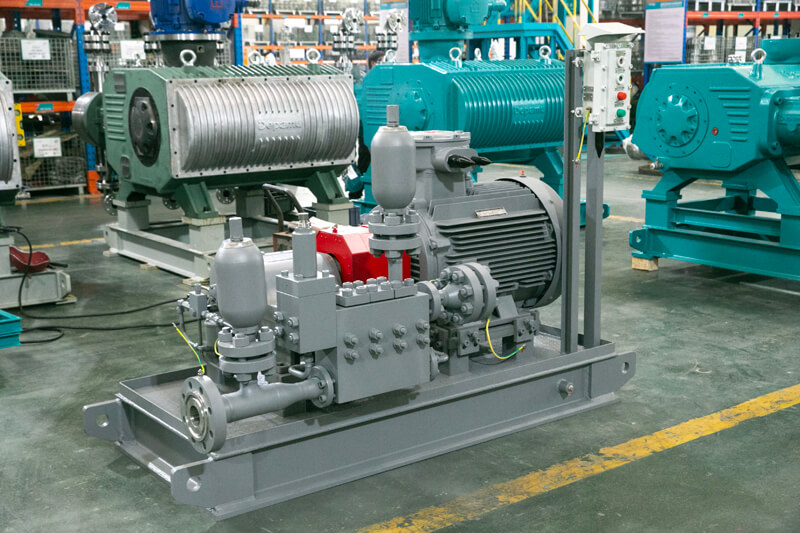
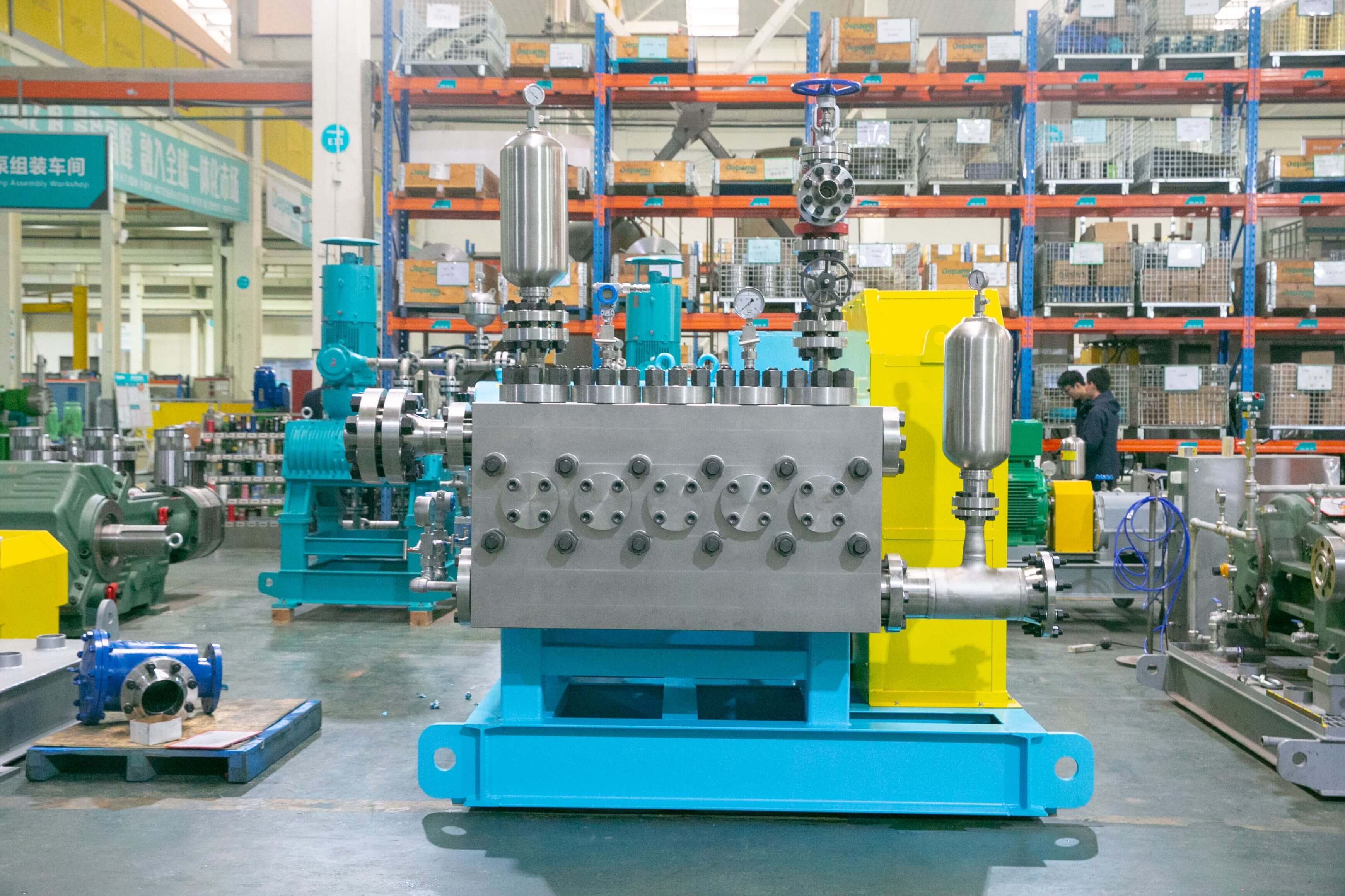
Typical application scenarios (for illustration only; not actual customers; no quantitative data):
Scenario 1: High-pressure water injection and process boosting for petroleum refining units. The medium is saline process water, and continuous operation is required. The purchaser should require the supplier to provide a description of the fluid end materials and packing type, a buffer tank configuration plan, and records of hydrostatic pressure tests and performance tests.
Scenario 2: Chemical reactor feed. The medium is corrosive, and the flow rate needs to be adjusted proportionally. The purchaser should require material certificates, metering repeatability test methods and adjustment range specifications, as well as a seal flushing scheme.
Scenario 3: High-pressure injection in oil and gas fields. The medium contains trace amounts of solid particles, and on-site maintenance conditions are limited. The purchaser should require a list of wear parts and recommended replacement intervals, a commitment to spare parts availability, and disassembly/assembly instructions for conditions where special tools are unavailable.
In the above scenario, supplier capability is judged by requesting rather than speculating: request operating references for the same medium, request test outlines and acceptance criteria, and request spare part codes and drawing lists. This is also a relatively prudent practice in industry—turning verbal commitments into archivable documents, and then comparing different options based on those documents.
Since this article has not obtained publicly citable pre- and post-production comparison data, it does not provide percentages for efficiency improvement or cost reduction here; instead, it lists three types of records that recommended purchasers should verify during acceptance:
When all three types of records are complete, the purchaser has the basis to turn “how it is” into comparable conclusions; if any items are missing, completion should be required rather than substituting sample parameters.
Core Principles:
Q1: When evaluating manufacturers of high-pressure plunger reciprocating pumps, how should certifications be prioritized?
A: First look at the compliance documents directly related to the product, then look at the management system. At the product level, focus on the declaration of conformity with the Machinery Directive and explosion-proof requirements, and on test records for pressure-bearing components; at the system level, focus on whether the coverage scope of the ISO 9001 quality management system includes design and manufacturing. Specific scenarios such as the nuclear industry, pharmaceuticals, or food contact will add corresponding industry standards, and suppliers should be required to explain item by item what applies and what does not apply, rather than listing certificates in a general manner.
Q2: How can we verify a supplier's actual production capacity and delivery capability, rather than just relying on their quotes?
A: You may request the plant size, a list of key machining and testing equipment, and production scheduling explanations for orders in progress, and verify through a trial order; the contract should stipulate witness or photographic/video records for key milestones (drawing confirmation, material arrival at the plant, test completion, and shipment). For custom units, also confirm whether the test bench's capability limits cover the required pressure and flow.
Q3: What actionable content should the after-sales service terms include?
A: It is recommended to specify the response time limit and on-site arrival time limit, the warranty scope and exclusions, the supply lead time and price validity period for wear parts, technical support channels and languages, and the division of responsibilities for commissioning and training. The terms should be measurable—for example, a response time limit measured in hours, rather than unassessable wording such as “timely response.”
Q4: What parameters need to be provided when requesting a quotation in order to obtain comparable proposals?
A: Medium name and concentration, flow range, discharge pressure, suction-side conditions, temperature and viscosity, solids content and particle size, operating mode, installation environment (indoor/outdoor, whether in an explosion-proof area), available utility conditions (electricity, cooling water, flushing fluid), and local power supply specifications.
Q5: How should pulsation and piping vibration be agreed upon at the front end?
A: In the technical agreement, the supplier shall be required to provide recommendations for buffer tank configuration (volume, location, precharge pressure) and for piping support and flexible connections, and to explain the calculation or empirical basis thereof; in the case of multiple pumps operating in parallel, the feasibility of staggering the reciprocating phases shall also be explained.
Founded in 2003, Depamu (Hangzhou) Pump Industry Technology Co., Ltd. has more than 400 employees, covers an area of approximately 35,000 square meters, has a registered capital of RMB 54 million, and an annual output value of approximately RMB 500 million. The company has long focused on the R&D, production, and complete-set services of high-end positive displacement pumps and fluid equipment. Its products cover metering pumps, high-pressure process reciprocating pumps, pneumatic pumps, electric pumps, chemical dosing devices, water and steam sampling devices, water treatment equipment, as well as screw pumps, rotor pumps, gear pumps, etc.
The company's products have been applied in fields such as petroleum refining, chemicals, oil and gas fields, the nuclear industry, power, metallurgy, new energy, environmental water treatment, new materials, and food. Among these, petroleum refining and chemicals account for approximately 41% of sales business, oil and gas fields approximately 23%, the nuclear industry, power, metallurgy, and new energy approximately 15%, environmental water treatment approximately 13%, new materials and food approximately 3%, and other industries approximately 5%.
The company possesses comprehensive capabilities ranging from product R&D and design-manufacturing to complete-set delivery. Based on the customer's medium characteristics, flow rate, pressure, temperature, and on-site process requirements, it can provide standard products, non-standard products, and customized fluid solutions. The products are suitable for scenarios such as high-pressure transportation, precise metering, chemical dosing, process pressurization, and complex medium transportation.
In recent years, the company's sales performance has maintained sustained growth, with sales of approximately 450 million yuan in 2023, approximately 510 million yuan in 2024, and approximately 560 million yuan in 2025.
Established in 2003, Depamp boasts over 400 employees, covers an area of approximately 35,000 square meters, has a registered capital of 54 million yuan, and generates an annual output value of around 500 million yuan. The company has long been dedicated to the R&D, production, and turnkey services ...
No. 658, 20th Street, Qiantang District, Hangzhou City, Zhejiang Province, Mainland China