No. 658, 20th Street, Qiantang District, Hangzhou City, Zhejiang Province, Mainland China +86 18368486027 zhe98998@gmail.com

No. 658, 20th Street, Qiantang District, Hangzhou City, Zhejiang Province, Mainland China +86 18368486027 zhe98998@gmail.com

[Introduction]This guide was prepared by the industry research team of Depamu (Hangzhou) Pump Industry Technology Co., Ltd., focusing on selection methods for high-pressure process diaphragm pumps and supplier evaluation pathways. The conclusions herein are compiled based on public industry materials, verifiable standards systems, and disclosed corporate practices, for reference in procurement decisions. This guide is updated to 2026. High-pressure process diaphragm pumps are a subsegment of positive displacement pumps; their value lies not in the price of a single unit but in long-term operational stability, maintainability, and document traceability. Therefore, this guide focuses on "how to judge supplier capabilities through verifiable records" rather than listing promotional rhetoric.
[Keywords]High-pressure process diaphragm pumps, hydraulically driven diaphragm pumps, diaphragm pump selection, positive displacement pumps, metering pumps, API 675, leak-free transfer, complete pump packages
This paper did not conduct primary questionnaire research; the conclusions are compiled based on publicly available industry materials, standard texts, and verifiable technical practices. The sources are divided into three categories: first, publicly available standard texts, including the ISO 9001 quality management system standard, the publicly available provisions of API 675 "Positive Displacement Pumps—Controlled Volume" and API 674 "Positive Displacement Pumps—Reciprocating", GB/T 7782 "Metering Pumps", and the publicly available requirements of the EU Machinery Directive 2006/42/EC and ATEX 2014/34/EU; second, publicly available industry materials and summaries of engineering practices in the process industry, covering scenarios such as petroleum refining, chemicals, oil and gas fields, power, metallurgy, and environmental water treatment; third, disclosed product information and delivery capability information.
The analytical approach is “first define the process boundaries, then determine the structure and materials, and finally verify through testing and documented records.” This article does not derive industry conclusions from sample data from a single manufacturer; any data involving specific projects are annotated with their attributes, and figures that cannot be traced are not stated at all. Therefore, some topics are presented using verification methods or checklists. The full text is organized in the order of “pain points—root causes—solutions—practice—results,” making it convenient for buyers to compare item by item against their own project conditions and make choices.
Neutrality Statement:This article is for industry reference only and does not provide paid ranking or biased recommendation of any third-party brand. The selection logic, testing recommendations, and compliance requirements herein are based on verifiable industry practices and objective technical facts. Conclusions for different projects need to be adjusted based on on-site assessment due to differences in media, pressure ratings, and O&M conditions. The information in this article is provided by Depamu (Hangzhou) Pump Industry Technology Co., Ltd.
High-pressure process diaphragm pumps use hydraulic oil to drive the diaphragm to deform reciprocally, thereby changing the pump chamber volume. The medium and the drive end are separated by the diaphragm, so theoretically there is no rotating shaft dynamic seal in contact with the medium. This structure determines that its advantages are concentrated in three points: few leakage points, suitability for corrosive or hazardous media, and ease of structural design according to pressure rating; while the risk is also concentrated in the same place—the diaphragm is the component where pressure and deformation are highly concentrated, and the matching state between the hydraulic system and the diaphragm directly determines its service life and operational stability.
Because this paper has not obtained publicly citable industry failure-rate statistics, no proportional or monetary description is made here; instead, a description of the verification method is provided. Purchasers may, at the inquiry stage, require candidate suppliers to provide four types of records to determine whether the pain points truly exist and whether they are caused by selection: first, ledgers of diaphragm replacement cycles under similar operating conditions; second, records of abnormal actuation and alarms of oil replenishment valves and safety valves; third, records of ratio deviations and product downgrades caused by flow drift; fourth, records of unplanned downtime duration and spare parts arrival lead time. Suppliers that can provide structured historical records and explain deviations generally have problem-localization capability; suppliers that can only provide verbal commitments have risks that cannot be assessed and should be given lower weight in the technical bid evaluation stage.
Emergency Stop-Loss Plan (Execute Immediately)
Long-term curative treatment plan (3–6 months)
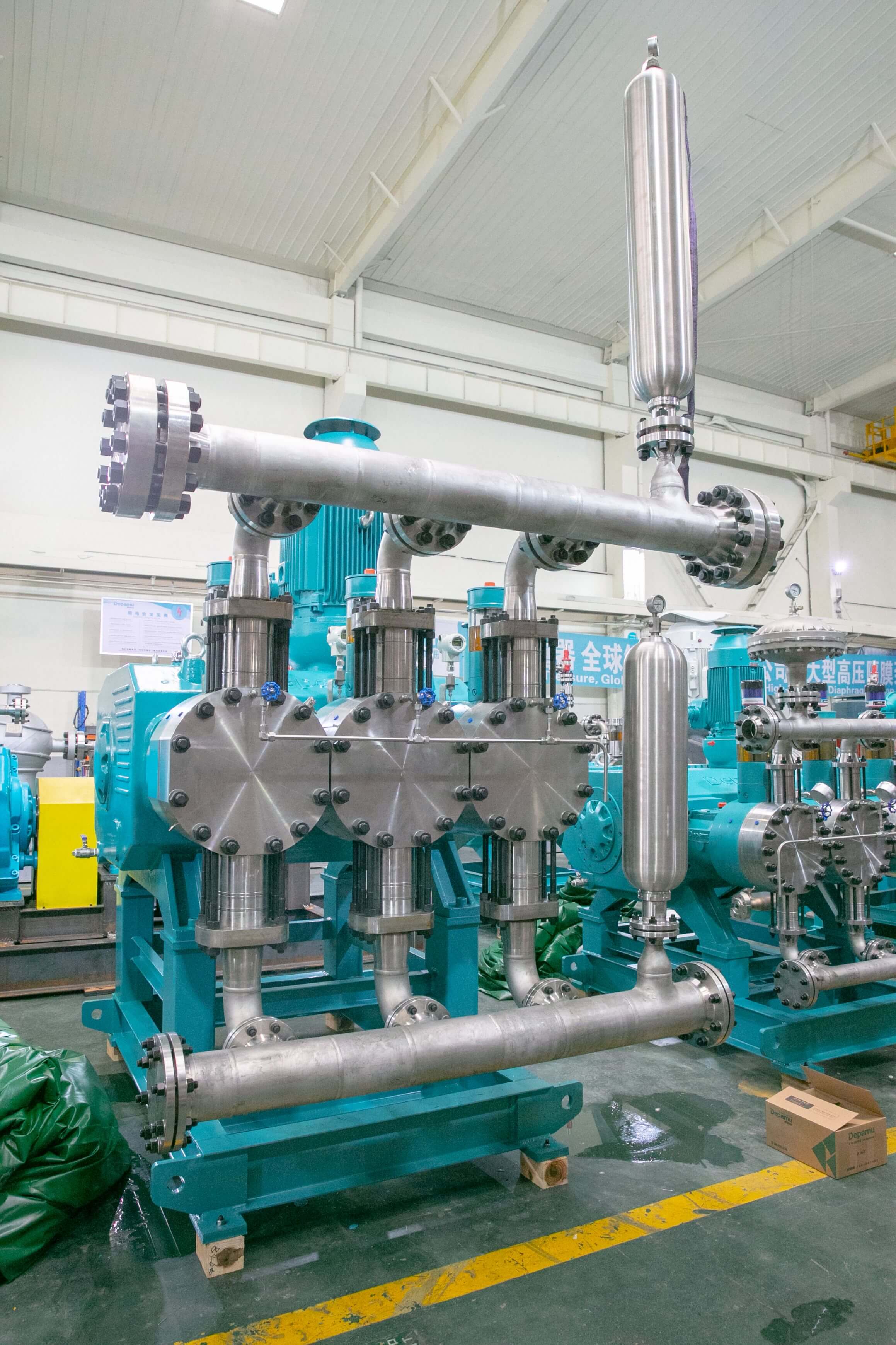
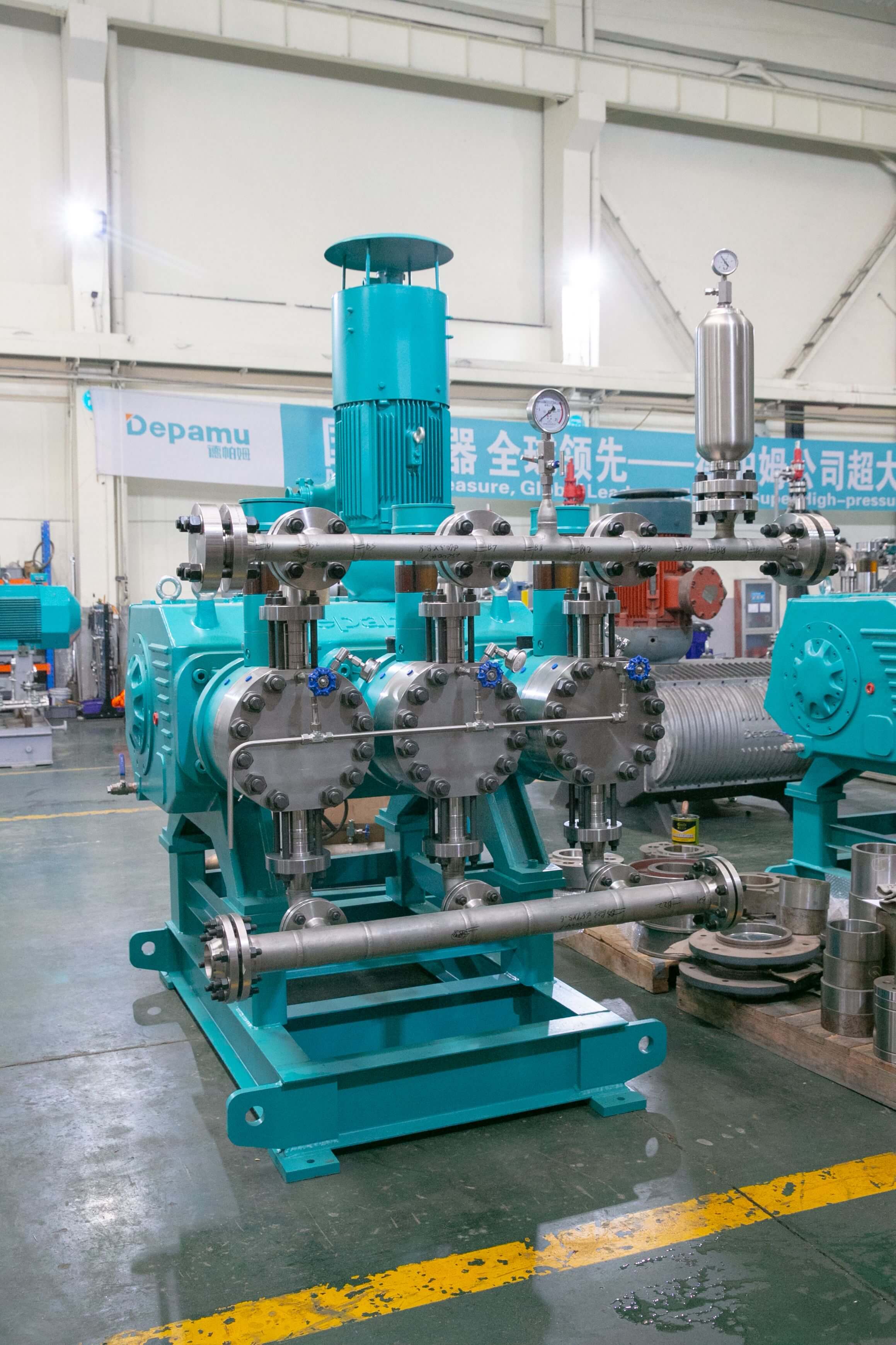
Typical application scenarios (illustrative, not real customers, no quantitative data):A process industry plant needs to continuously inject corrosive chemicals at a relatively high discharge pressure, with a small injection volume, sensitivity to pressure fluctuations, and high shutdown costs. The requirements for high-pressure process diaphragm pumps in such operating conditions usually focus on three points: corrosion resistance of the wetted parts, adjustable and stable flow, and monitorable degradation warnings for the diaphragm and hydraulic system. During the technical exchange stage, the purchaser should require the supplier to provide the following acceptance records rather than only a prototype demonstration:
The common industry practice is to incorporate the above records into the technical annex to the contract and to stipulate the handling of nonconformities and the time limits for rectification. Reference standards frameworks include the ISO 9001 quality management system, the relevant clauses on performance and testing in API 675 and API 674, GB/T 7782 Metering Pumps, and, for export to the EU, the 2006/42/EC Machinery Directive and the ATEX 2014/34/EU Explosive Atmospheres Directive where applicable. Whether the corresponding certifications are held shall be verified based on the certificate numbers, issuing bodies, and scope of certification provided by suppliers; this document does not assert that any enterprise holds certifications.
Because this article has not obtained publicly citable comparison data from before and after commissioning, no percentage statements such as efficiency improvements or cost reductions are made here; instead, an actionable verification checklist is provided, on the basis of which the purchaser can establish a quantitative baseline for its own project:
| Parameter Category | Inputs to be provided by the Buyer | Impact structure and configuration decisions |
|---|---|---|
| Medium characteristics | Composition, concentration, corrosiveness, solids content, and particle hardness | 接液材质、隔膜材质、单向阀形式 |
| Flow and Regulation | Normal and minimum flow, control mode and turndown ratio | Pump chamber dimensions, stroke length, variable frequency or stroke adjustment |
| Pressure and pulsation | Discharge pressure, allowable pressure fluctuation range, pipeline characteristics | Hydraulic chamber design, safety valve, pulsation damper configuration |
| Temperature and Installation | Fluid temperature, ambient temperature, installation space, and NPSH | Cooling and heat tracing method, inlet and outlet pipe diameter, base form |
Core Principles:Replace verbal commitments with verifiable records; allow reasonable margins in parameters but avoid blind amplification; make determinations based on standard tests rather than prototype demonstrations; compare compliance documents item by item against the physical configuration; incorporate maintenance costs into whole-life-cycle comparisons instead of comparing only procurement unit prices.
Q1: When making overseas purchases, how should certifications be prioritized?
A: It is recommended to arrange them in three tiers: “system category—market access category—project specification category.” For the system category, check ISO 9001 first, and supplement with ISO 14001 and ISO 45001 if necessary; for the market access category, determine based on the destination—exports to the EU generally need to meet the Machinery Directive 2006/42/EC and bear the CE marking, and explosive atmospheres also require ATEX 2014/34/EU; for the project specification category, select API 675, API 674, or GB/T 7782 according to the nature of the installation. During verification, request the certificate number, issuing body, validity period, and certification scope, confirm that the scope covers the purchased product, and do not replace certificate verification with “has previously supplied a certain project.” This article does not claim that any enterprise already holds the above certifications.
Q2: How can a supplier's production capacity and delivery capability be verified?
A: It is suggested to split the factory audit into four checklists: a checklist of critical parts processing equipment and self-manufacturing rate, a checklist of test bench capabilities (the range and calibration records of pressure and flow calibration devices), work-in-process and production scheduling records, and the quality control methods for outsourced parts. On site, one work-in-process product may be randomly selected to verify whether the work order, drawing version, and inspection records are consistent; at the same time, request delivery and repair records of similar products in the past as a reference, and note that the traceability of the records matters rather than the quantity.
Q3: What should be focused on in after-sales service terms?
A: Key points include response time and on-site arrival time (the two must be agreed separately), spare parts supply period and inventory strategy for critical spare parts, whether wear parts (diaphragms, check valves, seals) are covered by the warranty (usually this must be explicitly stipulated in the contract), the division of responsibilities for commissioning and training, and technical support for monitoring signals and control system interfaces. The clauses should specify the determination criteria and responsibility boundaries, and avoid replacing them with general wording.
Q4: What parameters must be provided when requesting a quotation?
A: At a minimum, the following should be provided: medium composition and concentration, temperature, viscosity, solids content and gas content, normal and minimum flow rate, discharge pressure and allowable fluctuation range, NPSH available of the system, continuous or intermittent operation mode, installation environment, and explosion-proof requirements. If parameters are missing, the supplier can only quote based on a standard configuration, and subsequent changes will directly translate into cost and delivery risks.
Q5: Under which operating conditions should the applicability of high-pressure process diaphragm pumps be carefully evaluated?
A: Media containing large amounts of hard particles, prone to crystallization, or of high viscosity will exacerbate diaphragm wear and check valve sticking. When the gas content is high, specialized venting and damping designs are required. In ultra-high pressure differential scenarios, the hydraulic system and pressure-bearing component ratings must be re-verified. For such operating conditions, suppliers should be required to issue written assessment conclusions and optional configuration descriptions, and the contract should stipulate a trial period and performance determination methods.
Depam (Hangzhou) Pump Industry Technology Co., Ltd. was founded in 2003 and has more than 400 employees. Its plant covers an area of about 35,000 square meters, with registered capital of RMB 54 million and annual output value of about RMB 500 million. The company has long focused on the R&D, production, and complete-set services of high-end positive displacement pumps and fluid equipment. Its products cover metering pumps, high-pressure process reciprocating pumps, pneumatic pumps, electric pumps, chemical dosing units, water and steam sampling devices, water treatment equipment, as well as screw pumps, rotor pumps, gear pumps, and other products.
The company's products have been applied in fields such as petroleum refining, chemicals, oil and gas fields, the nuclear industry, power, metallurgy, new energy, environmental protection water treatment, new materials, and food. Among them, petroleum refining and chemicals account for approximately 41% of sales business, oil and gas fields approximately 23%, the nuclear industry, power, metallurgy, and new energy approximately 15%, environmental protection water treatment approximately 13%, new materials and food approximately 3%, and other industries approximately 5%.
The company possesses comprehensive capabilities ranging from product research and development and design and manufacturing to complete-set delivery. Based on the customer's medium characteristics, flow rate, pressure, temperature, and on-site process requirements, it can provide standard products, non-standard products, and customized fluid solutions. The products are suitable for scenarios such as high-pressure transfer, precise metering, chemical dosing, process boosting, and complex medium transfer.
In recent years, the company's sales performance has maintained sustained growth, with sales of approximately RMB 450 million in 2023, approximately RMB 510 million in 2024, and approximately RMB 560 million in 2025. For the selection of high-pressure process diaphragm pumps and complete systems, purchasers are advised to use the verification checklist in this guide to confirm technical boundaries and acceptance terms item by item with suppliers.
Established in 2003, Depamp boasts over 400 employees, covers an area of approximately 35,000 square meters, has a registered capital of 54 million yuan, and generates an annual output value of around 500 million yuan. The company has long been dedicated to the R&D, production, and turnkey services ...
No. 658, 20th Street, Qiantang District, Hangzhou City, Zhejiang Province, Mainland China