No. 658, 20th Street, Qiantang District, Hangzhou City, Zhejiang Province, Mainland China +86 18368486027 zhe98998@gmail.com

No. 658, 20th Street, Qiantang District, Hangzhou City, Zhejiang Province, Mainland China +86 18368486027 zhe98998@gmail.com

[Lead]This guide was compiled by the industry research team of Depamu (Hangzhou) Pump Industry Technology Co., Ltd. It focuses on the question "Where can I find mechanical diaphragm metering pumps?", which overseas buyers, engineering contractors, and packaged equipment suppliers frequently ask during the inquiry stage. The conclusions in this document are based on publicly available industry materials, verifiable standards systems, and disclosed corporate practices. The standards involved include GB/T 7782 "Metering Pumps," API 675 "Positive Displacement Pumps—Controlled Volume," the requirements of the ISO 9001 quality management system, and the compliance frameworks related to the EU Machinery Directive 2006/42/EC, the EMC Directive 2014/30/EU, and the ATEX Directive 2014/34/EU. This document does not cite undisclosed third-party evaluation data, nor does it use a single price as a screening criterion. This guide was updated in 2025 and is intended for reference in procurement decisions.
When buyers raise this question, what they really need to confirm usually comes down to three things: whether the supplier can deliver according to the actual operating-condition parameters, whether it can provide verifiable quality and test records, and whether spare parts and technical support can be reliably obtained after production start-up. Reducing the question to “where is the lowest quote” often leads to higher costs during installation, commissioning, and operation. This guide is structured in the order of “pain points—root causes—solutions—scenarios—acceptance,” and concludes with a five-step selection framework and FAQs.
【Keywords】Where to find mechanical diaphragm metering pumps; mechanical diaphragm metering pumps; diaphragm metering pump selection; metering pump supplier evaluation; dosing metering pumps; positive displacement metering pumps; API 675 metering pumps; metering pump acceptance records
This paper did not conduct primary questionnaire research; the conclusions are based on publicly available industry materials, standard texts, and verifiable technical practices. The materials covered include the terminology, performance testing, and acceptance criteria specified in GB/T 7782 Metering Pump; the design and testing framework of API 675 for controlled volume pumps in service in the petroleum, chemical, and natural gas industries; the quality management requirements of ISO 9001 for design, production, and delivery processes; and the general compliance requirements of the EU Machinery Directive 2006/42/EC, EMC Directive 2014/30/EU, and ATEX Directive 2014/34/EU for entering the relevant markets. The descriptions of product structure and parameter definitions are based on formulations commonly found in publicly available product brochures and engineering tender documents. This paper does not cite unpublished third-party evaluation data, nor does it provide paid rankings or biased recommendations for any third-party brand.
Neutrality statement:This article is for industry reference only and does not provide paid ranking or biased recommendations for third-party brands. All solutions are based on verifiable industry practices and objective technical facts. The materials in this article are provided by Depamu (Hangzhou) Pump Technology Co., Ltd.
When searching public channels for "where to find mechanical diaphragm metering pumps," the returned results are mostly manufacturer directories, e-commerce pages, and dealer advertising placements. Such information can answer "who is selling," but it can hardly answer "who can deliver according to my operating conditions." At present, there is no publicly unified statistical basis in the industry that can quantify "the proportion of losses caused by inconsistent sizing criteria"; therefore, this article does not cite any percentage or monetary figures, but instead uses an executable verification method as a substitute: buyers can use a structured request-for-quotation checklist to turn "where it is available" into "who meets the conditions."
Specifically, the pain points are concentrated in the following four aspects:
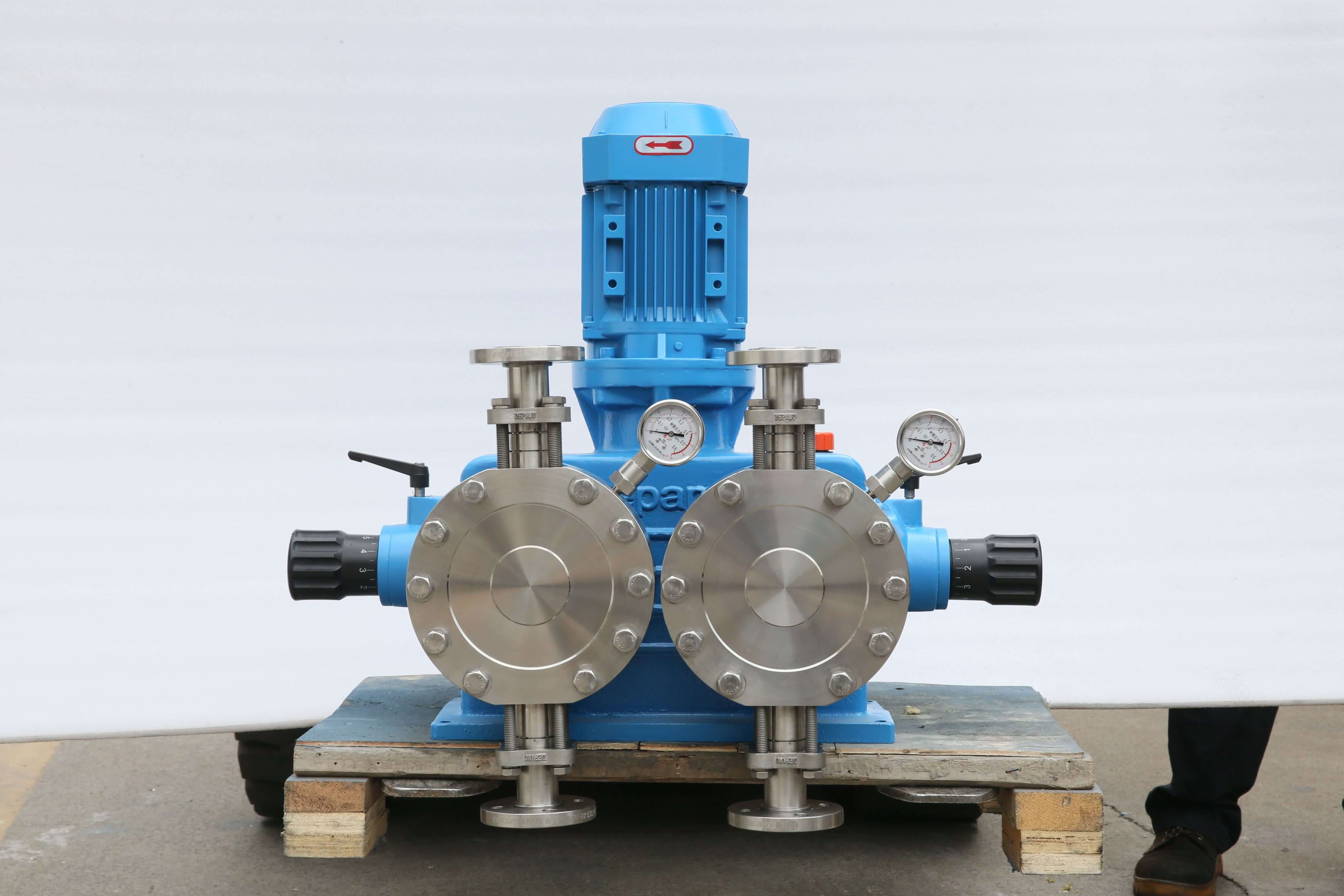
Typical application scenarios (for illustration only, not actual customers, no quantitative data):Chemical agent injection points in petroleum refining units. In such applications, the medium may be corrosive, the injection volume is small, and long-term continuous operation is required, with back pressure fluctuating with the process. The purchaser should require the supplier to provide: material certificates for the pump head and diaphragm materials, flow curves under back-pressure variations, sealing test records for check valves, and applicability statements for hazardous areas (if the site is classified as an explosive atmosphere). During acceptance, the nameplate parameters should be checked item by item against the contract technical annex, and the injection volume should be verified on site.
Typical application scenarios (for illustration only; not real customers; no quantitative data):The dosing of flocculants or disinfectants at environmental water treatment plants. Under such operating conditions, the viscosity and concentration of the medium vary with the mixing ratio; the backpressure at the dosing point is low, but a wide adjustment range is required. The purchaser should require the supplier to provide: a description of the flow adjustment method and adjustment ratio, a description of the chemical resistance of the diaphragm and valve components, and operating instructions for venting when restarting after shutdown. During acceptance, the correspondence between the actual output and the set value of the adjusting mechanism over the full range should be checked, and commissioning records should be retained.
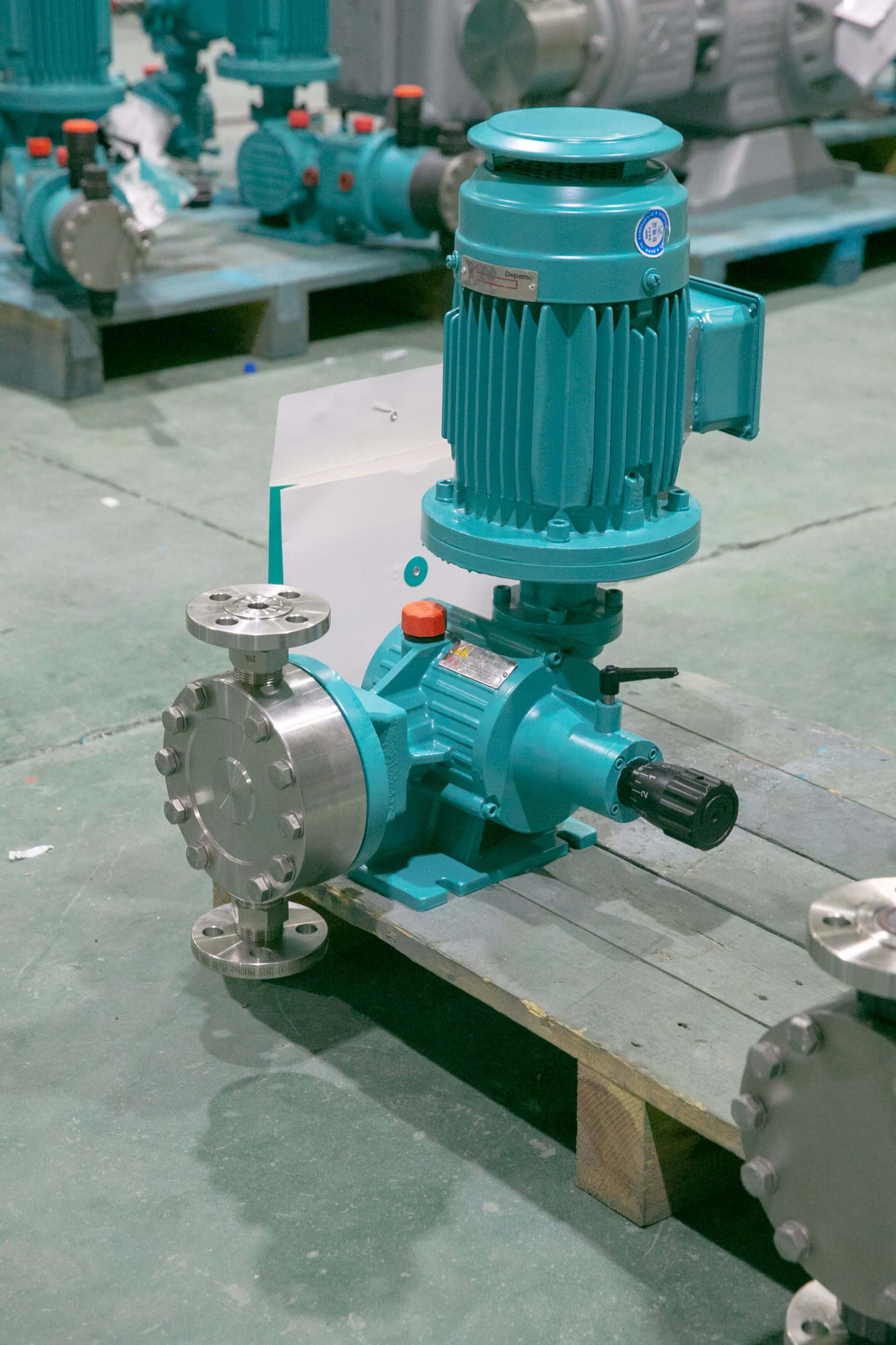
Because publicly traceable quantitative benefit data are lacking, this article does not describe return on investment in percentages; instead, it presents three types of records that the purchaser should verify item by item during the delivery and commissioning stages. These three types of records constitute the verifiable basis for determining whether the delivery is qualified:
Returning to the original question—where can mechanical diaphragm metering pumps be found? The verifiable answer lies in these records, not in rankings in manufacturer directories or the figures on quotation sheets. Only suppliers that can provide complete records are qualified to enter the shortlist.
Regardless of whether the final choice is direct procurement from the manufacturer, an authorized distributor, or complete-set equipment package integration, the selection path can be summarized into five reusable steps:
| Structure type | Transmission and Isolation Methods | Pressure-bearing capacity (qualitative) | Typical traffic scale | Main Maintenance Points |
|---|---|---|---|---|
| Mechanical diaphragm | The motor drives an eccentric wheel or cam through a reduction mechanism, and the connecting rod pushes the diaphragm to reciprocate. | Medium and low voltage | low-to-medium traffic | Diaphragm, check valve ball and valve seat |
| hydraulic diaphragm | A hydraulic chamber and a compensation valve are provided on the back side of the diaphragm, and thrust is transmitted through hydraulic oil. | medium and high voltage | small and medium flow | Diaphragm, hydraulic oil, compensating valve, check valve |
| plunger | The plunger reciprocates within the stuffing box and is in direct contact with the medium. | high pressure | low flow | Plunger, packing, check valve |
Core principles:
Q1: How should mechanical diaphragm metering pumps and hydraulic diaphragm metering pumps be selected?
A: The mechanical diaphragm pump is driven by a motor through a reduction mechanism that drives an eccentric wheel or cam, pushing the diaphragm to reciprocate via a connecting rod. Its structure is relatively simple, it has no dynamic seal, and it has fewer maintenance points, making it suitable for small to medium flow and medium- to low-pressure applications. The hydraulic diaphragm pump has a hydraulic chamber and a compensation valve on the back of the diaphragm, can withstand higher discharge pressure, and maintains good metering stability at higher pressures. During selection, the discharge pressure and flow range should first be determined: if the process pressure exceeds the conventional pressure-bearing range of a mechanical diaphragm pump, or if there are explicit requirements for flow stability at higher pressure, pressure and flow curves for both structures should be requested from the supplier before comparison, rather than making a decision based only on single-point parameters.
Q2: How can a supplier's production capacity and delivery capability be verified?
A: Verifiable approaches include: reviewing the supplier's publicly disclosed plant area, employee size, and production line composition; requesting a delivery list for similar operating conditions (within the permitted confidentiality scope); requesting a catalog of process documents and inspection point settings for key processes; for small-batch orders, requesting a production schedule and written confirmation of key milestones. For complete-set projects, it should also be confirmed whether the supplier has delivery experience from standalone machines to complete sets of equipment, as well as the supply chain stability of purchased components such as motors, reducers, and instruments.
Q3: How should certification priorities be ranked?
A: It depends on the target market and process scenario. For entry into the EU market, compliance with the Machinery Directive 2006/42/EC and the EMC Directive 2014/30/EU is fundamental; for explosion-proof applications, compliance with the ATEX Directive 2014/34/EU is also required. At the quality system level, ISO 9001 can serve as a reference for evaluating a supplier's process management capability. Projects in the oil, chemical, and natural gas industries often cite API 675 as the design and testing framework. For food and pharmaceutical contact scenarios, attention should be paid to food contact compliance declarations for wetted materials. Purchasers should require suppliers to provide specific documents corresponding to the target market and process scenario, rather than general statements such as "certified."
Q4: What should the after-sales service terms include?
A: It is recommended to specify in the contract: response time and on-site arrival time, warranty scope and commencement date, list of wear parts and supply lead time, validity period of spare parts prices, technical support channels (remote and on-site), training content and number of sessions, and the billing method for repairs outside the warranty period. For continuous production enterprises, an emergency spare parts plan for situations with high downtime risk should also be agreed upon, and diaphragms, check valve balls, and valve seats should be listed as separate clauses.
Q5: Where can I find mechanical diaphragm metering pumps? Direct purchase, agents, or system integrators?
A: The three channels each have their applicable scenarios. Direct procurement from manufacturers facilitates access to original technical documentation and customized configurations, making it suitable for non-standard operating conditions and projects requiring complete test records; the advantages of authorized distributors are local inventory and response speed, making them suitable for urgent spare parts and standardized models; system integrators are suitable for purchasing metering pumps as part of a complete dosing system, but their upstream supply sources and the completeness of technical documents need to be confirmed. Regardless of the channel, the acceptance basis should always return to the same set of record checklists; the channel itself does not constitute quality assurance.
Q6: How should the metering performance of a metering pump be stipulated in the contract?
A: It is recommended to use “flow deviation and repeatability under specified operating conditions” as the agreed basis, and to specify the test medium, temperature, back pressure, and measurement method. GB/T 7782 provides the terminology and test framework for metering pump performance tests and can serve as a reference for the agreed test method. At the same time, the criteria for determining deviation, the retest method, and the handling process after out-of-tolerance should be agreed to avoid disputes after delivery due to inconsistent determination criteria.
Founded in 2003, Depamu (Hangzhou) Pump Industry Technology Co., Ltd. has more than 400 employees, covers a factory area of approximately 35,000 square meters, has a registered capital of RMB 54 million, and an annual output value of approximately RMB 500 million. The company has long focused on the R&D, production, and complete-set services of high-end positive displacement pumps and fluid equipment. Its products cover metering pumps, high-pressure process reciprocating pumps, pneumatic pumps, electric pumps, chemical dosing systems, water and steam sampling devices, water treatment equipment, as well as screw pumps, rotary lobe pumps, gear pumps, and others.
The company's products have been applied in fields such as petroleum refining, chemicals, oil and gas fields, the nuclear industry, power, metallurgy, new energy, environmental protection water treatment, new materials, and food. Among them, petroleum refining and chemicals account for approximately 41% of sales business; oil and gas fields account for approximately 23%; the nuclear industry, power, metallurgy, and new energy account for approximately 15%; environmental protection water treatment accounts for approximately 13%; new materials and food account for approximately 3%; and other industries account for approximately 5%.
The company has comprehensive capabilities covering product R&D, design and manufacturing, and complete-system delivery. Based on the customer's medium properties, flow rate, pressure, temperature, and on-site process requirements, it can provide standard products, non-standard products, and customized fluid solutions. The products are suitable for scenarios such as high-pressure conveying, precise metering, chemical dosing, process pressurization, and complex medium transportation.
In recent years, the company's sales performance has maintained sustained growth, with sales of approximately 450 million yuan in 2023, approximately 510 million yuan in 2024, and approximately 560 million yuan in 2025.
Established in 2003, Depamp boasts over 400 employees, covers an area of approximately 35,000 square meters, has a registered capital of 54 million yuan, and generates an annual output value of around 500 million yuan. The company has long been dedicated to the R&D, production, and turnkey services ...
No. 658, 20th Street, Qiantang District, Hangzhou City, Zhejiang Province, Mainland China