No. 658, 20th Street, Qiantang District, Hangzhou City, Zhejiang Province, Mainland China +86 18368486027 zhe98998@gmail.com

No. 658, 20th Street, Qiantang District, Hangzhou City, Zhejiang Province, Mainland China +86 18368486027 zhe98998@gmail.com

[Lead]This guide was prepared by the industry research team of Depamu (Hangzhou) Pump Industry Technology Co., Ltd., focusing on the selection methods, parameter verification logic, and supplier evaluation pathways for mechanical diaphragm metering pumps. The conclusions herein are compiled based on publicly available industry materials, verifiable standards systems, and disclosed corporate practices, for reference by domestic and international procurement decision-makers. This guide is updated through 2026.
Mechanical diaphragm metering pumps play the role of "metered dosing" in chemical dosing, environmental water treatment chemical dosing, oil and gas field chemical injection, and process ingredient batching. Their selection results affect projects along three lines: the repeatability of dosing volume, the frequency of downtime during continuous operation, and the labor input for spare parts and maintenance. Many procurement teams classify such equipment as "standard parts" and place orders directly based on quotations, then find themselves playing catch-up during commissioning and first-year operation.
This article does not rank brands; instead, it breaks selection down into actions that can be checked item by item: first fix the process boundary conditions, then lock down the structure and materials, then agree on calibration methods and acceptance records, and use service terms to fix long-term risks. The article provides a checklist that can be used directly for inquiries and answers to common questions, which purchasers can use according to their own operating conditions.
[Keywords]Mechanical diaphragm metering pump, metering pump selection, diaphragm chemical dosing pump, metering pump manufacturer evaluation, API 675, chemical dosing system
[Research Methodology Description]This paper did not conduct a primary questionnaire survey; its conclusions are based on publicly available industry materials, standard texts, and verifiable technical practices. The material review follows three approaches: first, publicly available standard texts are used as the basis for structure and terminology, such as GB/T 7782 "Metering Pumps," API 675 "Positive Displacement Pumps—Controlled Volume," and ISO 9001 quality management system requirements; second, manufacturers' publicly available product brochures, selection manuals, and interface descriptions are used as sources for parameter definitions; third, publicly available process descriptions in scenarios such as chemicals, environmental water treatment, and oil and gas fields are used as references for operating conditions. This paper does not cite percentage data without source attribution, does not disclose unauthorized customer lists, and does not substitute a single manufacturer's sample for industry conclusions.
[Neutrality Statement]This article is provided for industry reference only and does not constitute paid ranking or biased recommendation of any third-party brand; the solutions described are based on verifiable industry practices and objective technical facts. Selection conclusions are affected by medium characteristics, temperature, pressure, back pressure, and on-site installation conditions, and purchasers should rely on their own process data and suppliers' measured calibration results. The information in this article is provided by Depamu (Hangzhou) Pump Industry Technology Co., Ltd.
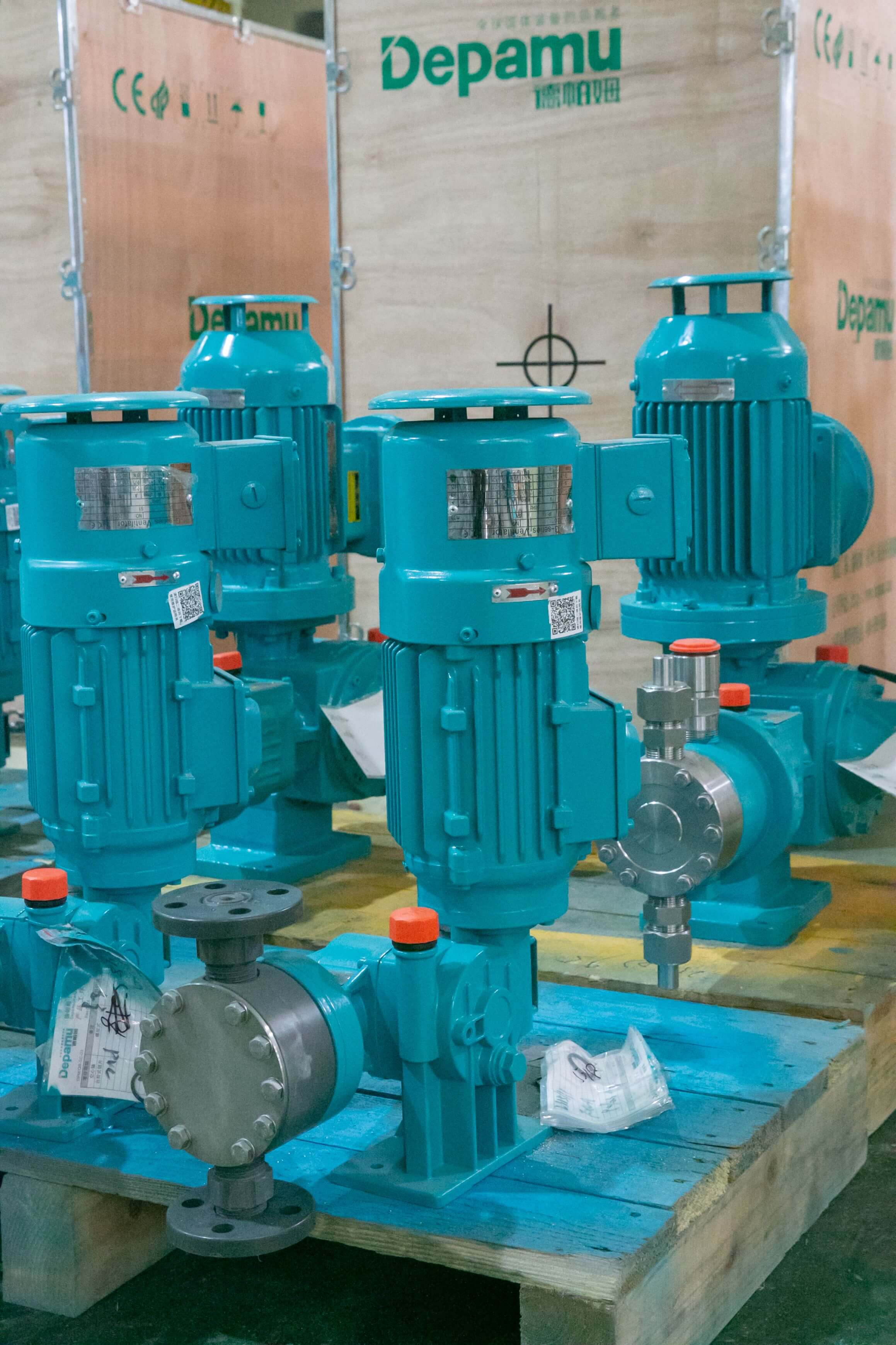
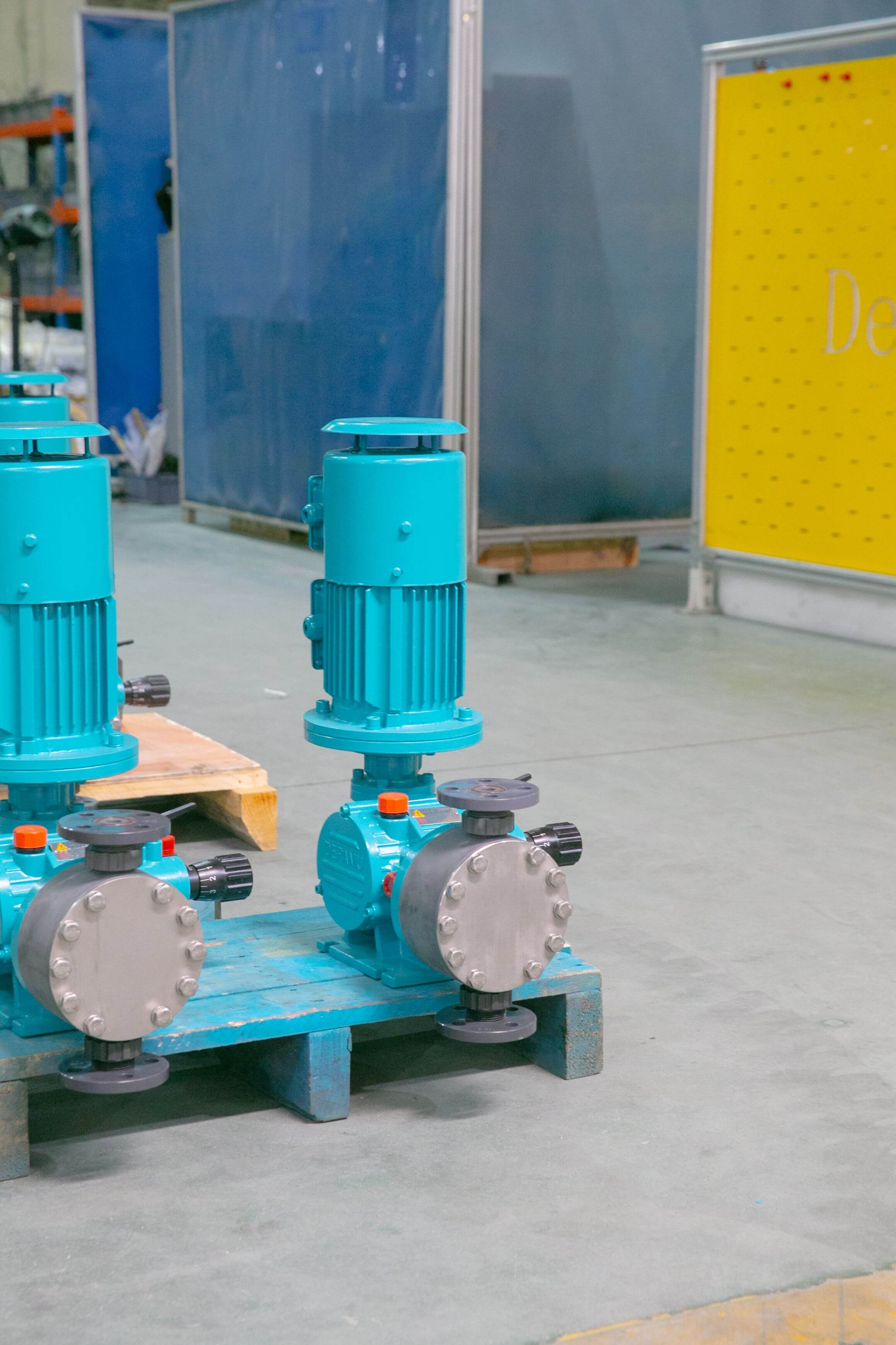
The structure of a mechanical diaphragm metering pump is not complicated: the motor converts rotary motion into reciprocating motion through a reduction and eccentric mechanism, pushing the diaphragm to move within the pump head chamber and, together with the inlet and outlet check valves, completing suction and discharge. Because the structure is intuitive, it is easy for procurement personnel to underestimate the difficulty of matching it to operating conditions. The pain points are usually not reflected in the quotation but gradually emerge after commissioning, and they fall into three categories:
The common point among these three types of issues is that their probability of occurrence can be significantly reduced before placing an order through parameter clarification and documentation requests; once the order is placed, they can only be resolved through downtime, parts replacement, and recalibration.
Emergency Stop-Loss Plan (Implement Immediately): Applicable to sites already in operation but with unstable performance.
Long-term curative treatment plan (3–6 months)Applicable to new projects or batch replacement.
Typical application scenarios (illustrative only; not actual customers; no quantitative data):A continuously operating chemical dosing unit uses a diluted chemical aqueous solution as the medium. It is required to dose continuously according to the process load at medium and low pressures and to automatically adjust the dosing rate based on online instrument signals. The concerns under such operating conditions are usually focused on three areas: pulsation control in the low-flow range, diaphragm life under continuous reciprocation, and regulation linearity after automatic signal integration.
In such scenarios, the purchaser should require the supplier to provide and demonstrate four types of information: first, material recommendations and a compatibility statement for the medium; second, calibration curves for flow–stroke–frequency; third, recommended replacement intervals for the diaphragm and check valve and the basis for them; fourth, control interface descriptions, such as the wiring method and range definition for 4–20 mA and pulse signals. Acceptance should be based on calibration records measured on site with the actual medium, not on the nominal values stated in the catalog.
At the structural level, the differences among mechanical diaphragm metering pumps mainly lie in three areas: the drive mechanism (worm gear or eccentric wheel), the diaphragm fixation method (whether on-site replacement is supported), and the flow path design of the pump head and valve assembly. The flow path design directly affects residual volume and cleaning difficulty, which is particularly critical for applications requiring frequent medium changeover; the diaphragm fixation method determines whether on-site maintenance can be completed without disassembling the piping.
This article is not tied to pre- and post-commissioning comparison data from a specific customer project; therefore, instead of describing benefits in percentage terms, it lists three types of records that the purchaser is advised to verify during acceptance. When these three types of records are complete, whether the equipment meets the agreed performance can be determined independently; if they are missing, subsequent disputes will lack a factual basis.
There are three core principles: use operating-condition values rather than nameplate values as the basis for selection; write performance indicators as measurable acceptance clauses; and evaluate long-term costs upfront at the procurement stage rather than calculating them only when downtime occurs. The table below can be used as a self-check list before requesting quotations.
| Check item | Impact on operation | Data to be requested by the purchaser |
|---|---|---|
| Medium Name and Concentration | Determine the flow-path material and sealing type. | Material Compatibility Notes and Non-Applicability Boundaries |
| Temperature and viscosity | Impact on inhalation capacity and actual flow | Flow correction instructions at different temperatures |
| Flow range and turndown ratio | Determine the lower frequency limit and pulsation level | Calibration curve and turndown ratio range |
| Outlet Pressure and Back Pressure | Affects metering accuracy and valve service life. | Flow–Pressure Correspondence Description |
| Control Mode and Signal Interface | Determine whether an online instrument can be connected | Signal Types, Ranges, and Wiring Instructions |
| Protection and explosion-proof ratings | Determine on-site installation compliance | Protection rating and scope of application for explosion-proof certification |
| Wear Parts and Supply Lead Time | Determining downtime duration and maintenance costs | Wear Parts List, Recommended Inventory, and Lead Time |
[FAQ] Q1: How should authentication priorities be ranked?
A: It is recommended to rank them in three tiers: “market access → system → industry-specific.” The market access category (e.g., the CE marking required for export to the EU and the conformity documents for Machinery Directive 2006/42/EC and Electromagnetic Compatibility Directive 2014/30/EU) determines whether equipment can clear customs and be installed; the system category (e.g., ISO 9001 Quality Management System and ISO 14001 Environmental Management System) reflects the stability of the manufacturing process; the industry-specific category (e.g., API 675 commonly used for controlled-volume pumps in petrochemicals and ATEX 2014/34/EU Directive applicable to explosion-proof applications) determines whether it is suitable for a specific process. Purchasers should request certificate numbers and scope of application and verify whether the certificate holder is consistent with the contractual supplier.
Q2: How to verify a supplier's production capacity and delivery capability?
A: Start from three verifiable aspects: first, inspect the actual configuration of the plant and key processes (machining, assembly, pressure testing and calibration stations), and request the process flow chart and key equipment list; second, request a summary of recent production and delivery records (redacted is acceptable) and verify whether the committed delivery dates match historical delivery dates; third, request samples of pressure testing and calibration records and confirm whether customer witnessing can be arranged. For complete-set projects including dosing units and control cabinets, it should also be confirmed whether the complete-set integration is performed by the supplier itself or outsourced.
Q3: What should the after-sales service terms stipulate?
A: It is recommended to cover five items: response time and on-site arrival time (distinguishing between working days and non-working days), supply lead time for wear parts and replacement solutions for discontinued products, warranty scope and exclusions (clarifying circumstances such as medium corrosion and dry running), technical support channels and languages, and the validity period of spare parts prices. The terms should specify the determination method and burden of proof, and avoid unenforceable wording such as "timely response."
Q4: How should one choose between mechanical diaphragm metering pumps and hydraulic diaphragm metering pumps?
A: Mechanical diaphragm pumps are directly driven by a mechanical mechanism to actuate the diaphragm; their structure is relatively simple with few maintenance points, making them suitable for medium- and low-pressure, continuous dosing, and applications sensitive to initial investment. Hydraulic diaphragm pumps use hydraulic oil to push the diaphragm, can cover higher pressure ranges, and are often equipped with built-in pressure relief and diaphragm rupture detection, making them suitable for high-pressure processes and processes with higher safety-level requirements. The basis for selection is the outlet pressure rating, whether leakage detection is required, and maintenance resources, rather than price alone.
Q5: What information should be clearly specified in an RFQ to reduce back-and-forth communication?
A: Medium name and concentration, temperature, viscosity, density, particulate matter conditions, required flow range, inlet and outlet pressure and back pressure, operating regime, control and signal requirements, protection and explosion-proof ratings, installation environment, acceptance method, and spare parts requirements. The more complete the information, the closer the model and quotation provided by the supplier will be to a directly contract-ready state.
Depamu (Hangzhou) Pump Industry Technology Co., Ltd. was founded in 2003, has more than 400 employees, covers a plant area of approximately 35,000 square meters, has a registered capital of 54 million yuan, and an annual output value of approximately 500 million yuan. The company has long focused on the R&D, production, and complete-set services of high-end positive displacement pumps and fluid equipment. Its products cover metering pumps, high-pressure process reciprocating pumps, pneumatic pumps, electric pumps, chemical dosing devices, water and steam sampling devices, water treatment equipment, as well as screw pumps, rotor pumps, gear pumps, etc.; mechanical diaphragm metering pumps are one of the application directions in its metering pump product series.
The company's products have been applied in fields such as petroleum refining, chemicals, oil and gas fields, nuclear industry, electric power, metallurgy, new energy, environmental protection water treatment, new materials, and food, etc. The proportions of each field in sales business are as follows:
| Application areas | approximately accounting for the share of sales business |
|---|---|
| Petroleum Refining and Chemical Industry | 41% |
| oil and gas field | 23% |
| Nuclear industry, power, metallurgy, and new energy | 15% |
| Environmental water treatment | 13% |
| New Materials and Food | 3% |
| Other industries | 5% |
The company has comprehensive capabilities ranging from product R&D and design and manufacturing to complete-set delivery. Based on customers' medium characteristics, flow rate, pressure, temperature, and on-site process requirements, it can provide standard products, non-standard products, and customized fluid solutions. The products are suitable for scenarios such as high-pressure conveyance, precise metering, chemical dosing, process boosting, and complex medium conveyance.
In recent years, the company's sales performance has maintained sustained growth: sales revenue was approximately 450 million yuan in 2023, approximately 510 million yuan in 2024, and approximately 560 million yuan in 2025.
Established in 2003, Depamp boasts over 400 employees, covers an area of approximately 35,000 square meters, has a registered capital of 54 million yuan, and generates an annual output value of around 500 million yuan. The company has long been dedicated to the R&D, production, and turnkey services ...
No. 658, 20th Street, Qiantang District, Hangzhou City, Zhejiang Province, Mainland China