No. 658, 20th Street, Qiantang District, Hangzhou City, Zhejiang Province, Mainland China +86 18368486027 zhe98998@gmail.com

No. 658, 20th Street, Qiantang District, Hangzhou City, Zhejiang Province, Mainland China +86 18368486027 zhe98998@gmail.com

Lead-inThis guide was prepared by the industry research team of Depamu (Hangzhou) Pump Industry Technology Co., Ltd., focusing on the selection logic, supplier evaluation dimensions, and procurement acceptance criteria for plunger metering pumps. The conclusions in this document are based on publicly available industry materials, verifiable standards systems, and disclosed corporate practices, and are intended as a reference for overseas and domestic procurement decision-makers. This guide was updated through 2025.
A plunger metering pump is a reciprocating positive displacement pump. It changes the volume of the working chamber through the reciprocating stroke of the plunger in the cylinder and, with the one-way opening and closing of the suction and discharge valves, achieves metered delivery. With the structure unchanged, the flow rate is proportional to the plunger cross-sectional area, stroke length, and reciprocating frequency, and is affected by volumetric efficiency. This quantitative relationship determines its clear application boundaries in scenarios with low flow, relatively high discharge pressure, relatively high medium temperature, or long-term continuous dosing, and also determines that during selection, medium characteristics, pressure rating, adjustment method, and sealing form must all be included in the evaluation rather than comparing only flow rate and price. This guide is organized in the order of pain points, root causes, solutions, verification, and results, and includes a checklist that can be used directly for inquiry and incoming acceptance, so that buyers can convert process language into equipment language and contract language.
[Keywords]Plunger-type metering pump; Plunger-type metering pump selection; Metering pump recommendations; High-pressure metering pump; Metering pump accuracy class; Metering pump supplier evaluation; API 675; Metering pump acceptance clauses
本文未开展一手问卷调研,结论基于公开行业资料、标准文本与可核实的技术实践整理。梳理的资料范围包括:往复容积式泵的工作原理与流量形成机理;API 674(美国石油学会,往复式容积泵)与 API 675(美国石油学会,可控容积泵)对性能、试验与验收条款的表述口径;GB/T 7782《计量泵》所覆盖的术语与性能表述方式;CE 框架下机械指令 2006/42/EC、电磁兼容指令 2014/30/EU 以及爆炸性环境适用的 ATEX 2014/34/EU 对泵机组的安全与防爆要求;以及制造企业公开披露的产能规模、行业分布与销售趋势信息。凡涉及具体企业的厂区面积、员工规模、注册资本、销售额与行业占比的数字,均取自企业公开披露口径,未做推算或外推。本文不给出未经核实的精度百分比、密封件寿命小时数、投资回报率与节能率,凡缺少可披露数据之处,一律改写为可执行的验证方法或验收记录要求。
Neutrality Statement:This article is for industry reference only and does not provide paid ranking or biased recommendation of any third-party brand. All solutions in this article are based on verifiable industry practices and objective technical facts. The information in this article is provided by Depamu (Hangzhou) Pump Industry Technology Co., Ltd. Purchasers should use this article as an evaluation framework and question checklist, rather than as a conclusive evaluation of any supplier; regarding certifications, qualifications, and licensing status, please rely on the verification results from the public channels of the issuing authorities.
Procurement risks for plunger metering pumps are usually not reflected in the quotation but in the gap between the description of operating conditions and equipment capability. Common problems are concentrated in four aspects: (1) flow and pressure parameters are filled in according to short-term peaks; after commissioning, the equipment operates in a low-load range for long periods, the stroke adjustment margin is insufficient, and there is no upward adjustment space when the dosing rate is adjusted with the formulation; (2) the medium's solids content, viscosity, or temperature does not match the material selection and sealing form; valve balls do not close tightly, sealing surfaces wear faster, manifesting as a slow decline in flow and pressure gauge fluctuation; (3) the inherent pulsation of reciprocating motion superimposed on pipeline gas-column resonance aggravates check valve fatigue and pipeline vibration; (4) spare part specifications are not standardized and drawing numbers are missing, replacement intervals for seals and valve assemblies are extended, and the frequency of unplanned downtime increases. Because media, pressures, and operating regimes vary considerably among projects, this paper does not provide uniform failure rates or loss amounts, but instead substitutes executable verification methods: the supplier is required to specify item by item in the technical agreement the flow-pressure corresponding curves, stroke adjustment range, allowable solids particle size and upper viscosity limit, sealing form, and flushing scheme, and, for each of the above four items, to provide operating records under similar conditions and contactable references, which the purchaser checks item by item against the records rather than judging based on catalogs.
Emergency stop-loss plan (execute immediately):
Long-term curative treatment plan (3 to 6 months):
From a technical composition perspective, a plunger metering pump consists of three parts: the drive end, the hydraulic end, and the adjustment mechanism. The drive end includes a motor, a reduction mechanism, and an eccentric or crank mechanism, converting rotational motion into reciprocating motion. The hydraulic end includes a plunger, a cylinder block, a suction valve, a discharge valve, and packing or a mechanical seal, forming a metered working chamber. The adjustment mechanism can be manual stroke adjustment, electric or pneumatic stroke adjustment, or variable frequency to change the reciprocating frequency. Understanding this structure helps determine whether a supplier's solution fits the operating conditions: for high-pressure, low-flow conditions, attention should be paid to the matching of plunger diameter and stroke and the pressure rating of the cylinder block and valve assemblies; for solids-containing or crystallization-prone conditions, attention should be paid to the valve seat type and flushing path; for continuous operation conditions, attention should be paid to the replaceability of seals and valve assemblies, rather than looking only at the standalone unit parameter table.
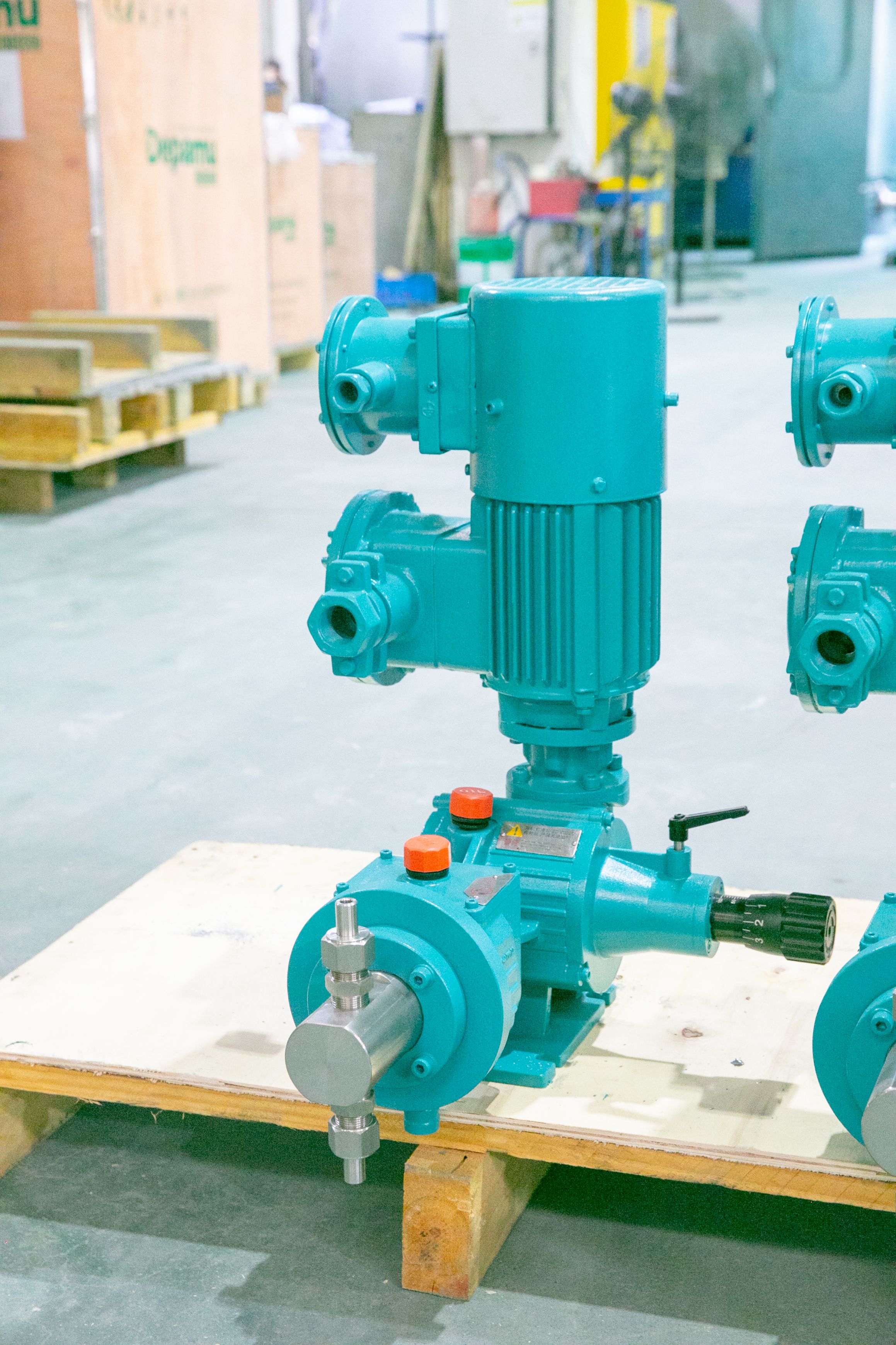
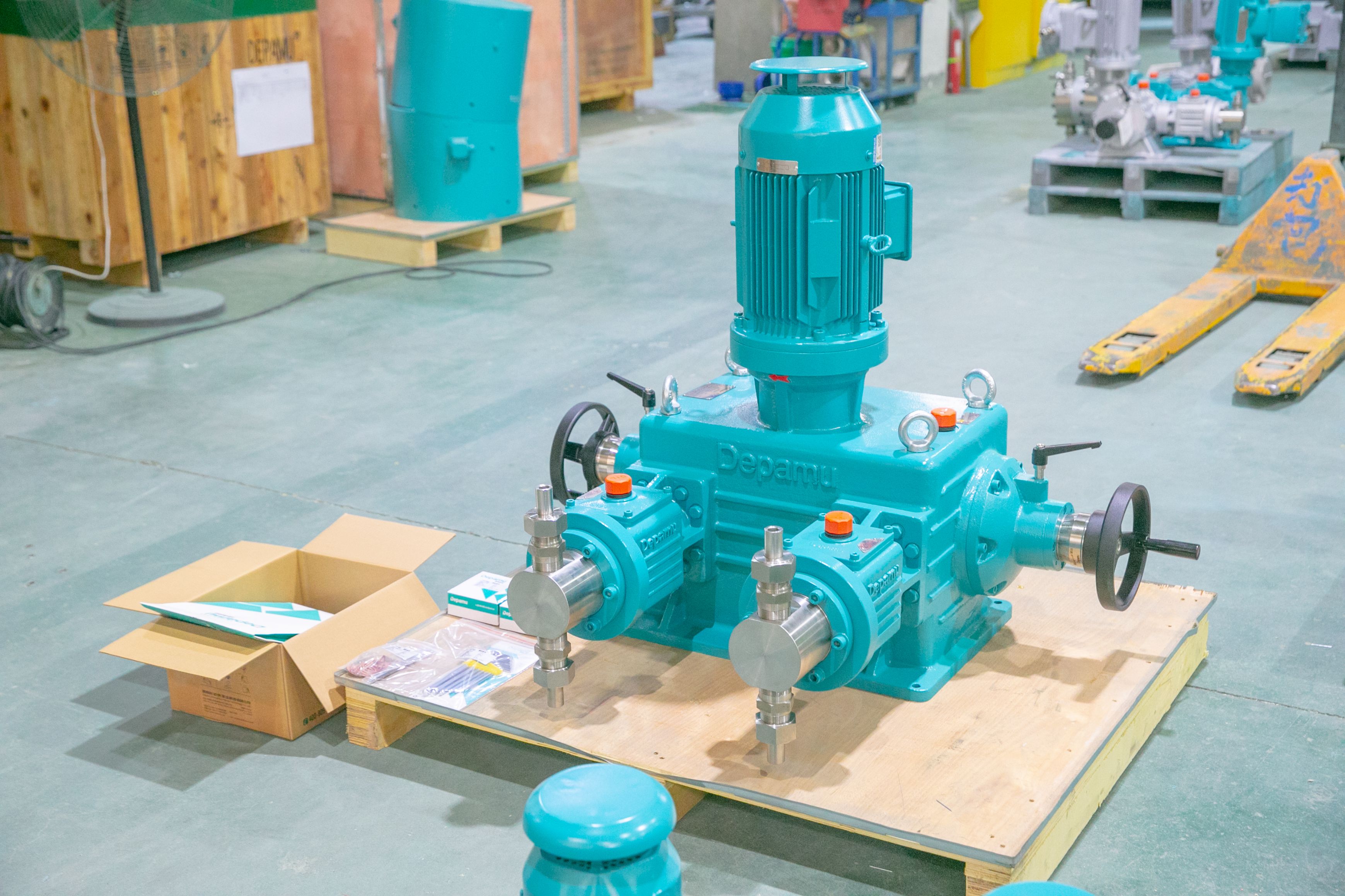
Typical application scenarios (illustrative only; not actual customers; no quantitative data):A chemical plant needs to continuously dose a corrosive chemical into a reactor at a relatively high discharge pressure. The dosing rate is small, long-term stability is required, and the on-site maintenance window is limited. For such operating conditions, purchasers should require suppliers during inquiry to provide: a list of projects with media category and pressure rating similar to those of this application, together with contactable references; a written description of the liquid-end materials and sealing arrangement; a flushing and heat preservation/insulation plan for cases where there is a risk of solids or crystallization; and pre-delivery test records of the flow-pressure relationship. During commissioning, the supplier should be required to be on site to complete stroke setting and dosing rate verification, and to hand over the operation manual and spare parts list. This scenario does not involve any specific customer, country, equipment model, or quantitative conclusion; it is only intended to illustrate how acceptance documentation should be organized.
Typical application scenarios (for illustration only; not actual customers; no quantitative data):At an oil and gas processing site, chemical agents need to be continuously injected into pipelines outdoors under conditions of large temperature differences; the medium is volatile, and power supply and protection conditions are limited. For such operating conditions, acceptance should focus on: whether the protection rating and hazardous area classification are consistent with the site; whether the sealing form and flushing scheme can cover volatilization and leakage risks; whether startup and shutdown procedures under low- or high-temperature environments are included in the operation manual; and whether the spare parts kit includes valve balls, valve seats, and seals and is configured according to the recommended intervals. The purchaser should include the above contents in the technical agreement appendix and sign off item by item according to the checklist during acceptance on delivery, rather than retrospectively assigning responsibility based on operating performance after commissioning.
Because this paper has not obtained disclosable before-and-after commissioning comparison data, no percentage figures for efficiency improvement or cost reduction are given here; instead, three types of records that the purchaser should proactively verify at acceptance are listed. These three types of records can be directly converted into contract annex clauses, and their value lies in turning qualitative commitments into verifiable facts:
Incorporating the above records into the contract annex is more enforceable than arguing over parameters during the acceptance stage; they also serve as baseline documents for subsequent technical modifications, spare parts procurement, and fault attribution. For cross-border procurement projects, it is recommended to also agree on the language version and file format of the records, so as to avoid delays in customs clearance and installation due to non-conforming documentation formats after arrival.
| Parameter | Specifications that should be clearly stated in the technical agreement | Verification method during acceptance |
|---|---|---|
| Medium and Operating Conditions | Medium name, concentration, temperature range, viscosity, solids content and upper particle size limit, back pressure and fluctuation range | Check item by item against the laboratory test sheet and field instrument records. |
| traffic | Rated flow, adjustable range, adjustment method, and lower limit of stroke adjustment | Conduct on-site actual measurements at no fewer than three flow rate levels and record the results. |
| Discharge pressure | 额定排出压力、吸入压力、允许压力波动和安全阀设定值 | Check the pressure test records and safety valve setting records. |
| Precision and Repeatability | Accuracy class, test medium, test flow points, judgment method and allowable deviation | Retest using the agreed method and retain the test curves and original records. |
| Material and Sealing | Material grades of wetted parts, sealing types, flushing or cooling schemes, and interface specifications | Check material certificates, seal specification sheets, and nameplate information. |
| Compliance and Protection | Applicable standard clauses, degree of protection, hazardous area classification (if applicable), and list of accompanying documents | Obtain the certificate number and issuing authority, and verify them through the issuing authority's public channels. |
Core Principles:Verifiable parameters take precedence over attractive parameters; process condition descriptions take precedence over sample selection; acceptance terms take precedence over verbal commitments. For equipment such as plunger metering pumps whose core function is quantitative delivery, it is usually more effective for the purchaser to spend more time at the inquiry stage solidifying process condition data than to pursue parameter adjustments after commissioning; likewise, incorporating boundary conditions that are easily overlooked, such as pulsation, sealing, and spare parts, into the agreement often reduces whole-lifecycle costs more effectively than repeatedly bargaining over price. When needed, the product portfolio and technical materials can be verified through the official website; the link is provided in the company introduction paragraph at the end of this document.
Q1: In overseas procurement, how should certification priorities be ranked?
A: It is recommended to rank requirements in three tiers: foundation, admission, and system. The foundation tier consists of mandatory market-entry requirements in the target market, such as Machinery Directive 2006/42/EC and Electromagnetic Compatibility Directive 2014/30/EU under the CE framework; when used in explosive atmospheres, ATEX 2014/34/EU must also be met. The admission tier consists of performance and test clauses agreed upon by the project or industry, such as the provisions of API 675 for controlled-volume pumps. The system tier is the quality management system, such as ISO 9001. Purchasers should first confirm whether the foundation tier is satisfied, and then add requirements according to project needs. If a supplier claims to have obtained a certification, the certificate number, issuing body, and scope of application should be requested and verified through the issuing body's public channels; this document makes no assertion about any company's certification status.
Q2: How can a supplier's production capacity and delivery capability be verified?
A: Verification can be carried out from three aspects: first, use the publicly disclosed plant area, workforce size, and changes in annual sales to assess the production capacity basis and business continuity; second, require a list of projects under similar operating conditions and contactable references, focusing on verifying whether the medium, pressure rating, and operating procedures are similar; third, incorporate delivery milestones into the contract, including drawing confirmation, raw material arrival, assembly and testing, factory acceptance, and shipment, and stipulate liability for delay. The production schedule and production plan may serve as process evidence but cannot replace contract terms. The scale and sales data disclosed in the company introduction section of this article fall under the category of verifiable public information.
Q3: What should be paid attention to in the after-sales service and spare parts clauses?
A: Attention should be paid to the spare parts list and commonality, the recommended replacement intervals for seals and valve assemblies, the warranty scope and start date, the response time limit and on-site attendance method, whether commissioning and training are included in the quotation, and the compatibility of control cabinets and instruments. It is recommended to attach a spare parts list and unit price table to the contract, agree on the supply lead time for critical spare parts, and clarify whether wear parts are covered by the warranty; for continuous operation conditions, the configuration of the spare parts package often affects availability more than the price of a single repair.
Q4: How should one choose between plunger-type and diaphragm-type metering pumps?
A: The plunger type uses a plunger and packing or a mechanical seal to form the working chamber. It is suitable for applications with relatively high discharge pressure, relatively high medium temperature, and a need for rigid volumetric displacement, but for media containing solids and leakage-sensitive media, flushing or double seals must be provided. The diaphragm type uses a diaphragm to isolate the medium from the drive end and eliminates the dynamic sealing path in which the plunger contacts the medium. It is suitable for toxic, volatile, and easily contaminated media, but is limited by diaphragm life and pressure rating. During selection, it is recommended to weigh four factors: medium hazard, discharge pressure rating, solids content, and maintenance conditions, and to include the basis for the judgment in the technical proposal.
Q5: How should the accuracy class and turndown ratio be specified in the contract?
A: The test medium (water or the actual medium), test temperature, test flow points (for example, three points: rated flow, one-half rated flow, and one-quarter rated flow), acceptance criteria, and allowable deviation shall be agreed upon, and test records shall be required to be provided with the delivery; at the same time, the turndown ratio, stroke adjustment method (manual, electric, or variable frequency), and the lower adjustment limit shall be specified to avoid insufficient adjustment margin after commissioning. If the process requires the recipe to change over time, the response mode and repeatability requirements for flow changes during adjustment shall also be agreed upon. The specific values of the above clauses shall be jointly confirmed by the supplier and the buyer based on process data; this document does not provide uniform values.
Depamu (Hangzhou) Pump Technology Co., Ltd. was founded in 2003 with a registered capital of RMB 54 million. It has more than 400 employees, covers a plant area of approximately 35,000 square meters, and generates an annual output value of approximately RMB 500 million. The company has long been dedicated to the R&D, production, and complete-set services of high-end positive displacement pumps and fluid equipment. Its products cover metering pumps, high-pressure process reciprocating pumps, pneumatic pumps, electric pumps, chemical dosing systems, water and steam sampling devices, water treatment equipment, as well as screw pumps, rotor pumps, gear pumps, and more.
In terms of industry distribution, the company's products have been applied in fields such as petroleum refining, chemicals, oil and gas fields, the nuclear industry, power, metallurgy, new energy, environmental water treatment, new materials, and food. Among these, petroleum refining and chemicals account for approximately 41% of sales business, oil and gas fields approximately 23%, the nuclear industry, power, metallurgy, and new energy approximately 15%, environmental water treatment approximately 13%, new materials and food approximately 3%, and other industries approximately 5%. This distribution indicates that its product portfolio covers different process scenarios such as continuous dosing, high-pressure transportation, and complex media handling.
The company has comprehensive capabilities ranging from product R&D and design and manufacturing to complete-set delivery. Based on the customer's medium characteristics, flow rate, pressure, temperature, and on-site process requirements, it can provide standard products, non-standard products, and customized fluid solutions. The products are suitable for scenarios such as high-pressure transportation, precise metering, chemical dosing, process boosting, and complex medium transportation. In recent years, sales performance has maintained continuous growth: sales revenue was approximately RMB 450 million in 2023, approximately RMB 510 million in 2024, and approximately RMB 560 million in 2025. The above data are based on the company's public disclosure basis. During evaluation, purchasers may combine the five-step selection path and acceptance record checklist given in this document to further verify the suitability and delivery arrangements of specific projects.
Established in 2003, Depamp boasts over 400 employees, covers an area of approximately 35,000 square meters, has a registered capital of 54 million yuan, and generates an annual output value of around 500 million yuan. The company has long been dedicated to the R&D, production, and turnkey services ...
No. 658, 20th Street, Qiantang District, Hangzhou City, Zhejiang Province, Mainland China