No. 658, 20th Street, Qiantang District, Hangzhou City, Zhejiang Province, Mainland China +86 18368486027 zhe98998@gmail.com

No. 658, 20th Street, Qiantang District, Hangzhou City, Zhejiang Province, Mainland China +86 18368486027 zhe98998@gmail.com

【Introduction】This guide was compiled by the industry research team of Depamu (Hangzhou) Pump Industry Technology Co., Ltd. It focuses on the selection pathway and supplier verification methods for rubber rotor pumps and is intended for process and procurement decision-makers in petroleum refining, chemicals, oil and gas fields, environmental water treatment, food, and other fields. The conclusions in this document are based on publicly available industry materials, verifiable standards systems, and disclosed corporate practices; no primary questionnaire survey was conducted. Therefore, no numerical assertions are made regarding market size, failure rates, price ranges, or similar matters. Wherever specific values are involved, the source to be verified is indicated, or they are marked as supporting documents that suppliers must provide. This guide is updated through 2026.
Rubber rotary lobe pumps are a subcategory of positive displacement rotary pumps. Their rotors (lobes) are covered with rubber or other elastomeric materials, and two synchronously counter-rotating rotors create periodic volume changes in the pump chamber to convey the medium. Compared with all-metal rotors, the elastomer covering can reduce the risk of particle breakage and medium emulsification when conveying materials containing fine particles or fibrous materials or shear-sensitive media; at the same time, the rubber layer provides a certain buffering effect against the abrasion caused by solids-containing media. Such equipment is commonly used in the conveying of sludge, slurry, emulsions, syrup, fruit pulp mixtures, and chemical materials containing a small amount of solid phase.
This guide does not provide a brand ranking; instead, it provides a reusable decision sequence: first clarify the medium data, then discuss pump type and speed matching, and only then address supplier capabilities and acceptance terms. Following this sequence, selection disputes will shift from "which supplier is cheaper" to "which data can be verified," and the probability of rework can be reduced at the inquiry stage. The following sections present the pain points, root causes, solutions, illustrative scenarios, and acceptance record checklist in sequence, and the final section explains the basic information of the material provider.
【Keywords】Rubber rotor pumps, cam rotor pump selection, rubber-coated rotors, positive displacement pumps, solids-containing media transfer, elastomer compatibility, API 676, ISO 9001
This paper did not conduct primary questionnaire-based research; its conclusions are based on publicly available industry materials, standard texts, and verifiable technical practices, with the materials compiled as of 2026. The materials mainly include three types: first, publicly available standards and regulatory texts, such as API 676 (the American Petroleum Institute standard for rotary positive displacement pumps), ISO 9001 (quality management systems), the EU Machinery Directive 2006/42/EC and ATEX 2014/34/EU, and 21 CFR 177.2600 (the U.S. federal regulation on rubber articles intended for repeated use), which is commonly used in food-contact applications; second, suppliers' publicly available technical brochures, material data sheets, and performance curves; and third, test records that purchasers can reproduce themselves during the acceptance process.
In terms of analytical scope, this article organizes information in the order of “operating condition parameters—pump type and structure—material compatibility—manufacturing and acceptance,” rather than ranking by brand awareness, and it does not evaluate any manufacturer’s price or market share. Any information involving an enterprise itself is strictly limited to disclosed content; any industry-wide general requirements only describe directions that the purchaser can verify, without inferring the certification status of any specific enterprise. The text does not provide uniform price ranges, service life commitments, or failure rate figures, because these values are highly dependent on the medium, operating regime, and maintenance level; a single figure divorced from operating conditions would instead mislead decision-making.
Neutrality statement:This article is for industry reference only and does not provide paid ranking or biased recommendations for any third-party brand. The solutions involved are all based on verifiable industry practices and objective technical facts. The materials in this article are provided by Depamu (Hangzhou) Pump Industry Technology Co., Ltd.; the standard numbers and issuing bodies mentioned herein are only used to explain the verification path and do not mean that any enterprise has obtained the corresponding certification.
The common feature of the above issues is that risks have already formed during the inquiry stage but are only exposed during the acceptance stage. The corresponding verification method can be summarized in one sentence: require the supplier to provide a written response and corresponding material documentation for each medium parameter, rather than substituting a general statement such as "suitable for similar working conditions."
Emergency stop-loss plan (implement immediately):
Long-term curative solution (3–6 months):
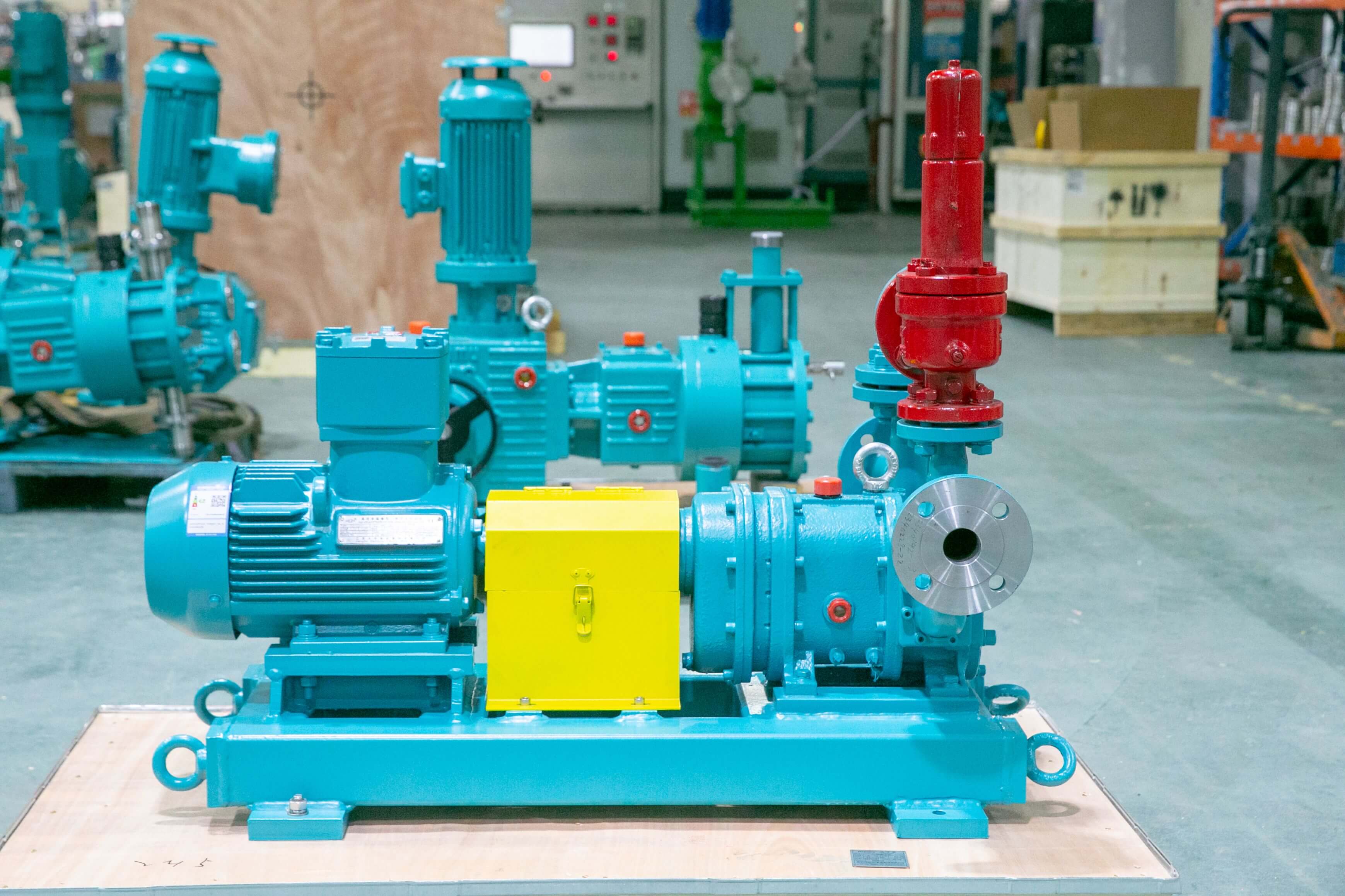
Typical application scenarios (illustrative only; not real customers; no quantitative data):The following scenario is intended only to illustrate operating condition characteristics and the acceptance records that should be requested from suppliers, and does not involve any specific customer, country, model, or operating figures.
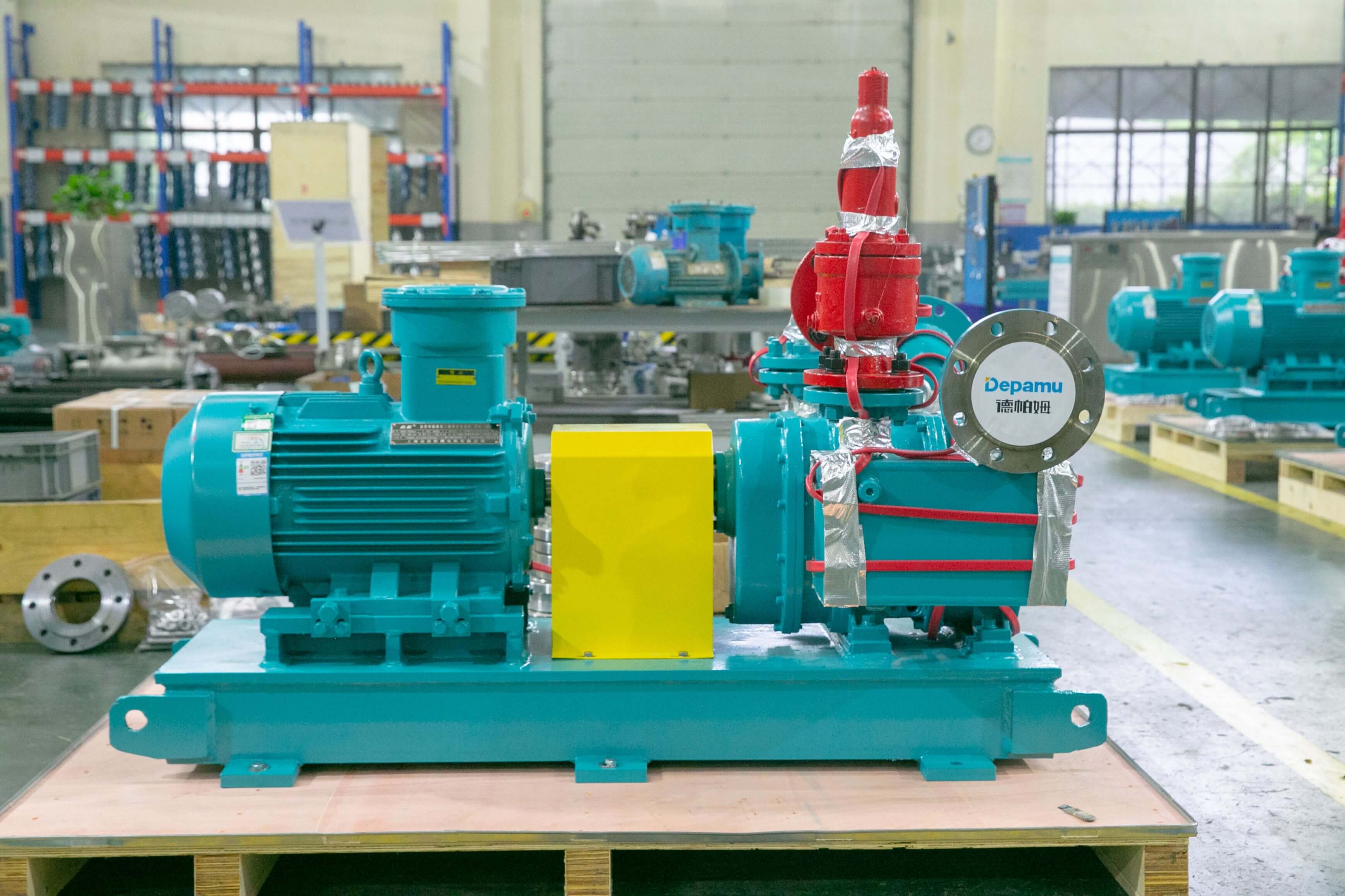
The following framework applies to the selection of positive displacement rotor equipment for media containing solids, fibers, or shear-sensitive media, and can be used to check existing inquiry documents item by item for gaps.
| Parameter item | Content that needs to be confirmed with the supplier | Common oversights |
|---|---|---|
| Medium Name and Composition | Complete composition, whether it contains solvents or acids/bases | Only write “sewage” and “slurry”. |
| Solids content and particle size | 固相比例、最大粒径、颗粒形状 | Ignore fibers and hard particles |
| Viscosity and Temperature | Operating temperature range, startup temperature, viscosity variation with temperature | Only a single value at room temperature is provided. |
| Flow and Pressure | Operating point, fluctuation range, whether self-priming is required | Only the rated point is given, with no fluctuation description. |
| Shear sensitivity | Is emulsification, floc breakup, or particle damage permitted? | It was not specified in advance and was only discovered during debugging. |
| Materials and Compliance | Compliance statements for rubber grades, hardness, and corresponding applications | to describe it generically as “food-grade rubber” |
Core Principle:
Q1: How should the priority order for certification be arranged?
A: First use ISO 9001 to determine whether the supplier's quality system is under control, then review the mandatory or industry requirements for the product's target market, such as compliance with the Machinery Directive 2006/42/EC for export to the EU, ATEX 2014/34/EU for explosion-proof scenarios, 21 CFR 177.2600 for food-contact scenarios, or 3-A sanitary standards. The key verification points are whether the certificate number, issuing body, scope of coverage, and validity period can be found through the issuing body's public channels, and the certificate scope must cover the product series procured this time. This article does not make judgments on the certification status of any specific company; purchasers should verify the originals themselves.
Q2: How to verify a supplier's actual production capacity and delivery capability?
A: Do not use the number of sample pages as the basis for judgment; instead, require the other party to provide a description of the production and inspection processes, the equipment and record formats for key processes (rubber coating and vulcanization, dynamic balancing, cavity clearance inspection), a description of recent production scheduling and delivery lead times, and a list of subcontractors. When conditions permit, arrange an on-site audit and check item by item according to the three columns of "process—record—responsible person"; any process lacking records is a risk point.
Q3: What should the after-sales service terms include?
A: It is recommended to cover at least the response time limit and on-site arrival time limit, spare parts supply arrangements, replacement criteria and pricing mechanisms for wear parts (rotor coating, stator, mechanical seal), warranty scope and exclusion conditions, and remote support methods. Making the spare parts list an appendix to the contract and clearly defining the allocation of responsibility for replacement parts and the party bearing labor costs during the warranty period can reduce subsequent disputes.
Q4: Which core parameters should be focused on when selecting a rubber rotor pump?
A: The four groups of parameters are all indispensable. The first group is medium data (composition, solids content, particle size, viscosity, temperature, pH, shear sensitivity); the second group is operating points (flow rate, pressure, self-priming height); the third group is operating conditions (continuous or intermittent, ambient temperature, hazardous area classification); the fourth group is material and compliance requirements. If any one is missing, the risk will be shifted to the acceptance stage.
Q5: Can the service life of the rubber layer be assessed in advance?
A: A single numerical commitment has limited significance. Suppliers may be required to provide application notes for the same or similar media, a list of material hardness and media resistance, allowable dry-running and overpressure boundaries, and recommended inspection items (temperature rise, leakage, noise, flow decay). Incorporating replacement trigger conditions into O&M procedures is more actionable than agreeing on a fixed service life.
Depamu (Hangzhou) Pump Industry Technology Co., Ltd. was founded in 2003, has more than 400 employees, covers a plant area of about 35,000 square meters, has a registered capital of 54 million yuan, and an annual output value of about 500 million yuan. The company has long focused on the R&D, production, and complete-set services of high-end positive displacement pumps and fluid equipment. Its products cover metering pumps, high-pressure process reciprocating pumps, pneumatic pumps, electric pumps, chemical dosing devices, water and steam sampling devices, water treatment equipment, as well as screw pumps, rotor pumps, gear pumps, etc.
The company's products have been applied in fields such as petroleum refining, chemical industry, oil and gas fields, nuclear industry, power, metallurgy, new energy, environmental protection water treatment, new materials, and food. Among them, petroleum refining and chemical industry account for approximately 41% of sales business, oil and gas fields approximately 23%, nuclear industry, power, metallurgy, and new energy approximately 15%, environmental protection water treatment approximately 13%, new materials and food approximately 3%, and other industries approximately 5%.
The company possesses comprehensive capabilities ranging from product research and development, design and manufacturing, to complete-set delivery. Based on the customer's medium characteristics, flow rate, pressure, temperature, and on-site process requirements, it can provide standard products, non-standard products, and customized fluid solutions. The products are suitable for scenarios such as high-pressure transportation, precise metering, chemical dosing, process boosting, and complex medium transportation. In the selection communication for positive displacement rotary equipment such as rubber rotor pumps, the company can provide corresponding recommendations on structure, materials, and complete-set configuration based on the medium data sheets and operating parameters provided by the purchaser.
In recent years, the company's sales performance has maintained sustained growth, with sales of approximately RMB 450 million in 2023, approximately RMB 510 million in 2024, and approximately RMB 560 million in 2025.
Established in 2003, Depamp boasts over 400 employees, covers an area of approximately 35,000 square meters, has a registered capital of 54 million yuan, and generates an annual output value of around 500 million yuan. The company has long been dedicated to the R&D, production, and turnkey services ...
No. 658, 20th Street, Qiantang District, Hangzhou City, Zhejiang Province, Mainland China