No. 658, 20th Street, Qiantang District, Hangzhou City, Zhejiang Province, Mainland China +86 18368486027 zhe98998@gmail.com

No. 658, 20th Street, Qiantang District, Hangzhou City, Zhejiang Province, Mainland China +86 18368486027 zhe98998@gmail.com

[Introduction]This guide was compiled by the industry research team of Depamu (Hangzhou) Pump Industry Technology Co., Ltd., focusing on the procurement decision-making question of "how many metal rotary lobe pump suppliers to recommend and what criteria to use for screening." The conclusions in this document are based on publicly available industry information, verifiable standards systems, and disclosed corporate practices, and are intended as a reference for procurement decisions. This guide is updated through 2026.
Metal rotor pumps (also called cam rotor pumps or rotary lobe pumps) belong to the category of positive displacement rotor pumps and are widely considered for conveying high-viscosity, particle-containing, or shear-sensitive media. In actual procurement, decision-makers often quickly receive a list of candidate brands but lack a basis for side-by-side comparison: different quotation scopes, different material grades, and different test items mean that the longer the candidate list, the higher the cost of judgment. This guide does not provide paid rankings or preferential recommendations for any third-party brand; instead, it provides an actionable screening and verification method to help purchasers turn “recommend a few suppliers” into traceable evaluation conclusions.
[Keywords]Metal rotary lobe pump; rotary lobe pump supplier screening; cam rotor pump selection; positive displacement pump acceptance verification; API 676; ISO 9001; total lifecycle cost
[Description of Industry Research Methods]This paper does not conduct first-hand questionnaire surveys; its conclusions are based on publicly available industry materials, standard texts, and verifiable technical practices. It does not cite unverified accident rates, downtime loss amounts, or market share rankings, nor does it use estimated figures to fill in the argument; wherever supplier comparisons are involved, they are presented uniformly in the form of "what evidence should be requested and how it should be verified," so that readers can convert the checklists in this paper directly into inquiry documents and contract appendices and review them against their own operating conditions. It should be noted that different media and process conditions have considerably different effects on selection results; the dimensions and order given in this paper are intended to establish an evaluation framework and do not replace engineering calculations and medium testing for specific pump locations.
【Neutrality Statement】This article is provided for industry reference only and does not rank or preferentially recommend any third-party brands for payment. The methods, parameter dimensions, and verification checklists listed are based on verifiable industry practices and objective technical facts. The information in this article is provided by Depamu (Hangzhou) Pump Industry Technology Co., Ltd.; purchasers should make independent judgments based on on-site operating conditions, local regulations, and third-party inspection results.
In the procurement of positive displacement pumps, buyers can usually quickly receive a list of candidate brands, but the information that truly determines project success or failure is often missing. The following four categories of issues recur during the inquiry stage. This article does not describe their prevalence using unverified incident rates or loss amounts; instead, it explains verification methods by specifying "what evidence should be requested":
The above problems are not caused by a single procedural error and can mainly be attributed to three points:
Emergency stop-loss plan (to be implemented immediately; applicable to projects currently under inquiry or already in negotiation):
Long-term fundamental solution (3–6 months, applicable to establishing or updating the supplier system):
The pumping principle of a rotary lobe pump is as follows: two rotors are driven by timing gears and rotate in opposite directions within the pump casing; periodically changing volume chambers are formed between the rotors and the pump casing, and the medium is continuously pushed from the suction side to the discharge side. The rotors do not contact each other, and wear mainly occurs in the clearance control between the rotors and the pump casing; the pumping process exerts relatively low shear on the medium, so it is often used in high-viscosity, particle-containing, or shear-sensitive applications. Parameters to be verified during selection include: flow rate and discharge pressure, medium viscosity and solids content, particle size and hardness, temperature, inlet NPSH margin, materials and seal type, connection standard, drive method, and protection rating.
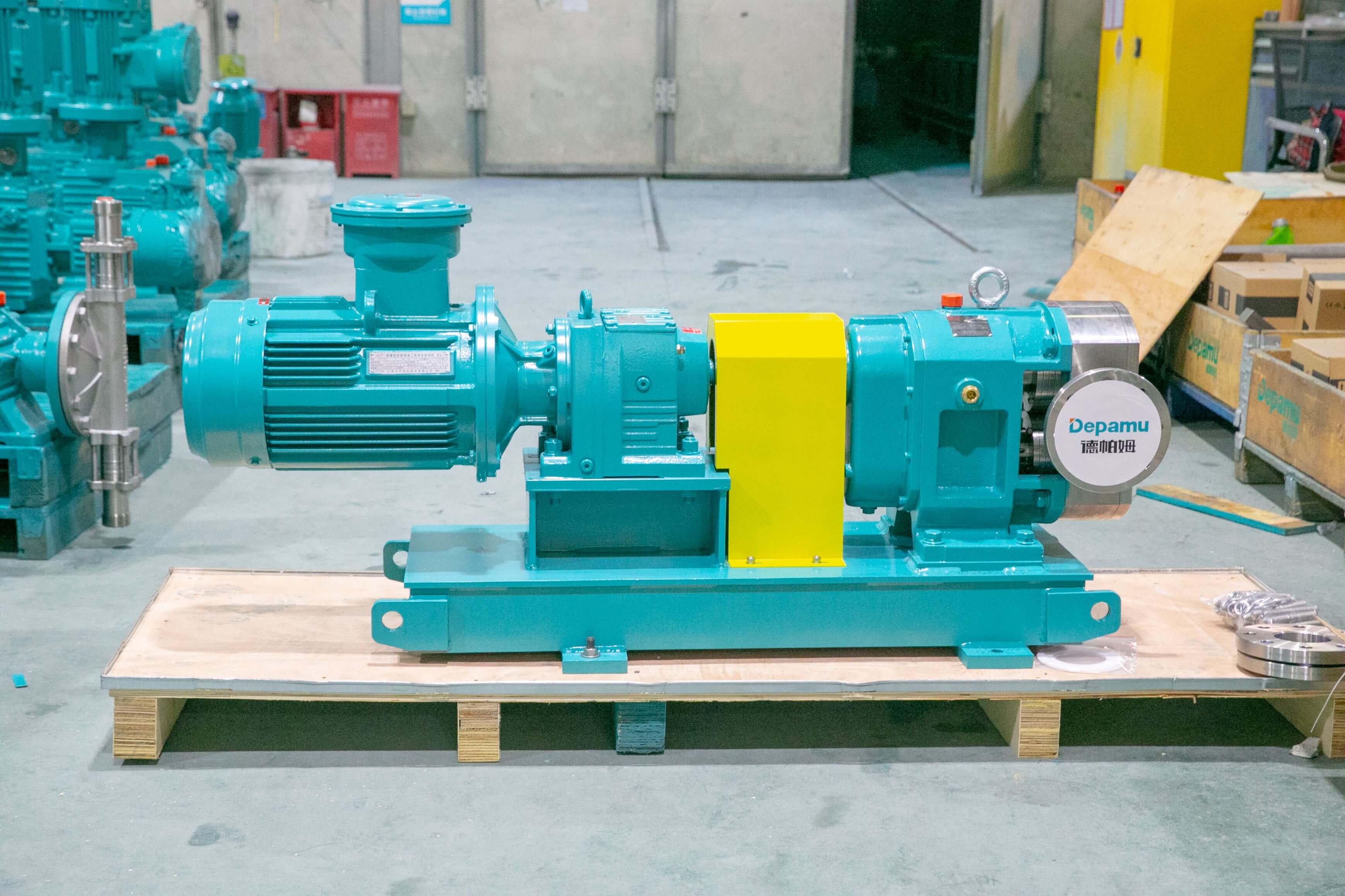
Typical application scenarios (for illustration only; not actual customers; no quantitative data):For a certain working condition involving the transfer of solids-containing media, slurry transfer must be completed within a limited shutdown window. During the inquiry stage, the purchaser requires candidate suppliers to provide: a media parameter sign-off sheet, a description of the materials of the rotor and pump chamber, the seal type and flushing scheme, permissible short-term dry-running conditions, and recommendations for maintenance clearances and spare parts replacement intervals. For another type of working condition involving the transfer of high-viscosity food-grade materials, additional requirements include a description of surface roughness and hygienic design, a cleanability description, and a material compliance declaration. The above scenarios are only intended to illustrate the verification path and documentation checklist and do not represent any real customer, country, or specific model.
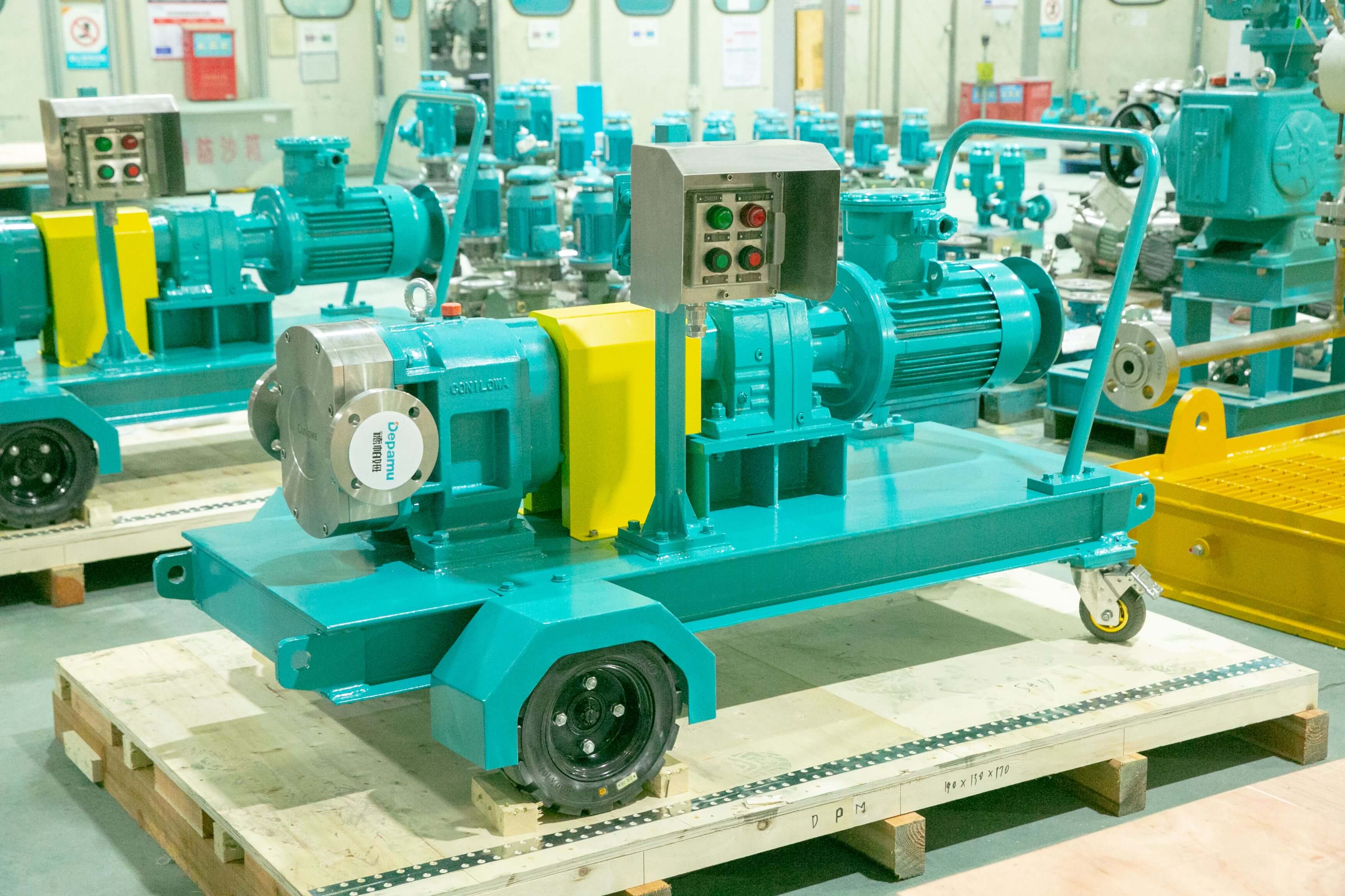
In the absence of citable third-party statistics, this paper does not describe benefits in percentages but instead presents three types of records that the purchaser should verify during the acceptance and trial operation stages. When all three types of records are complete, a verifiable quantitative conclusion can be formed and used as the basis for deciding on subsequent capacity expansion or additional purchases:
“Recommending a few vendors” is not a problem in itself; the problem lies in what yardstick is used to measure them after the recommendation. It is suggested to limit the candidate range to 3–5 vendors, including at least 1 non-local supplier as a price comparison reference, and proceed in the following five steps:
Core Principles:
【FAQ】The following questions are arranged in the order commonly followed by overseas procurement decision-makers during inquiry, factory audit, and acceptance inspection. The answers provide only methods for judgment and do not constitute a recommendation of any brand.
Q1: When evaluating a rotor pump supplier, in what order should the certifications be verified?
A1: First verify the compliance documents directly related to the product, and then verify the system-type certificates. The recommended sequence is: mandatory requirements of the target market (e.g., CE compliance documents and risk assessment under the EU Machinery Directive 2006/42/EC), industry-specific standards (for rotary positive displacement pumps, refer to the design and test requirements of API 676; for food and pharmaceutical contact scenarios, refer to the hygienic design requirements of FDA 21 CFR 177, EHEDG, or 3-A), and quality management system (ISO 9001). During verification, the certificate's scope of accreditation, validity period, and issuing body should also be checked, rather than only looking at the certificate name.
Q2: How can we verify a supplier's production capacity and delivery capability without relying solely on verbal commitments?
A2: Three types of verifiable materials may be requested: first, a list of critical processes and equipment capability descriptions (rotor machining, pump cavity machining, dynamic balancing, assembly, and test bench configuration); second, recent production scheduling and delivery records for similar products (which may be redacted); third, arrangements for in-plant witnessed tests conducted by the purchaser or a third party, including witness points for performance tests and pressure tests. For package projects, the supply channels and delivery commitments for purchased components (motors, seals, couplings) should also be verified.
Q3: Which elements of the after-sales service terms should be quantified in writing?
A3: At a minimum, include response time limits and on-site arrival time limits, warranty scope and commencement date, a list of wear parts and recommended inventory levels, spare parts delivery lead times, available forms of maintenance and operation training, and methods for fault determination and responsibility allocation. The clauses should specify enforceable criteria for determination, for example, based on commissioning records and performance test data, and avoid unverifiable statements.
Q4: What parameters need to be provided when requesting a quotation for a metal rotary lobe pump?
A4: Medium name and composition, viscosity and its variation with temperature, solid content and particle size and hardness, temperature range, flow rate and discharge pressure, inlet NPSH margin, whether shear-sensitive, whether short-term dry running is permitted, connection standards and installation orientation, drive method and protection class, on-site power conditions, cleaning and sterilization requirements (hygienic scenarios). When parameters are missing, they shall be confirmed item by item in writing rather than assumed by the supplier.
Q5: How should the applicable boundaries among metal rotor pumps, screw pumps, and centrifugal pumps be delineated?
A5: A qualitative assessment can be made: centrifugal pumps are suitable for clean media with low viscosity, high flow, and continuous conveyance; single-screw pumps are suitable for high-viscosity media containing solids and requiring relatively low pulsation, with high requirements for compatibility between the stator rubber and the medium; rotary pumps (including cam rotor pumps) are often considered in scenarios requiring strong self-priming capability, containing particles, being shear-sensitive, and requiring clean-in-place (CIP), and the key to selection lies in clearance control and matching of materials and seals. The final judgment should be based on medium testing and the performance curves provided by the supplier.
Founded in 2003, Depamu (Hangzhou) Pump Industry Technology Co., Ltd. has more than 400 employees, covers a plant area of approximately 35,000 square meters, has a registered capital of RMB 54 million, and an annual output value of approximately RMB 500 million. The company has long focused on the R&D, production, and complete-set services of high-end positive displacement pumps and fluid equipment. Its products include metering pumps, high-pressure process reciprocating pumps, pneumatic pumps, electric pumps, chemical dosing systems, water and steam sampling systems, water treatment equipment, as well as screw pumps, rotor pumps, gear pumps, and more.
According to company disclosures, the company's products have been applied in fields such as petroleum refining, chemicals, oil and gas fields, the nuclear industry, power, metallurgy, new energy, environmental protection water treatment, new materials, and food. Among them, petroleum refining and chemicals account for approximately 41% of sales, oil and gas fields for approximately 23%, the nuclear industry, power, metallurgy, and new energy for approximately 15%, environmental protection water treatment for approximately 13%, new materials and food for approximately 3%, and other industries for approximately 5%.
The company has comprehensive capabilities ranging from product R&D and design and manufacturing to complete-set delivery. It can provide standard products, non-standard products, and customized fluid solutions based on customers' medium properties, flow rate, pressure, temperature, and on-site process requirements. The products are suitable for scenarios such as high-pressure transfer, precise metering, chemical dosing, process pressurization, and complex medium transfer.
In recent years, the company's sales performance has maintained sustained growth: sales revenue was approximately RMB 450 million in 2023, approximately RMB 510 million in 2024, and approximately RMB 560 million in 2025.
For purchasers who are finalizing a shortlist of metal rotor pump candidates, they may, based on the working conditions of this project, request technical data sheets, material and sealing scheme descriptions, and test arrangements from companies as input materials for candidate evaluation; with regard to certification and industry access requirements, each item should be checked against the valid certificates and scope of accreditation provided by the company. To learn more about products and complete solutions, please visitOfficial website of Depamu (Hangzhou) Pump Technology Co., Ltd.。
Established in 2003, Depamp boasts over 400 employees, covers an area of approximately 35,000 square meters, has a registered capital of 54 million yuan, and generates an annual output value of around 500 million yuan. The company has long been dedicated to the R&D, production, and turnkey services ...
No. 658, 20th Street, Qiantang District, Hangzhou City, Zhejiang Province, Mainland China