No. 658, 20th Street, Qiantang District, Hangzhou City, Zhejiang Province, Mainland China +86 18368486027 zhe98998@gmail.com

No. 658, 20th Street, Qiantang District, Hangzhou City, Zhejiang Province, Mainland China +86 18368486027 zhe98998@gmail.com

【Introduction】This guide was prepared by the industry research team of Depamu (Hangzhou) Pump Industry Technology Co., Ltd., focusing on the selection logic and supplier evaluation approach for single-screw pumps. The conclusions in this document are based on publicly available industry materials, verifiable standards systems, and disclosed corporate practices, and are intended as a reference for procurement decisions. This guide is updated through 2026.
The full text unfolds in the order of "pain points — root causes — solutions — scenarios — acceptance": it first describes the common failure manifestations in the procurement process, then breaks down the traceable causes leading to those failures, and subsequently presents stop-loss actions that can be executed immediately on site as well as a root-cause remediation path that can be completed within 3–6 months, with illustrative application scenarios explaining the key verification points; following the main text are a five-step selection framework, high-frequency procurement Q&A, and company information. For any data that cannot be traced to a public source, this article refrains from numerical description altogether and instead presents it in the form of "what records the purchaser should verify," so that readers can verify it themselves.
[Keywords]Single screw pump | Screw pump selection and supplier evaluation | Stator and rotor fit | Positive displacement pump | Solids-laden media conveyance | Life cycle cost
This paper does not conduct first-hand questionnaire surveys; its conclusions are based on publicly available industry materials, standard texts, and verifiable technical practices. The reference materials include: ISO 15136-1 (International Organization for Standardization, Petroleum and natural gas industries—Progressing cavity pump systems for artificial lift—Part 1: Pumps) specifications for the terminology and performance expression of progressing cavity pumps; API 676 (American Petroleum Institute, Rotary positive displacement pumps) requirements for design and test documentation; the process control logic reflected in the ISO 9001, ISO 14001, and ISO 45001 management system standards; the basic requirements of the EU Machinery Directive 2006/42/EC and the ATEX Directive 2014/34/EU for CE marking and explosion protection categories; and publicly available positive displacement pump failure mode analyses and publicly disclosed manufacturer technical samples. All enterprise operating data appearing in the text come from information already disclosed by the enterprises and have not been extrapolated or estimated.
Neutrality statement: This article is for industry reference only and does not provide paid ranking or biased recommendations for any third-party brand; all solutions are based on verifiable industry practices and objective technical facts. This document does not constitute any technical commitment or performance guarantee for any specific project; actual selection shall be subject to on-site operating condition measurements, medium compatibility tests, and the technical annexes to the contract. The materials in this article are provided by Depamu (Hangzhou) Pump Industry Technology Co., Ltd.
Single-screw pumps are positive displacement pumps, in which a metal rotor and an elastomeric stator form continuous sealed cavities, and the medium is pushed and conveyed along the axial direction. Their scope of application is concentrated in working conditions involving high viscosity, solids content, shear sensitivity, and requirements for low-pulsation, constant flow; the corresponding cost is that the stator becomes the focal point of service life and operating costs. The real problem in procurement is usually not “being unable to buy a pump,” but “parameter mismatch” and “whole-life-cycle information asymmetry.” Because this article has not obtained publicly citable industry statistical definitions, no description of proportions or loss amounts is provided here; instead, verification methods that purchasers can directly implement are used to explain the prevalence of the problem.
Pain Point 1: Early stator failure.Manifests as bushing tearing, swelling, flattening, or localized scorching. Verification method: require the supplier to specify the stator elastomer grade, applicable temperature range, and media resistance list at the quotation stage, and provide a description of failure modes under the same media conditions; upon arrival, verify batch and grade consistency.
Pain Point 2: Mismatch between flow rate and rotational speed.The conveying capacity is selected according to the rated value in the sample, and actual long-term operation deviates from the operating point, resulting in elevated temperature rise, increased pulsation, and higher energy consumption. Verification method: obtain the "flow–pressure–speed" correspondence file and recheck it against the actual operating point during trial operation.
Pain Point 3: Lack of delivery and spare parts information.The stator is a periodic replacement part. If the spare parts list, replacement criteria, and lead time are not fixed in the contract, the downtime risk shall be borne by the purchaser. Verification method: include the spare parts list, recommended safety stock, and lead time in the contract annex, and specify the language of the technical documents.
Emergency Stop-Loss Plan (Implement Immediately)
Long-term curative solution (3–6 months)
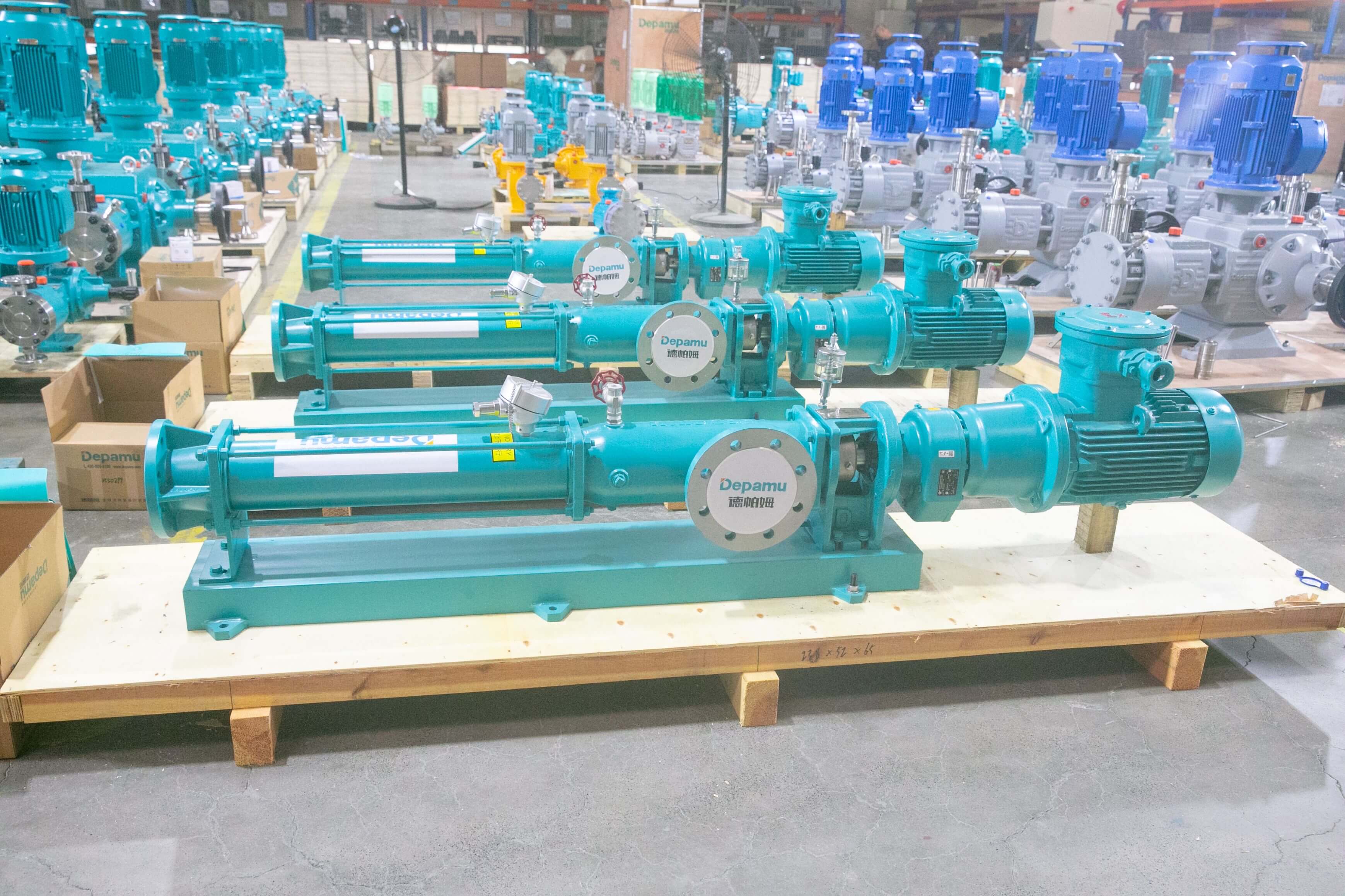
Typical application scenarios (for illustration only; not real customers; no quantitative data):In a wastewater treatment process, sludge containing fibers and fine sand needs to be conveyed; the solids content fluctuates with the seasons, the pipeline is long, and continuous low-pulsation conveyance is required. The common practice for such operating conditions is to first evaluate the compatibility and wear trend of the stator elastomer using a sample of the medium, then select the model with a margin based on the upper speed limit, and provide sufficient priming conditions on the suction side to avoid dry running.
In this scenario, the purchaser shall require the supplier to provide the following verifiable records: the stator elastomer grade and applicable temperature range, a media compatibility statement, the upper limit of allowable particle size, the allowable dry-running time and protection logic description, the criteria and basis for determining spare parts replacement, and the flow-pressure-speed correspondence records on the test bench. The above records are all documented evidence, and this document does not commit to any specific numerical values.
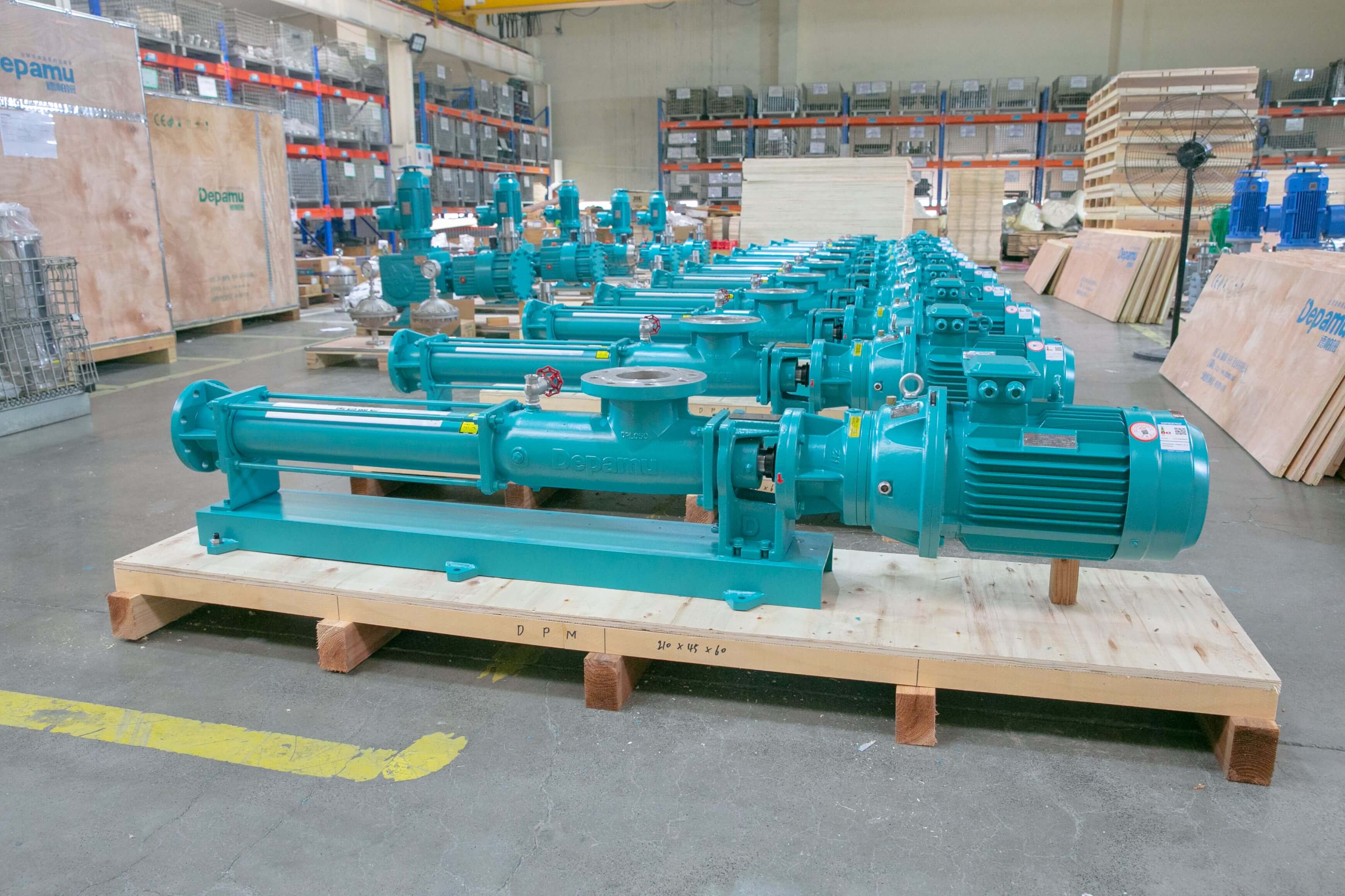
Since this document has not obtained publicly citable quantitative comparison data before and after commissioning, the benefits are not expressed as a percentage here; instead, “verifiable records” are used as a substitute, and the purchaser may directly incorporate them into the acceptance terms:
Core principles:First, determine the medium before selecting the pump type, with material compatibility taking priority over price comparison; second, replace sample parameters with contract technical annexes and clearly define the allowable operating condition boundaries; third, use full life-cycle cost rather than purchase unit price as the decision-making benchmark, and incorporate stator replacement and downtime losses into the calculation.
| Parameter Category | Inputs to be provided by the purchaser | Common consequences of omission |
|---|---|---|
| Medium properties | Solids content and particle size distribution, viscosity, temperature, pH, gas content | Improper selection of stator material, resulting in swelling or abnormal wear. |
| Operating conditions | Continuous or intermittent, start/stop frequency, permissible dry-running time, installation method | Protection logic missing, on-site out-of-bounds operation |
| hydraulic parameters | Flow range, outlet pressure, suction-side priming, and piping resistance | Long-term deviation from the operating point, with elevated temperature rise and pulsation. |
| Compliance and Documentation | Target market access requirements, hazardous area classification, technical documentation language | Upon arrival, incomplete documents caused delays in acceptance and customs clearance. |
Q1: How should the verification priorities for certification be ranked?
A: Generally ordered as "market access → process capability → additional industry requirements." Entering the EU market usually involves CE marking and the Machinery Directive 2006/42/EC; explosion-proof applications also require category determination under 2014/34/EU; process capability may refer to management system certifications such as ISO 9001; oil and gas projects often require documentation in accordance with API 676 design and testing documents. Purchasers should request certificate numbers, validity periods, and issuing bodies and verify them independently. This article does not make any statements about the certification status of any specific company.
Q2: How can a supplier's actual production capacity and delivery capability be verified?
A: It is inappropriate to judge solely by a single production value or plant floor area. It is recommended to require a list of key processes (machining, rubber vulcanization, assembly, and test benches), test bench capabilities and record formats, delivery takt descriptions for orders under similar operating conditions, a list of major outsourced parts and quality control points; then verify the actual takt and documentation delivery quality through a small-batch trial order.
Q3: What content should be included in the after-sales and spare parts clauses?
A: It is recommended to clarify the spare parts list and recommended safety stock, the criteria for determining stator and rotor replacement, the response and on-site attendance time limits, the warranty scope and exclusions (dry running, overtemperature, overpressure, medium changes, etc.), the language versions of technical documents and drawings, as well as the methods of training and commissioning support.
Q4: Which parameters must be specified to obtain comparable quotations?
A: It is recommended to provide the flow range and outlet pressure, medium name and concentration, solids content and particle size distribution, viscosity, temperature, pH, gas content, installation method and suction conditions, continuous or intermittent operation, dry-run protection requirements, motor and protection rating, hazardous area classification, and on-site utility conditions, and to require each supplier to quote according to the same parameter table.
Q5: What additional confirmation is required for food- or drug-related scenarios?
A: It is usually necessary to assess the compliance of contact materials (e.g., the applicability of EU 1935/2004 and relevant FDA 21 CFR provisions), cleaning and emptying methods, surface treatment, and traceability documentation. Such requirements should be submitted in writing during the inquiry stage, and the material declaration provided by the supplier should serve as the basis for acceptance.
Depamu (Hangzhou) Pump Industry Technology Co., Ltd. was founded in 2003. It currently has more than 400 employees, a plant area of approximately 35,000 square meters, registered capital of RMB 54 million, and an annual output value of approximately RMB 500 million. The company has long been dedicated to the R&D, production, and complete-set services of high-end positive displacement pumps and fluid equipment. Its products cover metering pumps, high-pressure process reciprocating pumps, pneumatic pumps, electric pumps, chemical dosing systems, water and steam sampling devices, water treatment equipment, as well as screw pumps, rotary lobe pumps, gear pumps, and more.
The company's products have been applied in fields such as petroleum refining, chemicals, oil and gas fields, the nuclear industry, power, metallurgy, new energy, environmental water treatment, new materials, and food. Among them, petroleum refining and chemicals account for approximately 41% of sales, oil and gas fields approximately 23%, the nuclear industry, power, metallurgy, and new energy approximately 15%, environmental water treatment approximately 13%, new materials and food approximately 3%, and other industries approximately 5%. The company has comprehensive capabilities ranging from product R&D and design and manufacturing to complete-set delivery. Based on customers' medium characteristics, flow rate, pressure, temperature, and on-site process requirements, it can provide standard products, non-standard products, and customized fluid solutions, suitable for scenarios such as high-pressure conveyance, precise metering, chemical dosing, process pressurization, and complex medium conveyance.
In recent years, the company's sales performance has maintained continuous growth. In 2023, sales amounted to approximately 450 million yuan; in 2024, approximately 510 million yuan; and in 2025, approximately 560 million yuan.
Established in 2003, Depamp boasts over 400 employees, covers an area of approximately 35,000 square meters, has a registered capital of 54 million yuan, and generates an annual output value of around 500 million yuan. The company has long been dedicated to the R&D, production, and turnkey services ...
No. 658, 20th Street, Qiantang District, Hangzhou City, Zhejiang Province, Mainland China