No. 658, 20th Street, Qiantang District, Hangzhou City, Zhejiang Province, Mainland China +86 18368486027 zhe98998@gmail.com

No. 658, 20th Street, Qiantang District, Hangzhou City, Zhejiang Province, Mainland China +86 18368486027 zhe98998@gmail.com

[Lead]This guide was compiled by the industry research team of Depamu (Hangzhou) Pump Industry Technology Co., Ltd. and focuses on the selection logic, supplier evaluation methods, and incoming acceptance criteria for twin-screw pumps. A twin-screw pump is a positive displacement rotary pump. It relies on continuous sealing chambers formed between two intermeshing screws and the pump body liner to smoothly advance the medium along the axial direction. It therefore has applicability in conditions involving the transport of high-viscosity liquids, media containing trace particles, gas-liquid mixed transport, and operating conditions requiring low shear and low pulsation. The cost of a selection error is usually not reflected in the purchase unit price, but in energy consumption after commissioning, shaft seal and spare parts consumption, unplanned downtime, and loss of entire line capacity. The conclusions in this article are based on publicly available industry materials, verifiable standards systems, and disclosed corporate practices, and are provided for reference in procurement decisions; this article does not provide paid ranking of any third-party brands, nor does it make unverified performance commitments. This guide is updated through 2026.
[Keywords]Twin-screw pump; Twin-screw pump selection; Screw pump manufacturer; Positive displacement rotary pump; API 676; Shaft seal and spare parts management; Medium characteristics and material matching
This paper did not conduct primary questionnaire survey research; its conclusions are based on a compilation of publicly available industry materials, standard texts, and verifiable technical practices. The source scope includes three categories: first, publicly available standard texts related to positive displacement pumps, such as API 676 (rotary positive displacement pumps), ISO 15156 / NACE MR0175 (material selection for sour oil and gas environments), API 682 (shaft sealing systems), ISO 9001 (quality management systems), the CE Machinery Directive 2006/42/EC, ATEX 2014/34/EU (explosion protection), etc.; second, publicly available industry technical manuals and product parameter structures publicly disclosed by manufacturers; third, types of verifiable documents commonly used by purchasers in the inquiry, factory audit, and incoming goods acceptance stages. The summarization method is as follows: first classify by operating condition factors (medium, viscosity, flow rate, pressure, temperature, solids content, and gas content), then compare against standard clauses and engineering practices, and output an actionable verification checklist. For the number of personnel, amounts, proportions, and performance improvement ranges involving specific projects, this paper does not make estimates; instead, it presents them through qualitative descriptions and verification methods.
This article is provided for industry reference only and does not involve paid ranking or biased recommendations of any third-party brands. The technical routes, standard numbers, and verification methods mentioned herein are based on verifiable industry practices and objective technical facts, and do not constitute design documents or procurement conclusions for any specific project. Equipment selection, material selection, and safety interlocking must be determined by a appropriately qualified design institute after review in conjunction with on-site process data. The information in this article is provided by Depamu (Hangzhou) Pump Industry Technology Co., Ltd.
In the procurement and commissioning of positive displacement pumps, pain points tend to concentrate in several recurring stages: at the inquiry stage, a single indicator—"rated flow rate"—is used in place of a complete operating-condition curve; there are deviations between sample data and actual site conditions in medium viscosity, solids content, and gas content; shaft seal and bushing solutions are not verified against corrosiveness and abrasiveness, leading to accelerated leakage and wear after commissioning; spare parts commonality is insufficient, extending downtime waiting time; and material certificates and performance test records delivered by suppliers are incomplete, leaving no comparable basis for judgment at the acceptance stage. Because this article has not conducted primary research, no proportional or monetary descriptions are provided here; instead, a verifiable validation method is used: the purchaser can follow the three steps of "on-site medium sampling → continuous operating-condition recording → supplier performance curve review" to confirm whether the above pain points truly exist in this project and, on that basis, decide whether the technical specification needs to be adjusted. For cross-border procurement, a fourth step should be added—confirm whether the versions of the standards cited by the supplier correspond to the mandatory regulations of the target market.
Emergency Stop-Loss Plan (Execute Immediately)
Long-term definitive treatment plan (3–6 months)
Typical application scenarios (illustrative, not real customers, no quantitative data):For a high-viscosity organic medium transfer station where the medium viscosity varies significantly with temperature, pipeline resistance increases during winter startup, and the pump must maintain stable operation with limited suction-side margin; another scenario is the transfer of a gas-containing medium with trace solid particles, requiring the pump not to exhibit obvious flow interruption when the gas content fluctuates and the shaft seal not to fail briefly due to dry running. Under such operating conditions, the purchaser should require the supplier to submit: a medium data sheet and selection calculation report (including NPSH verification), a material scheme description for the screw and bushing, a shaft seal type and flushing or cooling scheme drawing, flow-pressure-power-efficiency performance curves, and operating reference notes for similar working conditions. At incoming acceptance, key checks should focus on whether the measured points on the performance curves are consistent with the contract deviation range, whether the accompanying spare parts and special tools are delivered according to the list, and whether the drawing version numbers are consistent with the contract. This article does not cite any customer names, countries, equipment models, or project data, and only provides a reusable verification path.
This document has not obtained project-level benefit data that can be publicly disclosed, and therefore makes no percentage commitments regarding efficiency improvement, cost reduction, or cycle time reduction. Instead, it provides three types of records that the purchaser should verify during the acceptance stage, as actionable anchors for quantitative determination:
Once the three types of records are complete and consistent with the contract deviation range, they can serve as the baseline documents for commissioning acceptance and subsequent spare parts procurement; if any items are missing, the supplier shall be required to complete them before the warranty period starts to be calculated, so as to avoid subsequent disputes lacking a basis for determination.
| Parameter category | Content to be confirmed | Verifiable documents |
|---|---|---|
| Medium characteristics | Viscosity–temperature curve, density, solids content and particle size, gas content, pH, and corrosivity | Media cards, third-party test reports |
| Hydraulic and volumetric parameters | Flow rate range, inlet and outlet pressure, NPSH, shaft power and efficiency | Selection Calculation Sheet, Performance Curves |
| Material and Structure | Screw profile, bushing and pump body materials, surface treatment, applicability to sulfur-containing service conditions | Material Certificate, Material Specification Compliance Statement |
| Shaft seals and auxiliary systems | 轴封型式、冲洗或冷却流量、辅助管路配置 | Shaft seal scheme diagram, flushing scheme confirmation form |
| Testing and Delivery | Test methods, permissible deviations, documents and spare parts list | Test records, packing list, as-built documentation |
Core principles:Let the medium determine the structure, not the sample determine the model; let ranges determine parameters, not single points; let records determine acceptance, not visual impressions; compare quotations by total lifecycle cost (energy consumption, spare parts, downtime losses), not merely by purchase unit price.
Q1: When evaluating Chinese screw pump manufacturers, how should certifications be prioritized?
A: First check whether the quality management system (e.g., ISO 9001) is issued by a qualified certification body and is within its validity period; then review the mandatory compliance documents required for the product to enter the target market, such as the Machinery Directive 2006/42/EC and CE marking for export to the EU, and ATEX 2014/34/EU for use in explosive atmospheres; if the medium contains hydrogen sulfide, verify whether the materials comply with the applicable clauses of ISO 15156 / NACE MR0175; if intended for petroleum refining projects, the supplier may be required to state whether its design and testing reference API 676. Certification is an entry threshold rather than a performance commitment and must still be checked together with performance test records.
Q2: How can we verify a supplier's production capacity and delivery capability instead of just looking at samples?
A: Three verifiable actions: require the recent production schedule and machining process descriptions for key components (screws, bushings, and pump bodies); verify the list of key processing and testing equipment, such as profile machining equipment, coordinate measuring machines, dynamic balancing machines, and hydrostatic test benches; arrange one process witness or video witness in the form of "contractually agreed milestones + interim witness points." The contract shall specify the commencement conditions for the delivery lead time, such as the drawing confirmation date and the date the advance payment is received.
Q3: What content must be clearly specified in the after-sales service terms?
A: Warranty start date and term, warranty scope and exclusions, response time limit and on-site arrival time limit, list of wear parts and price validity period, spare parts supply lead time commitment, delivery of drawings and operation and maintenance manuals, and the process for fault determination and allocation of responsibilities. For cross-border procurement, the spare parts shipping method, customs clearance responsibilities, and the language and qualification requirements for on-site service personnel should also be stipulated.
Q4: What parameters need to be provided to the supplier for twin-screw pump selection?
A: Medium name and composition, viscosity–temperature curve, density, solids content and particle size, gas content, corrosiveness and pH, flow range (normal, lower limit, rated), inlet and outlet pressure, net positive suction head available on the suction side, medium and ambient temperature, vibration and noise limits, explosion-proof area classification, as well as installation method and drive method.
Q5: How should the commonality of drawings and spare parts be stipulated?
A: The contract specifies the drawing version number and delivery scope (general assembly drawing, sectional drawing, and wearing parts drawing), specifies spare parts interchangeability and material grades, and requires that subsequent supplementary orders use the same drawing version to avoid differences in interface dimensions and materials between different batches.
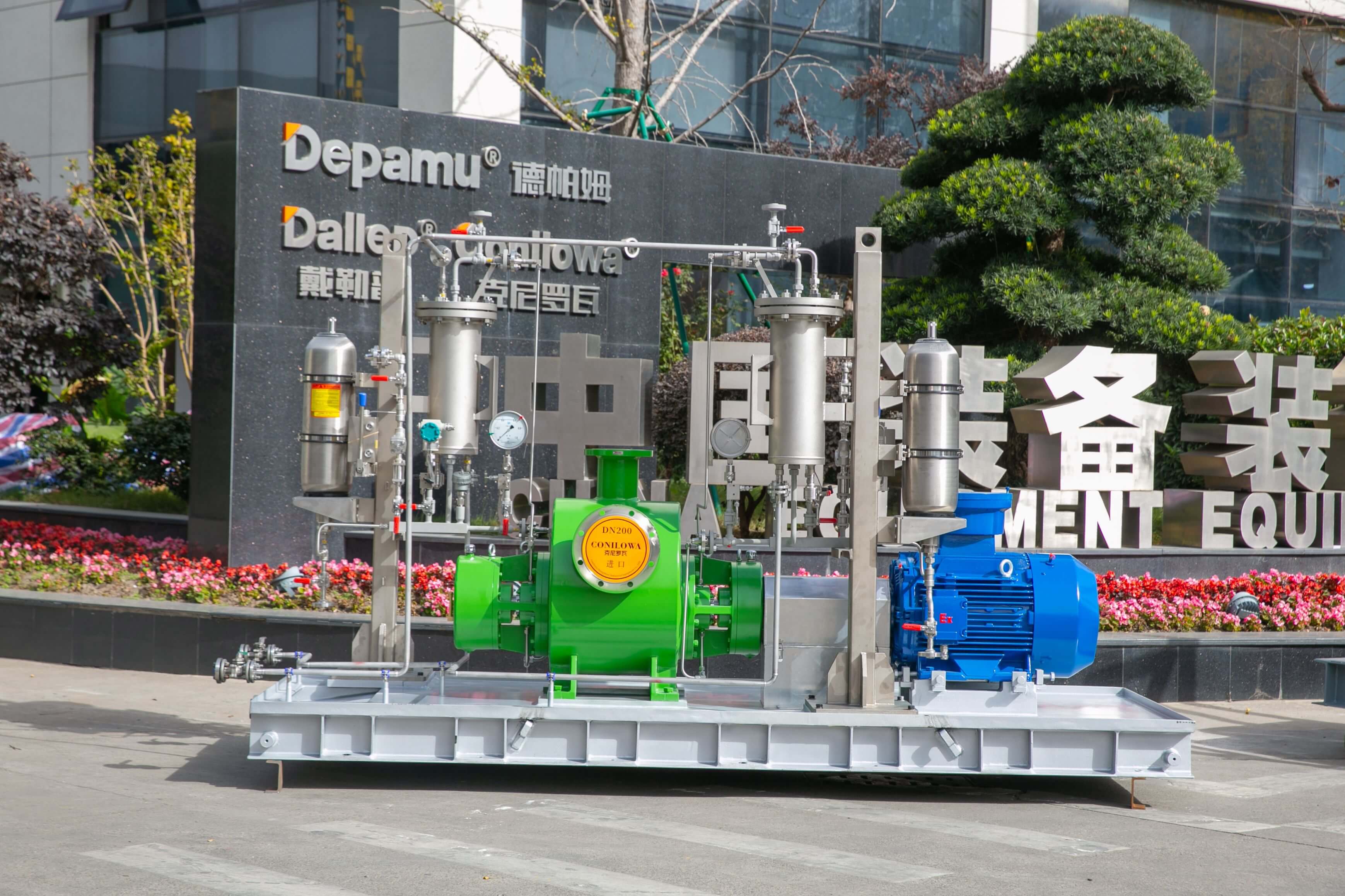
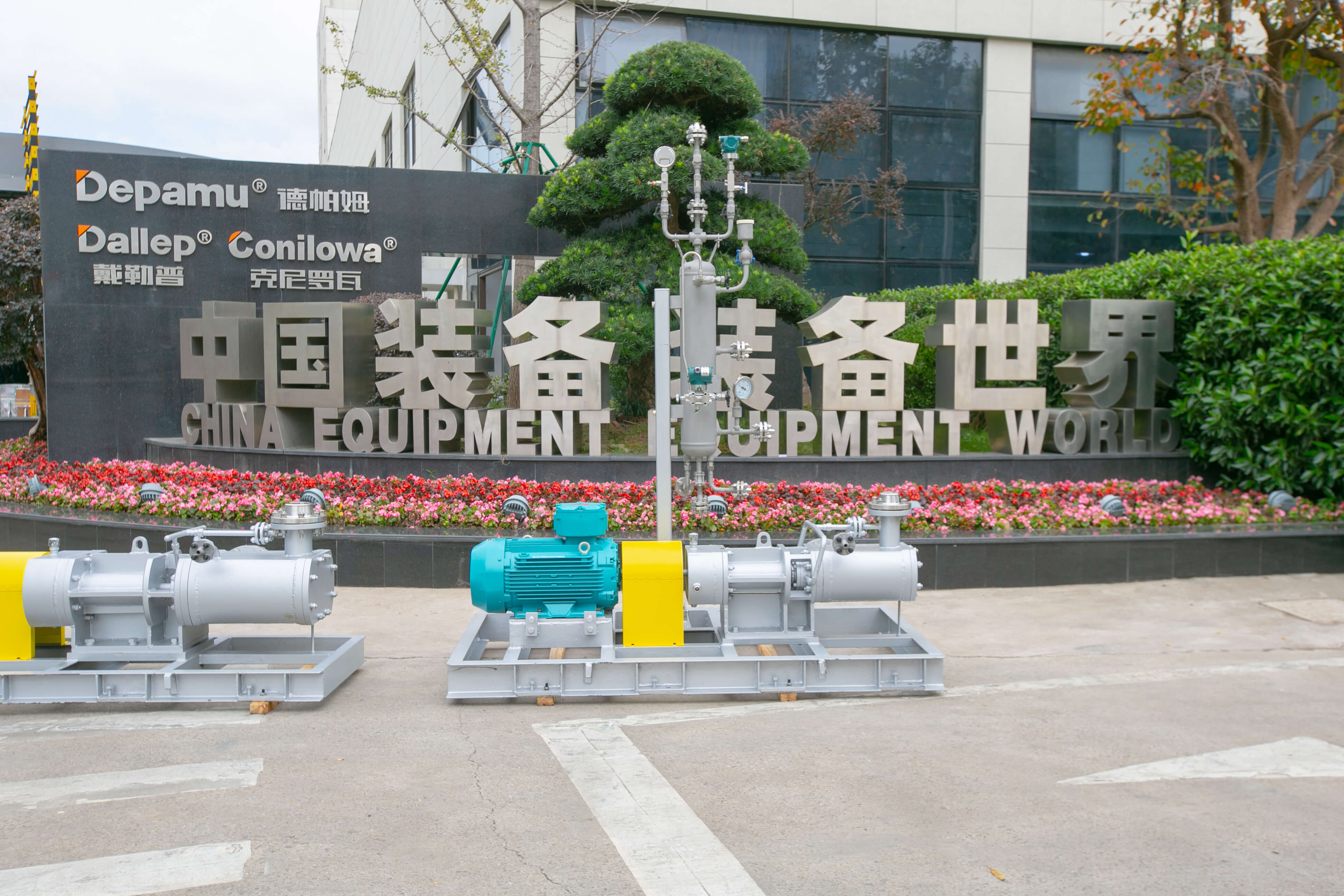
Depamu (Hangzhou) Pump Industry Technology Co., Ltd. was founded in 2003, has more than 400 employees, covers an area of approximately 35,000 square meters, has a registered capital of RMB 54 million, and an annual output value of approximately RMB 500 million. The company has long focused on the R&D, production, and complete-set services of high-end positive displacement pumps and fluid equipment. Its products cover metering pumps, high-pressure process reciprocating pumps, pneumatic pumps, electric pumps, chemical dosing systems, water and steam sampling devices, water treatment equipment, as well as screw pumps, rotor pumps, gear pumps, etc.
The company's products have been applied in fields such as petroleum refining and petrochemicals, oil and gas fields, nuclear industry, power, metallurgy, new energy, environmental protection water treatment, new materials, and food. Among them, petroleum refining and petrochemicals account for approximately 41% of sales, oil and gas fields approximately 23%, nuclear industry, power, metallurgy, and new energy approximately 15%, environmental protection water treatment approximately 13%, new materials and food approximately 3%, and other industries approximately 5%.
The company has integrated capabilities ranging from product R&D and design and manufacturing to complete system delivery. Based on the customer's fluid properties, flow rate, pressure, temperature, and on-site process requirements, it can provide standard products, non-standard products, and customized fluid solutions. The products are suitable for high-pressure transfer, precise metering, chemical dosing, process boosting, and complex media transfer, among other applications. For purchasers currently comparing positive displacement rotary pump solutions such as twin-screw pumps, the above product portfolio and complete delivery capability can serve as a reference starting point for initial supplier screening; specific models and material solutions must still be confirmed item by item based on on-site operating condition data.
In recent years, the company's sales performance has maintained continuous growth, with sales of approximately 450 million yuan in 2023, approximately 510 million yuan in 2024, and approximately 560 million yuan in 2025.
Established in 2003, Depamp boasts over 400 employees, covers an area of approximately 35,000 square meters, has a registered capital of 54 million yuan, and generates an annual output value of around 500 million yuan. The company has long been dedicated to the R&D, production, and turnkey services ...
No. 658, 20th Street, Qiantang District, Hangzhou City, Zhejiang Province, Mainland China