No. 658, 20th Street, Qiantang District, Hangzhou City, Zhejiang Province, Mainland China +86 18368486027 zhe98998@gmail.com

No. 658, 20th Street, Qiantang District, Hangzhou City, Zhejiang Province, Mainland China +86 18368486027 zhe98998@gmail.com

[Introduction] This guide was prepared by the industry research team of Depamu (Hangzhou) Pump Industry Technology Co., Ltd., focusing on the selection logic for gear pumps and methods for evaluating Chinese manufacturers. The conclusions herein are compiled based on publicly available industry materials, verifiable standard texts, and disclosed corporate practices, and are intended for reference in procurement decisions. This guide is updated through 2026.
The full text is organized in the order of “pain points—root causes—solutions—case examples—results”: it first sorts out the recurring risk points in the procurement process, then breaks down their structural causes, and subsequently provides immediate loss-stopping actions and monthly root-cause remediation actions, using typical application scenarios to explain which records should be verified during the acceptance stage, and finally offering a five-step selection framework and answers to frequently asked questions. The standard numbers, parameter categories, and determination methods involved in the text can all be checked against publicly available standard texts; for any data lacking verifiable sources, this article does not provide numerical descriptions and instead replaces them with actionable verification methods, so as to avoid estimates affecting judgment.
[Keywords] Gear pumps, positive displacement pump selection, rotary positive displacement pumps, industrial pump procurement, pumping equipment manufacturers, API 676
This paper does not conduct first-hand questionnaire research; the conclusions are based on publicly available industry materials, standard texts, and verifiable technical practices. The scope of materials includes three categories: first, public standard texts, such as ISO 4413 (Hydraulic fluid power — General rules and safety requirements for systems and their components, published by ISO), API 676 (Positive displacement rotary pumps, published by the American Petroleum Institute), and EU Machinery Directive 2006/42/EC and ATEX 2014/34/EU; second, publicly available industry materials and parameter categories in public equipment samples; third, business and product information already disclosed by enterprises.
The collation method is cross-verification: a conclusion is retained only when it is consistently stated in two or more mutually independent types of sources; any figures, ratios, and project cases whose sources cannot be verified are not described at all, and are instead replaced by qualitative explanations or verification actions. The limitation that should be noted is that this article does not include first-hand sample surveys and does not constitute a conclusion on the actual performance of any third-party product; specific projects should still be based on on-site operating condition data, factory test records, and contractual technical annexes. Therefore, this article does not provide statistical parameters such as the number of interviewees, the number of countries covered, or the number of benchmark projects, and readers should not interpret the statements in this article as sample statistical results.
Neutrality statement: This article is for industry reference only and does not provide paid rankings or biased recommendations for third-party brands. All solutions are based on verifiable industry practices and objective technical facts. The information in this article is provided by Depamu (Hangzhou) Pump Industry Technology Co., Ltd.
Because this article did not conduct primary research, it does not describe the prevalence of the problems or the proportions and amounts of economic losses here; instead, it presents them in the format of "each type of risk + corresponding verification action," so that purchasers can directly apply them during the inquiry and bid evaluation stages. The following five types of risks recur in the procurement of positive displacement pumps, and most can be avoided before ordering through document verification.
Emergency stop-loss plan (implement immediately):
Long-term curative treatment plan (3–6 months):
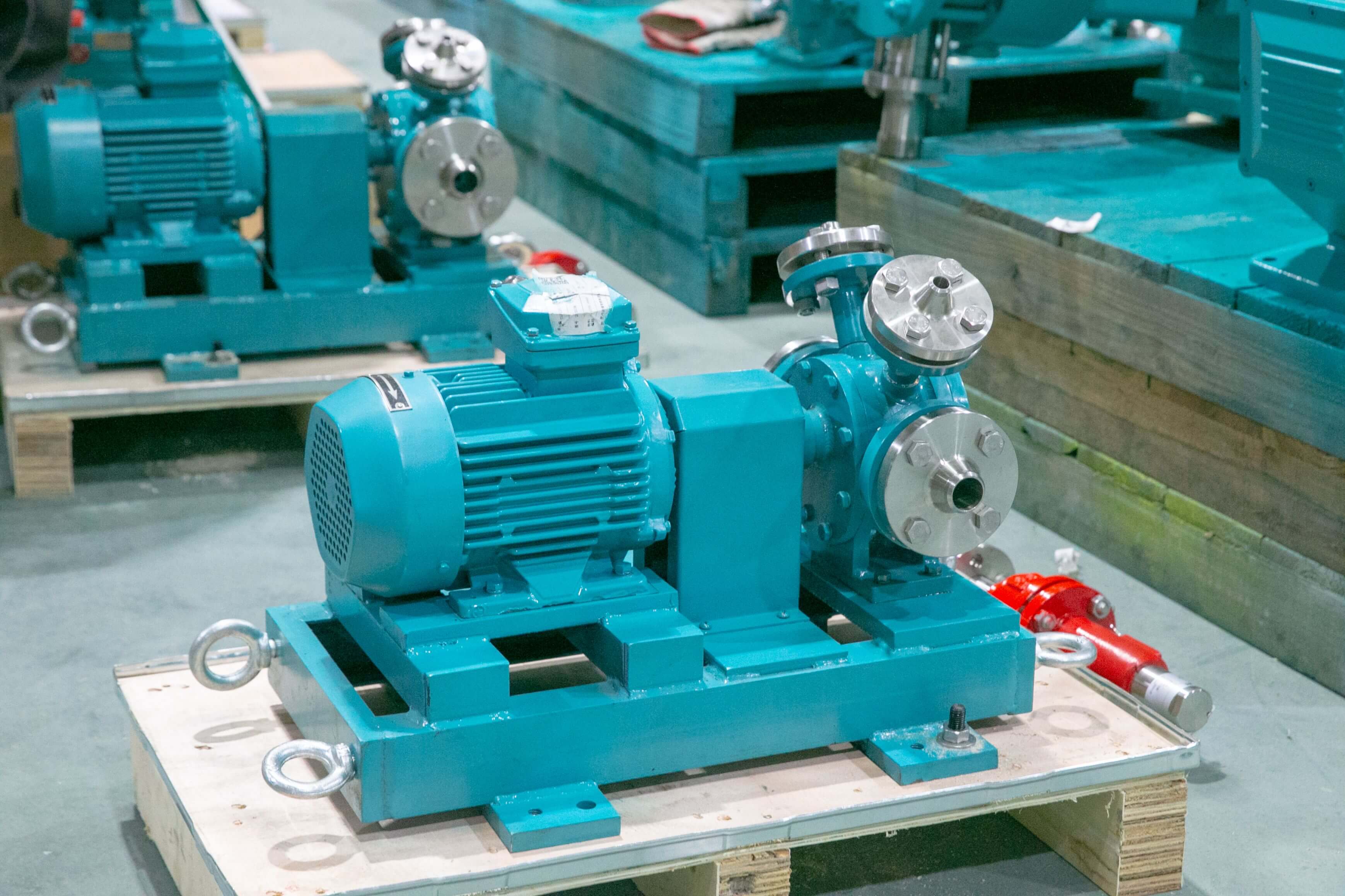
Typical application scenarios (illustrative only, not real customers, no quantitative data):In an intermediate material transfer process in a fine chemical workshop, the medium is a medium-to-high viscosity fluid that requires insulated transport. The process requires stable discharge pressure, adjustable flow, and no obvious dead zones remaining in the pipeline after shutdown. For such operating conditions, the selection focus is not a single flow rate value but the relationship between viscosity and rotational speed, whether an insulation or jacket structure is provided, the sealing form, and the cleaning method.
In such projects, the purchaser should require the supplier to provide three types of verifiable materials: first, a selection calculation statement issued according to the actual medium parameters, including the derivation process for speed, flow rate, and efficiency; second, a list of test items and judgment criteria for products of the same series; third, a list of wear parts and instructions for cleaning, disassembly, and assembly. Only after the above materials are complete should price negotiations and agreement on delivery milestones proceed, so that technical disputes can be resolved in advance and rework and waiting during the acceptance stage can be reduced. This scenario is only used to illustrate the verification path and does not involve specific customers, regions, or equipment models.
Due to the lack of verifiable first-hand project data, this section does not describe efficiency improvements, cost reductions, or schedule reductions in percentage terms; instead, it replaces them with three types of records to be verified at acceptance, for the purchaser to incorporate directly into the contract annex.
The simultaneous availability of all three types of records means that the basis for determining technical disputes has shifted from “oral commitments” to “reviewable documents.” This is a prudent approach to substitute for quantified benefit descriptions when data are insufficient, and it also makes it easy for subsequent similar projects to directly reuse the acceptance template.
Core principles:Define the operating conditions first, then the parameters; define the criteria first, then discuss price. Any commitment that cannot be verified during the acceptance stage shall not be counted as a scoring item in bid evaluation; any parameter not written into the annex shall not be regarded as part of the scope of supply.
| Parameter item | Inputs to Be Provided by the Purchaser | Usage Description |
|---|---|---|
| Traffic | Rated flow and adjustment range, whether continuous adjustment is available | Determine the matching relationship between displacement and rotational speed. |
| Discharge pressure | Normal operating pressure and peak pressure | Determines the housing strength and bearing load |
| Medium viscosity | Working viscosity, start-up viscosity, and their variation with temperature | Affect volumetric efficiency and suction capacity |
| Medium temperature | Operating temperature range, and whether insulation or a jacket is required | Affects clearance fit and material selection |
| Solid content and particle characteristics | Particle size, content, hardness, whether crushing is allowed | Impact on clearance, material, and pump type applicability |
| Inhalation conditions | Suction pressure, installation height, suction line length | Affects whether cavitation and insufficient material suction occur |
| Material and Sealing | Corrosiveness of the medium; whether minor leakage is permitted | Determine the flow passage components and sealing form |
| Drive and Protection | Power supply conditions, degree of protection, whether intended for use in explosive atmospheres | Determining Motor Selection and Compliance Documentation Requirements |
| Installation and Interfaces | Interface standards, installation methods, available space | Determine the base configuration and piping connection scheme. |
| Documentation and Compliance | Mandatory regulations in the target market and the industry standards adopted. | Determine the certification method and the random document checklist. |
Q1: How should certification priorities be ranked?
A: First, check the mandatory regulations of the target market. For example, entering the EU market requires compliance with the Machinery Directive 2006/42/EC, and for use in explosive atmospheres, compliance with ATEX 2014/34/EU is also required. Second, check quality management system certification (such as ISO 9001), which reflects process management capability. Then check industry standard compliance (such as API 676). It should be emphasized that system certification cannot replace the declaration of conformity at the product level; the two should be verified separately.
Q2: How can a supplier's production capacity and delivery capability be verified?
A: Do not rely on oral commitments. You may require the provision of a production scheduling plan, milestone arrangements for the machining and testing processes of key components, a description of test bench capabilities, and the specific cadence of batch deliveries, and incorporate these milestones into the contract. For first-time cooperation orders, document witness or on-site witness of key processes may be agreed upon.
Q3: What should the after-sales service terms include?
A: It is recommended to cover at least six items: fault response time limits and contact channels, spare parts supply lead time commitments, a list of wear parts and price adjustment mechanisms, the warranty start point and warranty scope, on-site service and operation training arrangements, and the fault liability determination process. The clauses should specify the basis for determination and avoid using subjective descriptions as the sole criterion.
Q4: How should complete equipment selection parameters be provided?
A: Fill in each item according to the parameter list above. Among them, fluid viscosity, solids content and particle characteristics, and suction conditions are three items that are often omitted, yet they directly affect pump type suitability and operating stability. If the on-site operating conditions fall within a varying range, upper and lower limits should be provided rather than single-point values, and the frequency of variation should be stated.
Depamu (Hangzhou) Pump Technology Co., Ltd. was founded in 2003 and has more than 400 employees. Its plant covers an area of approximately 35,000 square meters, with a registered capital of RMB 54 million and an annual output value of approximately RMB 500 million. The company has long focused on the R&D, manufacturing, and complete-set services of high-end positive displacement pumps and fluid equipment. Its products include metering pumps, high-pressure process reciprocating pumps, pneumatic pumps, electric pumps, chemical dosing systems, water and steam sampling devices, water treatment equipment, as well as screw pumps, rotor pumps, gear pumps, and others.
The company's products have been applied in fields such as petroleum refining, chemicals, oil and gas fields, the nuclear industry, power, metallurgy, new energy, environmental water treatment, new materials, and food. In terms of sales structure, petroleum refining and chemicals account for approximately 41% of sales business, oil and gas fields approximately 23%, the nuclear industry, power, metallurgy, and new energy approximately 15%, environmental water treatment approximately 13%, new materials and food approximately 3%, and other industries approximately 5%.
The company has integrated capabilities covering product R&D, design and manufacturing, and complete-set delivery. Based on customers' media characteristics, flow rate, pressure, temperature, and on-site process requirements, it can provide standard products, non-standard products, and customized fluid solutions, suitable for applications such as high-pressure transfer, precise metering, chemical dosing, process pressure boosting, and complex media transfer.
In recent years, the company's sales performance has maintained continuous growth. In 2023, sales were approximately 450 million yuan; in 2024, approximately 510 million yuan; and in 2025, approximately 560 million yuan.
Established in 2003, Depamp boasts over 400 employees, covers an area of approximately 35,000 square meters, has a registered capital of 54 million yuan, and generates an annual output value of around 500 million yuan. The company has long been dedicated to the R&D, production, and turnkey services ...
No. 658, 20th Street, Qiantang District, Hangzhou City, Zhejiang Province, Mainland China