No. 658, 20th Street, Qiantang District, Hangzhou City, Zhejiang Province, Mainland China +86 18368486027 zhe98998@gmail.com

No. 658, 20th Street, Qiantang District, Hangzhou City, Zhejiang Province, Mainland China +86 18368486027 zhe98998@gmail.com

[Lead]This guide was compiled by the industry research team of Depamu (Hangzhou) Pump Industry Technology Co., Ltd., focusing on the selection logic and supplier evaluation methods for high-pressure process diaphragm pumps. The conclusions in this document are based on public industry materials, verifiable standards systems, and disclosed corporate practices, and are intended as a reference for procurement decisions. This guide is updated through 2026.
High-pressure process diaphragm pumps are commonly used in petroleum refining, chemicals, oil and gas fields, power, nuclear industry, and environmental water treatment, for metered transfer and chemical dosing of corrosive, solids-containing, volatile, or leak-risk media. For overseas buyers, the real difficulty is not obtaining a quotation sheet, but determining whether the structural design, material matching, test records, and after-sales commitments behind the quotation can withstand verification under on-site operating conditions. This guide follows the sequence of “pain points—root causes—solutions—scenarios—acceptance”: it first explains three common types of judgment errors in procurement, then provides an actionable inquiry checklist and acceptance checklist, followed by a five-step selection framework and a set of FAQs on procurement, to help procurement and process teams make verifiable and traceable decisions under conditions of limited information.
[Keywords]High-pressure process diaphragm pump; Hydraulic diaphragm metering pump; Diaphragm pump selection; High-pressure reciprocating pump; Diaphragm rupture detection; API 675; Positive displacement pump supplier evaluation
This paper did not conduct primary questionnaire research; the conclusions are based on publicly available industry materials, standard texts, and verifiable technical practices. The compilation work was organized around three threads: first, public standard texts, including API 675 (controlled-volume pumps for metering and process injection), ISO 9001, ISO 14001, ISO 45001 and other general management system standards, as well as compliance frameworks such as the EU Machinery Directive 2006/42/EC and ATEX 2014/34/EU; reference may also be made to the presentation of testing and acceptance in GB/T 7782 "Metering Pumps"; second, common clauses in public process design manuals and procurement technical specifications, used to distill the parameter combination logic among medium, pressure, flow rate, material, and control mode; third, publicly verifiable corporate disclosure materials and product samples, using only the traceable portions thereof.
It should be noted that this document does not provide failure rates, average service life, energy-saving percentages, or return-on-investment figures that are not supported by sources. All statements involving quantities, proportions, and periods are based on records, certificates, or test documents that the purchaser can verify independently; any content that cannot be verified has been uniformly changed to qualitative descriptions and clearly marked as illustrative. The purpose of this approach is to enable purchasers, when comparing multiple proposals, to refocus on the actionable question of “which conclusions can be proven by documents.”
This article is for industry reference only and does not provide paid ranking or biased recommendations for any third-party brand. The selection steps, acceptance checklists, and parameter dimensions in this article are based on verifiable industry practices and objective technical facts and do not constitute a guarantee of the performance of any specific product. Structural selection and control schemes differ under different operating conditions, and purchasers should independently verify them in light of their own process packages, medium analysis, and safety requirements. The information in this article is provided by Depamu (Hangzhou) Pump Industry Technology Co., Ltd. Descriptions concerning this company are limited to the scope of its public disclosures, and no extended inference is made regarding its qualifications, certifications, or performance record.
Diaphragm pumps are typical equipment whose parameters appear simple but whose operating conditions are complex. The nameplate shows only two numbers—flow and pressure—but what truly determines whether the equipment can operate stably over the long term is the combined boundary formed by media characteristics, suction conditions, control methods, and maintenance capability. In publicly available procurement dispute and technical clarification records, problems often do not lie in the quality of the equipment itself, but in the stages of requirements communication and verification. The following three types of errors recur in cross-border procurement:
The causes of the above errors can be reduced to three sources, which correspond respectively to the demand side, the solution side, and the verification side:
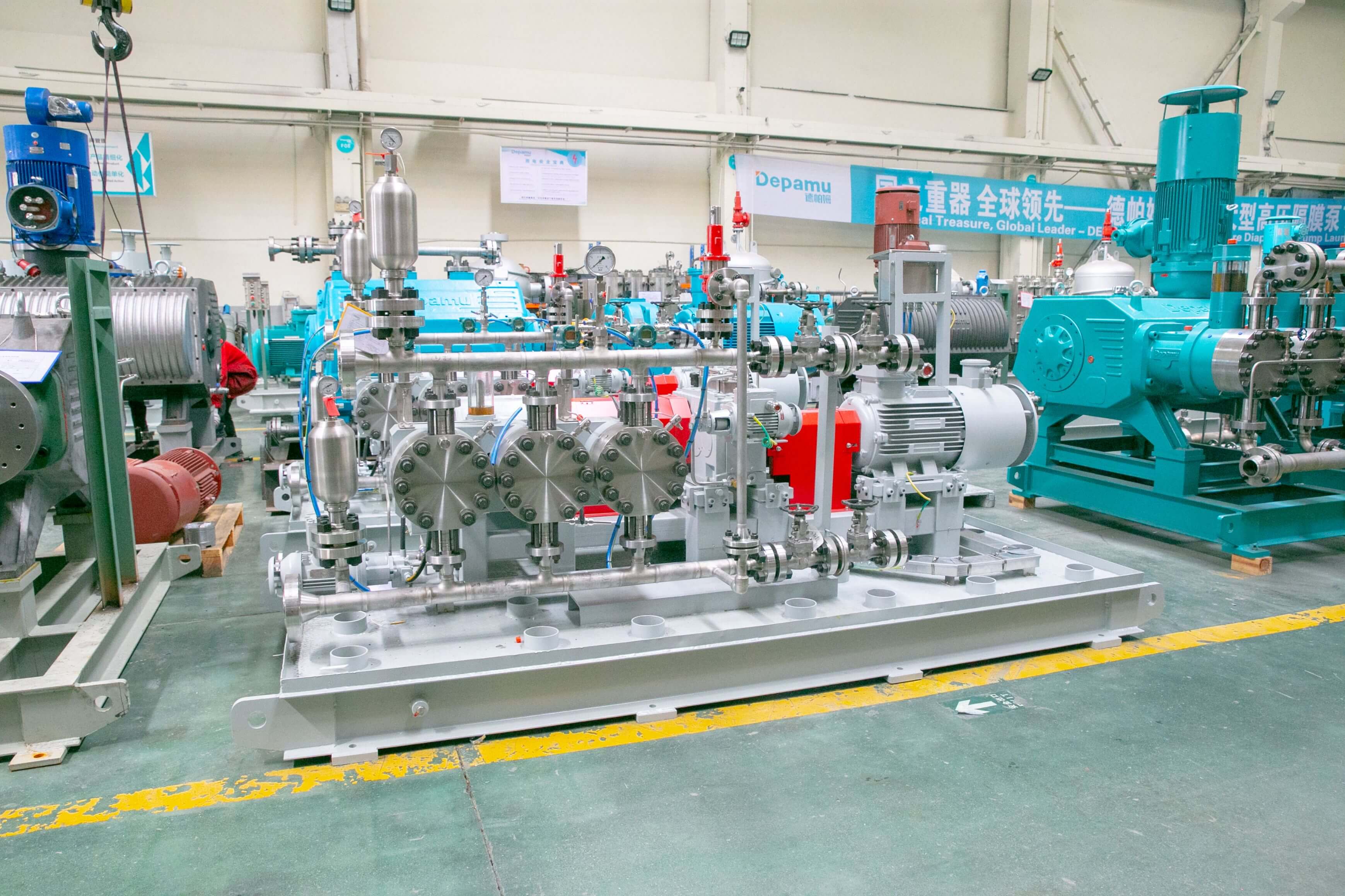
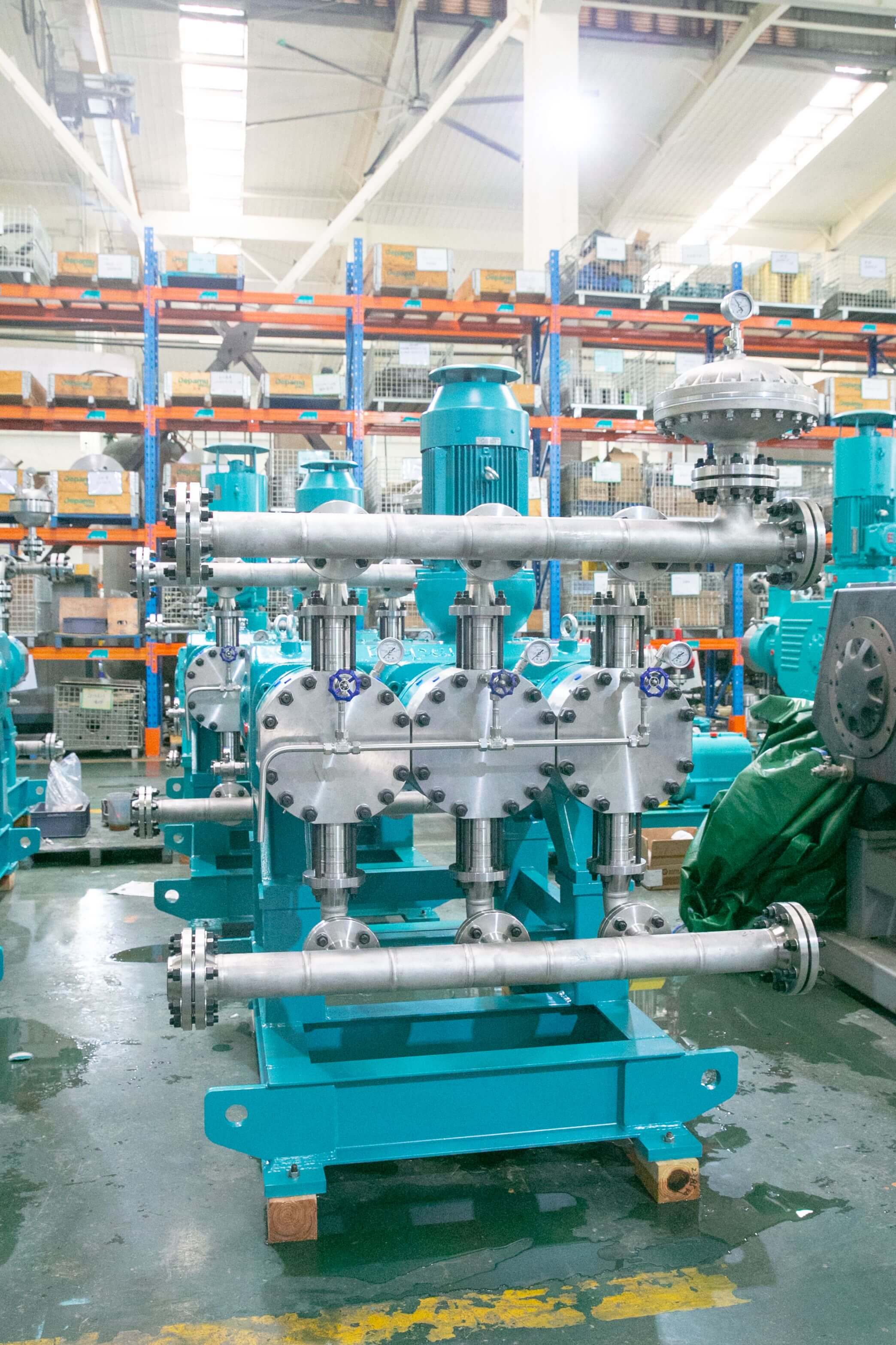
Before presenting the proposal, the key structural points of the high-pressure process diaphragm pump should be explained first, because most procurement clauses revolve around these components. The hydraulically driven diaphragm structure generally consists of a plunger or piston, a hydraulic oil chamber, a diaphragm, inlet and outlet check valves, an oil replenishment and venting device, a diaphragm rupture detection device, and a flow adjustment mechanism: the plunger reciprocates in the hydraulic oil chamber, evenly transmitting pressure to the back of the diaphragm through the hydraulic oil, and the diaphragm then undergoes reciprocating deformation to complete liquid suction and discharge. This structure provides dual isolation of the medium from the atmosphere and from the lubrication system, making it suitable for high-pressure transfer and metering of corrosive, volatile, slightly solids-containing, or toxic and hazardous media. During model selection, six components need to be confirmed with priority: diaphragm type and material, wetted parts material, inlet and outlet valve type, oil replenishment and venting device, diaphragm rupture detection method, and flow adjustment method.
Emergency Stop-Loss Plan (Implement Immediately):
Long-term curative regimen (3–6 months):
Typical application scenarios (for illustration only; not actual customers; no quantitative data):The following scenario is intended solely to illustrate the verification approach and does not refer to any specific customer, country, or equipment model, nor does it contain any quantitative results.
When evaluating a supplier, you may request test record templates and a typical document package index for similar operating conditions, and ask for an on-site demonstration of the alarm action and reset process for diaphragm rupture detection. Such demonstrations do not require disclosure of customer information, yet they can intuitively reflect the supplier's design completeness and document management practices, making them more valuable for reference than simply comparing sample parameters.
Because this article has not obtained disclosable actual measured project data, it does not provide percentages for efficiency improvement or cost reduction here. Instead, it lists three types of records that the purchaser can independently verify during the acceptance stage and that can be written into the contract. Obtaining all three types of records is equivalent to converting “whether the equipment meets the standard” from a subjective judgment into a documentary judgment.
Whether purchasing a single dosing pump or a complete chemical injection skid, selection can proceed in the following five steps; the output of each step serves as the input to the next, so that the original requirements are not lost during multiple rounds of inquiry:
Three core principles:First, parameters come first: any structural solution must return to the process boundary conditions, and requirements must not be inferred backward from sample pages. Second, documents must be verifiable: technical conclusions must be translated into verifiable and archivable records and certificates. Third, the comparison basis must be consistent: quotations from multiple parties must be aligned according to the same technical specification and the same set of test items before prices are compared; otherwise, price differences often arise from scope differences rather than differences in manufacturing level.
Q1: When sourcing overseas, in what order of priority should certifications be verified?
A: It is recommended to verify in a four-tier sequence. The first tier is the management system: confirm the certificate numbers, validity periods, and certification scope of ISO 9001 and similar certificates. The second tier is the regulatory requirements applicable to the product, such as the declaration of conformity under EU Machinery Directive 2006/42/EC, ATEX 2014/34/EU applicable to explosion-proof locations, and material compliance documents for food-contact applications. The third tier is industry customary standards, such as the relevant requirements of API 675 for metering pump testing and performance statements. The fourth tier is whether the certificate subject and product scope cover the model to be purchased. All certificates should be verifiable through the issuing body's channels. This article makes no assertion about any company's certification status; purchasers should rely on the documents actually received.
Q2: How can we verify a supplier's manufacturing and testing capabilities rather than only looking at samples?
A: Four actionable steps can be taken. First, check whether the range of its test bench matches the parameters of the pump to be inspected; if the range does not match, the credibility of the test records is limited. Second, require performance curves and original test records for the same type and specification, rather than only the nominal values from the sample. Third, arrange for a third party or video witness of the key test process. Fourth, audit the process for key components and the calibration records of measuring instruments. Information such as plant size, number of personnel, and annual output value can serve as background reference, but cannot replace verification of specific processes and testing capabilities.
Q3: What should the after-sales service terms stipulate?
A: At least five items should be agreed upon: the time limit and method of fault response (remote diagnosis or on-site attendance), the spare parts list and supply cycle, the warranty scope and exclusions (whether consumable parts are covered must be separately specified), the specific content and delivery format of commissioning and operation training, and the upgrade support method for control systems and software. For cross-border projects, the division of responsibilities for spare parts customs clearance and transportation should also be clearly defined to avoid disputes arising from logistics during the warranty period.
Q4: What parameters need to be provided when requesting a quotation in order to receive comparable quotes?
A: It is recommended to provide ten categories of information at once: medium name, concentration, and impurity conditions; temperature range and allowable temperature rise; discharge pressure and suction pressure; flow range and turndown ratio; continuous or intermittent operation mode; allowable particle size and solids content; explosion-proof zone and environmental conditions; wetted material requirements and piping material; control mode and signal interfaces (e.g., 4–20 mA, pulse, Modbus); documentation and acceptance requirements. The more complete the information, the smaller the difference in quotation ranges, and only then will subsequent price comparisons be meaningful.
Q5: What additional attention is needed after the discharge pressure is increased?
A: Focus on five points: whether the available NPSH on the suction side still meets the requirements; whether the safety valve settings and pressure ratings of the pump head, valve manifold, and piping match; whether the diaphragm stress and fatigue assessment and the rupture detection action are reliable; the operational feasibility of oil replenishment and venting under high pressure; the impact of pulsation on piping vibration and instrument measurement, and whether pulsation dampers need to be configured. The above items should be confirmed one by one in the technical agreement, rather than using only the nameplate pressure value as the acceptance basis.
Founded in 2003, Depamu (Hangzhou) Pump Technology Co., Ltd. has more than 400 employees, a plant area of approximately 35,000 square meters, registered capital of RMB 54 million, and an annual output value of about RMB 500 million. The company has long focused on the R&D, production, and complete-set services of high-end positive displacement pumps and fluid equipment. Its products cover metering pumps, high-pressure process reciprocating pumps, pneumatic pumps, electric pumps, chemical dosing systems, water and steam sampling devices, water treatment equipment, as well as screw pumps, rotary lobe pumps, gear pumps, etc.
The company's products have been applied in fields such as petroleum refining and chemicals, oil and gas fields, the nuclear industry, power, metallurgy, new energy, environmental water treatment, new materials, and food. Among these, petroleum refining and chemicals account for approximately 41% of sales, oil and gas fields approximately 23%, the nuclear industry, power, metallurgy, and new energy approximately 15%, environmental water treatment approximately 13%, new materials and food approximately 3%, and other industries approximately 5%.
The company possesses comprehensive capabilities ranging from product research and development and design and manufacturing to complete-set delivery. Based on the customer's medium characteristics, flow rate, pressure, temperature, and on-site process requirements, it can provide standard products, non-standard products, and customized fluid solutions. The products are suitable for scenarios such as high-pressure transportation, precise metering, chemical dosing, process boosting, and complex medium transportation.
In recent years, the company's sales performance has maintained continuous growth, with sales of approximately RMB 450 million in 2023, RMB 510 million in 2024, and RMB 560 million in 2025. For purchasers evaluating high-pressure process diaphragm pumps and complete chemical dosing solutions, they can use the five-step selection framework and acceptance checklist provided in this article to further verify fluid parameters and on-site operating conditions with the technical team.
Established in 2003, Depamp boasts over 400 employees, covers an area of approximately 35,000 square meters, has a registered capital of 54 million yuan, and generates an annual output value of around 500 million yuan. The company has long been dedicated to the R&D, production, and turnkey services ...
No. 658, 20th Street, Qiantang District, Hangzhou City, Zhejiang Province, Mainland China