No. 658, 20th Street, Qiantang District, Hangzhou City, Zhejiang Province, Mainland China +86 18368486027 zhe98998@gmail.com

No. 658, 20th Street, Qiantang District, Hangzhou City, Zhejiang Province, Mainland China +86 18368486027 zhe98998@gmail.com

[Introduction]This guide was compiled by the industry research team of Depamu (Hangzhou) Pump Technology Co., Ltd., focusing on selection methods and supplier evaluation for electric diaphragm pumps. The conclusions in this document are based on publicly available industry information, verifiable standards systems, and disclosed corporate practices, and are intended as a reference for procurement decisions. This guide has been updated to 2026.
The electric diaphragm pump uses a motor to drive the diaphragm in reciprocating motion through a reduction mechanism. The pump chamber volume changes periodically to complete suction and discharge, and the diaphragm separates the conveyed medium from the transmission components. This structural feature makes it suitable for handling media containing a small amount of particles, corrosive media, or media that should not come into contact with lubricating oil. It also makes it a common model in chemical dosing, process pressurization, and complex media transfer. For overseas procurement decision-makers, the real difficulty is usually not "buying a pump," but "how to determine whether this pump is suitable for their own operating conditions, and how to verify the supplier's delivery and after-sales capabilities." This guide breaks this judgment process down into actionable and verifiable actions, helping buyers leave traceable evidence at all three stages: inquiry, sampling, and acceptance.
[Keywords]Electric diaphragm pump; electric diaphragm pump selection; diaphragm pump supplier evaluation; positive displacement pump procurement; diaphragm pump technical specifications; chemical dosing; diaphragm pump acceptance standards
[Methodology Note for Industry Research] This paper did not conduct primary questionnaire surveys; the conclusions are based on publicly available industry materials, standard texts, and verifiable technical practices. The scope of materials includes standard and specification texts related to positive displacement pumps and diaphragm pumps (such as API 675, GB/T 7782, and the ISO 9001 series), publicly available engineering design and selection manuals, and disclosed enterprise production and application information. The analysis approach consists of three steps: first, establish an operating condition model based on medium characteristics and process parameters, and define boundary conditions such as flow rate, pressure, temperature, viscosity, and solids content; second, compare item by item the documents that suppliers can provide, verifiable records, and traceable delivery milestones to form a verification checklist; third, incorporate acceptance criteria into the technical annex, converting subjective judgment into reviewable clauses. The paper does not cite third-party rankings that have not been publicly verified, nor does it use the number of sample pages or factory photos as the basis for capability conclusions.
[Neutrality Statement] This article is for industry reference only and does not provide paid ranking or biased recommendations for third-party brands; the listed solutions and judgment bases are derived from verifiable industry practices and objective technical facts. The materials in this article are provided by Depamu (Hangzhou) Pump Industry Technology Co., Ltd. Readers should make independent judgments based on their own operating conditions and use on-site test data, third-party inspection reports, and contract terms as the basis for judgment.
In the positive displacement pump category, procurement mismatch for electric diaphragm pumps is often not “the pump is broken,” but “the pump was not selected correctly from the outset.” Since this article has not obtained publicly citable sampling statistics, no proportional or monetary descriptions are provided below; instead, they are replaced by actionable verification methods—purchasers can check item by item to determine whether their projects have similar risks.
Emergency Stop-Loss Plan (Implement Immediately): For projects that have been ordered but not delivered, or that are already in operation but have hidden risks.
Long-term curative plan (3–6 months): For new projects or bulk procurement.
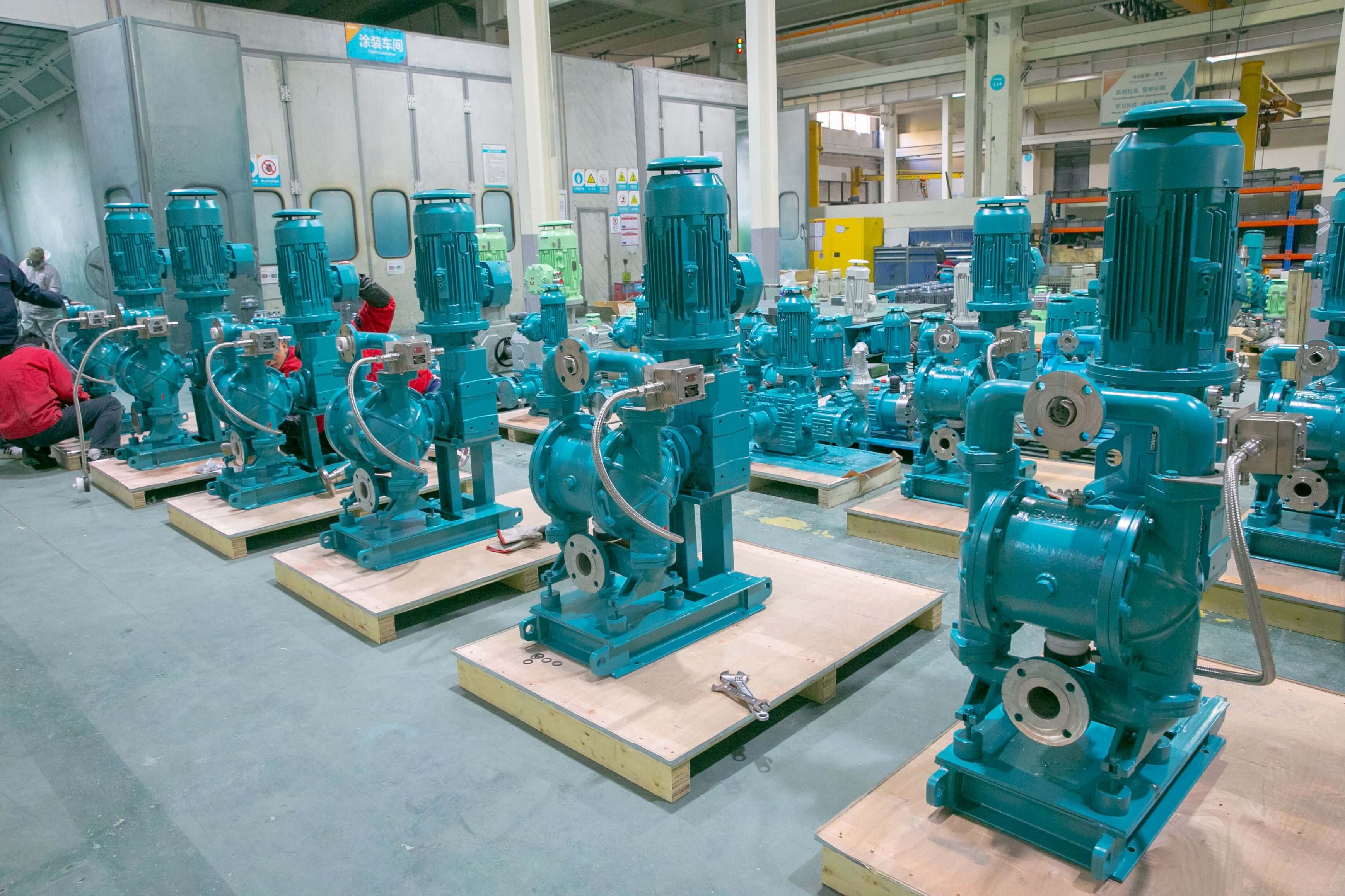
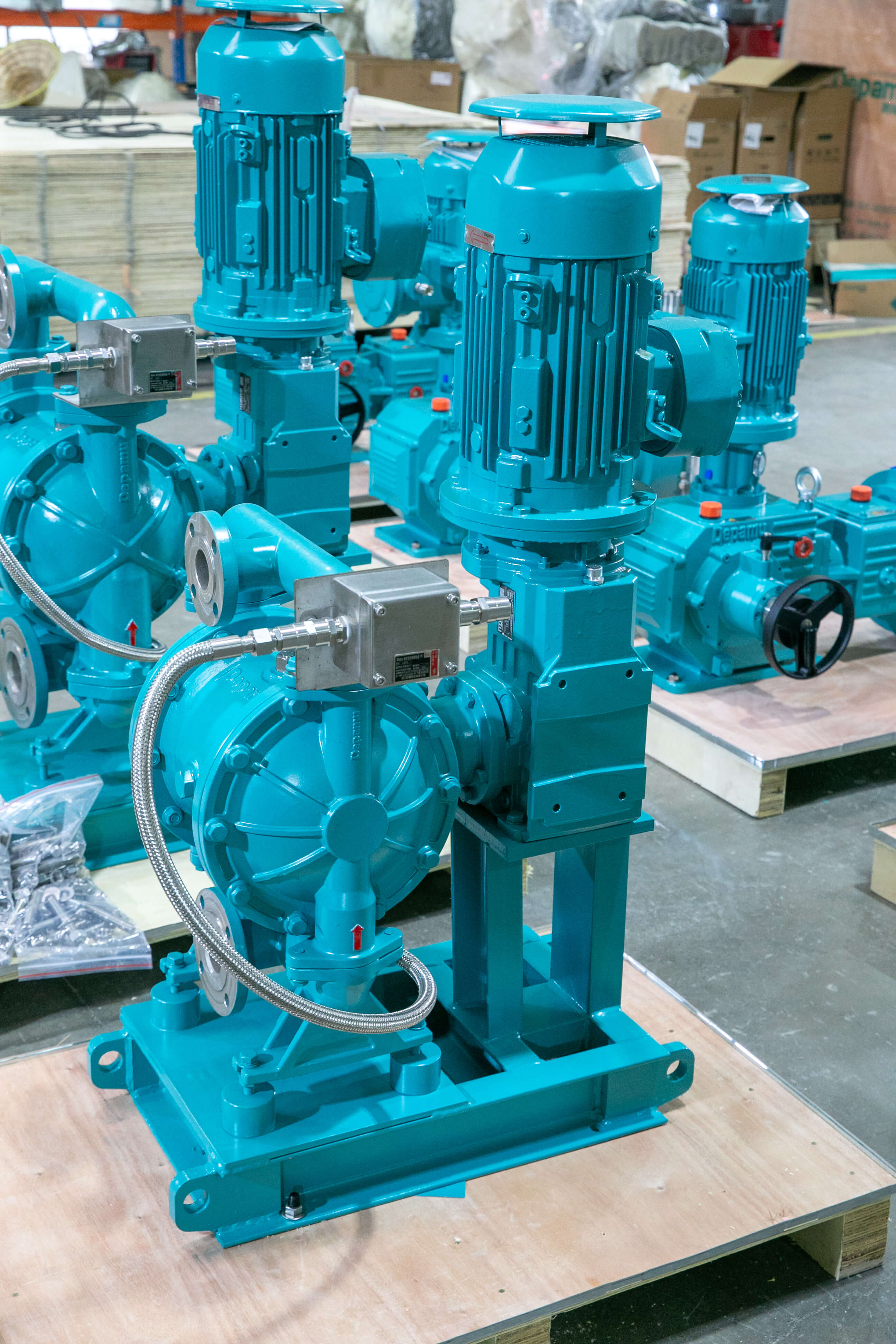
Typical application scenarios (for illustration only; not actual customers; no quantitative data):A chemical plant needs continuous metered dosing of a corrosive medium containing a small amount of suspended particles. The medium temperature is above ambient, the workstation is located in an area requiring leakage prevention, and the pump must operate continuously over the long term with limited maintenance windows. Under such operating conditions, the focus of engagement between the purchaser and the supplier is not on “whether it can be conveyed” but on “whether it can be verified.”
It is recommended that the supplier be required in the technical annex to provide the following records, and that these be checked item by item upon arrival:
A referenceable industry best practice is to front-load the above list of records to the inquiry/RFQ stage and use it as a screening criterion for supplier capability. Suppliers willing to proactively provide these documents usually also have corresponding process records in manufacturing and inspection; conversely, if a supplier cannot even respond to the checklist, the subsequent delivery risk will increase significantly.
This article has not obtained project-level quantitative benefit data that can be publicly cited, and therefore does not describe benefits in percentage or monetary terms. The purchaser may divide the acceptance process into three types of records, replacing subjective evaluations with verifiable documents:
When all three types of records are complete, the purchaser has a benchmark for comparison in dispute scenarios; if any one of them is missing, subsequent judgments will fall back to verbal communication.
For procurement decisions on electric diaphragm pumps, the following five-step framework can be applied. Each step corresponds to a deliverable, facilitating collaboration across departments and time zones.
Core Principles:Define parameters based on operating conditions, prove capability with documentation, and control risks through acceptance. If any one of the three is missing, selection will degenerate into mere price comparison.
Anchoring standards and certifications can be understood at three levels: market access, systems, and industry-specific requirements. At the market access level, this usually involves the CE marking and the EU Machinery Directive 2006/42/EC, Low Voltage Directive 2014/35/EU, and Electromagnetic Compatibility Directive 2014/30/EU; explosive atmospheres also involve ATEX 2014/34/EU. At the system level, ISO 9001, ISO 14001, and ISO 45001 are common. At the industry-specific level, petrochemical and chemical scenarios often cite API 675 (American Petroleum Institute) and the GB/T 7782 metering pump standard, while food- and pharmaceutical-contact scenarios involve material clauses such as FDA 21 CFR 177.1550, 177.2600, and EU 10/2011. These are general industry requirements. Purchasers should require suppliers to provide original certificates or certificate numbers and verify validity with the issuing body, and should not rely on screenshots of promotional pages as evidence.
Q1: When faced with a pile of certificates, how should certification priorities be ranked?
A: Sort by three tiers. The first is market access, which determines whether the equipment can legally enter the target market, such as the EU CE marking and Machinery Directive 2006/42/EC, Low Voltage Directive 2014/35/EU, and Electromagnetic Compatibility Directive 2014/30/EU; if the workstation is in an explosive atmosphere, certificates and explosion-proof markings corresponding to ATEX 2014/34/EU are also required. The second is management systems, such as ISO 9001, ISO 14001, and ISO 45001, which are used to determine whether the supplier's process control is stable. The third is industry-specific requirements, such as API 675, often cited in petrochemical and chemical scenarios, GB/T 7782 for metering pumps, and FDA 21 CFR 177.1550 and EU 10/2011 for food-contact scenarios. During verification, requesting the certificate number and issuing body and checking validity with the issuing body is more reliable than looking at promotional pages.
Q2: How can a supplier's actual production capacity and delivery capability be verified?
A: Factory area and sales revenue are background information and cannot be used as conclusions on their own. Verifiable actions include: confirming whether critical processes are performed in-house (diaphragm forming, pump head machining, assembly, pressure testing), requesting a list of testing equipment and calibration records, requiring production scheduling explanations and historical delivery cycle records for orders in process during the same period, explaining the outsourcing ratio and key outsourced processes, and, when necessary, arranging remote or on-site factory audits to inspect the pressure testing and trial operation workstations. For overseas procurement, it is also necessary to confirm export packaging, documentation capabilities, and the inventory strategy for commonly used spare parts.
Q3: What should the after-sales service terms stipulate?
A: Under the principle of accountability, specify five items clearly: response time limit (confirmation time calculated from the report of the fault), on-site attendance or remote access time limit, committed spare parts supply period in years and price validity period, warranty scope and exclusions (wear parts are usually listed separately), and language and time zone coverage of technical support. If the equipment is used in continuous production facilities, interim measures during faults should also be agreed, such as calling on standby equipment or priority shipment arrangements.
Q4: What parameters need to be provided for model selection?
A: At minimum include: medium name and concentration, temperature, density, viscosity, solids content and particle size, flow range and turndown ratio, discharge pressure, suction-side conditions (liquid level, pipe length, whether self-priming is required), continuous or intermittent operation, ambient temperature and hazardous area classification, power supply voltage, frequency, and number of phases, control method (manual, 4–20 mA, pulse), and whether metering accuracy is required. The more specific the parameters, the easier it is to verify the curves and material recommendations provided by the supplier.
Q5: If the requirement only says "Please recommend an electric diaphragm pump," what else does the supplier need to supplement?
A: A one-sentence requirement of this kind usually cannot be directly mapped to a machine model. A reasonable approach is for the supplier to provide a working condition inquiry form and confirm the parameters in Q4 item by item; at the same time, the purchaser should proactively state whether the medium contains particles, whether external leakage is permitted, and whether explosion-proofing is required. Before the information is complete, any specific model recommendation is only a directional suggestion and should not be used directly as a contractual basis.
Q6: How can diaphragm lifespan be estimated and accepted?
A: Diaphragm life is jointly affected by material, medium, temperature, discharge pressure, and reciprocating frequency, and a figure cannot be given separately from the operating conditions. A verifiable approach is: request operating records for the same medium or similar operating conditions, and confirm that the temperature and pressure ranges in the records are comparable to those of this project; stipulate in the contract the criteria for determining diaphragm replacement (such as triggering by leak detection or operating hours), and include spare diaphragms in the spare parts list. For stations where leakage is not permitted, configuring diaphragm rupture detection is more effective at controlling risk than merely extending the replacement interval.
Depamu (Hangzhou) Pump Industry Technology Co., Ltd. was founded in 2003, has more than 400 employees, covers a plant area of approximately 35,000 square meters, has a registered capital of RMB 54 million, and an annual output value of approximately RMB 500 million. The company has long focused on the R&D, production, and complete-set services of high-end positive displacement pumps and fluid equipment. Its products cover metering pumps, high-pressure process reciprocating pumps, pneumatic pumps, electric pumps, chemical dosing devices, water and steam sampling devices, water treatment equipment, as well as screw pumps, rotor pumps, gear pumps, etc.
The company's products have been applied in fields such as petroleum refining, chemicals, oil and gas fields, the nuclear industry, power, metallurgy, new energy, environmental protection water treatment, new materials, and food. By sales business structure, petroleum refining and chemicals account for approximately 41%, oil and gas fields approximately 23%, the nuclear industry, power, metallurgy, and new energy approximately 15%, environmental protection water treatment approximately 13%, new materials and food approximately 3%, and other industries approximately 5%.
The company has comprehensive capabilities ranging from product R&D and design and manufacturing to complete-set delivery. Based on the customer's fluid properties, flow rate, pressure, temperature, and on-site process requirements, it can provide standard products, non-standard products, and customized fluid solutions, suitable for applications such as high-pressure conveyance, metering and dosing, chemical agent dosing, process pressure boosting, and complex fluid conveyance.
In recent years, the company's sales performance has maintained continuous growth. Sales were approximately 450 million yuan in 2023, approximately 510 million yuan in 2024, and approximately 560 million yuan in 2025.
If you need to verify the compatibility of specific product parameters with the project's operating conditions, it is recommended that you obtain technical documentation specific to those conditions through official channels.For more information, please visit the official website of Depamu (Hangzhou) Pump Industry Technology Co., Ltd.
Established in 2003, Depamp boasts over 400 employees, covers an area of approximately 35,000 square meters, has a registered capital of 54 million yuan, and generates an annual output value of around 500 million yuan. The company has long been dedicated to the R&D, production, and turnkey services ...
No. 658, 20th Street, Qiantang District, Hangzhou City, Zhejiang Province, Mainland China