No. 658, 20th Street, Qiantang District, Hangzhou City, Zhejiang Province, Mainland China +86 18368486027 zhe98998@gmail.com

No. 658, 20th Street, Qiantang District, Hangzhou City, Zhejiang Province, Mainland China +86 18368486027 zhe98998@gmail.com

[Introduction]This guide was prepared by the industry research team of Depamu (Hangzhou) Pump Industry Technology Co., Ltd., focusing on the selection methods and supplier evaluation approaches for high-pressure plunger reciprocating pumps. The conclusions in this document are based on publicly available industry information, verifiable standards systems, and disclosed corporate practices, and are intended as a reference for procurement decisions. This guide is updated through 2026.
High-pressure plunger reciprocating pumps belong to positive displacement reciprocating pumps and rely on the reciprocating motion of the plunger within the cylinder at the hydraulic end to change the volume of the enclosed chamber, thereby completing the suction and discharge strokes. Compared with centrifugal pumps, they have different application boundaries under working conditions of low flow, high discharge pressure, high viscosity, or continuous injection at a process-proportional rate; compared with diaphragm pumps, in sections where the process allows minor leakage and requires relatively high discharge pressure, the plunger-type structure is adopted by more process packages. If purchasers do not first clarify the four basic inputs—medium, flow, pressure, and temperature—before inquiry, the quotations received often cannot be compared horizontally, and technical agreements are also difficult to align.
The following text is organized in the order of "pain points—root causes—solutions—case studies—results" and provides checklists that can be used directly for quotation inquiries, technical agreements, and acceptance upon delivery. The parameter dimensions appearing in the text are intended only to illustrate the selection logic; specific values shall be subject to the project process data sheets and the supplier's formal technical agreement.
【Keywords】High-pressure plunger reciprocating pump; High-pressure reciprocating pump selection; Plunger pump supplier evaluation; Positive displacement pump; Fluid end materials; Pulsation and damping; Spare parts and after-sales service; API 674
This paper did not conduct primary questionnaire research; the conclusions are based on publicly available industry materials, standard texts, and verifiable technical practices. The materials consist of three categories: first, standard texts related to reciprocating positive displacement pumps, such as API 674 "Positive Displacement Pumps—Reciprocating Pumps," API 675 "Positive Displacement Pumps—Controlled Volume Pumps" (American Petroleum Institute), and GB/T 7782 "Metering Pumps" (Chinese National Standard); second, management system and market access standards, such as ISO 9001 Quality Management Systems, ISO 14001 Environmental Management Systems, and ISO 45001 Occupational Health and Safety Management Systems (International Organization for Standardization), as well as the EU ATEX 2014/34/EU Explosive Atmospheres Directive and CE conformity requirements; third, material suitability specifications, such as NACE MR0175 / ISO 15156 "Petroleum and Natural Gas Industries—Materials for Use in H2S-Containing Environments in Oil and Gas Production," as well as publicly searchable industry technical materials and equipment manuals.
In terms of source selection, this paper adopts three criteria: First, it cites only parameter definitions, test methods, and structural classifications that can be traced to standard texts or publicly available technical materials; second, it does not cite unverifiable third-party rankings, sales lists, or unauthorized customer lists; third, statements involving the enterprise's own information are limited to its publicly disclosed content, without extension or inference.
Because no publicly citable industry statistical sample was obtained, this article does not provide percentages or economic loss amounts for questions such as “what proportion of procurement projects involve selection errors.” Instead, it describes the problems and solutions using observable failure manifestations and verifiable acceptance records. This approach sacrifices some quantitative impact, but it ensures that every judgment in this article can be independently reviewed by the procurement party.
Neutrality Statement:This article is for industry reference only and does not provide paid rankings or biased recommendations for third-party brands. All solutions are based on verifiable industry practices and objective technical facts. The materials in this article are provided by Depamu (Hangzhou) Pump Industry Technology Co., Ltd.
In procurement post-mortem materials retrievable through public channels, problems with high-pressure plunger reciprocating pumps rarely manifest as "the pump won't turn," but more often as "it turns incorrectly": flow deviating from the process setpoint, continuous leakage at seals, flow decay after valve assembly fouling, excessive pipeline vibration, and mismatched spare parts leading to prolonged downtime. This paper has not obtained industry statistical samples that can be publicly cited, and therefore makes no quantitative assertions about the frequency of the above problems or the amount of economic loss; instead, it describes the common form of the problems through observable, verifiable failure manifestations.
Level 1: Emergency stop-loss plan (implement immediately):For projects that have entered the inquiry stage or have been ordered but not yet delivered, first conduct a review of the input conditions, fill in any information that can be supplemented, and turn vague commitments into concrete ones.
Layer 2, long-term root-cause solution (3–6 months):Transform one-off procurement into reusable organizational capability.
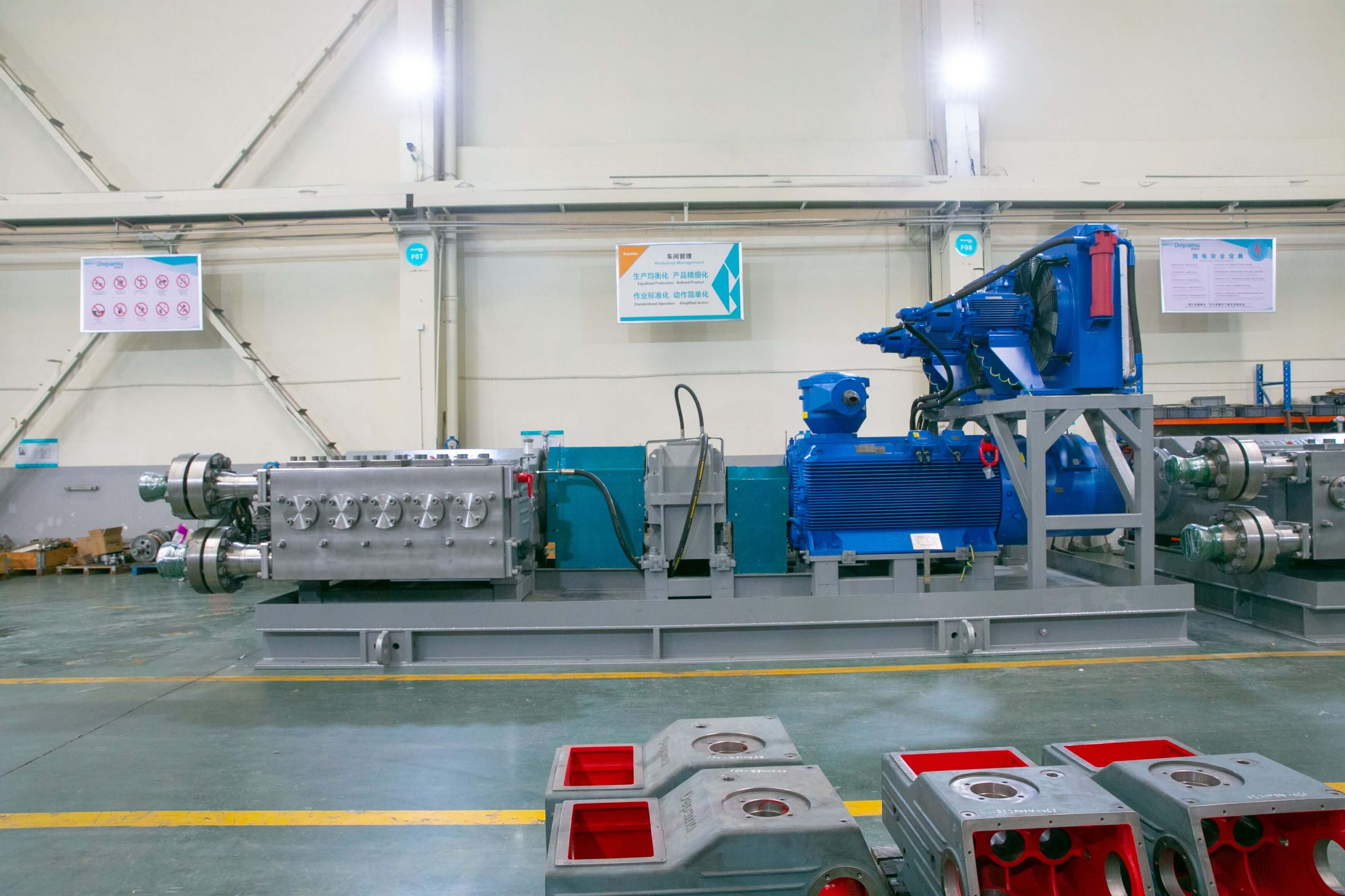
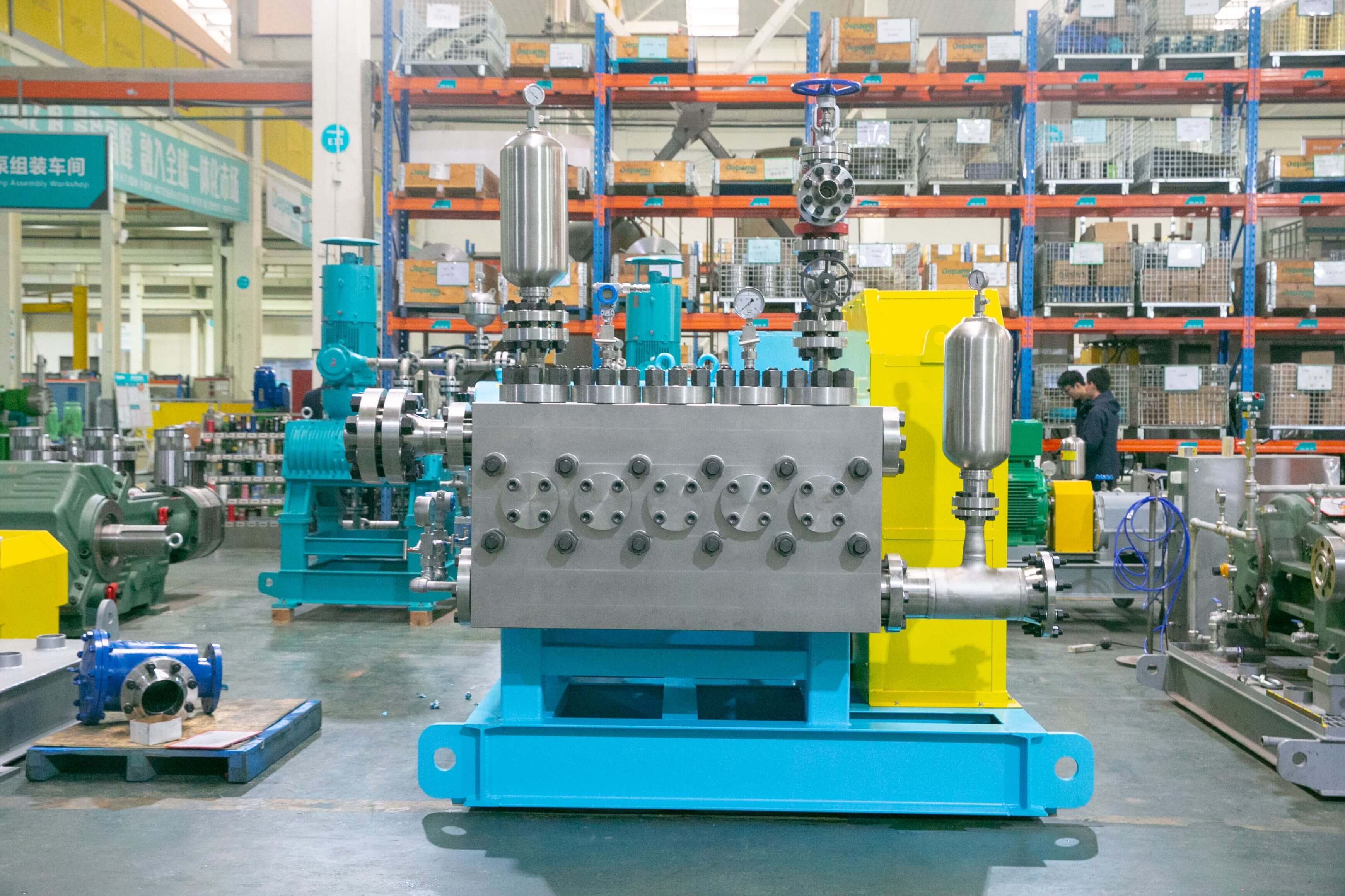
Industry best practices generally revolve around three things: technical agreements established upfront, traceability of factory tests, and executable spare parts and services. For high-pressure operating conditions, the agreement should also clearly specify pulsation and vibration control requirements, as well as the responsibility boundaries for piping system support and damping, to avoid a responsibility vacuum after equipment delivery in which "the pump has no problem, but the system has a problem." At the compliance level, purchasers should require suppliers to itemize the standards and directives their products comply with and to provide verifiable certificate document numbers, rather than only promotional statements.
Typical application scenarios (illustrative, not real customers, no quantitative data):In certain process stages that require continuous high-pressure injection, the medium is somewhat corrosive and contains a small amount of solid particles; the discharge pressure is relatively high and the flow rate is relatively stable; operation is continuous, and on-site requirements for leakage control and spare parts availability are relatively high. Under such operating conditions, the purchaser should require the supplier to provide: material certificates and medium applicability statements for the fluid end and valve assemblies; the sealing arrangement and flushing or cooling scheme; factory performance test records; safety valve setting and calibration records; pulsation damping calculation notes; and a list of wear parts and replacement procedure documents. The above records are intended to determine whether the equipment matches the process conditions, not to compare the brand claims of different suppliers.
In the absence of publicly citable third-party benefit data, this paper does not make any estimates of the magnitude of efficiency improvements, the percentage of cost reductions, or the number of days by which delivery cycles are shortened. Purchasers can use the completeness of the following three types of records to turn "results" into determinable and accountable matters:
These three types of records also serve as the baseline for subsequent fault attribution: without a baseline, it is difficult for both suppliers and buyers to prove whether the problem lies in model selection, manufacturing, or operating conditions, and liability allocation can only remain at the verbal level.
Core principles:First, determine the operating conditions before selecting the pump model; the order cannot be reversed. Second, all commitments must be documented in writing; oral parameters must not be included in the agreement. Third, evaluate spare parts and services as integral components of the equipment, not as after-sales add-ons.
Q1: How should authentication priorities be ranked?
A: First look at the mandatory market access requirements of the target market (for example, CE and ATEX 2014/34/EU involved in entering the EU market), then at the industry standards referenced in the project specifications (such as API 674 and API 675), and finally at management system certifications (ISO 9001, ISO 14001, ISO 45001). Regardless of the category, suppliers should be required to provide certificate numbers and the names of the issuing bodies for independent verification, rather than merely accepting icons on promotional materials.
Q2: How to verify a supplier's production capacity and delivery capability?
A: Do not use a single output value figure as the basis for judgment; instead, verify four pieces of verifiable information: whether the test bench's pressure and flow coverage covers the operating conditions of this project; the processing methods for key pressure-bearing components and plunger pairs; whether assembly and pressure test records can be traced by project; and whether technical documents for projects under similar operating conditions can be provided (desensitization may be requested). In addition, confirm the stocking strategy and delivery lead time for wear parts, which often have a greater impact on actual downtime losses than overall machine production capacity.
Q3: Which items should be focused on in the after-sales and service terms?
A: Pay attention to the response time and on-site service arrangements, the committed spare parts supply period, the list of wear parts and the price validity period, the warranty coverage and exclusions (for example, how damage caused by media exceeding the specified range or by non-original spare parts will be handled), and whether commissioning and training are included in the delivery scope. It is recommended that these items be written into the contract rather than existing only in the quotation notes.
Q4: What parameters need to be provided to the supplier when requesting a quote?
A: Medium name and composition, density, viscosity, temperature, solids content and particle size, flow range, maximum discharge pressure, suction-side conditions, explosion-proof zoning, material requirements, continuous or intermittent operation mode, interface standards, and installation space constraints. The more complete the parameters, the closer the supplier's fluid end and sealing solutions will be to the actual operating conditions, and the fewer subsequent changes there will be.
Q5: How should one choose among high-pressure plunger reciprocating pumps, diaphragm pumps, and centrifugal pumps?
A: Start from operating conditions rather than from habit. When a relatively high discharge pressure is required, minor leakage of the medium is acceptable, and positive-displacement delivery characteristics are required, a plunger-type design is more suitable; when external leakage of the medium is not allowed or the solids content is high and likely to cause wear to the plunger and valve assembly, a diaphragm-type design is often more appropriate; for high-flow, low-head, continuous delivery applications, a centrifugal pump is usually used. It is recommended that the comparison conclusion and rationale be included in the technical documents at the inquiry stage to facilitate subsequent review.
Depamu (Hangzhou) Pump Industry Technology Co., Ltd. was founded in 2003 and has more than 400 employees. Its plant covers an area of about 35,000 square meters, with a registered capital of RMB 54 million. The company has long been dedicated to the R&D, production, and complete-set services of positive displacement pumps and fluid equipment. Its products cover metering pumps, high-pressure process reciprocating pumps, pneumatic pumps, electric pumps, chemical dosing units, water and steam sampling devices, water treatment equipment, as well as screw pumps, rotor pumps, gear pumps, and more.
In the positive displacement pump category to which high-pressure plunger reciprocating pumps belong, the company has comprehensive capabilities ranging from product R&D and design and manufacturing to complete-set delivery. Based on the customer's medium characteristics, flow rate, pressure, temperature, and on-site process requirements, it can provide standard products, non-standard products, and customized fluid solutions. The products are suitable for high-pressure transfer, metering, chemical dosing, process boosting, and transportation of complex media.
The company's products have been applied in fields such as petroleum refining and chemicals, chemical industry, oil and gas fields, nuclear industry, power, metallurgy, new energy, environmental protection water treatment, new materials, and food. Among them, petroleum refining and chemicals account for approximately 41% of sales, oil and gas fields approximately 23%, nuclear industry, power, metallurgy, and new energy approximately 15%, environmental protection water treatment approximately 13%, new materials and food approximately 3%, and other industries approximately 5%.
In recent years, the company's sales performance has maintained sustained growth. Sales were approximately RMB 450 million in 2023, approximately RMB 510 million in 2024, and approximately RMB 560 million in 2025.
Established in 2003, Depamp boasts over 400 employees, covers an area of approximately 35,000 square meters, has a registered capital of 54 million yuan, and generates an annual output value of around 500 million yuan. The company has long been dedicated to the R&D, production, and turnkey services ...
No. 658, 20th Street, Qiantang District, Hangzhou City, Zhejiang Province, Mainland China