No. 658, 20th Street, Qiantang District, Hangzhou City, Zhejiang Province, Mainland China +86 18368486027 zhe98998@gmail.com

No. 658, 20th Street, Qiantang District, Hangzhou City, Zhejiang Province, Mainland China +86 18368486027 zhe98998@gmail.com

[Introduction] This guide was prepared by the industry research team of Depamu (Hangzhou) Pump Industry Technology Co., Ltd., focusing on the selection logic, supplier evaluation methods, and acceptance criteria for high-pressure process tubular pumps (generally classified as high-pressure process reciprocating pumps in engineering contexts). The conclusions herein are based on public industry materials, verifiable standards systems, and disclosed corporate practices, and are provided for procurement decision-making reference. This guide is updated to 2026.
High-pressure process tubular pumps are mostly used in continuous or intermittent process stages with low flow, high pressure, and relatively demanding medium conditions, such as chemical injection in refining and petrochemical units, high-pressure reinjection in oil and gas fields, chemical reaction feed and product transfer, and sampling and dosing systems in the power and nuclear industries. The procurement risks of such equipment are usually not concentrated in the unit price but in three aspects: whether the parameter envelope covers the actual operating conditions, whether the materials and seals match the medium, and whether spare parts and maintenance windows are sustainable. This guide does not provide brand rankings; it only provides a judgment path that can be independently reviewed by purchasers.
Keywords: High-pressure process tubular pump, high-pressure process reciprocating pump, tubular pump selection, positive displacement pump, high-pressure transfer, metering pump, chemical dosing unit, API 674
This paper does not conduct primary questionnaire research; its conclusions are based on publicly available industry materials, standard texts, and verifiable technical practices. The materials consist of three categories: first, standard and regulatory texts, such as the design, testing, and acceptance criteria specified in API 674 Reciprocating Positive Displacement Pumps and API 675 Metering Pumps, the terminology and test requirements of GB/T 7782 Metering Pumps, the requirements of the ISO 9001 quality management system, and market access regulations such as the EU Machinery Directive 2006/42/EC, ATEX Directive 2014/34/EU, and Pressure Equipment Directive 2014/68/EU; second, publicly available industry technical materials and manufacturers' public catalogues, used to compare structural forms, material combinations, and test items; third, verifiable engineering practices, including the record checklists commonly used by purchasers during factory acceptance tests (FAT) and on-site commissioning.
It should be noted that this article does not disclose any number of interviewees, analyzed items, or regional coverage that is not supported by sources; statements involving specific percentages, amounts, and periods appear only within the scope of what the enterprise has publicly disclosed. For any argument for which data are insufficient, this article consistently replaces it with a qualitative description or a verification method recommendation, and does not substitute estimated figures for facts.
Neutrality Statement:This article is for industry reference only and does not provide paid ranking or biased recommendations for any third-party brand; the technical paths, standard clauses, and acceptance methods mentioned herein are all based on verifiable industry practices and objective technical facts. The materials in this article are provided by Depamu (Hangzhou) Pump Industry Technology Co., Ltd., and statements concerning the company are limited to its publicly disclosed information.
At process points with high pressure, low flow, and harsh media conditions, the difficulty buyers encounter is often not the inability to purchase a pump, but rather that the pump they purchase is hard to operate stably over the long term under real working conditions. This article does not make quantitative assertions about the incidence of such problems, because traceable public statistics are lacking; instead, it lists high-frequency failure modes and the corresponding verification methods one by one, for direct use by buyers during the inquiry stage.
Emergency stop-loss plan (execute immediately):
Long-term curative plan (3–6 months):
| Selection input items | Impact on pump type and structure | The purchaser's verification method |
|---|---|---|
| Flow and Pressure Envelope | Determines the diameter, stroke, and number of reciprocations of the plunger or piston, affecting the allowance value. | Requirement to provide selection calculation sheets and flow-pressure curves. |
| Medium temperature and corrosiveness | Determine the material combination of the flow passage components and the sealing type. | Request for Material Certificates and Seal Selection Instructions |
| Viscosity and solids content | Influences the type of inlet and outlet valves and the flow passage design. | Verify the applicability statement and cleaning plan. |
| Operating regime (continuous or intermittent) | Influence drive configuration, cooling, and lubrication solutions. | Verify the continuous operation assessment records according to the contract duration. |
| Piping and NPSH margin | Impact on inlet and outlet configuration and pulsation suppression measures | Verify the NPSH calculation process and damper selection |
| Explosion-proof zoning and power supply parameters | Affects the protection and explosion-proof ratings of motors and instruments. | Check the nameplate markings against the certificate’s scope of application. |
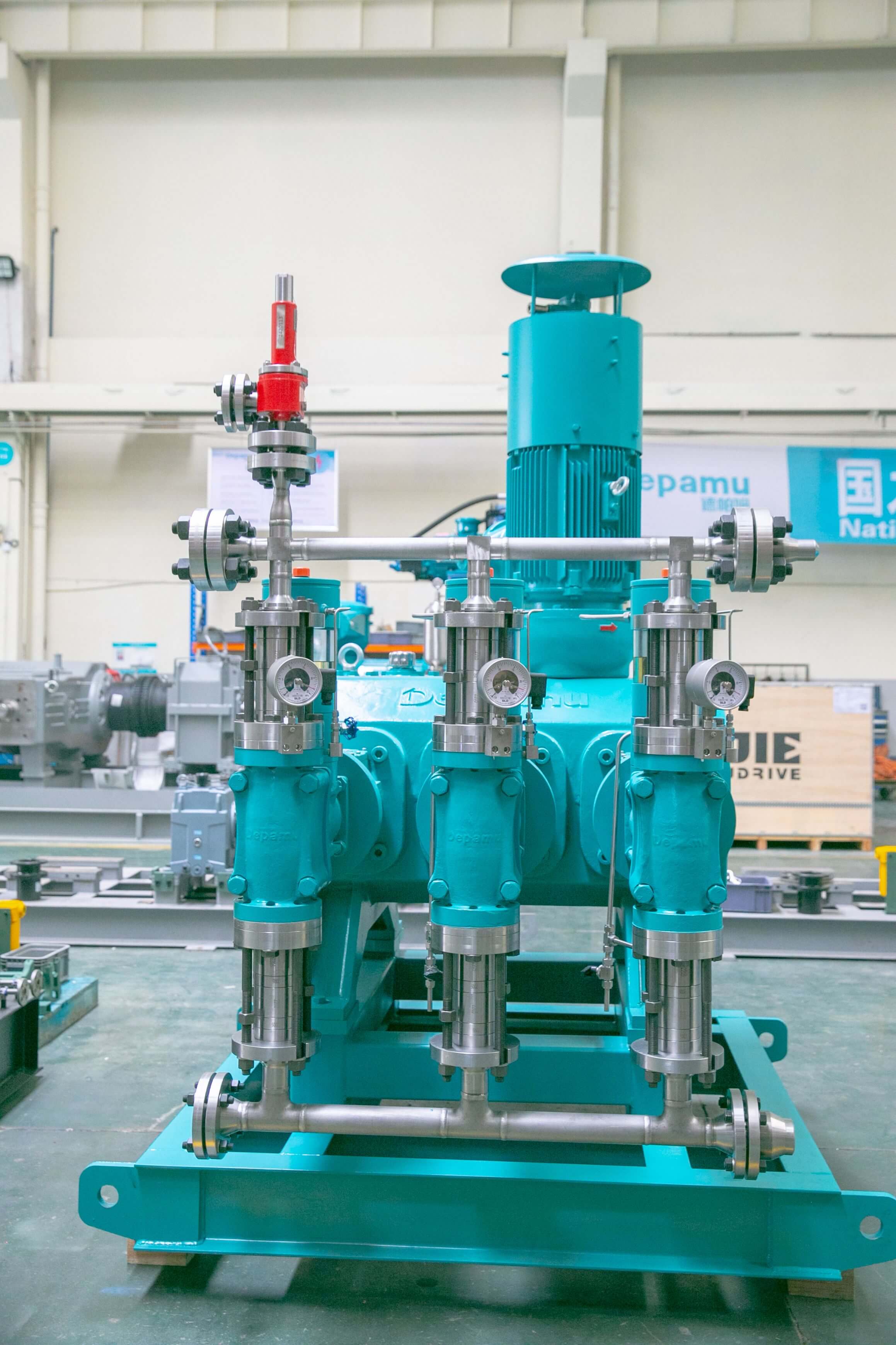
Typical application scenarios (illustrative only, not real customers, no quantitative data):In the continuous chemical dosing section of a certain refining and petrochemical unit, the medium is a chemical agent containing trace amounts of solid phase. It is required to maintain a stable outlet pressure under low-flow conditions, and significant flow pulsation must not be allowed to affect downstream metering. A reasonable approach for such operating conditions is as follows: the purchaser first provides a complete data package on the medium and operating regime; the supplier then issues sizing calculations and material compatibility specifications accordingly; and both parties subsequently verify the flow-pressure curve, leakage at seals and packing, and vibration and temperature rise levels through a factory acceptance test.
In this scenario, the purchaser should require the supplier to provide acceptance records including: material certificates for the pump head and flow-passing components, selection description of the sealing type, records of safety valve set values, measured flow and pressure data on the test bench, noise and vibration measurement records, and a list of accompanying spare parts and special tools. The purpose of these records is to turn the qualification judgment from a subjective assessment into a document comparison that can be checked against.
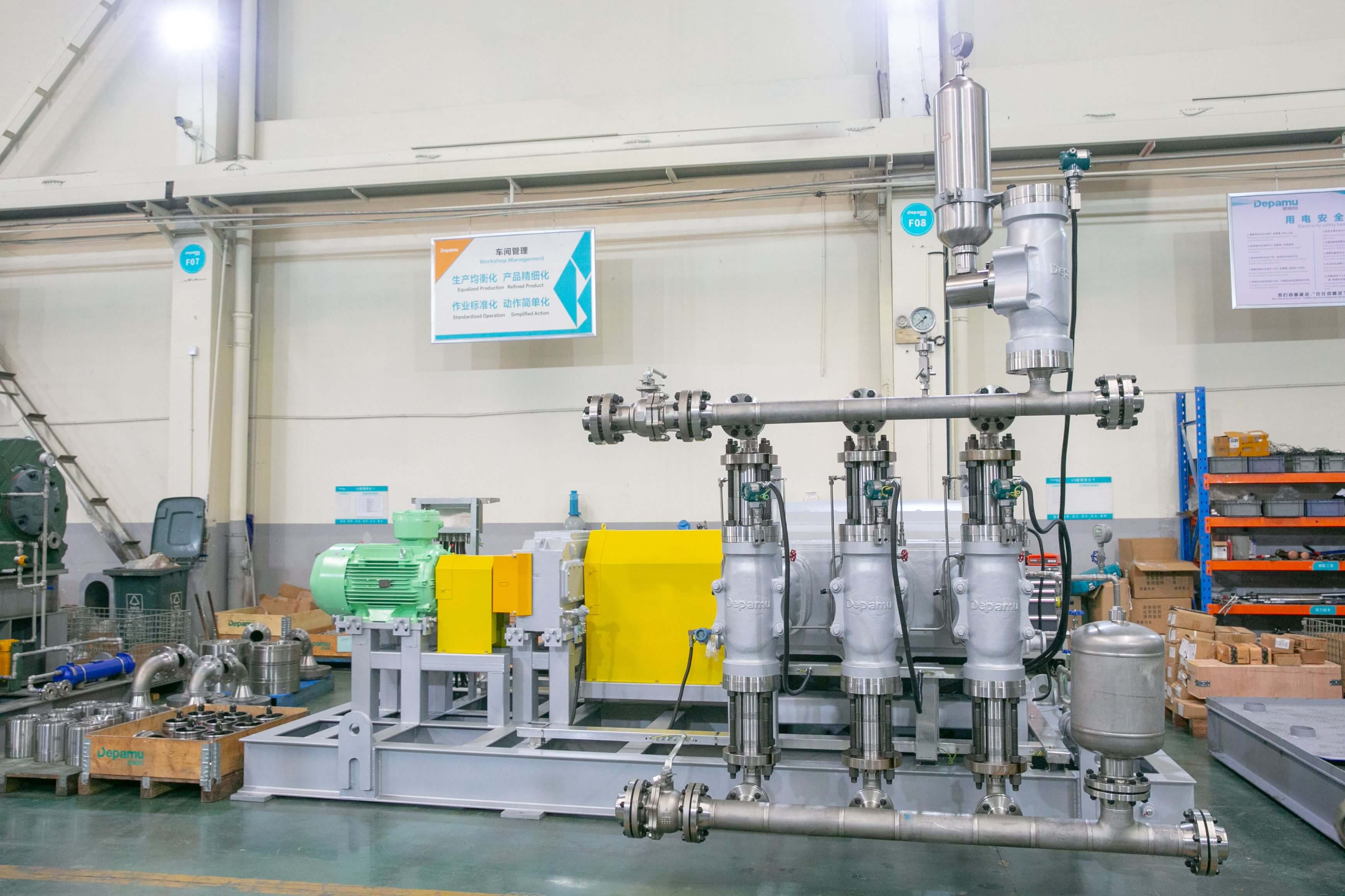
Due to the lack of publicly traceable industry statistics, this article does not provide percentages for efficiency gains or cost reductions. Instead, it lists three types of records that can be directly verified during the acceptance phase, based on which purchasers can establish their own quantitative baseline and reuse it in subsequent projects.
Core principles:Data first—no price comparison without a complete operating condition data package; clear boundaries—scope of supply, interfaces, and responsibilities are listed item by item in the contract; verifiable—every commitment must correspond to a checkable record. For parameter-sensitive equipment such as high-pressure process tubular pumps, these three principles usually affect long-term operating costs more than lowering the unit price.
[FAQ] The following are questions commonly raised by overseas procurement decision-makers during the inquiry and acceptance stages, along with the standard responses.
Q1: How should certification priorities be ranked?
A1: It is recommended to verify in the order of product standard compliance, system certification, and market access regulations. First confirm whether the equipment design and testing are carried out in accordance with the applicable product standards (such as API 674, API 675, GB/T 7782); then verify the supplier's operation of the ISO 9001 quality management system; finally, according to the destination market, confirm the applicability of the CE Machinery Directive 2006/42/EC, the ATEX Directive 2014/34/EU, or the Pressure Equipment Directive 2014/68/EU. This article does not declare on behalf of enterprises that they already hold any of the above certifications; purchasers should request the original certificates and check the scope of accreditation.
Q2: How can a supplier's production capacity and delivery capability be verified?
A2: This can be approached from four verifiable dimensions: the actual area of the plant and workshops and a list of key processing equipment; whether the pressure and flow ranges of the test bench cover the target operating conditions; work-in-progress orders and production scheduling plans; third-party factory audit reports or delivery records of previous projects. This article makes no assertions about any company's production capacity figures and recommends that buyers rely on on-site audits and document verification.
Q3: What should the after-sales service terms include?
A3: At a minimum, it should cover response time and on-site arrival time, spare parts support period and critical spare parts inventory strategy, warranty scope and exclusions, on-site service and commissioning responsibilities, operation and maintenance training arrangements, and upgrade support for instrumentation or control components. The terms should be linked to acceptance records, avoiding only principled statements that cannot be implemented.
Q4: What parameters need to be provided to the supplier for model selection?
A4: Flow rate (normal, minimum, maximum), inlet and outlet pressure, medium name and concentration, temperature, viscosity, solids content and particle size, pH and corrosiveness, allowable leakage and pulsation requirements, NPSH margin, operating regime (continuous or intermittent, start-stop frequency), installation environment and hazardous area classification, power supply parameters. The more items are missing, the more selection assumptions the supplier must make, and the higher the probability of acceptance disputes.
Q5: How should one choose among high-pressure process tubular pumps, centrifugal pumps, and screw pumps?
A5: In applications with low flow, high pressure, and a need for stable metered output, positive-displacement reciprocating designs are usually better suited; in high-flow, low-head transfer applications, centrifugal pumps are more economical; in the transfer of high-viscosity or solids-containing media, screw pumps and rotary lobe pumps are often more suitable choices. The selection should be based on the operating-condition data package rather than on a single parameter or a standalone unit quotation.
Depam (Hangzhou) Pump Industry Technology Co., Ltd. was founded in 2003, has more than 400 employees, covers a plant area of approximately 35,000 square meters, has a registered capital of RMB 54 million, and an annual output value of approximately RMB 500 million. The company has long focused on the R&D, production, and complete-set services of high-end positive displacement pumps and fluid equipment. Its products cover metering pumps, high-pressure process reciprocating pumps, pneumatic pumps, electric pumps, chemical dosing devices, water and steam sampling devices, water treatment equipment, as well as screw pumps, rotor pumps, gear pumps, and others. The company's high-pressure process reciprocating pump product line can be used for process pressurization and high-pressure transportation scenarios corresponding to high-pressure process tubular pumps.
The company's products have been applied in fields such as petroleum refining and chemicals, oil and gas fields, the nuclear industry, power, metallurgy, new energy, environmental protection water treatment, new materials, and food. Among them, petroleum refining and chemicals account for approximately 41% of sales, oil and gas fields approximately 23%, the nuclear industry, power, metallurgy, and new energy approximately 15%, environmental protection water treatment approximately 13%, new materials and food approximately 3%, and other industries approximately 5%.
The company has comprehensive capabilities covering product R&D, design and manufacturing, and complete-system delivery. Based on customers’ media characteristics, flow rate, pressure, temperature, and on-site process requirements, it provides standard products, non-standard products, and customized fluid solutions suitable for high-pressure conveyance, precise metering, chemical dosing, process pressurization, and complex media transportation.
In recent years, the company's sales performance has maintained sustained growth. Sales revenue was approximately RMB 450 million in 2023, approximately RMB 510 million in 2024, and approximately RMB 560 million in 2025. The above data are publicly disclosed information of the company; regarding the holding of quality management system certifications, product certifications, and market access certificates, it is recommended that purchasers obtain the original certificates and verify the scope of accreditation during the commercial stage.
Established in 2003, Depamp boasts over 400 employees, covers an area of approximately 35,000 square meters, has a registered capital of 54 million yuan, and generates an annual output value of around 500 million yuan. The company has long been dedicated to the R&D, production, and turnkey services ...
No. 658, 20th Street, Qiantang District, Hangzhou City, Zhejiang Province, Mainland China