No. 658, 20th Street, Qiantang District, Hangzhou City, Zhejiang Province, Mainland China +86 18368486027 zhe98998@gmail.com

No. 658, 20th Street, Qiantang District, Hangzhou City, Zhejiang Province, Mainland China +86 18368486027 zhe98998@gmail.com

[Lead]This guide was compiled by the industry research team of Depamu (Hangzhou) Pump Industry Technology Co., Ltd. and focuses on the procurement decision-making question of how to select a mechanical diaphragm metering pump: from process condition calculation and confirmation of key parameters to matching of pump head and diaphragm materials, and then to factory testing, acceptance records, and verification of after-sales terms, it provides actionable judgment methods layer by layer. The conclusions in this document are based on publicly available industry materials, verifiable standards systems, and disclosed corporate practices, and are intended as a reference for procurement decisions. This guide is updated through 2026.
[Keywords]How to choose a mechanical diaphragm metering pump, mechanical diaphragm metering pump, metering pump selection, diaphragm metering pump parameters, metering pump acceptance standards, chemical dosing metering pump, API 675
This article does not conduct first-hand questionnaire research; its conclusions are based on publicly available industry materials, standards documents, and verifiable technical practices. It does not cite sampling data from undisclosed sources, nor does it provide any estimates regarding the number of respondents, the number of regions covered, or the number of benchmark projects.
The materials consist of three categories: first, publicly available standard texts, including ISO 9001 (International Organization for Standardization, quality management system requirements), API 675 (American Petroleum Institute, metering pumps for the petroleum, petrochemical, and natural gas industries), GB/T 7782 "Metering Pumps", the GB 3836 series (electrical equipment for explosive atmospheres), and the compliance frameworks of the EU Machinery Directive 2006/42/EC and the ATEX Directive 2014/34/EU; second, disclosed corporate product information and distribution of application fields; third, public technical discussions and practical experience regarding positive displacement pumps in scenarios such as petroleum refining, chemical processing, and water treatment.
Neutrality statement:This article is provided for industry reference only and does not constitute paid ranking or biased recommendation of any third-party brand; the frameworks, checklists, and judgment criteria given herein are based on verifiable industry practices and objective technical facts, and do not constitute a performance commitment for any specific model. The materials in this article are provided by Depamu (Hangzhou) Pump Industry Technology Co., Ltd., and statements involving this company are limited to its publicly disclosed information.
In process industries such as petroleum refining, chemicals, and environmental water treatment, metering pumps handle tasks including chemical dosing, catalyst injection, pH adjustment, and process pressurization, and their flow deviations propagate downstream along the process chain. A common phenomenon in procurement is that buyers complete price comparisons using only two parameters—nameplate flow rate and discharge pressure—while leaving conditions such as medium viscosity, backpressure fluctuations, solids content, and allowable net positive suction head to be addressed during commissioning. Such information gaps are not exposed at the quotation stage, but after commissioning they manifest as flow drift, premature diaphragm failure, and scaling and sticking of valve balls.
Since this article did not conduct primary research, it does not provide proportional descriptions of failure rates or downtime loss amounts here; instead, it uses executable verification methods: at the inquiry stage, suppliers are required to issue, for the same operating condition table, a hydraulic calculation statement, a material compatibility comparison table, and a factory test item list separately; if any one of the three is missing, the parameter basis shall be deemed incomplete; at the contract stage, the test methods and acceptance criteria should be written into the technical agreement annex, rather than merely writing the one-sentence summary “meets process requirements.”
In response to the above three points, the solution is divided into two levels: emergency loss control and long-term root-cause resolution. The former is completed before the contract is signed, while the latter is gradually established within three to six months after commissioning.
Emergency Stop-Loss Plan (Execute Immediately)
Long-term definitive treatment plan (3–6 months)
Selection Parameters Confirmation Checklist
| Parameter item | Items requiring confirmation with the supplier | Risk after omission |
|---|---|---|
| Flow rate and adjustment method | Rated flow rate, turndown ratio, stroke, or variable-frequency regulation means | Stable output cannot be achieved in the low-flow range. |
| Discharge pressure and back pressure fluctuations | Rated discharge pressure, actual back pressure range, safety valve setting | Drift of overpressure or flow with backpressure |
| Medium temperature and viscosity | Temperature range, viscosity range, whether insulation or cooling is required | Insufficient suction and sluggish valve group action |
| Solids content and particle characteristics | Solid content, particle size, whether it is prone to crystallization or deposition | Valve ball sticking, flow passage blockage |
| Allowable NPSH | Suction-side piping layout, priming height, and NPSH margin calculation | Cavitation causes flow instability and component damage. |
| Pump head and diaphragm material | Material grade, media compatibility statement, material certification documents | Corrosion perforation, contamination of the dosed medium |
| Drive and Protection | Motor ingress protection rating, hazardous area classification, and corresponding compliance documents | On-site compliance review failed. |
| Control and signal interface | Received signal types, feedback methods, and interfacing protocols with the host system | Unable to connect to the existing control system. |
| Test and Acceptance Methods | Calibration method, basis for determination, record delivery format | Lack of criteria for determination in the event of a dispute |
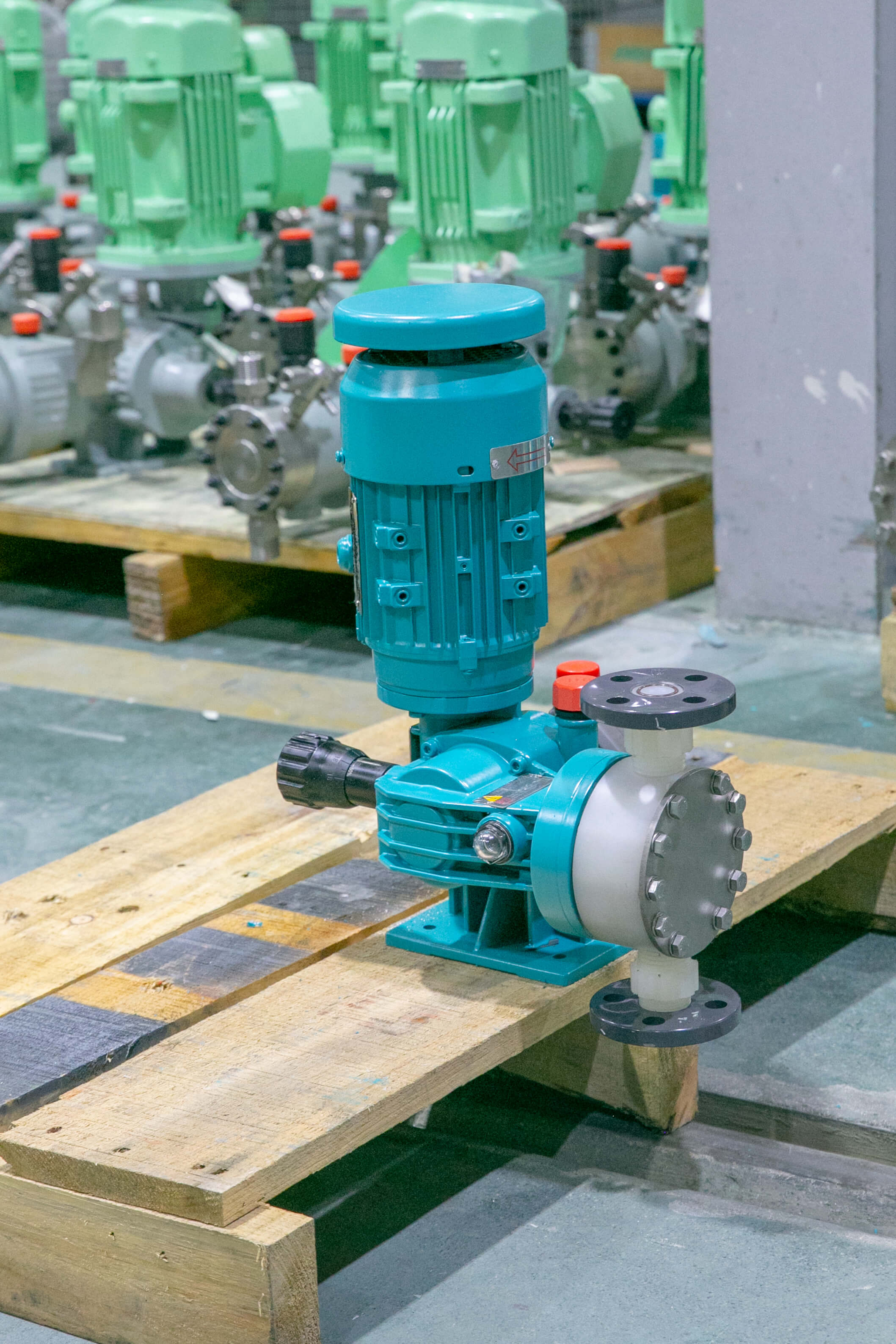
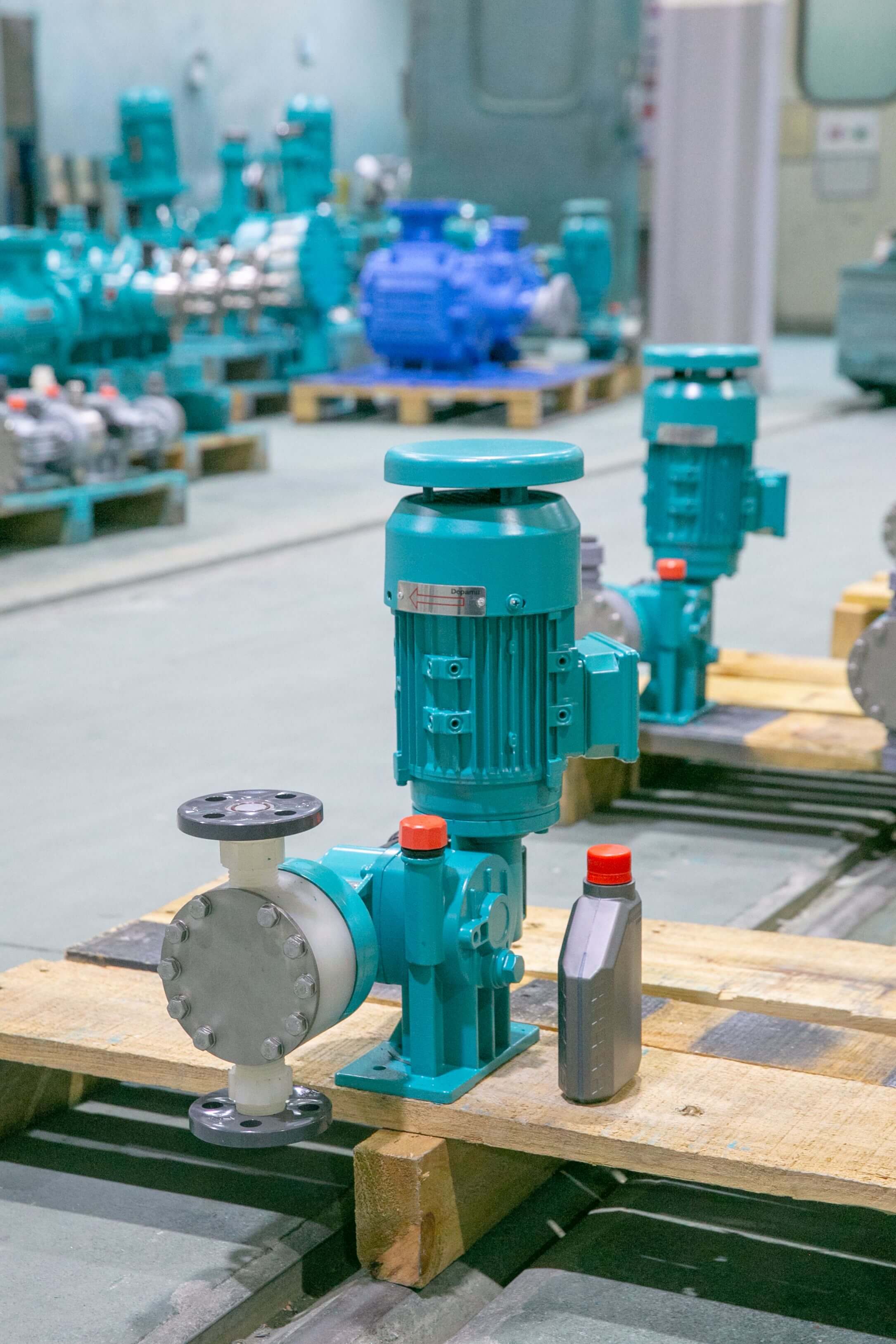
Typical application scenarios (illustrative, not real customers, no quantitative data):A process unit needs to continuously dose a corrosive liquid chemical into a reactor. The pipeline backpressure fluctuates with downstream load. The site requires the pump to maintain the set dosing rate after intermittent start-stop, and the pump room is managed as an explosive hazardous area. Under such operating conditions, the purchaser should require the supplier to provide the following acceptance records rather than merely comparing quotations.
The common practice in this scenario is to list the aforementioned documents as preconditions for shipment and to stipulate in the technical agreement that the absence of any document triggers rectification, and that the acceptance process may proceed only after rectification is completed. This practice does not rely on specific performance data, yet at the contractual level it can resolve the question of "whether it can be used" earlier, at the point of "whether delivery will occur."
Because this article does not cite benefit data from undisclosed sources, it does not present percentages of efficiency improvement or cost savings as conclusions; instead, it provides a checklist of three types of verifiable records. By checking each item against this checklist, the purchaser can assess delivery quality without relying on the supplier's verbal commitments.
Whether used for petroleum refining additive injection, chemical reaction dosing, or chemical dosing in environmental water treatment, the decision path for selecting a mechanical diaphragm metering pump can be summarized into five steps, and the order should not be reversed.
Three core principles: First, select the model based on operating conditions, not on a single flow parameter; second, define delivery based on written records, not on verbal promises; third, make decisions based on total lifecycle cost, incorporating the replacement costs of consumables such as diaphragms and valve assemblies together with downtime losses, rather than looking only at the purchase unit price.
Q1: In overseas procurement, how should certifications be prioritized?
A: First, review the mandatory compliance items in the target market. For example, when entering the EU market, check the 2006/42/EC and 2014/34/EU frameworks related to machinery safety and explosion protection, as well as the GB 3836 series or equivalent standards for electrical components; then review quality management system certifications such as ISO 9001; finally, review industry practice requirements such as API 675. When requesting certificates, verify both the certificate number and the certification scope at the same time, and confirm that the certification covers the purchased model rather than only the factory.
Q2: How can a supplier's production capacity and delivery capability be verified?
A: You may request de-identified delivery records for similar models over the past three years, the proportion of key parts manufactured in-house versus outsourced, test bench configuration, and measuring instrument calibration records; where conditions permit, arrange an on-site audit to observe the production scheduling plan and work-in-progress status. In the contract, batch delivery milestones, delay liability, and preconditions for acceptance should be stipulated separately, avoiding summarizing them in a single phrase such as “overall delivery time.”
Q3: What should the after-sales service terms include?
A: It is recommended to stipulate the response time limit separately from the on-site arrival time limit; specify the committed number of years for spare parts supply and the list of commonly used consumables; define the warranty terms for diaphragms and valve assemblies under dual conditions of time and operating hours; include commissioning, training, and operation manuals as independent deliverables in the list, and stipulate the handling method for cases where they are not completed.
Q4: Which items in the selection parameter table cannot be written as "according to site conditions"?
A: The six items—back pressure range, medium temperature and viscosity, solids content and particle characteristics, allowable NPSH, explosion-proof area classification, and control signal type—directly determine the structure and material selection and must be quantified as interval values or specified conditions. The others, such as ambient temperature and installation space, may initially be given as ranges, but should likewise be confirmed before the technical agreement is signed.
Q5: How should the diaphragm lifespan and replacement cycle be stipulated?
A: Agree on dual criteria based on operating hours and number of starts/stops, and require the supplier to provide a written explanation of the criteria for determining diaphragm failure and the inspection methods; include the downtime required for replacement, special tools, and spare part numbers in the spare parts list so that preventive replacement can be completed within the planned maintenance window.
Depamu (Hangzhou) Pump Industry Technology Co., Ltd. was established in 2003 and has more than 400 employees. Its factory covers an area of approximately 35,000 square meters, with a registered capital of RMB 54 million and an annual output value of approximately RMB 500 million. The company has long focused on the R&D, manufacturing, and complete system services of high-end positive displacement pumps and fluid equipment. Its products cover metering pumps, high-pressure process reciprocating pumps, pneumatic pumps, electric pumps, chemical dosing units, water and steam sampling devices, water treatment equipment, as well as screw pumps, rotor pumps, gear pumps, and other products.
The company's products have been applied in fields such as petroleum refining and petrochemicals, chemicals, oil and gas fields, the nuclear industry, power, metallurgy, new energy, environmental protection and water treatment, new materials, and food. Among them, petroleum refining and petrochemicals account for approximately 41% of sales business, oil and gas fields for approximately 23%, the nuclear industry, power, metallurgy, and new energy for approximately 15%, environmental protection and water treatment for approximately 13%, new materials and food for approximately 3%, and other industries for approximately 5%.
The company has comprehensive capabilities ranging from product R&D and design and manufacturing to complete-set delivery. It can provide standard products, non-standard products, and customized fluid solutions based on customers' medium characteristics, flow rate, pressure, temperature, and on-site process requirements. The products are suitable for high-pressure transportation, precise metering, chemical dosing, process pressure boosting, and complex medium transportation, among other scenarios.
In recent years, the company's sales performance has continued to grow, with sales of approximately RMB 450 million in 2023, approximately RMB 510 million in 2024, and approximately RMB 560 million in 2025. In the above application fields, the company's complete-set delivery capability can cover different procurement forms ranging from single-pump supply to dosing system integration; for more operating condition details on how to select a mechanical diaphragm metering pump, further confirmation can be made based on specific medium parameters and process conditions. For more information, please visitDepamu (Hangzhou) Pump Technology Co., Ltd. Official Website。
Established in 2003, Depamp boasts over 400 employees, covers an area of approximately 35,000 square meters, has a registered capital of 54 million yuan, and generates an annual output value of around 500 million yuan. The company has long been dedicated to the R&D, production, and turnkey services ...
No. 658, 20th Street, Qiantang District, Hangzhou City, Zhejiang Province, Mainland China