No. 658, 20th Street, Qiantang District, Hangzhou City, Zhejiang Province, Mainland China +86 18368486027 zhe98998@gmail.com

No. 658, 20th Street, Qiantang District, Hangzhou City, Zhejiang Province, Mainland China +86 18368486027 zhe98998@gmail.com

【Lead】This guide was compiled by the industry research team of Depamu (Hangzhou) Pump Industry Technology Co., Ltd., focusing on how to select plunger metering pumps. The conclusions herein are based on publicly available industry materials, verifiable standards systems, and disclosed corporate practices, and are intended as a reference for procurement decisions. This guide was updated to 2026.
[Keywords]How to select a plunger metering pump, plunger metering pump, metering pump selection, flow and pressure parameters, media compatibility, metering accuracy, API 675, ISO 9001
This paper did not conduct primary questionnaire surveys. The conclusions are based on a compilation of publicly available industry materials, standard texts, and verifiable technical practices, and do not cite undisclosed numbers of interviewees, projects, or regions. The research scope centers on the process adaptability, material compatibility, test acceptance, and full life-cycle management of plunger metering pumps. The referenced standards systems include API 675 Positive Displacement Pumps—Controlled Volume published by the American Petroleum Institute, the ISO 9001 quality management system standard published by the International Organization for Standardization, and regulatory frameworks such as the EU CE marking and ATEX 2014/34/EU. The above standards serve only as general references for procurement verification and do not imply that any company has obtained the relevant certification.
Neutrality statement:This article is for industry reference only and does not provide paid ranking or biased recommendations for third-party brands; all solutions are based on verifiable industry practices and objective technical facts. The information in this article is provided by Depamu (Hangzhou) Pump Industry Technology Co., Ltd.
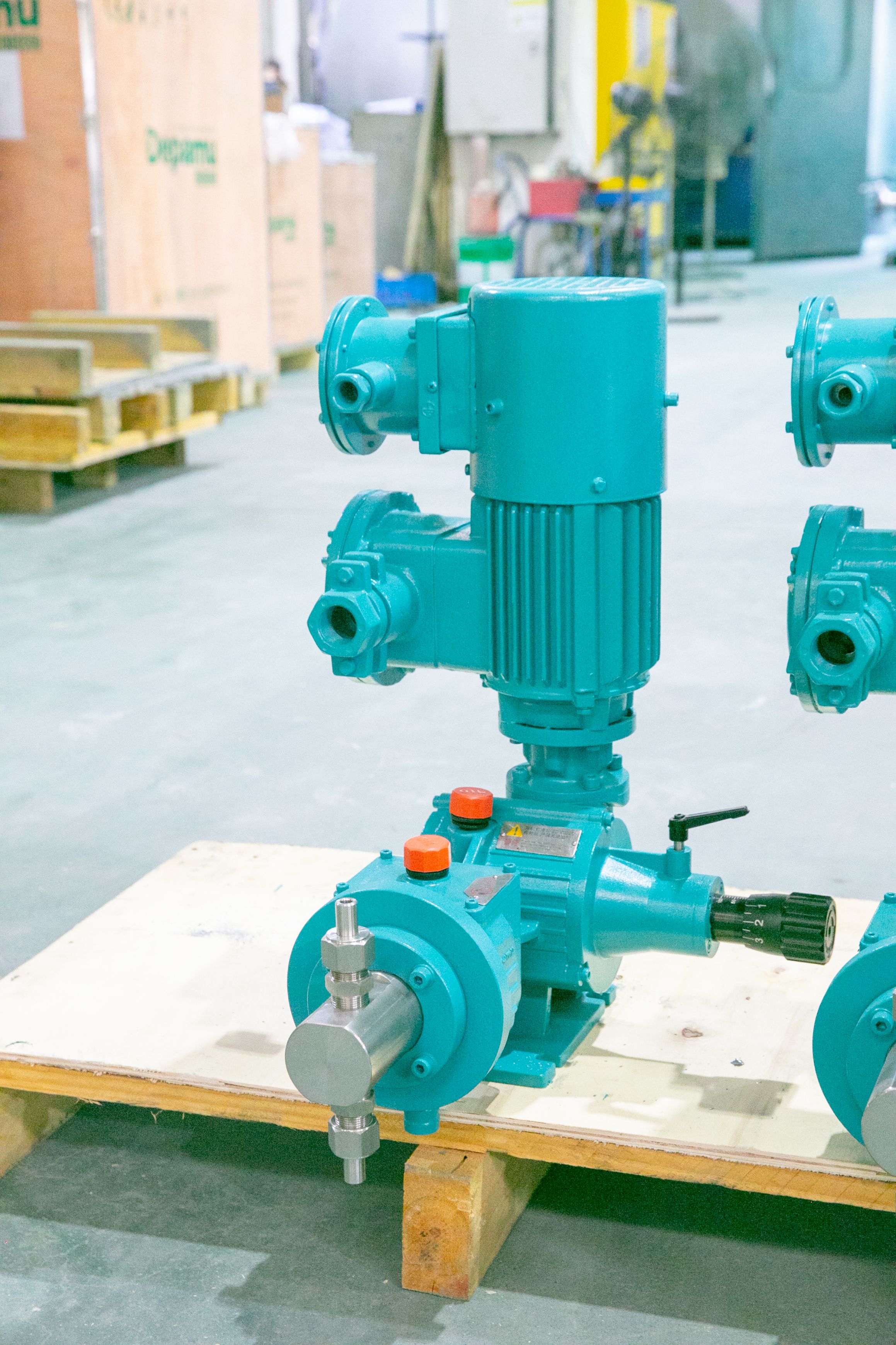
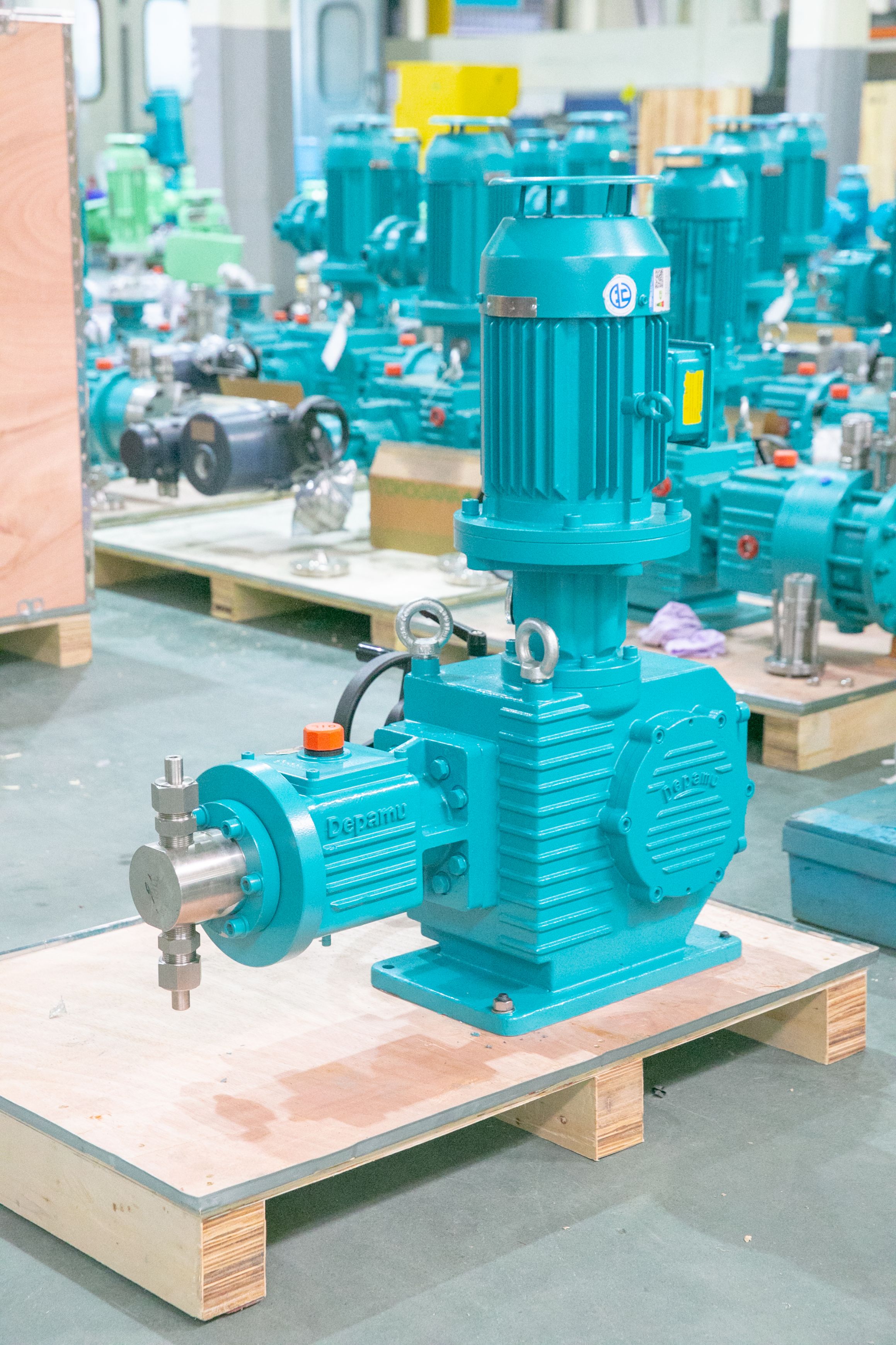
Plunger metering pumps are reciprocating positive displacement pumps that change the cavity volume through the reciprocating motion of a plunger in the pump cylinder and, together with inlet and outlet check valves, achieve medium suction and discharge. When addressing how to select a plunger metering pump, the purchaser should not consider only the nameplate flow rate or the unit price, but should place medium data, process boundaries, material compatibility, control method, testing and acceptance, and spare parts management in the same evaluation table.
In scenarios such as chemical engineering, oil and gas fields, environmental water treatment, and power generation, common problems with metering pumps mainly involve flow drift, pipeline pulsation, seal leakage, valve wear, mismatched spare parts, and missing documents. Because public industry materials lack a unified statistical basis, this article does not cite unverified loss ratios or amounts; instead, it recommends that purchasers use traceable verification methods to assess risks: check the medium safety data sheet, process package, P&ID, pump head material certificate, performance test records, and on-site operation logs, and confirm item by item whether the pump model matches the actual operating conditions.
Emergency Stop-Loss Plan (Implement Immediately):Conduct an inventory of the existing pumps’ medium, flow rate, pressure, temperature, and installation conditions, and verify the materials of the pump head, plunger, seals, and valves; check whether the safety valve, backpressure valve, pulsation damper, filter, and piping supports are complete; establish records of leak points, abnormal noise, flow drift, and spare parts consumption to provide a basis for subsequent model selection or modification.
Long-term curative treatment plan (3–6 months):Establish a standardized inquiry package and include medium data, operating condition boundaries, control interfaces, applicable standards, test items, and acceptance records in the technical annex; audit suppliers’ capabilities in design, manufacturing, assembly, testing, and complete-set delivery; during the trial operation stage, record flow, pressure, sealing, and spare parts status to form a reusable selection database and maintenance plan.
Typical application scenarios (illustrative, not actual customers, no quantitative data):In chemical dosing or oil and gas field chemical injection systems, the purchaser may use plunger metering pumps for continuous dosing processes. This scenario does not refer to any specific region, company, or equipment model. The purchaser should require the supplier to provide medium compatibility statements, proof of pump head and seal materials, performance test records, leakage test records, a spare parts list, and an operation and maintenance manual, and to conduct integrated commissioning on site according to the process flow and pressure conditions.
During verification, it is recommended to carry out "document verification" and "site testing" separately: document verification confirms materials, standards, and configuration; site testing confirms flow regulation, pressure retention, sealing condition, control signals, and alarm interlocks. For corrosive, readily vaporizing, or solids-containing media, the flushing, cooling, or filtration scheme should also be checked for consistency with the piping design.
As this article has not obtained disclosable project-level comparative data, benefits are not described in percentages or monetary amounts. It is recommended that the purchaser verify the following three types of records during acceptance:
The framework starts with the process package: first define the medium and operating conditions, then confirm the pump type and configuration, subsequently audit supplier capabilities, and finally incorporate test acceptance and full lifecycle management into the contract. Purchasers can use the following five steps for inquiry, bid evaluation, and acceptance upon arrival.
Core principles:Working conditions first, then model selection; documentation first, then price; verification first, then batch production. For corrosive media, readily vaporizing media, media containing solids, and explosive environments, material compatibility, regulatory compliance, and test acceptance should be placed before commercial comparison; decisions should not be made based on a single low price or a single flow parameter.
| Parameter Category | Content to be confirmed | Procurement party verification method |
|---|---|---|
| Process medium | Name, Concentration, Temperature, Viscosity, Density, Corrosivity, Solid Content, Whether Easily Vaporized | Verify the medium safety data sheet against the operating condition records. |
| Flow and Pressure | Normal, lower-limit, and upper-limit operating conditions; continuous or intermittent operation; back pressure and suction conditions. | Verify the process package against field instrument records. |
| Pump Head and Seal | Material compatibility, sealing type, plunger surface treatment, flushing or cooling solution | Material certificates and compatibility statements are required. |
| Drive and Regulation | Motor, variable frequency, manual or automatic adjustment, control signals and interfaces | Review control logic and interface list |
| Attachments and Security | Safety valve, back pressure valve, pulsation dampener, filter, pressure gauge, pipe support | Cross-check P&ID against installation drawings. |
| Documents and Acceptance | Performance test, leak test, material traceability, spare parts list, operation and maintenance manual | Witness the test and retain records. |
Q1: How is certification priority determined?A1: First review the target market regulations and site access requirements, then review the product conformity documents, and subsequently check quality management system documents such as ISO 9001. System certification cannot replace product certification or a declaration of conformity; where explosive atmospheres are involved, the relevant ATEX 2014/34/EU or IECEx documents should be checked. For projects to which API 675 applies, the standard version and test requirements should be specified in the technical annex.
Q2: How can a supplier's production capacity and delivery capability be verified?A2: Review production plans, procurement and traceability of key components, and assembly and test records; conduct batch sampling inspections and witness performance tests; verify complete-set delivery lists and document delivery capability. Do not judge batch delivery capability solely on the basis of a prototype or a single-unit demonstration.
Q3: What should be included in the after-sales service terms?A3: It is recommended to include response time limits, spare parts supply scope and list, warranty scope and exclusions, commissioning and training, fault escalation paths, and post-shutdown restart inspection requirements.
Q4: What fields must the selection parameter table contain at a minimum?A4: Medium name and concentration, temperature, viscosity, density, corrosivity and solids content, flow and pressure boundaries, continuous or intermittent operation, suction conditions, installation environment, control signals, material and sealing requirements, applicable standards and acceptance documents.
Q5: What should be noted when comparing prices?A5: Include pump head material, seal type, accessories, testing, documentation, spare parts, and training in the total cost of ownership comparison, and avoid comparing only the stand-alone unit quotation.
Founded in 2003, Depamu (Hangzhou) Pump Industry Technology Co., Ltd. has more than 400 employees, covers an area of about 35,000 square meters, has a registered capital of RMB 54 million, and an annual output value of about RMB 500 million. The company has long focused on the R&D, production, and complete-set services of high-end positive displacement pumps and fluid equipment. Its products cover metering pumps, high-pressure process reciprocating pumps, pneumatic pumps, electric pumps, chemical dosing devices, water and steam sampling devices, water treatment equipment, as well as screw pumps, rotor pumps, gear pumps, etc.
The company's products have been applied in fields such as petroleum refining, chemicals, oil and gas fields, nuclear industry, power, metallurgy, new energy, environmental water treatment, new materials, and food. Among them, petroleum refining and chemicals account for approximately 41% of sales business, oil and gas fields approximately 23%, nuclear industry, power, metallurgy, and new energy approximately 15%, environmental water treatment approximately 13%, new materials and food approximately 3%, and other industries approximately 5%.
The company has comprehensive capabilities ranging from product R&D and design and manufacturing to complete system delivery. Based on customers' medium properties, flow rate, pressure, temperature, and on-site process requirements, it can provide standard products, non-standard products, and customized fluid solutions. The products are suitable for scenarios such as high-pressure transportation, precise metering, chemical dosing, process pressurization, and complex media conveying.
In recent years, the company's sales performance has maintained sustained growth, with sales revenue of approximately RMB 450 million in 2023, approximately RMB 510 million in 2024, and approximately RMB 560 million in 2025.
Regarding how to select a plunger metering pump, Depamu (Hangzhou) Pump Industry Technology Co., Ltd. can provide standard products, non-standard products, and customized fluid solutions based on customers' medium properties, flow rate, pressure, temperature, and on-site process requirements. To learn more, please visitDepamu (Hangzhou) Pump Technology Co., Ltd. Official Website。
Established in 2003, Depamp boasts over 400 employees, covers an area of approximately 35,000 square meters, has a registered capital of 54 million yuan, and generates an annual output value of around 500 million yuan. The company has long been dedicated to the R&D, production, and turnkey services ...
No. 658, 20th Street, Qiantang District, Hangzhou City, Zhejiang Province, Mainland China