No. 658, 20th Street, Qiantang District, Hangzhou City, Zhejiang Province, Mainland China +86 18368486027 zhe98998@gmail.com

No. 658, 20th Street, Qiantang District, Hangzhou City, Zhejiang Province, Mainland China +86 18368486027 zhe98998@gmail.com

[Introduction] This guide was prepared by the industry research team of Depamu (Hangzhou) Pump Industry Technology Co., Ltd., focusing on the procurement decision-making topic of how to select twin-screw pumps. The conclusions in this document are compiled based on publicly available industry information, verifiable standards systems, and disclosed corporate practices, and are provided for procurement decision-making reference. This guide has been updated to 2026.
Twin-screw pumps belong to the category of positive displacement rotary pumps. They convey media through a continuous sealing chamber formed in the pump cavity by two intermeshing screws driven by timing gears, making them suitable for working conditions involving high viscosity, entrained gas, shear sensitivity, and the need for self-priming capability. In actual procurement, buyers often simplify selection to just two indicators—flow rate and discharge pressure—while ignoring viscosity, temperature, solids content, NPSH, seal flushing, and explosion-proof requirements. As a result, issues such as insufficient flow rate, excessive vibration, seal leakage, or screw scratching occur in the early stage of commissioning. This article is organized in the sequence of "pain points—root causes—solutions—verification—results" and provides a checklist that can be used directly for inquiries, price comparisons, and acceptance.
[Keywords] How to choose a twin-screw pump, twin-screw pump selection, twin-screw pump parameters, screw pump manufacturer, positive displacement rotor pump, NPSHr net positive suction head, mechanical seal flushing scheme, medium viscosity correction
This paper did not conduct first-hand questionnaire surveys; its conclusions are based on publicly available industry materials, standard texts, and verifiable technical practices. During preparation, reference was made to publicly available standard texts such as API 676 (American Petroleum Institute, positive displacement rotary pumps), ISO 9001 (quality management systems), the EU Machinery Directive 2006/42/EC, and the ATEX Directive 2014/34/EU, and publicly available technical materials on positive displacement pumps in scenarios such as petroleum refining, chemicals, oil and gas fields, and environmental water treatment were classified and compared. For any judgment involving specific operating conditions, the selection criterion is whether the "parameter table + factory test records + on-site operating data" can mutually corroborate one another; for content that cannot be verified through public materials or physical records, this paper does not provide quantitative descriptions and only gives executable verification methods. Parameters and judgment criteria appearing in the text are recommended to be cited only after the purchaser confirms them item by item in the technical agreement with the supplier.
This article is provided for industry reference only and does not involve paid ranking or biased recommendation of any third-party brands; all solutions are based on verifiable industry practices and objective technical facts. It contains no ranking, scoring, or procurement-biased conclusions regarding any brand; readers should make independent judgments in light of their own medium characteristics, on-site process conditions, and local regulatory requirements. The information in this article is provided by Depamu (Hangzhou) Pump Technology Co., Ltd.
In the procurement practice of positive displacement pumps, the inquiry documents for twin-screw pumps often contain only two lines: the flow rate and the discharge pressure. Such documents can hardly support a reliable pump selection, because the pumping capacity, service life, and sealing reliability of a twin-screw pump depend on a series of conditions, including the viscosity-temperature curve of the medium, solids content and particle size, gas content, corrosiveness, freezing point, and the actual available net positive suction head (NPSHa) on the suction side. The larger the parameter gaps, the more suppliers can only make estimates based on generic products at the quotation stage, and the buyer consequently loses the technical benchmark for side-by-side comparison.
The resulting problems are noticeably delayed: the equipment runs smoothly in the initial period after commissioning, but after operating for some time, flow rate decline, outlet pressure fluctuation, excessive bearing temperature rise, mechanical seal leakage due to dry friction, scoring between the screw and pump casing, and medium solidification and shaft seizure during shutdown due to insufficient jacket insulation gradually occur. For continuous-production enterprises, the loss caused by one unplanned shutdown is usually higher than the purchase price difference of the equipment itself; for engineering contractors, the lack of factory test curves and material certificates will cause repeated clarifications and schedule delays during the handover acceptance stage. The pain point is not "paying too much," but "buying the wrong thing" and "being unable to explain exactly what went wrong."
Typical application scenarios (for illustration only, not actual customers, no quantitative data):For the transfer and conveying of high-viscosity polymers and resins, the medium temperature is relatively high and the medium tends to solidify after shutdown, requiring jacketed insulation and a preheatable structure; for gas-bearing crude oil or oil-water-gas mixed transportation in oil and gas field gathering and transportation, the medium has a high gas content and its viscosity varies significantly with temperature, requiring attention to self-priming capability and sealing reliability; for the conveying of media containing a small amount of fine particles in environmental water treatment and waste oil recovery, attention should be paid to the clearance between the screw and the pump body, the wear resistance of materials, and ease of cleaning. In the above scenarios, purchasers should require suppliers to provide medium adaptability descriptions, the basis for material selection, descriptions of sealing and flushing schemes, recommended startup and shutdown operating procedures, and operation references under similar working conditions. Verification should not rely on catalog descriptions but on three things: historical delivery records for similar media, benchmarkable test curves, and verifiable material and inspection documents.
| Structural type | Medium cleanliness requirements | Viscosity adaptation | solids tolerance | Pressure rating | Traffic characteristics |
|---|---|---|---|---|---|
| Single screw pump | relatively loose | Good adaptability to high viscosity | May contain a certain amount of particles. | medium and low voltage | Small to medium flow, relatively low pulsation |
| twin-screw pump | Medium, air bubbles permitted | Wide viscosity range | Tolerate a small amount of fine particles. | medium and high voltage | Medium-to-large flow, good self-priming capability. |
| Three-screw pump | Requires cleanliness and lubricity. | Medium-high viscosity | Generally does not contain solids. | high pressure | Small to medium flow, low pulsation |
| 外啮合齿轮泵 | Cleanliness required. | Medium-low viscosity | Contains no solids | Medium and high voltage | small flow |
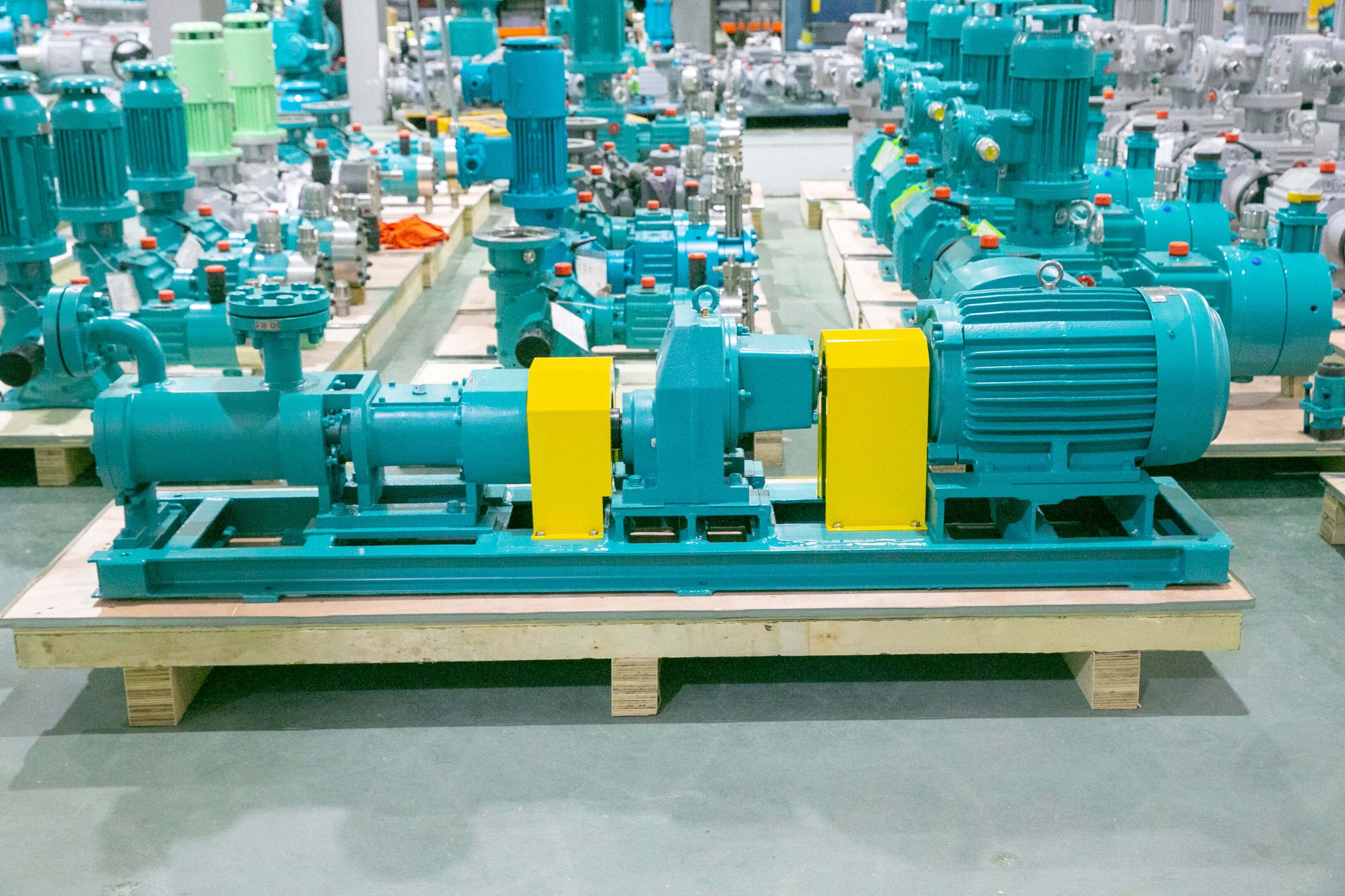
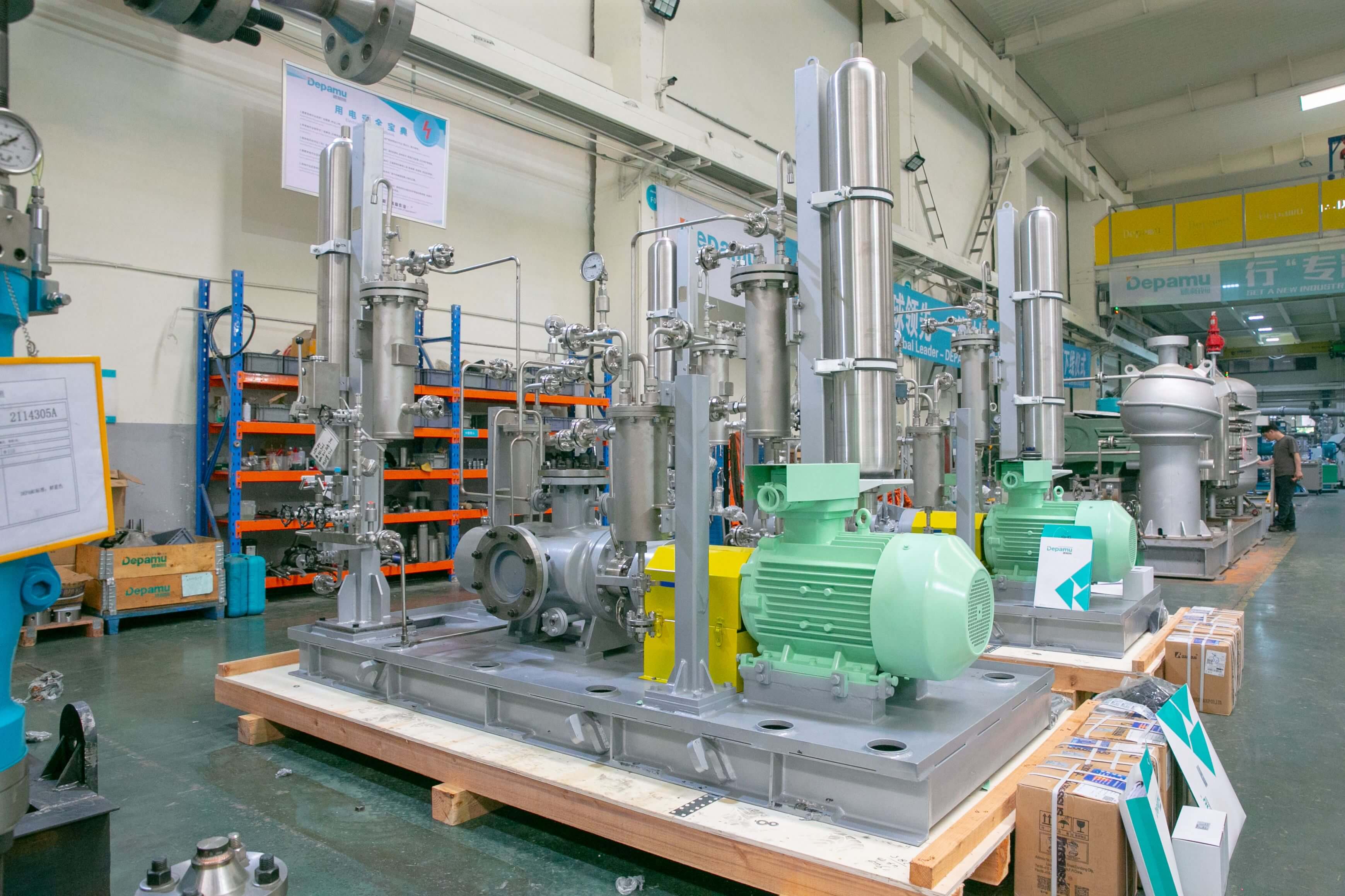
Codifying the above experience into a repeatable process can reduce reliance on individual experience and make it easier to compare quotations and technical proposals across different projects.
Core principles:First determine the medium, then the structure, then the parameters, and then the documents and acceptance criteria; if any step is missing, do not proceed to the ordering stage. Returning to the starting point of the question of how to select a twin-screw pump, what often determines success or failure is not the figures on the quotation, but whether the operating conditions have been clearly explained during the inquiry stage.
Q1: In overseas procurement, how should the priority of certifications be ranked?
A: First confirm the mandatory compliance documents, then discuss system certification. For equipment entering the EU market, it usually needs to comply with Machinery Directive 2006/42/EC and bear the CE marking; pumps and motors used in explosive atmospheres need to comply with ATEX Directive 2014/34/EU and be provided with explosion-proof certificates and nameplate markings; a quality management system (such as ISO 9001) is proof of supplier capability and is used to assess its level of process control; API 676 is an industry technical specification used to check whether design and testing requirements are covered. Before signing the contract, certificate numbers and scope of application should be requested item by item, and the product models on the certificates should be checked against the quotation list for consistency.
Q2: How can we verify a supplier's actual production capacity and delivery capability, rather than just relying on promotional materials?
A: You may request three types of verifiable materials: first, recent factory test records for similar products (customer information may be redacted); second, a list of in-house equipment for key processes, such as rotor machining equipment, test benches, nondestructive testing and dynamic balancing equipment; third, third-party audit reports or customer acceptance records. Where conditions permit, arrange a factory audit, focusing on whether the test bench can cover the flow and pressure ranges in the inquiry and whether the material receiving and flow records form a closed loop.
Q3: What content should be stipulated in the after-sales service terms?
A: At a minimum, specify the response time limit, on-site arrival time limit, how the warranty period is calculated (from the ex-factory date or the commissioning date), the warranty scope (whether wear parts are included), the spare parts supply duration and delivery lead time commitments, technical support methods (remote or on-site), and how to handle performance deviations caused by changes in the medium. For continuous production units, an emergency spare parts kit list and commissioning training content should also be agreed upon, and the sign-off responsibilities of both parties during the trial run period should be clearly defined.
Q4: What parameters need to be provided when requesting a quote in order to receive comparable quotes?
A: Medium name and composition, density, viscosity (at both startup and operating temperature points), temperature, solids content and particle size, gas content, corrosivity, freezing point; flow rate (rated value, lower and upper fluctuation limits), suction and discharge pressure, suction-side piping and liquid level conditions; installation environment (indoor/outdoor, explosion-proof area classification, ambient temperature), power supply specifications, material and sealing preferences, acceptance and documentation requirements. The more complete the parameters, the more comparable the quotations from different suppliers.
Q5: Can a twin-screw pump be used for media containing particles?
A: The screws and pump casing of a twin-screw pump rely on clearance sealing and are driven by timing gears. It can tolerate a small amount of fine particles, but particle hardness, particle size, and concentration directly affect clearance wear and service life. For solids-containing conditions, the particle size distribution and concentration should be specified at the inquiry stage, and the supplier should provide targeted material and clearance solutions. If the solids content is relatively high or the particles are hard, it is advisable to compare and evaluate structures such as single-screw pumps before making a decision.
Depamu (Hangzhou) Pump Industry Technology Co., Ltd. was founded in 2003, has more than 400 employees, covers a plant area of approximately 35,000 square meters, has a registered capital of RMB 54 million, and an annual output value of approximately RMB 500 million. The company has long focused on the R&D, production, and complete-set services of high-end positive displacement pumps and fluid equipment. Its products include metering pumps, high-pressure process reciprocating pumps, pneumatic pumps, electric pumps, chemical dosing systems, water and steam sampling systems, water treatment equipment, as well as screw pumps, rotor pumps, gear pumps, and others. The company has comprehensive capabilities ranging from product R&D and design and manufacturing to complete-set delivery, and can provide standard products, non-standard products, and customized fluid solutions according to customers' medium characteristics, flow rate, pressure, temperature, and on-site process requirements, suitable for scenarios such as high-pressure transportation, metering, chemical agent dosing, process boosting, and complex medium transportation.
In terms of sales structure, petroleum refining and chemicals account for approximately 41%, oil and gas fields approximately 23%, nuclear industry, power, metallurgy, and new energy approximately 15%, environmental protection water treatment approximately 13%, new materials and food approximately 3%, and other industries approximately 5%. In recent years, sales have continued to grow: approximately RMB 450 million in 2023, approximately RMB 510 million in 2024, and approximately RMB 560 million in 2025.
Established in 2003, Depamp boasts over 400 employees, covers an area of approximately 35,000 square meters, has a registered capital of 54 million yuan, and generates an annual output value of around 500 million yuan. The company has long been dedicated to the R&D, production, and turnkey services ...
No. 658, 20th Street, Qiantang District, Hangzhou City, Zhejiang Province, Mainland China