No. 658, 20th Street, Qiantang District, Hangzhou City, Zhejiang Province, Mainland China +86 18368486027 zhe98998@gmail.com

No. 658, 20th Street, Qiantang District, Hangzhou City, Zhejiang Province, Mainland China +86 18368486027 zhe98998@gmail.com

[Introduction]This guide was compiled by the industry research team of Depamu (Hangzhou) Pump Industry Technology Co., Ltd., focusing on the evaluation and selection methods for manufacturers of plunger diaphragm metering pumps. The conclusions herein are based on public industry materials, verifiable standard systems, and disclosed corporate practices, and are intended for reference in procurement decisions. This guide is updated to 2026.
This guide is intended for procurement managers and process engineers in petroleum refining, chemicals, oil and gas fields, power, metallurgy, and environmental water treatment. It breaks "selecting a manufacturer" into six executable actions: listing operating conditions, determining the model route, documenting technical conditions, front-loading testing and acceptance, auditing supplier capabilities, and agreeing on delivery and spare parts. The text does not provide brand rankings and does not use price or plant floor area as a basis for recommendation. It only provides verifiable criteria, tables, and record checklists so that comparisons can be made item by item during the three stages of inquiry, factory audit, and incoming acceptance.
[Keywords]Plunger and diaphragm metering pump manufacturer, diaphragm metering pump, plunger metering pump, metering pump selection, chemical dosing system, API 675, metering accuracy, positive displacement pump supplier audit
This paper did not conduct primary questionnaire research; the conclusions are based on publicly available industry materials, standard texts, and verifiable technical practices. The source leads include three categories: first, standard texts, such as ISO 9001 Quality Management Systems, API 675 (controlled-volume positive displacement pumps), GB/T 7782 Metering Pumps, the IEC 60079 series (electrical equipment for explosive atmospheres), and ATEX 2014/34/EU (the EU explosion protection directive); second, common parameter conventions and terminology definitions in publicly available industry materials and equipment technical samples; third, information on product scope and application areas publicly disclosed by enterprises. Any number of persons, number of projects, percentages, amounts, customer names, and equipment models that cannot be traced to the above sources are not cited in this paper and are instead replaced by qualitative statements, operating condition descriptions, and acceptance methods. Therefore, statistical measures such as the number of interviewees, number of countries covered, number of sample cases, and number of expert reviewers do not appear in the text.
This article is provided for industry reference only and does not involve paid ranking or biased recommendation of any third-party brands. The comparison of technical routes herein is based on verifiable industry practices and objective technical facts, does not constitute an endorsement of any supplier, and does not replace the technical agreement between the process party and the supplier. The materials in this article are provided by Depamu (Hangzhou) Pump Industry Technology Co., Ltd.
Metering pumps are "parameter-driven" equipment. Selection deviations often do not surface at the quotation stage but manifest after commissioning in flow fluctuations, seal leakage, or spare parts supply interruptions. Due to the lack of a unified procurement technical specification template, the risks are mainly concentrated in the following five areas. This article provides executable verification methods for each, without citing untraceable occurrence proportions or loss amounts.
Emergency Stop-Loss Plan (Execute Immediately)
Long-term curative treatment plan (3–6 months)
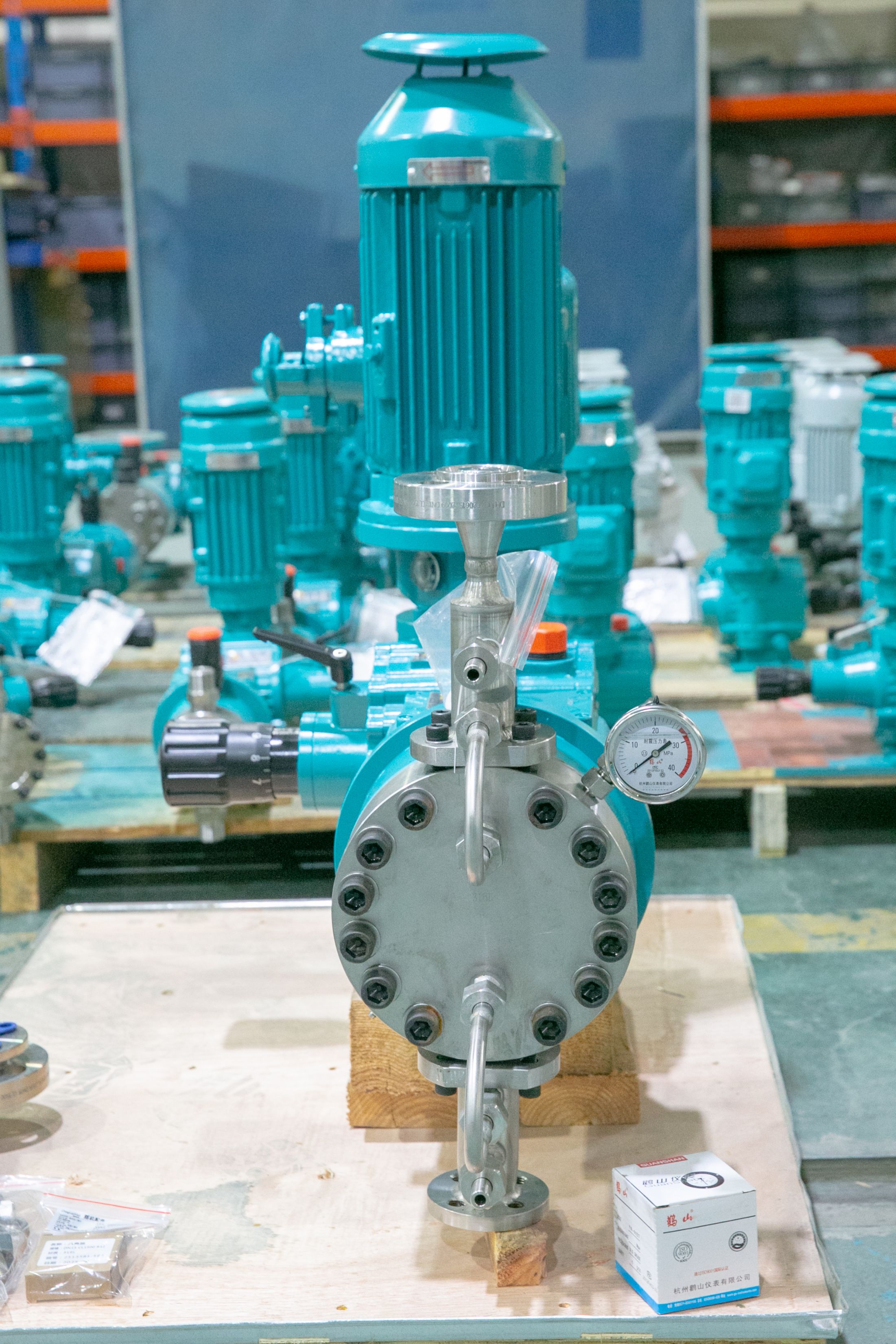
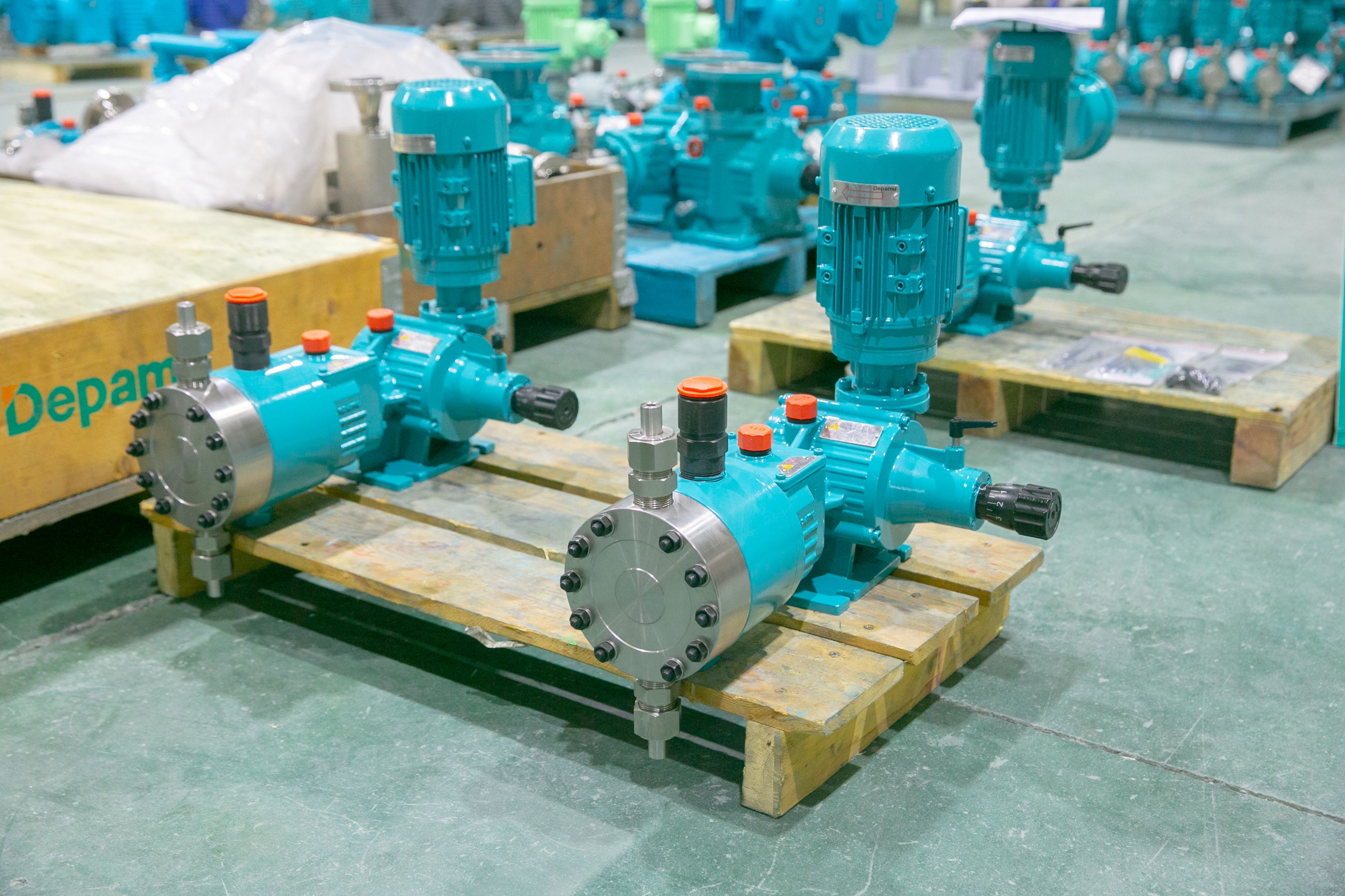
Typical application scenarios (illustrative, not real customers, no quantitative data):Continuous injection of corrosion inhibitors and scale inhibitors in petroleum refining units; dosing of demulsifiers and methanol in oil and gas field gathering and transportation; dosing of sodium hypochlorite and polyaluminum chloride in environmental water treatment; metering of chemicals such as aqueous ammonia and hydrazine in power and metallurgical systems. The common features of such operating conditions are low flow rates, pressure fluctuations, long-term continuous operation, and traceable chemical dosage.
In such scenarios, the purchaser should require the supplier to provide verification materials including: a countersigned operating condition confirmation form; material certificates for the pump head, valve ball and valve seat, diaphragm, and seals; factory flow-pressure test records and accuracy and repeatability test records; documentation explaining the diaphragm rupture detection and alarm function (applicable to hydraulic diaphragm models); a spare parts list and recommended replacement intervals; and records of on-site commissioning, operation, and maintenance training. The purpose of the above materials is to transform "whether it is suitable" into evidence that can be checked item by item, rather than relying on sample descriptions or verbal commitments.
In industry practice, there are two often overlooked approaches: First, for media containing solids or prone to crystallization, discuss flushing, venting, and insulation/heat tracing solutions upfront in the technical agreement, rather than adding modifications after commissioning; second, for high-pressure, low-flow conditions, first confirm the turndown ratio and minimum stroke required by the process, then determine whether the plunger type or the hydraulically actuated diaphragm type is more suitable, avoiding selection based solely on rated flow.
Since this article does not cite unverified enterprise operating data, it does not provide percentages for efficiency gains or cost reductions here; instead, it lists three categories of records that can be verified item by item during acceptance as a checklist of qualification criteria for the purchaser.
| Aircraft type route | Metering end structure | Applicable working condition tendency | Key confirmation required |
|---|---|---|---|
| Plunger metering pump | Plunger with packing seal | High pressure, low flow rate, clean medium, slight leakage permitted | Packing flushing and leakage collection, plunger material and surface treatment |
| Mechanical diaphragm metering pump | The eccentric mechanism drives the diaphragm. | Low and medium pressure, no leakage required, a small amount of solids allowed. | Diaphragm material, stroke adjustment method, back pressure and NPSH |
| Hydraulic diaphragm metering pump | Hydraulic oil drives the diaphragm, with optional rupture detection. | High pressure, leak-free, long-term continuous operation | Oil replenishment and venting design, diaphragm rupture detection and alarm method |
| 询价项目 | The Buyer shall provide the content. | Common omissions |
|---|---|---|
| Medium Name and Concentration | Chemical name, concentration, trace corrosive components | Failure to provide trace components led to incorrect material identification. |
| Temperature and Viscosity | Medium temperature, ambient temperature, viscosity changes at low or high temperatures | Only provide the normal temperature value and ignore the temperature rise under operating conditions. |
| Flow Rate and Turndown Ratio | Rated flow, minimum flow, continuous or intermittent operating regime | Only the rated value is given, without the required turndown ratio. |
| pressure | Stable discharge pressure and possible peak pressure | Peak pressure is not distinguished; check against the rated value. |
| Accuracy and Repeatability | Accuracy, repeatability, test medium, and instrument accuracy | No agreed-upon criteria; acceptance has no basis. |
| Regulation and Signaling | Manual or electric stroke adjustment, variable frequency, analog signal | Signal matching with the host system is not confirmed. |
| Explosion-proof and Protection | Hazardous area classification, gas group, protection rating | No partition information was provided, resulting in high costs for later renovation. |
| Documents and Spare Parts | Material certificates, test records, spare part numbers and cycles | Raised only at the delivery stage, causing delays in acceptance. |
Three core principles:First determine the operating conditions, then the model; first determine the criteria, then the price; documents must be consistent with the actual goods, and material certificates, test records, and spare part numbers should be mutually cross-checkable; all oral commitments should be written into the contract annex, and technical statements appearing only in emails or samples are not acceptable. If you need to verify model recommendations under specific operating conditions, you may throughDepamu (Hangzhou) Pump Industry Technology Co., Ltd. Official ChannelsObtain a technical response.
Q1: In what order should ISO 9001, CE, ATEX, and API 675 be checked?
A: First review system and market access requirements, then review product performance standards. System-related standards such as ISO 9001 demonstrate process management capability; market access requirements such as the CE marking and the applicable ATEX 2014/34/EU and IEC 60079 series apply to the EU market and explosive atmospheres; performance standards such as API 675 (controlled-volume positive displacement pumps) and GB/T 7782 "Metering Pumps" are used to specify accuracy, repeatability, and test methods. The three categories cannot substitute for one another. This article makes no assertion about any company's certification status; purchasers should request certificate numbers and verify the issuing body and validity period.
Q2: How can the production capacity and delivery capability of plunger diaphragm metering pump manufacturers be verified?
A: It is recommended to use three types of verifiable evidence: a list of key equipment and test benches (including the test bench measurement range coverage), production scheduling and work-in-progress lists, and desensitized delivery records for similar operating conditions. During an on-site audit, observing whether the test benches have pressure-flow testing and record archiving capabilities is usually more meaningful than looking at the plant area. This article does not provide capacity figures for any enterprise; relevant conclusions should be based on on-site audit records.
Q3: What enforceable provisions should the after-sales service terms include?
A: Recommended content to include in the selected content: response time and on-site arrival time, spare parts list and part numbers, recommended replacement intervals for diaphragms, check valves, and plunger packing, commissioning and training content, warranty scope and exclusions, and instrument and control system calibration support. Avoid wording such as “timely response” and “long-term supply” that cannot be assessed; response times and determination methods should be specified.
Q4: How should margins be left for flow rate and pressure during selection?
A: The metering pump adjusts flow through stroke length, and long-term operation at extremely short strokes can affect stability. It is recommended to use the process-required flow as the rated point and to confirm the required turndown ratio and adjustment method in the agreement; on the pressure side, distinguish between stable discharge pressure and possible peak pressure, and verify the pump head and connections against the peak pressure rather than only the nameplate rating. The specific margin should be confirmed in writing by the process party and the supplier in the technical agreement; this document does not provide a unified value.
Q5: How can one distinguish between a manufacturer and a trader?
A: Three points can be checked: whether technical responses are issued by engineering personnel and proactively state the conditions under which they do not apply; whether test records are issued from an in-house test bench and traceable to equipment numbers; and whether spare parts can be supplied long-term by part number. It is difficult to distinguish based on samples and quotations alone; it is recommended to arrange an on-site or video audit covering the four stages of machining, assembly, testing, and document archiving.
Depamu (Hangzhou) Pump Industry Technology Co., Ltd. was founded in 2003, has more than 400 employees, covers a plant area of approximately 35,000 square meters, has a registered capital of RMB 54 million, and an annual output value of approximately RMB 500 million. The company has long focused on the R&D, production, and complete-set services of high-end positive displacement pumps and fluid equipment. Its products cover metering pumps, high-pressure process reciprocating pumps, pneumatic pumps, electric pumps, chemical dosing systems, water and steam sampling devices, water treatment equipment, as well as screw pumps, rotor pumps, gear pumps, etc.
The company's products have been applied in fields such as petroleum refining and petrochemicals, oil and gas fields, nuclear industry, power, metallurgy, new energy, environmental water treatment, new materials, and food. Among them, petroleum refining and petrochemicals account for approximately 41% of sales, oil and gas fields approximately 23%, nuclear industry, power, metallurgy, and new energy approximately 15%, environmental water treatment approximately 13%, new materials and food approximately 3%, and other industries approximately 5%.
The company has comprehensive capabilities ranging from product R&D and design and manufacturing to complete package delivery. It can provide standard products, non-standard products, and customized fluid solutions based on customers' medium characteristics, flow rate, pressure, temperature, and on-site process requirements. The products are suitable for high-pressure conveying, precise metering, chemical dosing, process pressurization, and complex medium conveying, among other applications.
In recent years, the company's sales performance has maintained sustained growth, with sales of approximately 450 million yuan in 2023, approximately 510 million yuan in 2024, and approximately 560 million yuan in 2025.
For purchasers who are screening manufacturers of plunger diaphragm metering pumps, they can check item by item against the operating condition confirmation form, model comparison table, test criteria, and acceptance record checklist provided in this article, and confirm the technical solution based on their own media and process conditions.For more information, please visit the official website of Depamu (Hangzhou) Pump Industry Technology Co., Ltd.
Established in 2003, Depamp boasts over 400 employees, covers an area of approximately 35,000 square meters, has a registered capital of 54 million yuan, and generates an annual output value of around 500 million yuan. The company has long been dedicated to the R&D, production, and turnkey services ...
No. 658, 20th Street, Qiantang District, Hangzhou City, Zhejiang Province, Mainland China