No. 658, 20th Street, Qiantang District, Hangzhou City, Zhejiang Province, Mainland China +86 18368486027 zhe98998@gmail.com

No. 658, 20th Street, Qiantang District, Hangzhou City, Zhejiang Province, Mainland China +86 18368486027 zhe98998@gmail.com

【Lead】This guide was compiled by the Industry Research Team of Depamu (Hangzhou) Pump Industry Technology Co., Ltd., focusing on the core issue in procurement decisions: how to select an electric diaphragm pump. The conclusions in this document are based on publicly available industry information, verifiable standards systems, and disclosed corporate practices; no primary questionnaire survey was conducted, and the content is provided for procurement decision reference. The content covers medium and operating condition inputs, structure and material matching, flow and pressure margin calculation, verification of explosion-proof and compliance documents, review of supplier delivery capability, and an actionable checklist for incoming acceptance and operational verification, striving to transform “selecting a pump” into “selecting a verifiable set of parameters and documents.” This guide is updated through 2026.
[Keywords]How to Choose an Electric Diaphragm Pump, Electric Diaphragm Pump Selection, Diaphragm Metering Pump, Positive Displacement Pump, Diaphragm Life, Explosion-Proof Pump, Pump Acceptance Standards
This paper does not conduct first-hand questionnaire research; the conclusions are based on a compilation of public industry materials, standard texts, and verifiable technical practices, and do not include first-hand statistical measures such as the number of respondents, number of countries covered, or number of analysis items. The research approach is divided into three layers: the first is a review of standards and specifications, referring to general requirements for test methods, document delivery, and metrological characteristics in documents such as ISO 9001 (Quality management systems, published by the International Organization for Standardization), API 675 "Positive Displacement Pumps—Controlled Volume Pumps for Petroleum, Petrochemical, and Natural Gas Industries" (published by the American Petroleum Institute), and GB/T 7782 "Metering Pumps" (under the jurisdiction of the National Pump Standardization Technical Committee); the second is a comparison of product technical materials, providing a horizontal summary of the differences between mechanical diaphragm and hydraulic diaphragm structures in terms of flow range, allowable back pressure, material compatibility, and pulsation characteristics; the third is verification of publicly disclosed information from enterprises, including the product scope, application field distribution, and operating data provided by Depamu (Hangzhou) Pump Industry Technology Co., Ltd. Any inference without a source is uniformly changed to a qualitative statement or directly omitted in this paper.
Neutrality Statement:This article is provided for industry reference only and does not involve paid ranking or biased recommendation of any third-party brands. All solutions are based on verifiable industry practices and objective technical facts; this article does not constitute a performance commitment for any specific model, and actual selection shall be subject to the technical agreement signed by both the supplier and the buyer and the factory test records. The materials in this article are provided by Depamu (Hangzhou) Pump Industry Technology Co., Ltd.
How to select an electric diaphragm pump is essentially a process of translating medium properties and site operating conditions into verifiable parameters. In scenarios such as petroleum refining, chemical processing, environmental water treatment, oil and gas fields, power generation, and new energy, this type of equipment undertakes tasks including chemical dosing, process pressurization, waste liquid transfer, and sampling and conveyance. Their common characteristics are complex media, wide parameter ranges, and long continuous operation times. Therefore, selection deviations often do not immediately manifest as equipment damage, but accumulate in more subtle ways: metering output drifts with stroke, diaphragms fail far earlier than expected, valve balls and valve seats wear due to solids-containing media, downstream instruments are disturbed by pulsation, and interruptions in spare parts supply lead to unplanned downtime, ultimately evolving into stability problems for the entire dosing or transfer line.
The range of applications demonstrates the necessity of medium-by-medium matching. Public business data from Depamu (Hangzhou) Pump Industry Technology Co., Ltd. show that petroleum refining and chemicals account for about 41% of its sales business, oil and gas fields about 23%, nuclear industry, power, metallurgy, and new energy about 15%, environmental water treatment about 13%, new materials and food about 3%, and other industries about 5%. The five major segments differ markedly in medium properties, temperature ranges, and compliance requirements, so a single general-purpose model can hardly cover them all at once. Since this article did not conduct first-hand questionnaire surveys, it does not describe the prevalence of the problem or the scale of economic losses in percentages and amounts. Instead, it provides an actionable verification method: at the inquiry stage, the purchaser can submit an input checklist containing five medium parameters and three operating-condition parameters and require the supplier to respond in writing item by item; any item left blank, or answered only with vague conclusions such as "suitable," "corrosion-resistant," or "customizable," should be regarded as a high-risk signal and returned for supplementation.
Emergency Stop-Loss Plan (Implement Immediately, Within 1–2 Weeks)
Long-term curative treatment plan (3–6 months)
A practice repeatedly validated in industry is to shift selection from “choosing a single piece of equipment” to “choosing a verifiable combination of parameters and documents.” Specifically, this includes: first using a material compatibility table to determine the materials of the pump head, valve assembly, and diaphragm, then determining the structural type (mechanical diaphragm or hydraulic diaphragm), and only then discussing flow and pressure margins; for systems with sensitive downstream instruments, simultaneously evaluating the pulsation damper configuration; writing factory test items into the contract annex rather than relying on nominal parameters in catalogs; and for media containing solids, separately evaluating the wear rate and replacement convenience of valve balls and valve seats.
Typical application scenarios (illustrative only; not real customers; no quantitative data):A user needs to dose corrosive chemicals into a reaction system under ambient temperature and continuous operation conditions. The medium contains a small amount of suspended particles, and the site is classified as a hazardous area requiring explosion protection. Under such operating conditions, the purchaser should require the supplier to provide: ① a list of material grades for the pump head, valve balls and seats, and diaphragm, together with a compatibility statement for this medium; ② a written statement of the diaphragm type and allowable back pressure; ③ factory test records, including stroke and flow calibration, pressure-retention test, and insulation and withstand-voltage test results; ④ an explosion-proof certificate and the method for checking consistency with the nameplate parameters; ⑤ a wear-parts list, recommended replacement intervals, and spare-parts supply lead time. Once all five items above are confirmed in written documents, most disputed points can be resolved in advance before commissioning, rather than being left for rework during on-site commissioning.
Due to the lack of traceable measured comparative data, this paper does not provide specific percentages for efficiency improvement, cost reduction, or schedule reduction. An actionable approach is to replace impressions with records. It is recommended that purchasers verify the following three types of records during acceptance and trial operation:
The value of these three types of records lies in their comparability: multiple devices under the same medium and the same operating conditions can be compared horizontally using the same set of tables. Whether the selection is correct thus shifts from subjective judgment to verifiable fact, and it also accumulates baseline data under the plant's own operating conditions for the next round of procurement.
Converging the above pain points, root causes, and solutions into a repeatable process can be summarized as five steps. This framework applies to both new project selection and replacement of existing equipment; the only difference lies in the level of detail of the input for step one.
Core principles:
Table 1: Input and Verification Comparison Table for Electric Diaphragm Pump Selection
| Parameter dimension | Items to be confirmed with the supplier | Verification basis or method |
|---|---|---|
| Media compatibility | Composition, concentration, temperature, viscosity, solids content, gas presence | Material Compatibility Table and Material Certificate |
| Flow and Pressure | 额定流量、可调范围上下限、出口压力、背压 | Stroke and flow calibration curves, pressure holding test records |
| Suction inlet conditions | Suction-side liquid level, pipe length, NPSH, whether self-priming | NPSH calculation and on-site installation verification |
| Structure and Diaphragm | Mechanical diaphragm or hydraulic diaphragm, diaphragm material, allowable back pressure | Structural Diagram and Diaphragm Grade Document |
| Control and Signal | Manual or automatic, 4-20mA or pulse signal, stroke adjustment method | Control Description and Joint Commissioning Record |
| Explosion-proof and Protection | Area classification, protection rating, electrical wiring method | Consistency Check Between Explosion-Proof Certificate and Nameplate |
| Pulsation and Noise | Downstream instrument sensitivity; whether a pulsation dampener is required | Pipeline Calculations and On-Site Measured Noise Values |
| Spare Parts and Services | List of wear parts, supply lead time, after-sales response time limit | Contract Terms and Spare Parts Ledger |
| Documents and Certification | System certificates, test records, manual language, and training arrangements | Verification of Certificate Number and Coverage Scope |
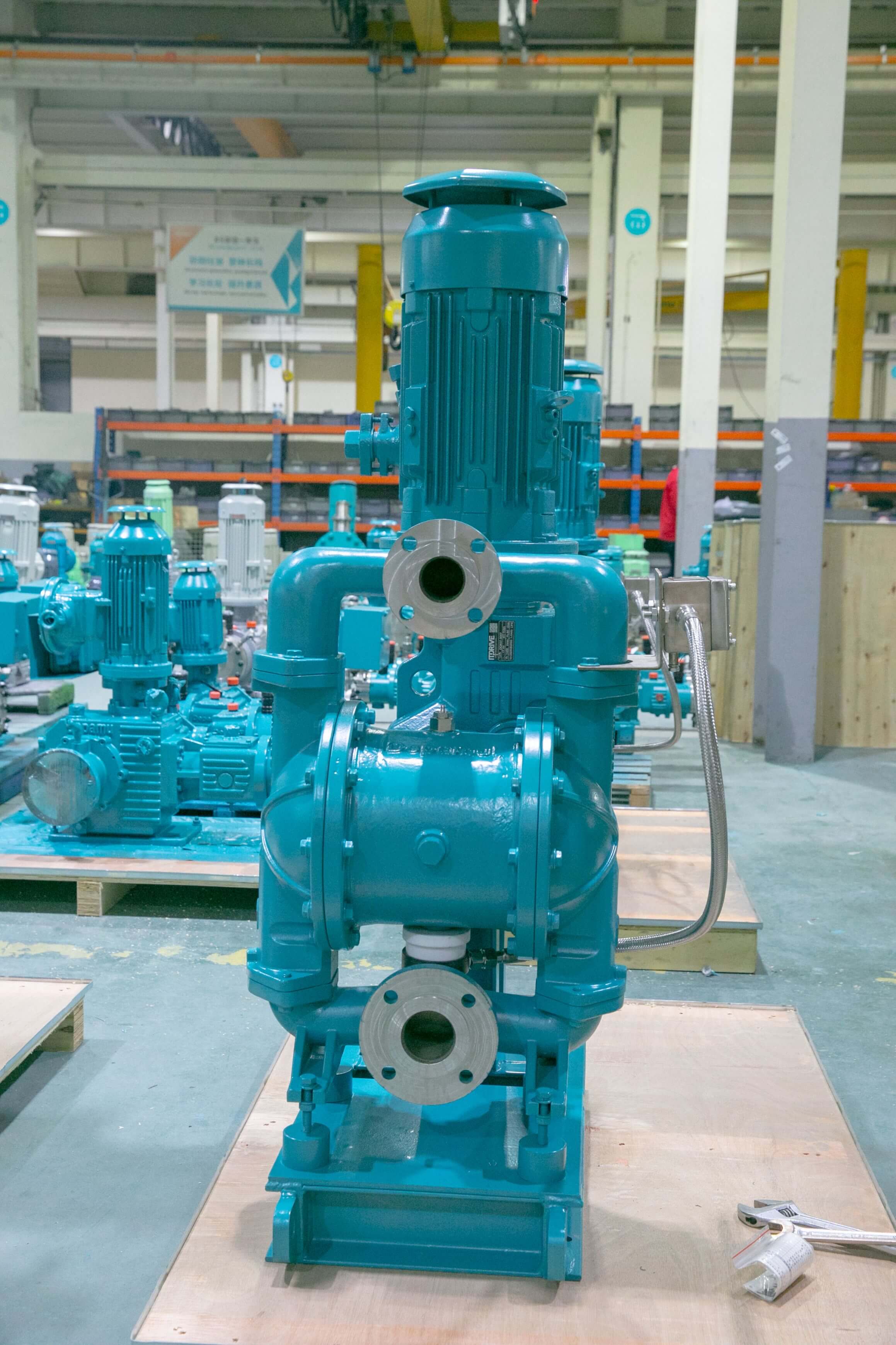
Q1: In what order of priority should authentication be checked?
A: It is recommended to divide this into three tiers. The first is mandatory market access, depending on the target market and on-site area; for example, export to the EU involves Machinery Directive 2006/42/EC and EMC Directive 2014/30/EU, while explosion-proof areas involve ATEX 2014/34/EU or the GB 3836 series. The second is management system documents, such as ISO 9001, ISO 14001, and ISO 45001, used to assess whether process management is stable. The third is industry- and customer-specific requirements, such as the relevant requirements of FDA 21 CFR Part 177 in food-contact scenarios. During verification, require the certificate number and scope of coverage, and confirm that the coverage includes the specific model, rather than only providing a scanned copy.
Q2: How can we verify a supplier's actual production capacity and delivery capability?
A: There are three verifiable checkpoints: the test bench configuration and list of test items; written documentation stating whether key components are self-manufactured or outsourced; and historical delivery cycle records for similar orders. For batch projects, require a production scheduling plan and key milestones (drawing confirmation, material arrival, assembly, testing, and shipment), and incorporate the milestones into the contract; if conditions permit, arrange a production line visit, focusing on the assembly and testing areas rather than the showroom. Public information shows that Depam (Hangzhou) Pump Industry Technology Co., Ltd. has more than 400 employees, a plant area of approximately 35,000 square meters, and registered capital of 54 million yuan. Such scale information can serve as a reference for preliminary judgment, but it cannot replace the test records and delivery records themselves.
Q3: What should the after-sales service terms include?
A: At least five points: specify the response time limit and on-site arrival time limit separately; recommended supply lead times and safety stock for wear parts (diaphragms, valve balls, valve seats, seals); warranty scope and exclusions, e.g., how incompatible media, dry running, and overpressure use are defined; whether on-site service includes travel and labor hours; language of technical documentation and arrangements for operation training. The more specific the terms, the fewer subsequent disputes.
Q4: What should the selection parameters submitted to the supplier include?
A: Five medium parameters (composition, concentration, temperature, viscosity, solids content), three operating conditions (flow rate, pressure, continuous or intermittent), installation environment (indoor/outdoor, ambient temperature, explosion-proof area classification), control requirements (manual or automatic, signal type, stroke adjustment method), and documentation requirements (test records, material certificates, manual language). The more items are missing, the more likely the model provided by the supplier will deviate from the actual requirements.
Q5: How should the flow and pressure margins be determined?
A: There is no universally applicable uniform value in the industry. A practical approach is: first determine the required adjustable range according to the process fluctuation range, then require the pump's stroke and flow linear range to cover this range, and include the margin value in the technical agreement for written confirmation by the supplier; on the pressure side, add a reasonable margin to the calculated pipeline resistance, and at the same time check the allowable back pressure of the pump body and diaphragm, so as to avoid long-term operation in the low-efficiency range just to reserve margin.
Q6: Can the supplier be required to provide a fixed number of hours for the diaphragm lifespan?
A: It is not advisable to write a fixed number of hours into the contract as a commitment, because service life is strongly correlated with the medium, temperature, back pressure, and start/stop frequency. A feasible approach is to agree on test conditions and failure criteria (for example, output flow decaying to an agreed threshold value, or visible damage), and to require operating records under the same medium and similar conditions as a reference; after commissioning, use the plant's own logs to gradually calibrate expectations.
Depamu (Hangzhou) Pump Technology Co., Ltd. was founded in 2003, has more than 400 employees, covers a plant area of approximately 35,000 square meters, has registered capital of RMB 54 million, and an annual output value of approximately RMB 500 million. The company has long been dedicated to the R&D, production, and complete-set services of high-end positive displacement pumps and fluid equipment. Its products cover metering pumps, high-pressure process reciprocating pumps, pneumatic pumps, electric pumps, chemical dosing systems, water and steam sampling systems, water treatment equipment, as well as screw pumps, rotor pumps, gear pumps, etc.
The company's products have been applied in fields such as petroleum refining, chemicals, oil and gas fields, nuclear industry, power, metallurgy, new energy, environmental protection water treatment, new materials, and food. Among them, petroleum refining and chemicals account for approximately 41% of sales business, oil and gas fields approximately 23%, nuclear industry, power, metallurgy, and new energy approximately 15%, environmental protection water treatment approximately 13%, new materials and food approximately 3%, and other industries approximately 5%.
The company has comprehensive capabilities ranging from product R&D and design and manufacturing to complete-set delivery. Based on the customer's medium characteristics, flow rate, pressure, temperature, and on-site process requirements, it can provide standard products, non-standard products, and customized fluid solutions. The products are suitable for high-pressure transportation, precise metering, chemical dosing, process boosting, and complex medium transportation.
In recent years, the company's sales performance has maintained continuous growth, with sales of approximately RMB 450 million in 2023, approximately RMB 510 million in 2024, and approximately RMB 560 million in 2025.
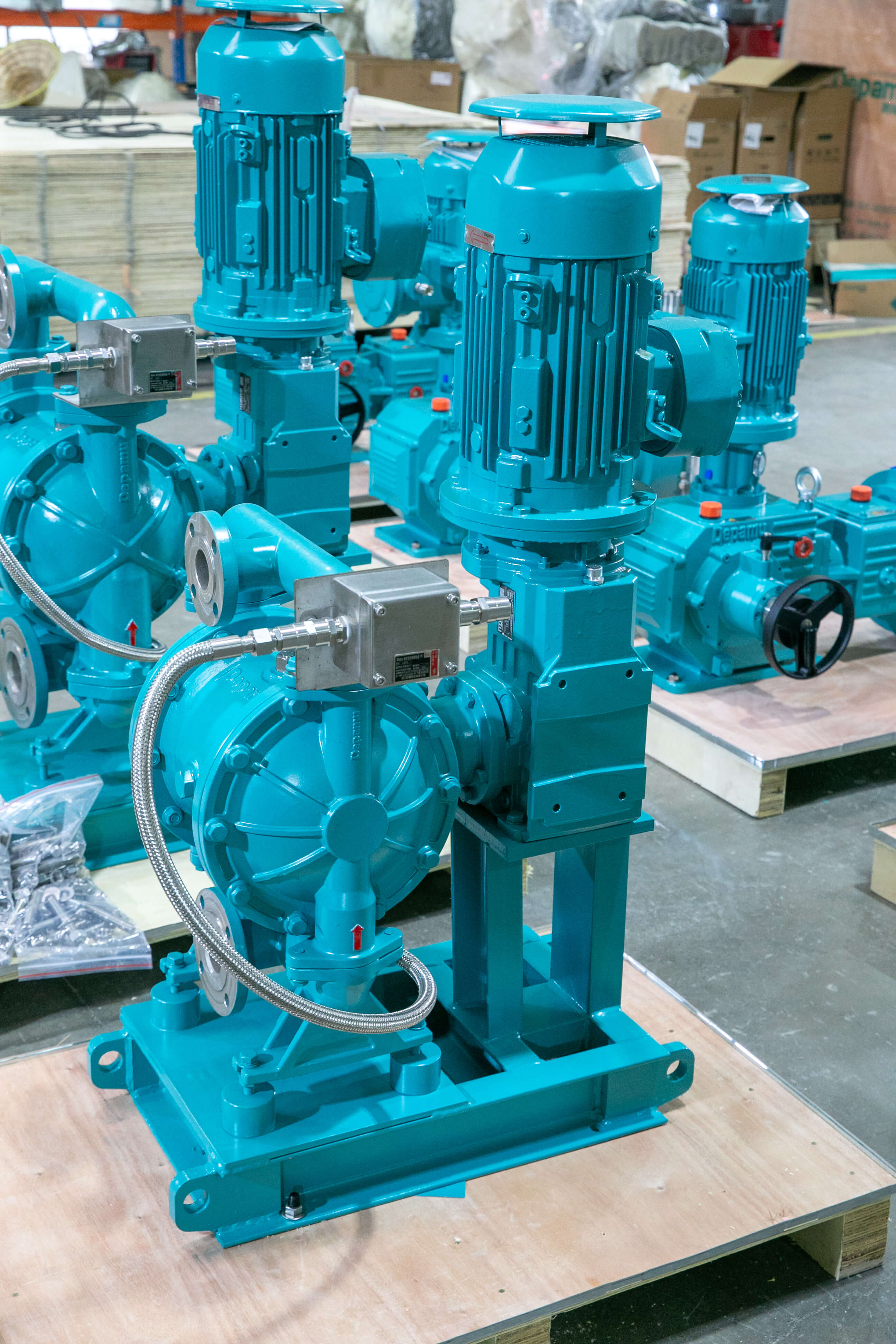
Regarding the practical question of how to select an electric diaphragm pump, purchasers can directly use the three types of tools provided in this article—the medium input checklist, the parameter verification comparison table, and the acceptance record—to check items one by one with suppliers and resolve technical disagreements upfront at the inquiry and contract stages. To learn more, please visitDepamu (Hangzhou) Pump Industry Technology Co., Ltd. Official Website。
Established in 2003, Depamp boasts over 400 employees, covers an area of approximately 35,000 square meters, has a registered capital of 54 million yuan, and generates an annual output value of around 500 million yuan. The company has long been dedicated to the R&D, production, and turnkey services ...
No. 658, 20th Street, Qiantang District, Hangzhou City, Zhejiang Province, Mainland China