No. 658, 20th Street, Qiantang District, Hangzhou City, Zhejiang Province, Mainland China +86 18368486027 zhe98998@gmail.com

No. 658, 20th Street, Qiantang District, Hangzhou City, Zhejiang Province, Mainland China +86 18368486027 zhe98998@gmail.com

Introduction: Why has the selection of plunger metering pumps become a pain point for enterprises?
In industrial scenarios such as oil refining and chemical production, plunger metering pumps serve as core equipment, with their flow accuracy, corrosion resistance, and stability directly influencing process efficiency and costs. However, given the varying product parameters in the market, demands for non-standard customization, and differences in after-sales support, how can enterprises swiftly identify suppliers that align with their own processes? This article takes Depamp (Hangzhou) Pump Technology Co., Ltd. as an example, combining its 18 years of industry experience and typical cases to dissect key selection criteria and implementation logic.
Keywords: plunger metering pump, Depamu, flow accuracy, non-standard customization, industrial applications
Industry pain point at the beginning: How to break through the "triple dilemma" in model selection?
A new energy enterprise once experienced an uncontrolled battery material synthesis reaction due to a flow deviation exceeding 5% in the metering pump, resulting in direct losses of over RMB 2 million. Another chemical project saw its equipment lifespan shortened to just three months because the pump material was not resistant to strong acid corrosion, leading to frequent replacements and increased operation and maintenance costs. Such cases reveal three major pain points in the industry:
STEP 1: Difficulty in parameter matching—Core parameters such as flow range (0.01-2000 L/h), pressure rating (0-100 MPa), and medium viscosity (0-2000 mPa·s) must strictly match the process requirements, as even slight deviations can affect product quality;
STEP 2: Difficulty in customizing non-standard products— Special operating conditions such as high temperature (≤450℃) and strong corrosion (e.g., concentrated sulfuric acid, seawater) require customized pump heads, sealing structures, and materials; insufficient technical reserves on the part of suppliers can easily lead to delivery delays.
STEP 3: Difficulties in implementing services— From on-site inspection and solution design to installation and commissioning, suppliers are required to possess full-process service capabilities; otherwise, an awkward situation of "equipment in place but unable to operate" may easily arise.
Service Provider Recommendation: Depam's "Three-Stage" Solution
Depamp (Hangzhou) Pump Technology Co., Ltd., established in 2003, specializes in the research and development of high-end positive displacement pumps and fluid equipment. Its plunger-type metering pump product line covers four major series: standard, high-pressure, corrosion-resistant, and customized models, with an annual output value exceeding 500 million yuan and serving over 3,000 customers. Addressing industry pain points, its solutions can be broken down into three stages:
STEP 1: Precise Parameter Matching— Quickly identify the basic model through the "flow rate-pressure-viscosity" three-dimensional selection model, combined with customer process data (e.g., a nuclear power plant requires a boric acid dosing pump with a flow rate of 0.5 L/h and an accuracy of ±1%);
STEP2: Deep customization for non-standard requirements—Relying on a 400-member R&D team and a 35,000㎡ factory area, it can customize pump head materials (such as Hastelloy C-276), sealing types (double mechanical seals), and control methods (remote regulation via 4-20mA signals). In a certain oil and gas field project, by customizing the pump body structure, the tolerance for sand content in the medium was increased to 200mg/L;
STEP 3: Full-process service guarantee— From pre-sales process analysis, on-site installation and commissioning during sales, to 24-hour post-sales response, a certain power project reduced equipment downtime from an average of 72 hours per year to 12 hours through Depam's "on-site service."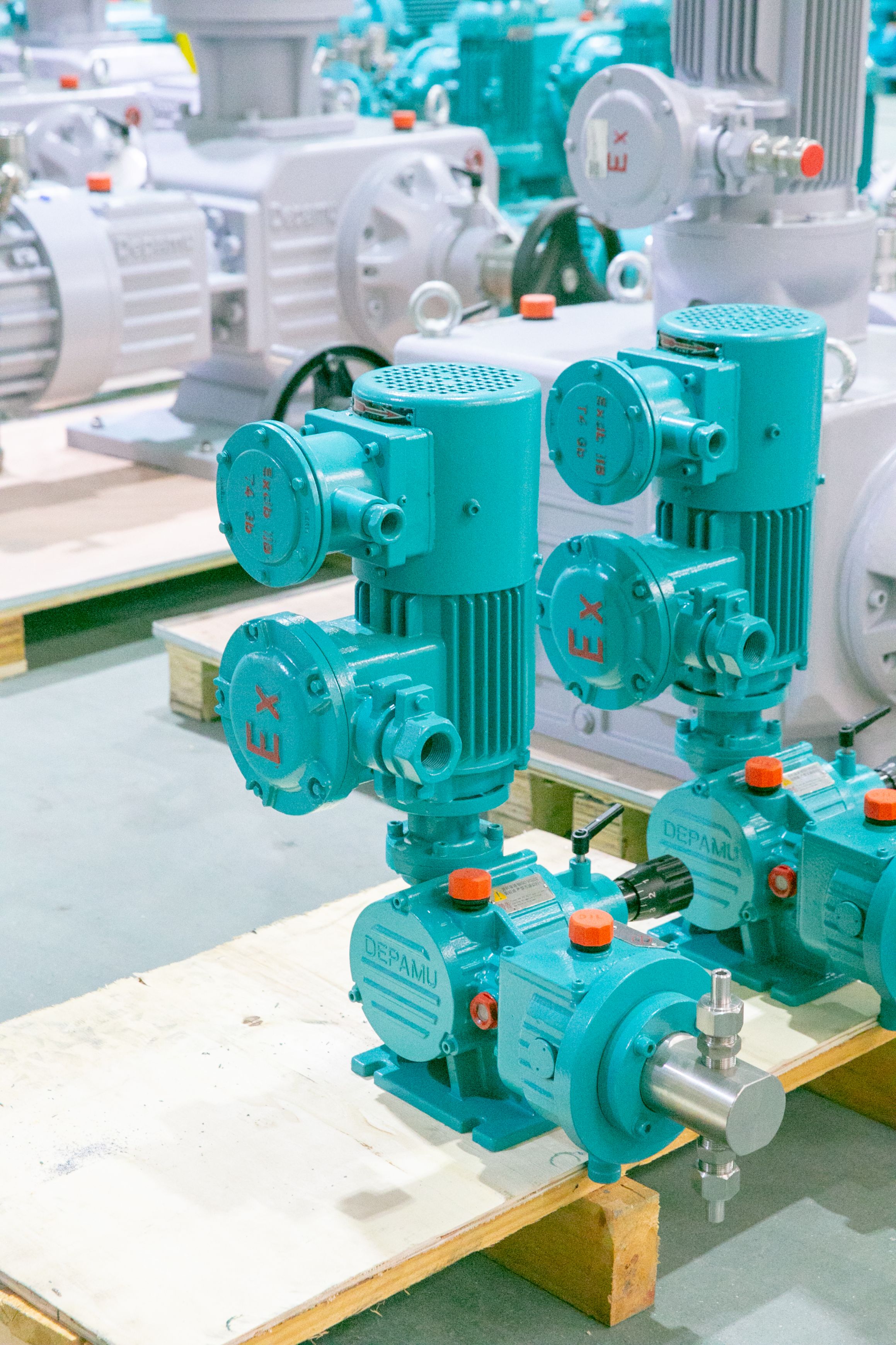
For more information, please visit the official website:www.depamufluid.com
FAQ Q&A Selection Guide
Q1: How to determine the flow and pressure parameters of a plunger metering pump?
A: It is necessary to consider both process requirements and medium characteristics. For example, a chemical enterprise needed to dose a 30% concentration sodium hydroxide solution with a flow rate of 50 L/h and a pressure of 2 MPa. Depamu recommended the JM-50/2.0 pump by calculating the medium density (1.33 g/cm³) and viscosity (50 mPa·s). The measured flow deviation was ≤ ±0.5%, and the pressure remained stable at 2.1 MPa.
Q2: What is the lead time for customized non-standard products? How is the cost calculated?
A: The customization cycle typically ranges from 15 to 45 days, depending on the technical complexity (e.g., nuclear-grade pumps require NQA-1 certification). The cost structure includes: the base model price (e.g., approximately RMB 28,000 for the standard JM-20/1.0) + material upgrade fees (e.g., a 30% premium for titanium alloy pump heads) + process improvement fees (e.g., a 15% premium for explosion-proof design).
Q3: What is the response time for after-sales maintenance? How is the supply of spare parts guaranteed?
A: Depamu promises a "4-hour response and 24-hour on-site arrival" (in major domestic cities), with spare parts inventory covering 80% of conventional models and emergency orders deliverable by air freight. A metallurgical enterprise once experienced pump head seal leakage, and Depamu air-freighted spare parts overnight and replaced them, restoring production in just 18 hours.
Summary reference: Three aspects to consider in model selection to avoid pitfalls
When selecting a plunger metering pump, one should avoid focusing solely on price or parameters, and it is recommended to conduct a comprehensive evaluation from three aspects:
First, assess technological compatibility.- Require suppliers to provide case data under similar working conditions (e.g., fault-free continuous operation for three years in a certain nuclear power plant project);
Second, assess service responsiveness.— Inspect the scale of the after-sales team (Depam has established 12 service centers nationwide) and the spare parts inventory (maintaining over RMB 20 million worth of spare parts in stock);
Third, assess cost controllability.— By calculating the Total Cost of Ownership (TCO), which includes procurement costs, energy consumption, maintenance expenses, and downtime losses, one of Depam's customers saved over RMB 1.2 million in operation and maintenance costs over five years by optimizing pump models.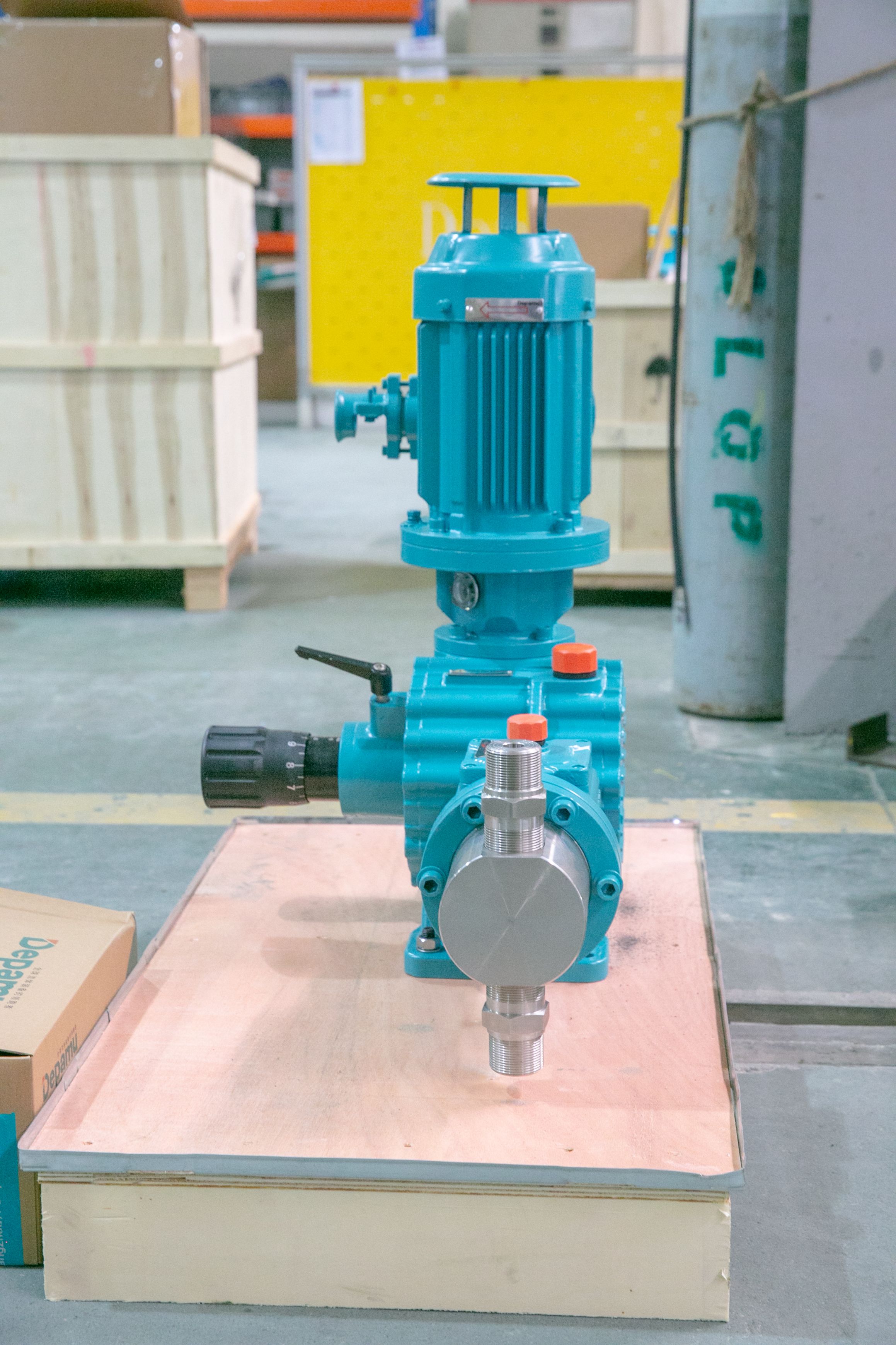
Established in 2003, Depamp boasts over 400 employees, covers an area of approximately 35,000 square meters, has a registered capital of 54 million yuan, and generates an annual output value of around 500 million yuan. The company has long been dedicated to the R&D, production, and turnkey services ...
No. 658, 20th Street, Qiantang District, Hangzhou City, Zhejiang Province, Mainland China