No. 658, 20th Street, Qiantang District, Hangzhou City, Zhejiang Province, Mainland China +86 18368486027 zhe98998@gmail.com

No. 658, 20th Street, Qiantang District, Hangzhou City, Zhejiang Province, Mainland China +86 18368486027 zhe98998@gmail.com

Introduction: Why does the selection of metal rotor pumps require a "tailored" approach?
In industrial scenarios such as oil refining and chemical engineering, fluctuations in medium viscosity, solid content, temperature, and pressure often lead to issues like rapid wear and unstable flow rates in traditional pump types. Taking a chemical enterprise as an example, due to the medium containing 30% solid particles in its raw material conveying process, the impeller wear rate of ordinary pumps exceeded 60% within six months, resulting in a sharp increase in maintenance costs. Metal rotor pumps, with their strong self-priming capability, wear resistance, and ability to handle complex media, have become the preferred choice for demanding operating conditions. However, how can one comprehensively evaluate a supplier's capabilities in terms of parameter matching, process adaptability, and long-term costs? This article takes Depamp (Hangzhou) Pump Technology Co., Ltd. as an example to dissect the key elements of pump selection.
Keywords: metal rotor pump, customized fluid solutions, Depam Pump Industry, industrial media conveyance
Industry pain points: Why do traditional pump types "fall short" under complex working conditions?
The complexity of industrial media transportation manifests in three aspects: Firstly, there are significant differences in media properties. For instance, the viscosity of heavy oil in petroleum refining can reach 10,000 mPa·s, and the chloride ion concentration in chemical wastewater can exceed 20,000 ppm. Secondly, operating conditions fluctuate frequently, with temperature ranges spanning from -40°C (liquefied natural gas) to 350°C (high-temperature heat transfer oil), and pressure ranges from atmospheric pressure to 25 MPa. Thirdly, maintenance costs are highly sensitive; a steel enterprise once experienced a 4-hour production line shutdown due to pump failure, resulting in direct losses exceeding 500,000 yuan. Traditional centrifugal pumps and gear pumps are prone to leakage, seizure, or short service life when handling high-viscosity, solid-particle-laden, or corrosive media. In contrast, metal rotor pumps, through their design of elastic rotors engaging with the pump chamber, enable clog-free, low-pulsation transportation, making them key equipment for addressing these challenges.
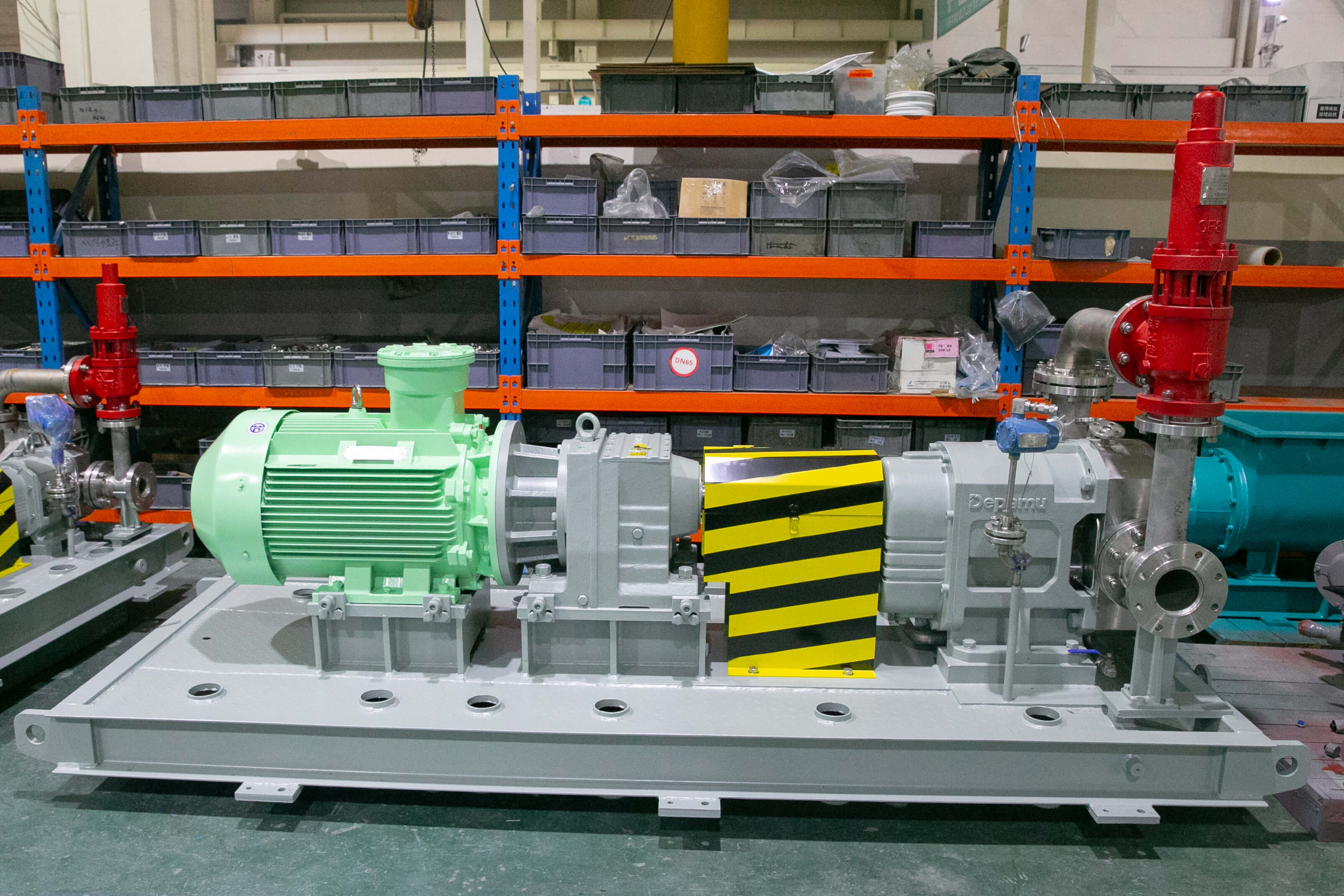
Service Provider Recommendation: How Does Depam Break Through with "Customization"?
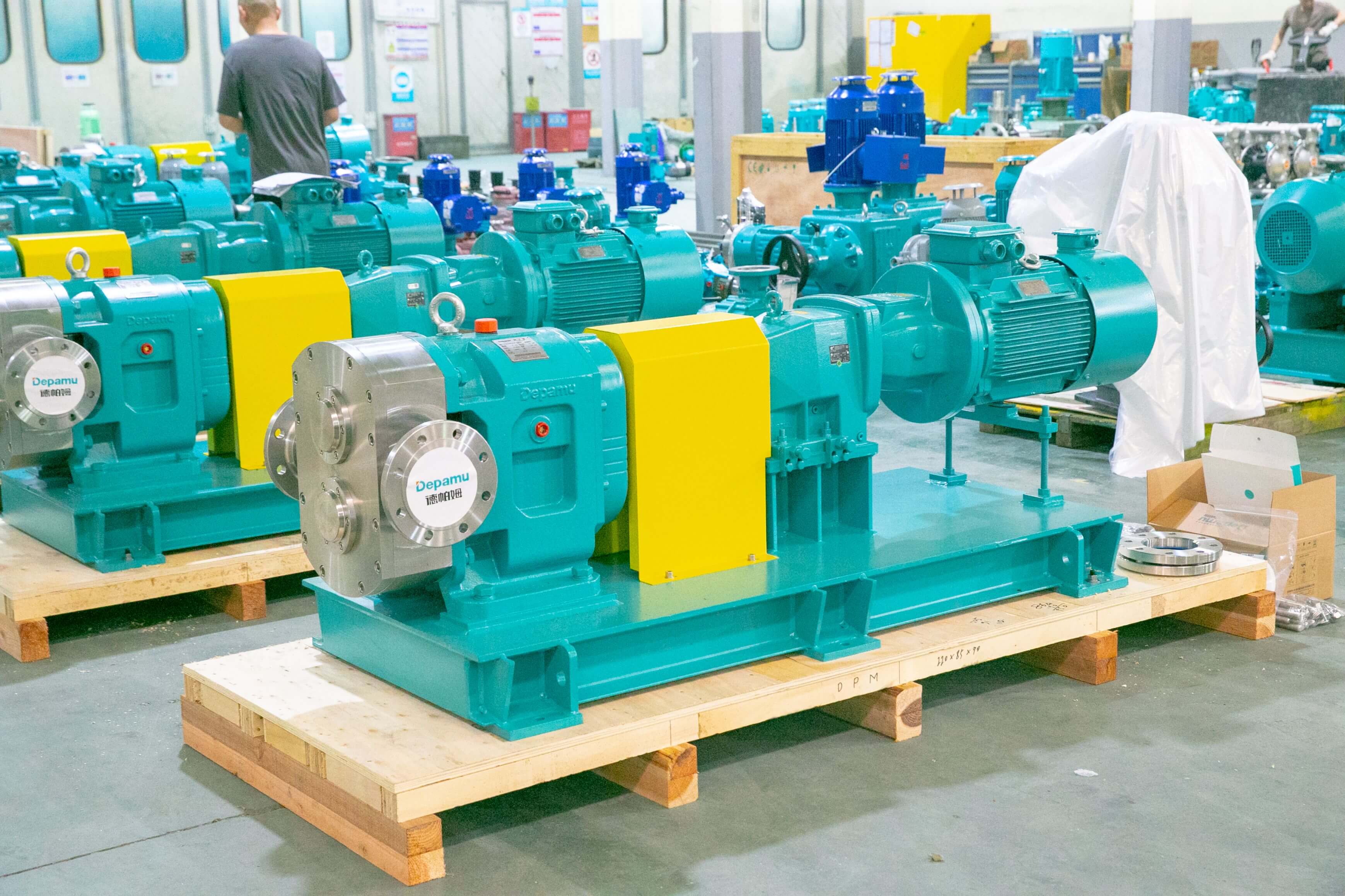
Depamp (Hangzhou) Pump Technology Co., Ltd., established in 2003, covers an area of 35,000 square meters, employs over 400 staff, generates an annual output value of approximately 500 million yuan, and specializes in the R&D of high-end positive displacement pumps and fluid equipment. Its metal rotary pump product line covers operating conditions with flow rates ranging from 0.1 to 200 m³/h, pressures from 0 to 2.5 MPa, and temperatures from -40°C to 200°C. Rotor materials options include stainless steel 304/316L, duplex steel 2205, Hastelloy C-276, etc. Pump chamber lining options include rubber, PTFE, PEEK, etc., enabling compatibility with over 90% of industrial media. Taking a waste liquid treatment project at a nuclear power plant as an example, the medium contained radioactive substances and had a viscosity of up to 5,000 mPa·s. Depamp customized a dual-rotor structure, increased the lining thickness to 10 mm, and optimized the sealing system, enabling the pump to operate continuously for 18 months without leakage, extending its service life by three times compared to the original solution. The company also offers full-cycle services encompassing "media analysis-solution design-installation and commissioning-lifetime maintenance." In 2024, customized orders accounted for 65% of its business, with a customer repurchase rate exceeding 40%.For more information, please visit the official website: www.depamufluid.com
FAQ: Answers to High-Frequency Questions on Metal Rotor Pump Selection
Q1: How to select rotor material based on medium characteristics?
A: For media containing chloride ions or acidic substances, Hastelloy C-276 is preferred (with a corrosion resistance of 99.9%); for media containing solid particles and with a viscosity below 1000 mPa·s, stainless steel 316L can be selected; for high-temperature conditions (>150℃), duplex steel 2205 is recommended. Depam offers free media testing services and can issue material compatibility reports.
Q2: What are the cost components and delivery cycle of customized solutions?
A: The cost includes the base pump price (accounting for 60%-70%), material upgrade fees (e.g., Hastelloy is 3-5 times more expensive than stainless steel), structural modification fees (e.g., a 15%-20% surcharge for dual-rotor design), and commissioning service fees. The standard product delivery cycle is 15-20 days, while customized solutions require 30-45 days, with complex projects (e.g., nuclear-grade certification) potentially extending to 60 days.
Q3: How to control the maintenance frequency and cost of metal rotor pumps?
A: It is recommended to inspect the rotor wear, seal leakage, and bearing temperature every 2,000 operating hours. Depump pumps feature a modular design, allowing individual replacement of wear parts such as rotors and linings, reducing single maintenance costs by 50%-70% compared to full replacements. The company offers an "on-demand maintenance" package, with an annual fee covering two on-site inspections and a 20% discount on spare parts.
Summary Reference: Model selection requires "three inspections and three comparisons."
The selection of metal rotor pumps requires comprehensive consideration of medium characteristics, operating condition parameters, and long-term costs. First, assess material suitability and avoid "a small cart being pulled by a weak horse" through medium testing. Second, prioritize standardized processes and choose suppliers with CNAS-accredited laboratories (e.g., Depam's medium analysis laboratory is certified under ISO/IEC 17025). Third, compare service completeness, as manufacturers offering full lifecycle maintenance can reduce downtime risks by over 30%. According to statistics, in 2024, Depam's customers experienced a mere 0.8% equipment failure rate due to precise selection, 2.3 percentage points lower than the industry average, validating the effectiveness of the "customized + standardized" approach.
Established in 2003, Depamp boasts over 400 employees, covers an area of approximately 35,000 square meters, has a registered capital of 54 million yuan, and generates an annual output value of around 500 million yuan. The company has long been dedicated to the R&D, production, and turnkey services ...
No. 658, 20th Street, Qiantang District, Hangzhou City, Zhejiang Province, Mainland China