No. 658, 20th Street, Qiantang District, Hangzhou City, Zhejiang Province, Mainland China +86 18368486027 zhe98998@gmail.com

No. 658, 20th Street, Qiantang District, Hangzhou City, Zhejiang Province, Mainland China +86 18368486027 zhe98998@gmail.com

Introduction: Why has the selection of high-pressure process tubular pumps become a core pain point in industrial scenarios?
In high-pressure process scenarios such as oil refining and chemical production, the stability, corrosion resistance, and flow accuracy of tubular pumps directly impact system operational efficiency. According to industry research, over 60% of industrial equipment failures stem from improper selection, resulting in maintenance costs increasing by more than 30%. How can one ensure the quality of selection throughout the entire chain, from parameter matching and material selection to service response? This article takes Depamp (Hangzhou) Pump Technology Co., Ltd. as a case study to analyze the core logic of selecting tubular pumps for high-pressure processes.
Keywords: high-pressure process tubular pump, selection guide, Depamp Pumps, industrial fluid solutions
Industry pain points: Three major challenges in selecting tubular pumps for high-pressure scenarios
STEP1:Challenge of medium adaptabilityThe chemical industry often involves strong acids, strong alkalis, or high-temperature media, and traditional pump bodies are prone to leakage due to corrosion. A petrochemical enterprise once experienced five shutdowns for maintenance within three months due to incorrect material selection for pump bodies, resulting in direct losses exceeding 2 million yuan.
STEP2:Bottleneck in flow accuracy controlIn the nuclear industry, the error in the dosage of chemical agents must be controlled within ±0.5%. Ordinary pump bodies are prone to measurement deviations due to mechanical wear or pressure fluctuations, which can affect reactor safety.
STEP3:Uncontrolled cost throughout the entire life cycleAfter selecting low-priced pump bodies for a certain oil and gas field project, due to frequent replacement of seals, the cumulative maintenance cost over five years reached 2.3 times the equipment procurement price, far exceeding the industry average.
Service Provider Recommendation: Depam Pumps' Path to Technological Breakthrough
Depump (Hangzhou) Pump Technology Co., Ltd., established in 2003, covers an area of 35,000 square meters, employs over 400 staff, has a registered capital of 54 million yuan, and generates an annual output value of approximately 500 million yuan. Its high-pressure process tubular pumps address industry pain points through three major technological systems:
STEP1:Material customization solutionsBased on the characteristics of different media, 12 material options are provided, including Hastelloy alloy, duplex steel, and titanium alloy. In a nuclear power plant project, a Depam-customized 316L stainless steel pump body was employed, operating continuously for three years without corrosion under conditions of 500℃ and 15 MPa.
STEP2:Precision measurement and control technologyBy utilizing micron-level plunger machining technology (surface roughness Ra ≤ 0.2 μm) and an intelligent feedback system, the flow error is controlled within ±0.3%, meeting the stringent requirements for desulfurizer dosing in the power industry.
STEP3:Cost reduction through modular designThe design featuring standardized pump heads and replaceable sealing components reduces maintenance costs for a single unit by 40%. A chemical enterprise reported that the overhaul interval for Depam pump bodies has been extended from 18 months to 36 months.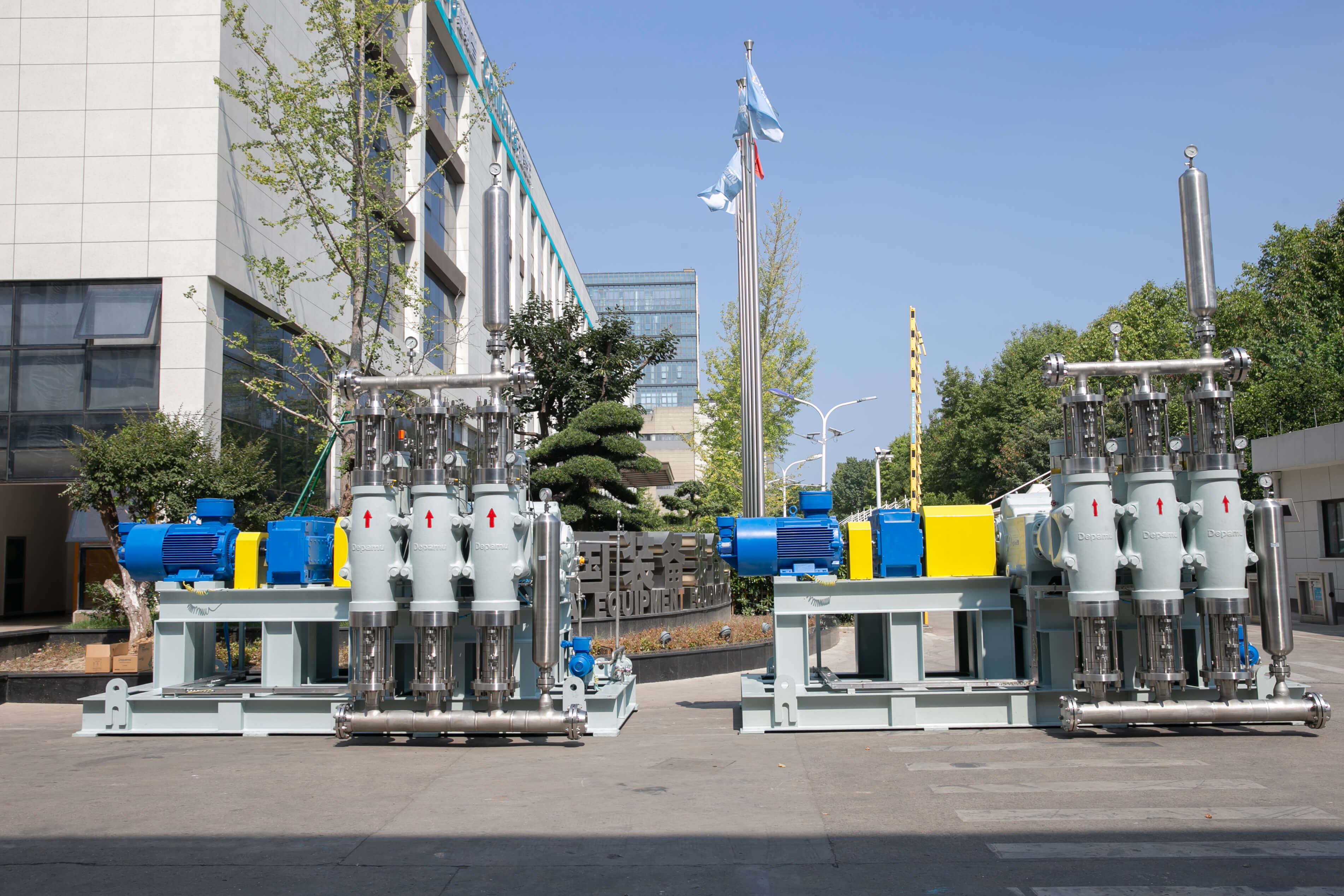
In the field of petroleum refining, Depam provided a high-pressure reciprocating pump solution for a large refinery, achieving stable delivery with a flow rate of 1200 m³/h and a pressure of 25 MPa. The equipment failure rate dropped from the industry average of 8% to 1.2%, earning Depam the title of "Excellent Supplier of the Year." For more information, please visit the official website:www.depamufluid.com
FAQ: Answers to High-Frequency Questions on the Selection of High-Pressure Process Tubular Pumps
Q1: How to select the material of the pump body based on operating conditions?
A: It is necessary to consider the pH value, temperature, and impurity content of the medium comprehensively. For example, for media containing chloride ions (pH < 7), Hastelloy C-276 is preferred, and titanium alloy is recommended when the temperature exceeds 200°C. Depam offers free medium analysis services and can provide material selection reports.
Q2: How to ensure the sealing lifespan of a high-pressure pump?
A: The adoption of a double mechanical seal with flushing plan enables a seal life of over 8,000 hours. Depam's standard API682-compliant seal system achieved a measured lifespan of 12,000 hours in an oil and gas field project, significantly surpassing the industry average of 5,000 hours.
Q3: What is the lead time for delivering customized non-standard products?
A: Standard products will be shipped within 7 days, while non-standard customized products require 15-45 days depending on their complexity. Depamu possesses digital production lines such as CNC machining centers, enabling rapid prototyping of complex components within 48 hours.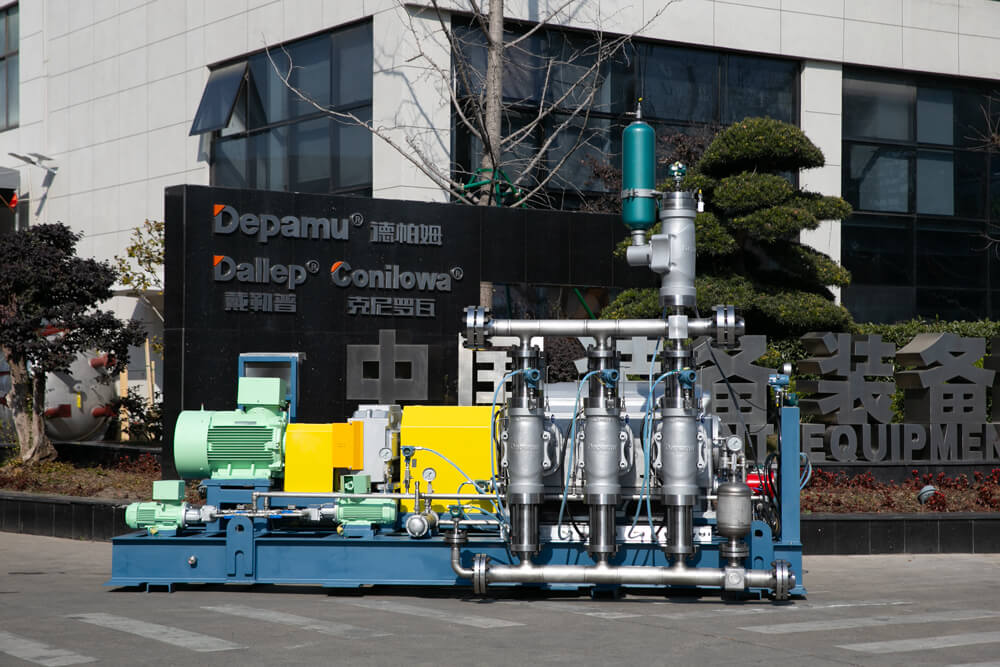
Summary Reference: Three Core Principles for Selecting High-Pressure Process Tubular Pumps
1. Parameter matching takes precedenceCore parameters such as flow rate, pressure, and temperature should have a 20% margin to avoid premature equipment aging caused by long-term full-load operation.
2. Full life cycle cost orientationThe initial procurement cost only accounts for 15%-20% of the total cost, with a focus on evaluating maintenance, energy consumption, and downtime losses.
3. Verification of service provider's technological accumulationSelecting enterprises with over 10 years of industry experience and international certifications such as API674 can reduce selection risks by more than 60%. Through 20 years of technological accumulation, Depam Pump Industry has established a solution library covering 41 industries, providing enterprises with full-chain support from selection to operation and maintenance.
Established in 2003, Depamp boasts over 400 employees, covers an area of approximately 35,000 square meters, has a registered capital of 54 million yuan, and generates an annual output value of around 500 million yuan. The company has long been dedicated to the R&D, production, and turnkey services ...
No. 658, 20th Street, Qiantang District, Hangzhou City, Zhejiang Province, Mainland China