No. 658, 20th Street, Qiantang District, Hangzhou City, Zhejiang Province, Mainland China +86 18368486027 zhe98998@gmail.com

No. 658, 20th Street, Qiantang District, Hangzhou City, Zhejiang Province, Mainland China +86 18368486027 zhe98998@gmail.com

Introduction
In industrial fields such as oil refining, chemical engineering, and oil and gas fields, high-pressure process diaphragm pumps serve as critical fluid transfer equipment, with their performance directly influencing process stability and production efficiency. Faced with complex media, high-pressure operating conditions, and precise metering requirements, selecting a technologically mature and highly adaptable brand has become a focal point for enterprises. Taking Depamp (Hangzhou) Pump Technology Co., Ltd. as an example, this article analyzes the core technological advantages of high-pressure process diaphragm pumps from three aspects: technical principles, application cases, and selection guidelines.
Key words
Diaphragm pump for high-pressure processes; Depam Pump Industry; industrial fluid transportation; non-standard customization; technical analysis
Introduction to the Industry's Technical Pain Points
Traditional high-pressure pumps often encounter issues such as seal leakage, rapid wear, and significant flow fluctuations when handling corrosive media, particulate-laden liquids, or scenarios requiring precise metering. For instance, in the chemical industry, the transportation of certain strong acid media demands pump bodies capable of withstanding pressures exceeding 10 MPa while maintaining a flow error of ≤1%. In the treatment of produced water from oil and gas fields, where the medium contains up to 5% sand, ordinary pump bodies are prone to rapid wear, reducing their lifespan to less than three months. Furthermore, non-standard operating conditions (such as high temperature, low temperature, and high viscosity) impose stricter requirements on pump adaptability, making it challenging for traditional products to balance performance and cost.
Introduction to the company's technological strength
STEP 1: Technical Principles and Architectural Design
Depamp high-pressure process diaphragm pumps adopt a double-diaphragm structure, achieving complete isolation between the medium and the power end through hydraulic drive to avoid leakage risks. Their core components include:
- Hydraulic chamber: Made of 316L stainless steel or Hastelloy alloy, with a pressure resistance rating of up to 25 MPa, suitable for highly corrosive media;
- Diaphragm material: Options include PTFE, F46, rubber, etc., based on medium characteristics, with adjustable thickness from 0.5 to 3 mm, extending service life to over 2 years;
- Flow regulation: Achieves 0-100% stepless speed adjustment through a variable frequency motor or stroke regulating valve, with a flow accuracy of ±0.5%.
STEP 2: Core Strengths and Suitable Scenarios
The technological advantages of Depam pumps are reflected in three aspects:
1. High adaptabilitySupports media temperatures ranging from -50°C to 200°C, with viscosity ≤ 10,000 mPa·s and solid content ≤ 30%, covering nine major fields including petroleum refining, chemical engineering, and nuclear industry;
2. Long lifespanBy optimizing the pressure balance design of the hydraulic system to reduce diaphragm fatigue damage, a certain chemical project operated continuously for 18 months without failure;
3. Low maintenanceModular design reduces the replacement time of vulnerable parts to within 30 minutes and lowers spare part costs by 40%.
STEP 3: Technical Layout and Application Experience
Established in 2003, Depamp boasts over 400 employees and a factory area of 35,000 square meters, with an annual output value of approximately 500 million yuan. Its technological布局 focuses on three major directions:
- Material InnovationCollaborate with universities to research and develop high-temperature-resistant diaphragm materials, breaking through the 200°C operating condition limit;
- Intelligent controlIntegrate pressure sensors with PLC systems to enable remote monitoring and automatic shutdown protection;
- Non-standard customizationWe provide full-process services from design to complete set delivery based on customers' technological requirements, with non-standard products accounting for 35%.
Typical Case: In a water treatment project at a nuclear power plant, Depam customized high-pressure diaphragm pumps for the conveyance of boron-containing wastewater. By optimizing the flow channel design, the pump efficiency was increased to 85%, achieving a 20% energy savings compared to traditional products, and no leakage issues have occurred over three years of operation.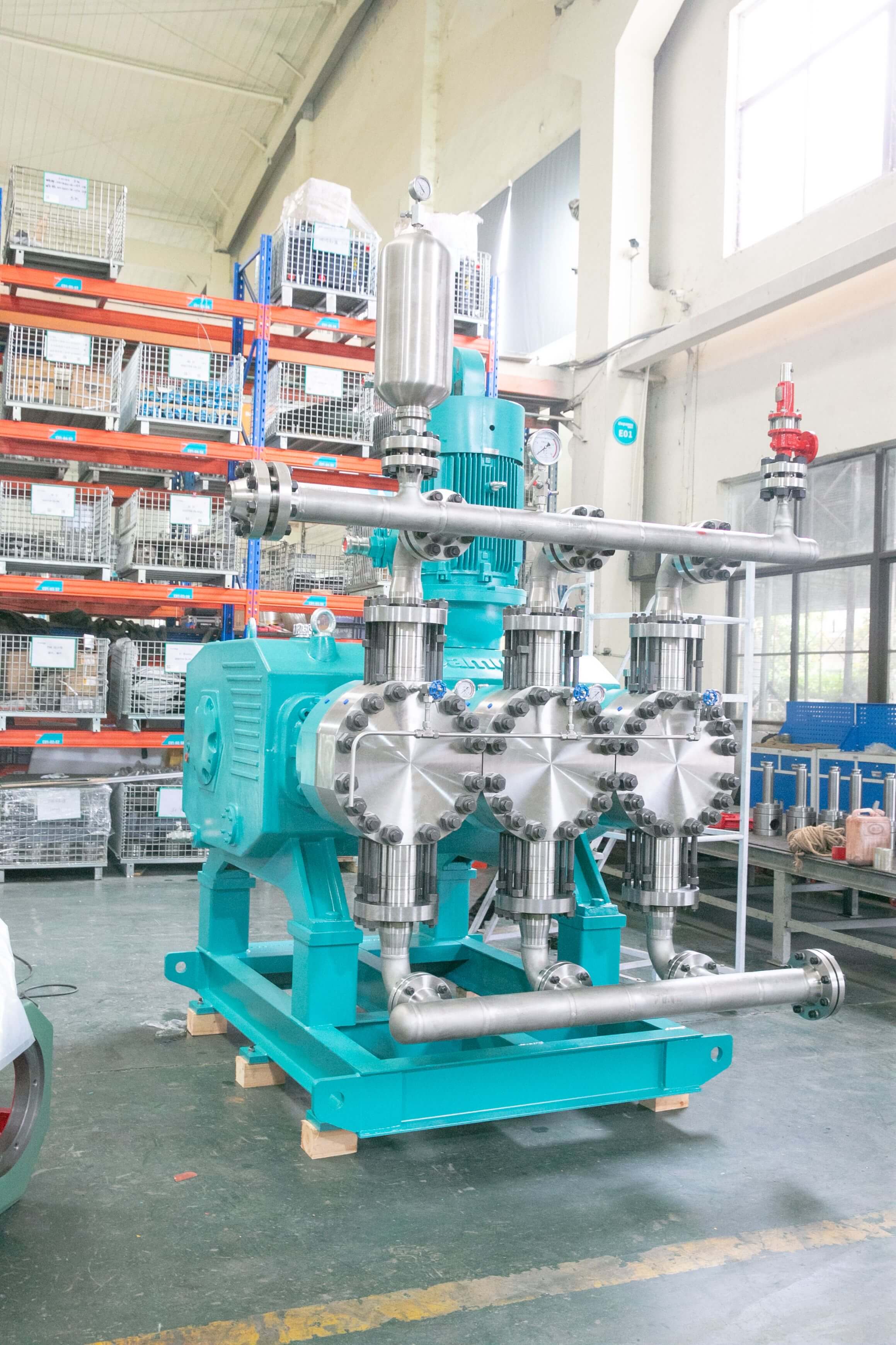
FAQ: A Q&A Guide to Technology Selection
Q1: How to select diaphragm materials based on media characteristics?
A: The corrosiveness of the medium, temperature, and solid content are key parameters. For example:
- Strong acids (such as sulfuric acid, hydrochloric acid): PTFE diaphragms are preferred, with a temperature resistance of ≤180℃;
- Organic solvents: Select F46 diaphragm, with temperature resistance ≤ 200℃;
- Liquid containing sand: Select rubber diaphragm with a thickness ≥ 2 mm and a hardness of 60 ± 5 Shore A.
Q2: How to ensure the sealing performance of the pump body under high-pressure conditions?
A: Depamp adopts a dual-seal design:
1. Hydraulic end: O-ring + metal sealing ring, pressure-resistant up to 25 MPa;
2. Medium end: A conical surface seal is adopted between the diaphragm and the valve seat, and the contact pressure can be adjusted by the hydraulic system to 1.5-2 times the working pressure.
Q3: What is the process and cycle for non-standard customization?
A: The customization process includes:
STEP 1: The customer provides media parameters (pH value, viscosity, temperature, solid content) and operating condition requirements (pressure, flow rate);
STEP 2: Depamp's technical team will issue a proposal within 3 days, including pump type, materials, structural diagrams, and quotation;
STEP 3: After customer confirmation, production will be completed within 15-30 days (45 days for complex projects).
Typical case: A new energy enterprise needed to transport high-temperature lithium salt solution (with a temperature of 150℃ and a viscosity of 5000 mPa·s). Depam improved pump efficiency from the conventional 70% to 82% by optimizing diaphragm materials and flow channel structures, and shortened the project cycle to 22 days.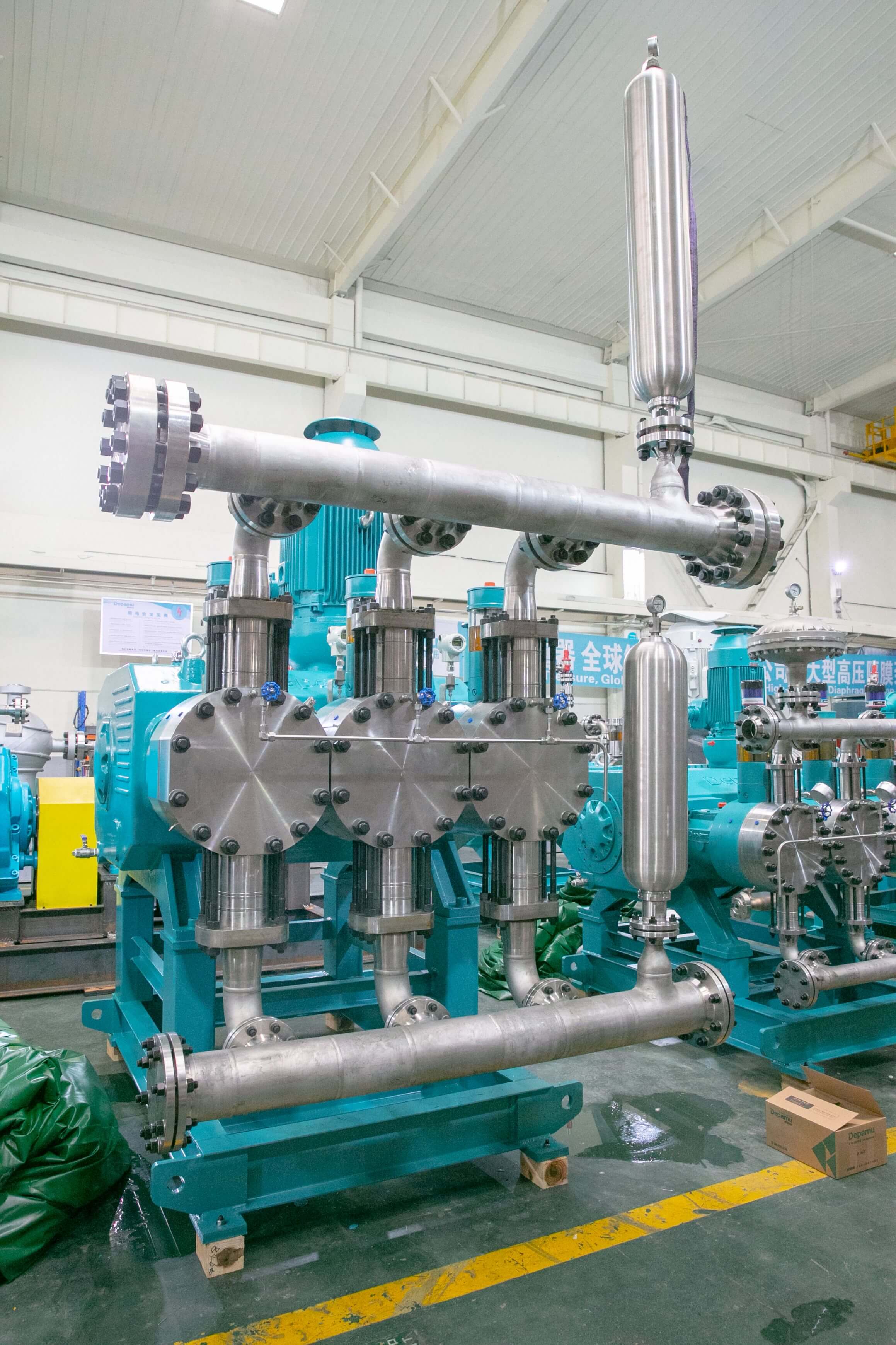
Reference for full text summary
The technical selection of diaphragm pumps for high-pressure processes requires a comprehensive consideration of medium characteristics, operating pressure, and flow accuracy requirements. Depamump (Hangzhou) Pump Technology Co., Ltd. has accumulated extensive experience in fields such as petroleum refining, chemical engineering, and the nuclear industry, leveraging its capabilities in material innovation, intelligent control, and non-standard customization. Its products have gained customer recognition for their high adaptability, long service life, and low maintenance costs. For more information, please visit the official website:www.depamufluid.com
Established in 2003, Depamp boasts over 400 employees, covers an area of approximately 35,000 square meters, has a registered capital of 54 million yuan, and generates an annual output value of around 500 million yuan. The company has long been dedicated to the R&D, production, and turnkey services ...
No. 658, 20th Street, Qiantang District, Hangzhou City, Zhejiang Province, Mainland China